Artwork
Untitled
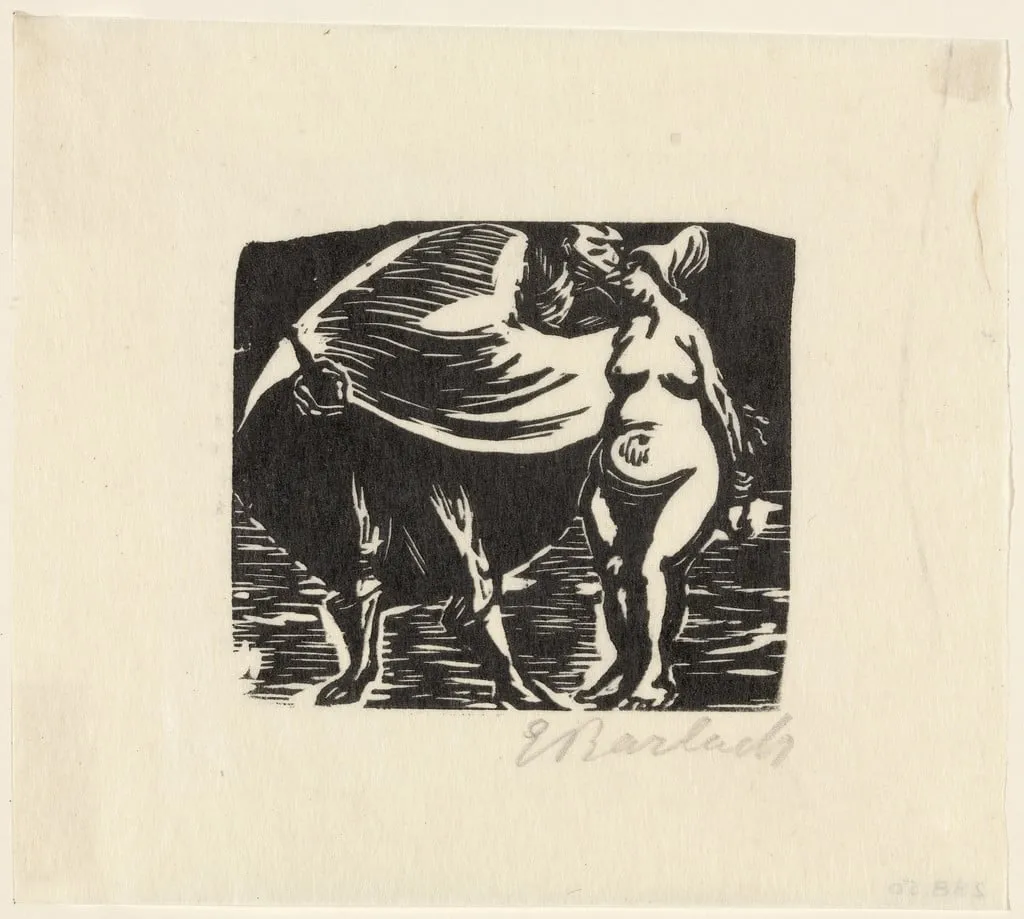
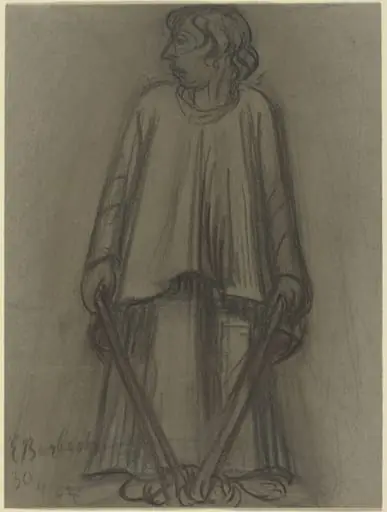
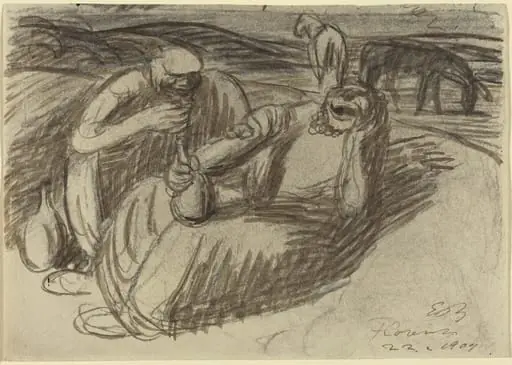
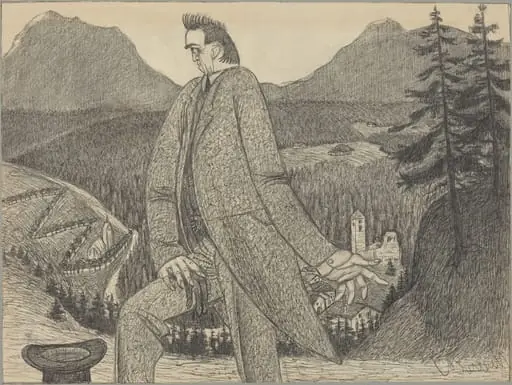
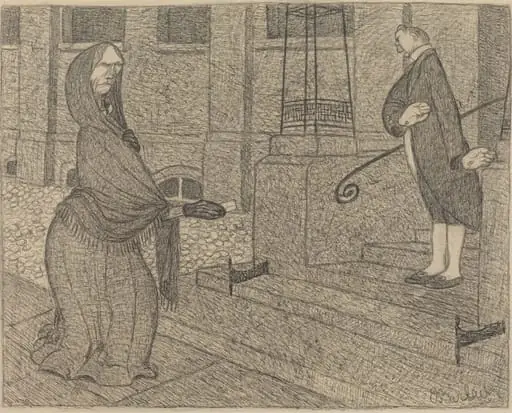
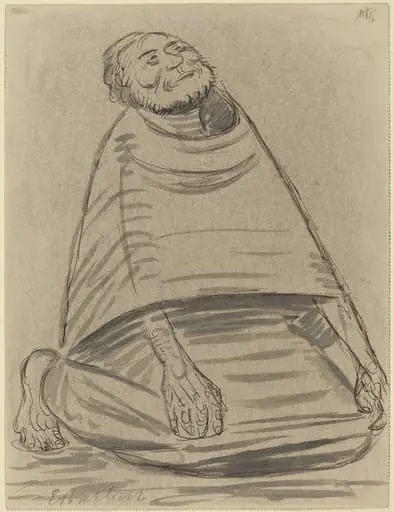
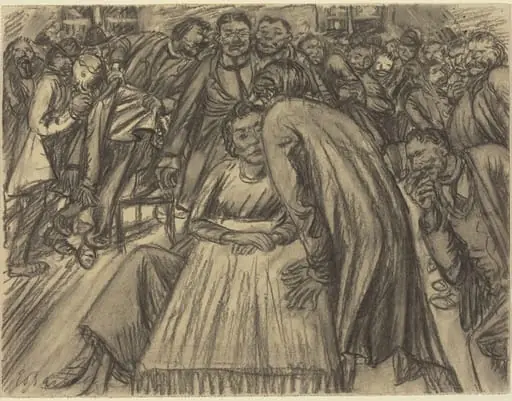
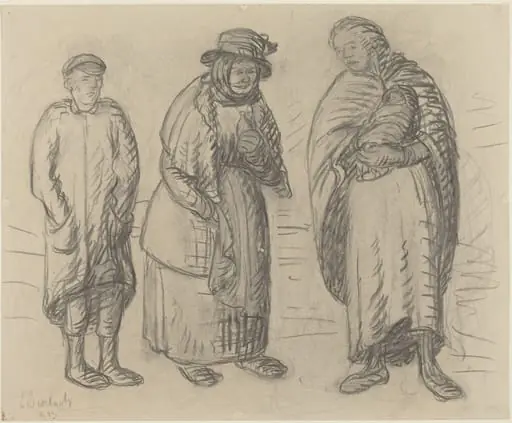
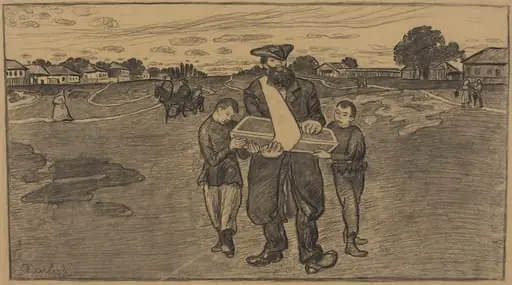
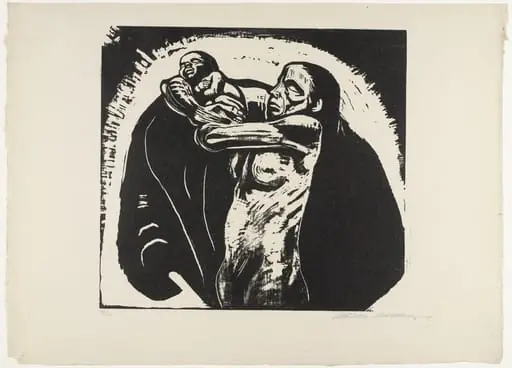
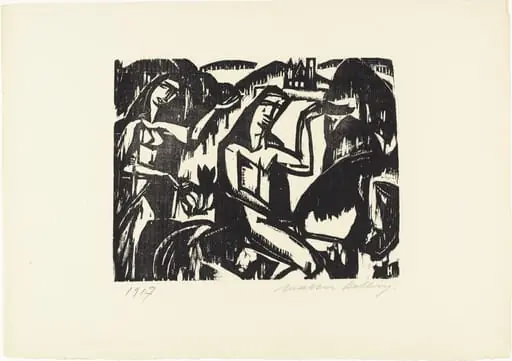
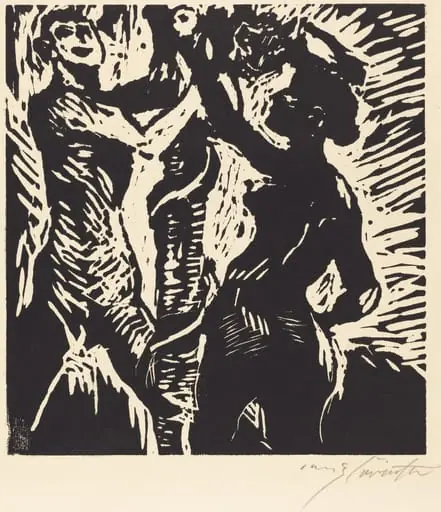
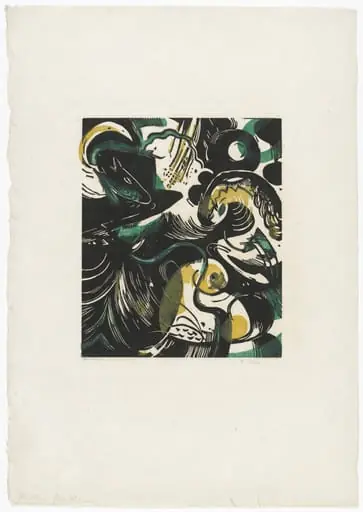
Untitled is an ink print by Ernst Barlach. It dates from 1921 and is held in the collection of the Museum of Modern Art.
About this work
Overview
Created around 1921, this woodcut by Ernst Barlach is part of a body of work responding to the trauma of World War I.
Created around 1921, this woodcut by Ernst Barlach is part of a body of work responding to the trauma of World War I. Executed in black and white, it employs stark contrasts and simplified forms to convey emotional weight. The print is held in the collection of The Museum of Modern Art and reflects Barlach’s transition from nationalist sentiment to a deeply personal pacifism following his wartime experiences.
Subject & Meaning
Two nude figures inhabit a shadowed, ambiguous space. One stands still, turned away, while the other extends a large, flowing cloak toward them. The gesture suggests protection, coercion, or transformation—its intent remains deliberately unresolved. The lack of context and the figures’ vulnerability evoke themes of isolation, intimacy, or existential vulnerability, consistent with Barlach’s postwar preoccupations.
Technique & Style
Barlach used the woodcut medium to emphasize texture and movement over realism. Deeply carved lines create a rough, tactile background, while the figures are rendered with fluid, sweeping contours. The absence of grayscale and the reliance on pure black and white heighten the emotional tension. The cloak’s swirling form dominates the composition, drawing attention to gesture rather than anatomical detail.
History & Provenance
The work entered The Museum of Modern Art’s collection as part of its broader effort to document modernist printmaking. During the Nazi regime, Barlach’s art was labeled degenerate and removed from public institutions. This piece survived because it was privately held or acquired by a foreign museum before the purge, avoiding destruction or confiscation.
Context
Barlach’s postwar work emerged amid Germany’s cultural reckoning with loss and moral collapse. His prints and sculptures rejected glorified nationalism, instead focusing on human fragility. This woodcut aligns with a broader Expressionist movement that prioritized inner experience over external realism, reflecting the psychological aftermath of war across European art.
Legacy
Barlach’s woodcuts influenced later generations of printmakers who valued emotional intensity over technical polish. His use of the medium to confront themes of suffering and redemption remains significant in 20th-century German art. Though less widely known than his sculptures, these prints are recognized for their quiet power and formal economy.
Artist & collection
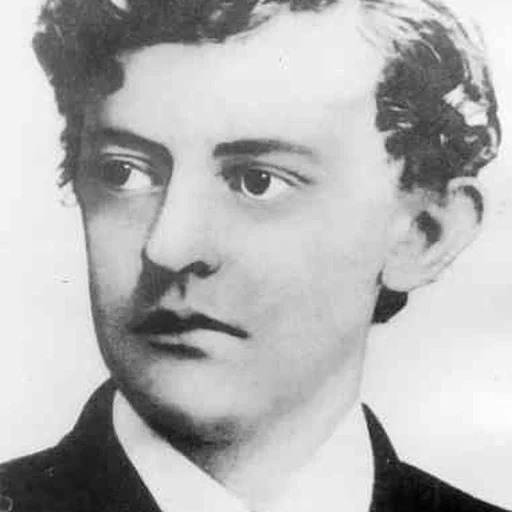
Artist
Ernst Heinrich Barlach (2 January 1870 – 24 October 1938) was a German expressionist sculptor, medallist, printmaker and writer.