Open full image Pin
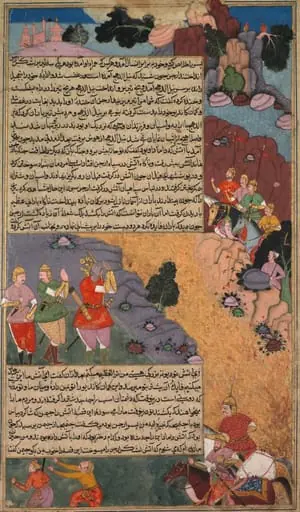
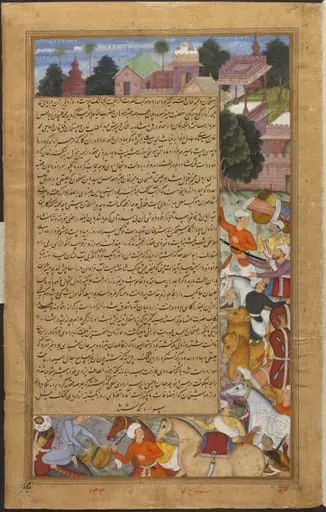
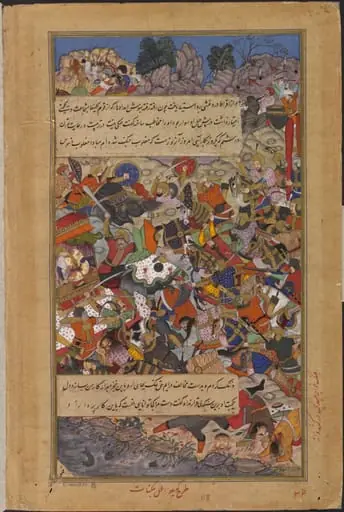
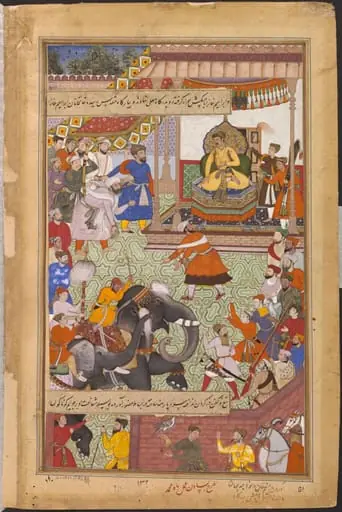
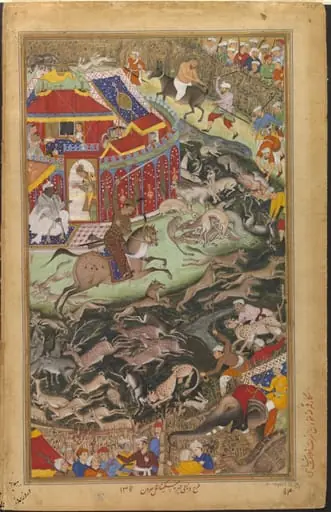
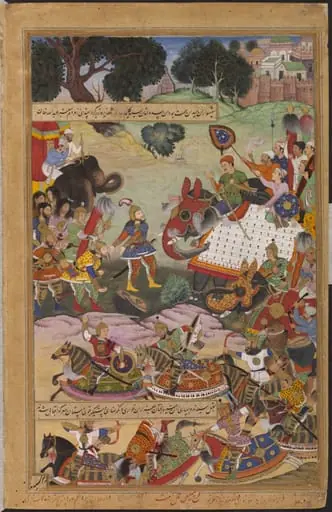
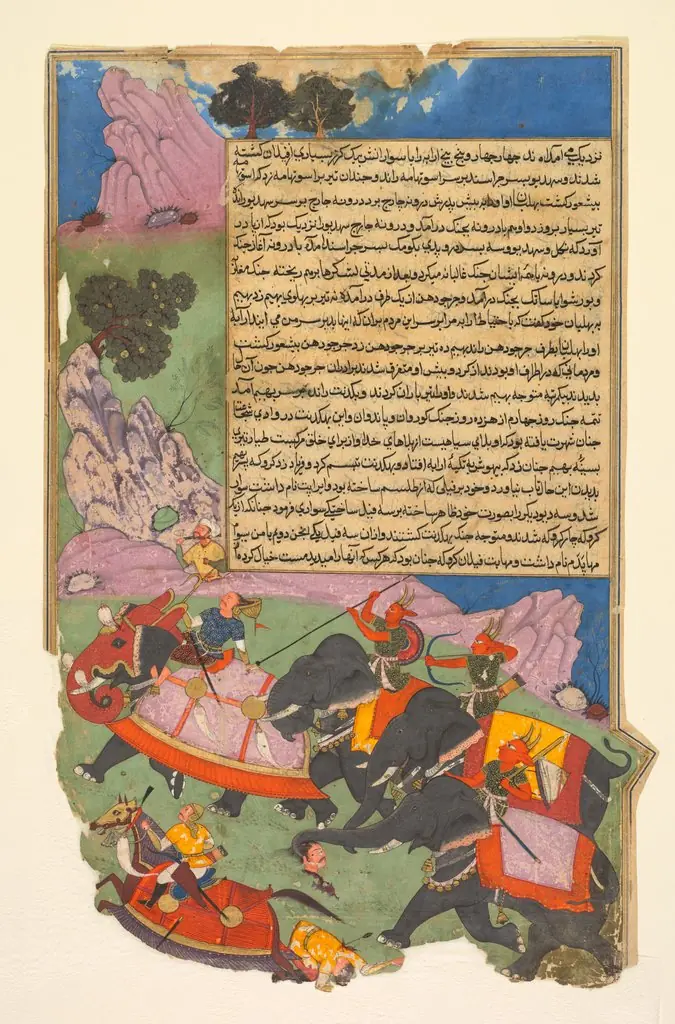
Ghatotkacha and three demons in his company chase Bhagadatta, from Bhishma-parva (volume six) of a Razm-nama (Book of Wars) adapted from the Sanskrit Mahabharata and translated into Persian by Mir Ghiyath al-Din Ali Qazvini, known as Naqib Khan (Persian, d. 1614), by Fazl, unspecified, 1616

Ghatotkacha and three demons in his company chase Bhagadatta, from Bhishma-parva (volume six) of a Razm-nama (Book of Wars) adapted from the Sanskrit Mahabharata and translated into Persian by Mir Ghiyath al-Din Ali Qazvini, known as Naqib Khan (Persian, d. 1614)

Fazl

1616

unspecified

From the collection of Cleveland Museum of Art
Dominant colour

Overview

Ghatotkacha and three demons in his company chase Bhagadatta, from Bhishma-parva (volume six) of a Razm-nama (Book of Wars) adapted from the Sanskrit Mahabharata and translated into Persian by Mir Ghiyath al-Din Ali Qazvini, known as Naqib Khan (Persian, d. 1614) is a 1616 unspecified by Fazl, a Baroque work, depicting Court of Jahangir, held at Cleveland Museum of Art.

Who painted this?
Fazl
When & what style?
1616 · Baroque
Where can I see it?
Cleveland Museum of Art

About this work

You see a wild battle scene: red-skinned demons on elephants charge toward a warrior in a chariot. The demons look identical, like copies of each other. This painting comes from a Persian translation of an ancient Indian epic. The Mughal emperor wanted the story in his court’s language. The artist turned magic into something you can see—repeating demons to show how one hero multiplied himself. If you like this, look up Mughal India, court of Jahangir (reigned 1605–27), made for Abd al-Rahim the Khan Khanan, Indian art for more works like it.

The story of this work

Overview

The red demons riding elephants were magically generated in multiples by Ghatotkacha, the son of one of the protagonists of Book of Wars . Though created by magic, the elephant-riding demons still caused problems for their adversaries and forced them to retreat. This scene took place on the fourth of 18 days of heated battle. The Mughal emperor Akbar (reigned 1556–1605) commissioned a translation of the ancient Sanskrit epic Mahabharata into the Mughal court language of Persian and distributed copies to members of his court. He believed that the epic provided insight into how to rule the…

Read the full account in the museum source.

About the artist

Artist

Fazl

This painter worked in a Mughal workshop where artists turned India’s epic stories into delicate Persian-style paintings.

See the richer artist page

More by Fazl

Artifact World Gallery — 100,000 artworks Get the app