Artwork
Cap pe soclu cu evantai
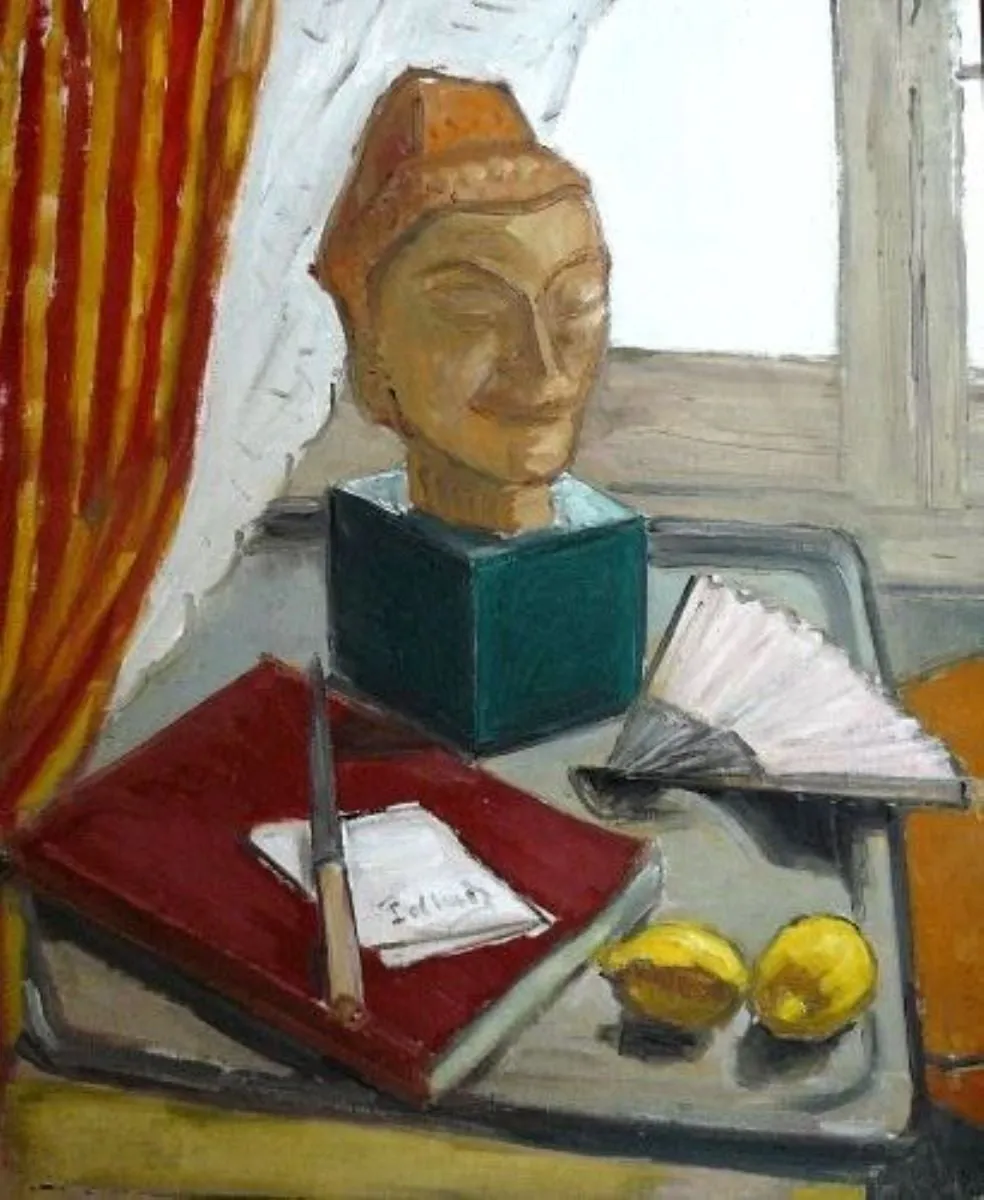
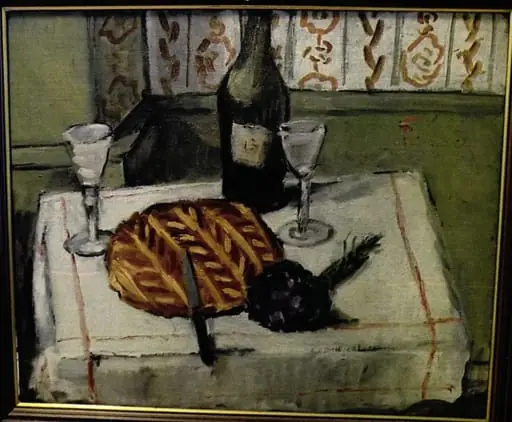
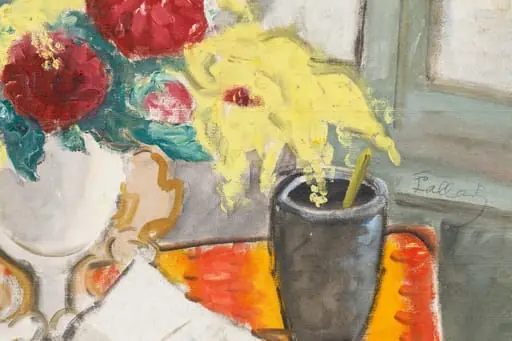
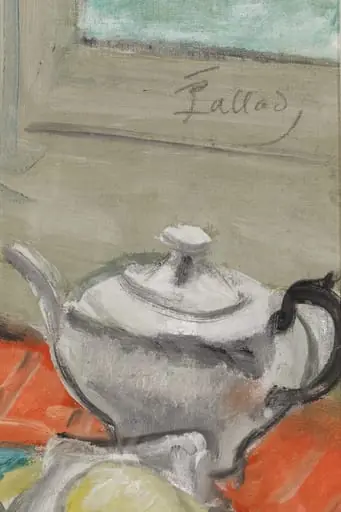
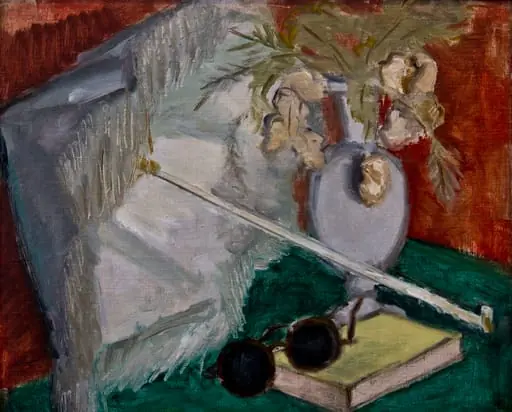
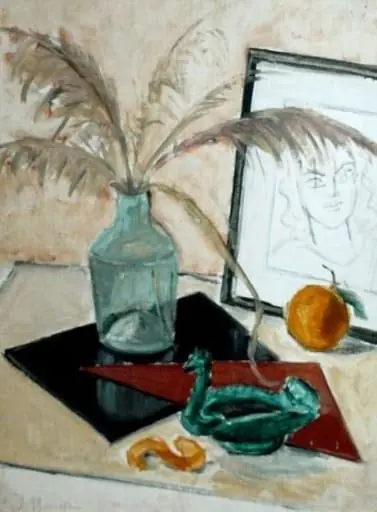
Cap pe soclu cu evantai is an unspecified painting by Theodor Pallady. It dates from 1949 and is held in the collection of the Art museum of Craiova.
About this work
Overview
Created around 1949 by Theodor Pallady, this small still life presents a quiet arrangement of domestic objects on a table. The work is part of the Museum of Ethnography’s collection and reflects the artist’s late-period interest in simplified forms and tactile surfaces. Its composition avoids narrative complexity, focusing instead on the quiet presence of ordinary items.
Subject & Meaning
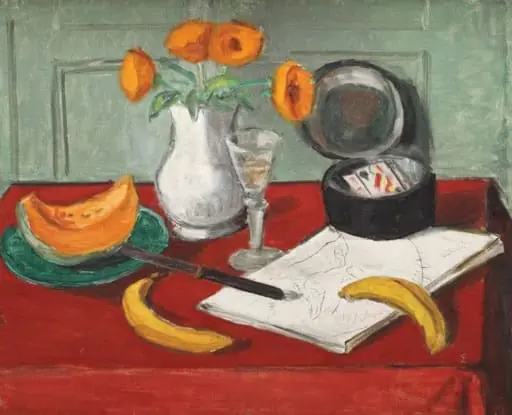
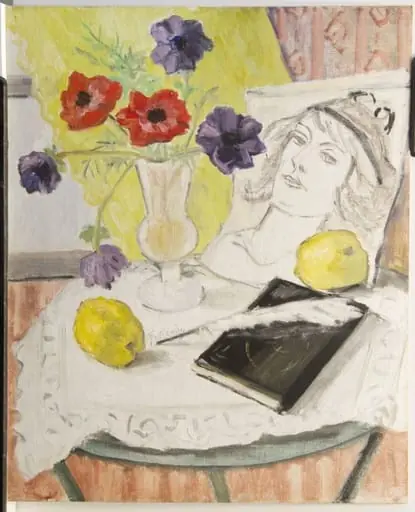
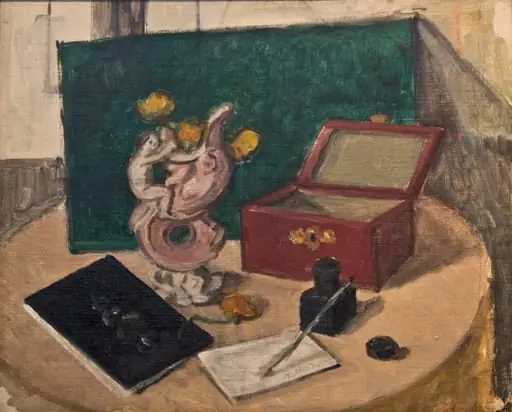
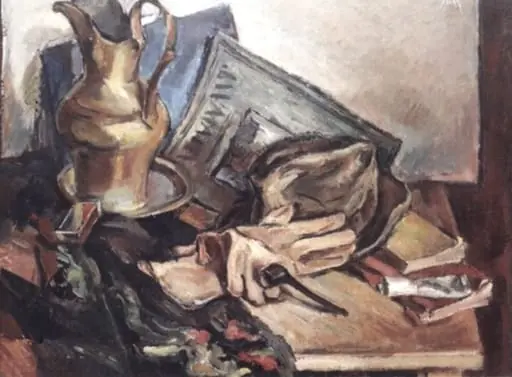
A clay bust in a hat rests atop a dark green box, flanked by a red cloth, a knife, scattered papers, two yellow lemons, a fan, and an open book. These objects suggest a personal, possibly studio-bound space—items used in daily life or ritual. The absence of human figures shifts attention to the stillness and materiality of the objects, evoking contemplation rather than storytelling.
Technique & Style
Pallady applied paint with thick, uneven brushstrokes, creating a rough, tactile surface. The impasto technique emphasizes texture over smoothness, giving the objects a physical weight. Colors are restrained but deliberate: bold reds, vivid yellows, and muted earth tones anchor the composition without ornamentation, reinforcing a sense of quiet realism.
History & Provenance
The work entered the Museum of Ethnography’s collection after Pallady’s death, likely through donation or acquisition from his estate. Its placement in an ethnographic institution, rather than a fine arts museum, suggests an interest in its cultural or domestic resonance. No earlier exhibition history is widely documented, indicating its quiet, personal character.
Context
Painted in the late 1940s, this piece emerges from a period when Pallady moved away from earlier academic styles toward more introspective, reduced compositions. Influenced by Romanian folk aesthetics and post-war austerity, the work reflects a shift toward simplicity and material honesty, aligning with broader European trends in post-expressionist still life.
Legacy
Though not widely exhibited, this painting exemplifies Pallady’s late artistic trajectory—marked by restraint, tactile surface, and symbolic quietude. It contributes to understanding how Romanian modernists reinterpreted everyday objects as vessels of memory and presence, influencing later generations interested in materiality over spectacle.
Artist & collection
Artist
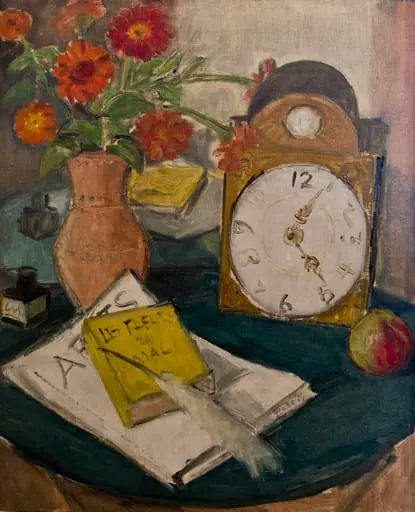
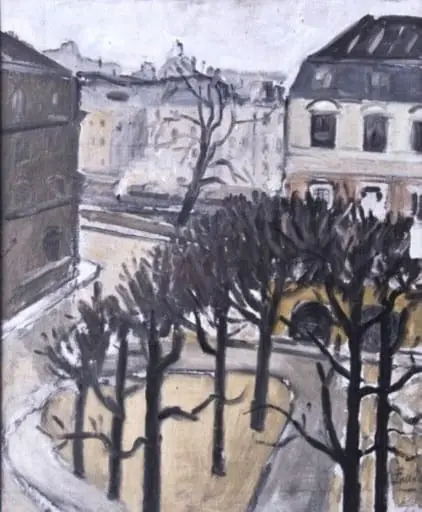
Theodor Pallady made still lifes and interiors in early 20th-century Bucharest. His Place Dauphine shows a quiet Parisian square, while Natură moartă (Ulcică cu flori și chibrituri) piles everyday objects on a table.…