Artwork
Acidulé
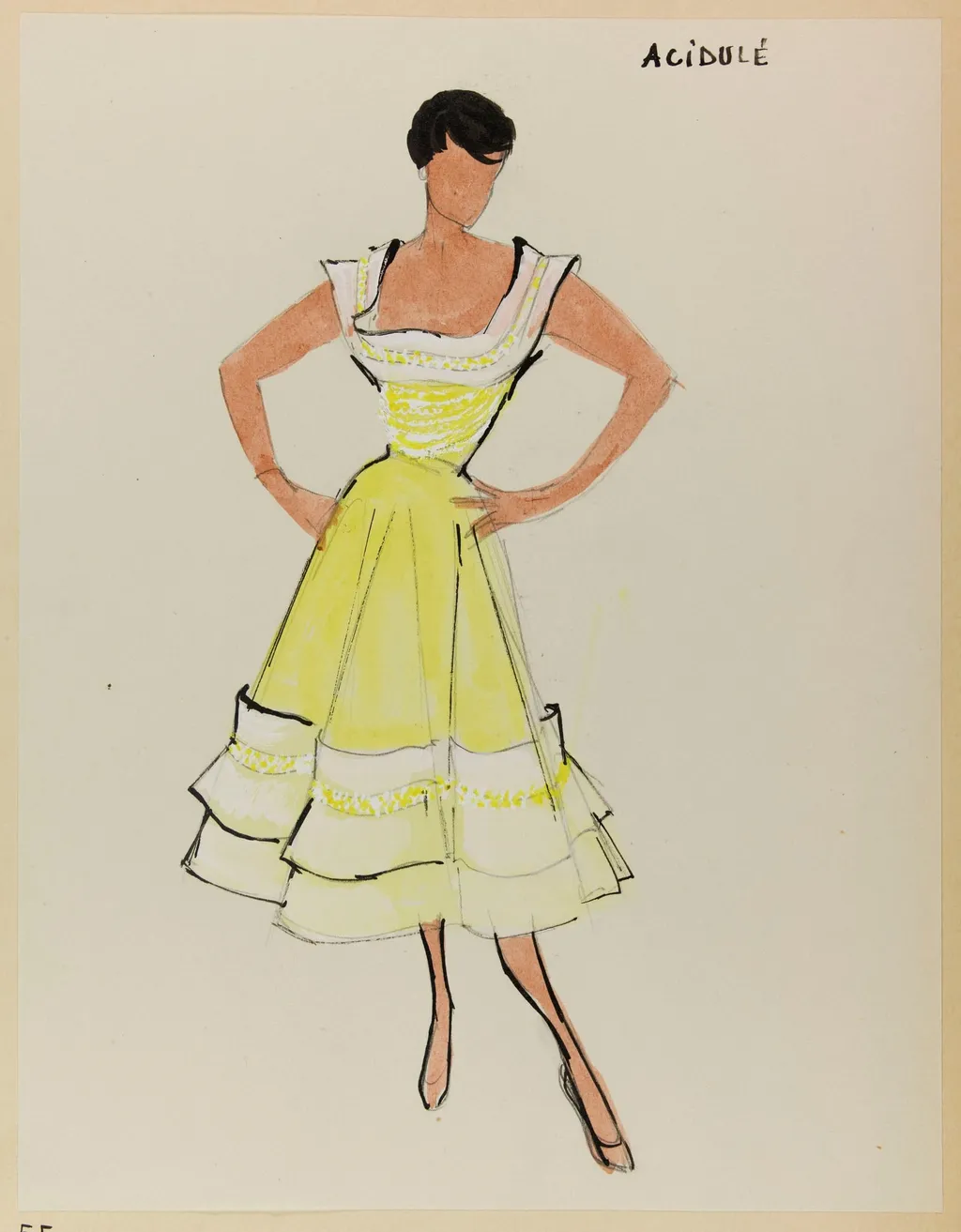
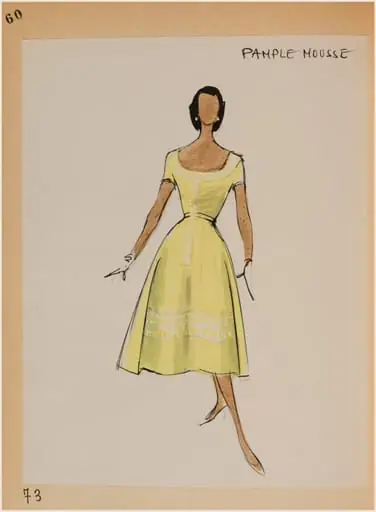
Acidulé is a drawing by Marie-Louise Carven. It dates from 1953 and is held in the collection of the Palais Galliera - Musée de la Mode de la Ville de Paris.
About this work
Overview
It resides in the collection of the Museum of Ethnography, reflecting its significance as a document of mid-century French fashion practice.
Created around 1953, *Acidulé* is a fashion sketch by Marie-Louise Carven, founder of the Parisian house Carven established in 1945. Executed in ink and watercolor, it captures an early concept for a dress intended for a petite frame. The drawing’s spontaneous quality suggests it was a preliminary design, not a polished presentation piece. It resides in the collection of the Museum of Ethnography, reflecting its significance as a document of mid-century French fashion practice.
Subject & Meaning
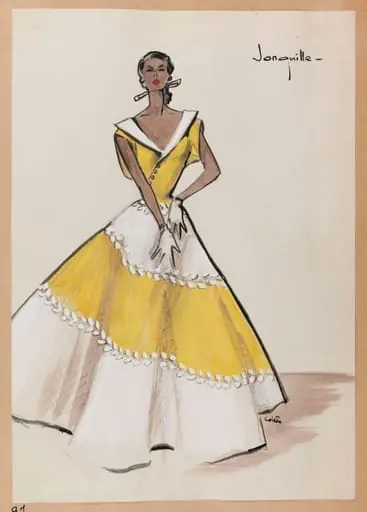
The sketch depicts a woman in a bright yellow dress with a fitted bodice and a full, ruffled skirt, her hands resting on her hips in a confident stance. The white collar and subtle patterned trim add refined detail. The title *Acidulé*, meaning 'sour' or 'tart' in French, evokes a playful, energetic tone—perhaps referencing the dress’s vivid hue and lively silhouette. The pose and color suggest a sense of youthful vitality, aligning with Carven’s focus on wearable, cheerful designs.
Technique & Style
Carven rendered the design with loose, fluid lines and translucent washes of color, emphasizing movement over precision. The sketch’s immediacy reveals her working method: rapid, intuitive mark-making that prioritized form and mood over technical finish. The background is left largely blank, directing focus to the garment’s structure and the figure’s posture. This approach reflects the practical needs of a designer developing ideas for production.
History & Provenance
Marie-Louise Carven launched her label in 1945 and was among the first Parisian couturiers to develop a ready-to-wear line, making fashion more accessible. *Acidulé* emerged during this period of innovation, capturing a moment when haute couture began to intersect with mass production. The sketch entered the Museum of Ethnography’s collection as part of a broader effort to document everyday fashion as cultural artifact, rather than solely ceremonial or elite attire.
Context
In the early 1950s, Parisian fashion was redefining itself after wartime austerity. Carven’s designs catered to women seeking practical elegance, often emphasizing light fabrics and proportions suited to smaller frames. *Acidulé* reflects this shift—its cheerful color and unstructured silhouette contrasted with the more rigid silhouettes of contemporaries. The sketch also signals the growing importance of preparatory drawings in the transition from couture to prêt-à-porter.
Legacy
Though not a finished garment, *Acidulé* exemplifies Carven’s influence on democratizing fashion. Her sketches, like this one, helped bridge the gap between artistic vision and commercial production. Today, such drawings are valued not only for their aesthetic but as records of design processes that shaped modern ready-to-wear. The piece remains a quiet testament to the role of women designers in redefining postwar style.
Artist & collection
Artist
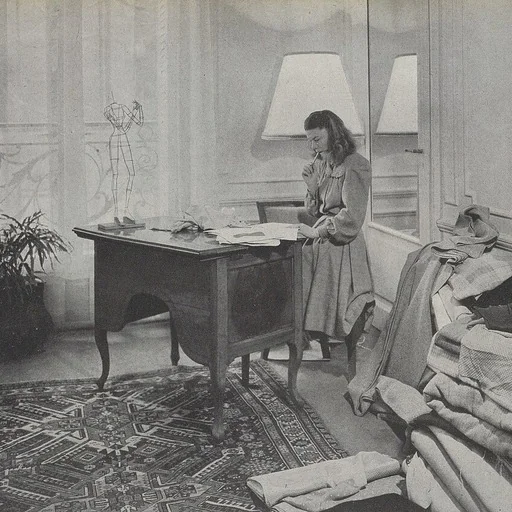
Marie-Louise Carven (31 August 1909 – 8 June 2015), born Carmen de Tommaso, was a French fashion designer who founded the house of Carven in 1945.
Museum
Palais Galliera - Musée de la Mode de la Ville de Paris
Continue through works from the same source collection.
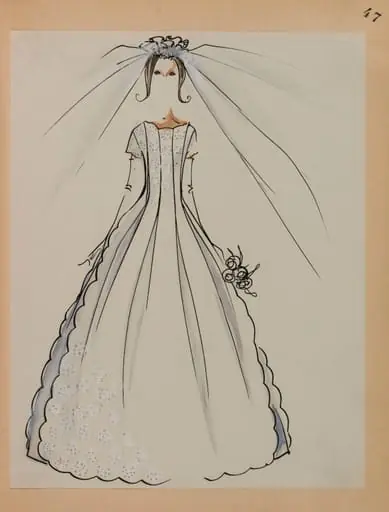 Robe de mariée festonnée et son voile
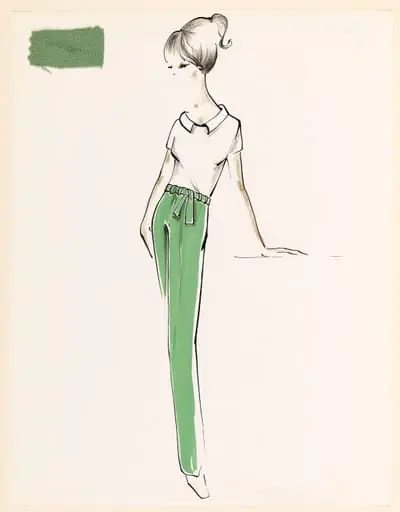 Haut blanc à manches courtes et pantalon vert à ceinture nouée
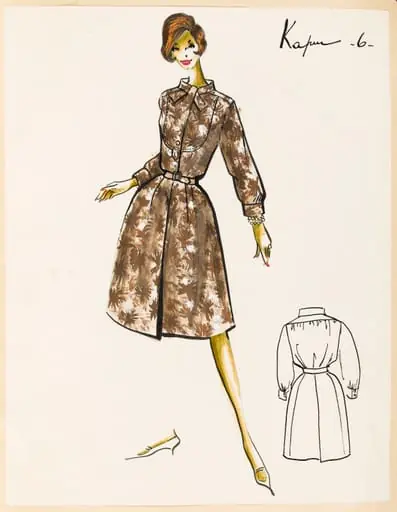 Kapur
Kapur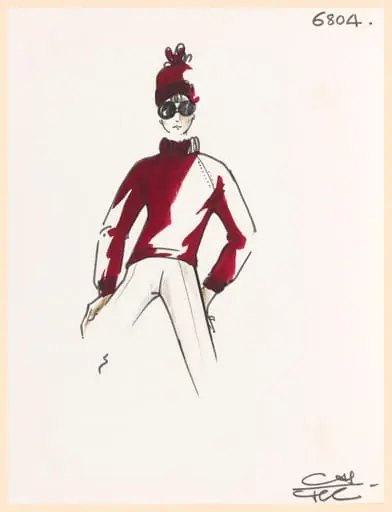 Pull-over à manches longues pourpre, bonnet assorti, pantalon et lunettes de soleil
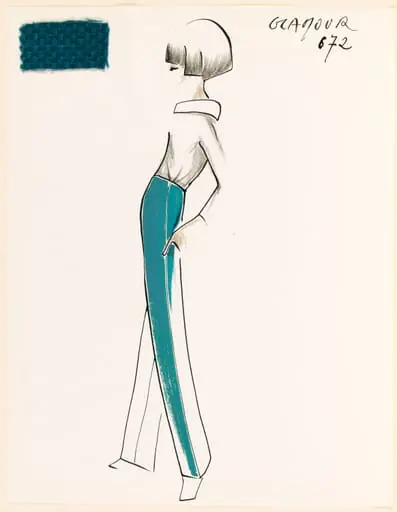 GLAMOUR
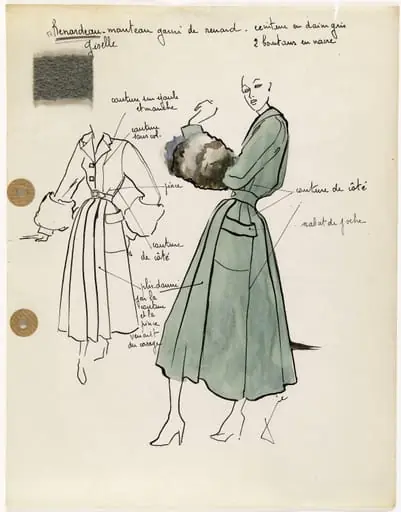 'Renardeau'
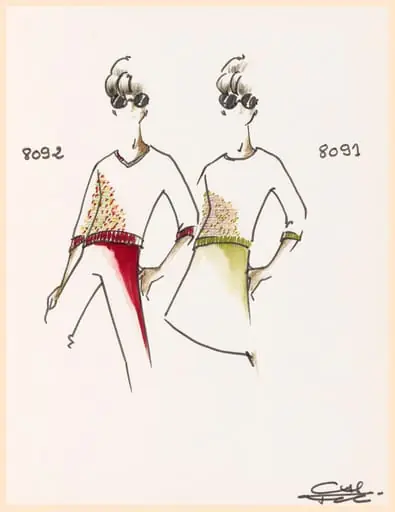 Pull-over à manches trois quarts et à encolure V à motifs multicolores, pantalon cerise et lunettes de soleil
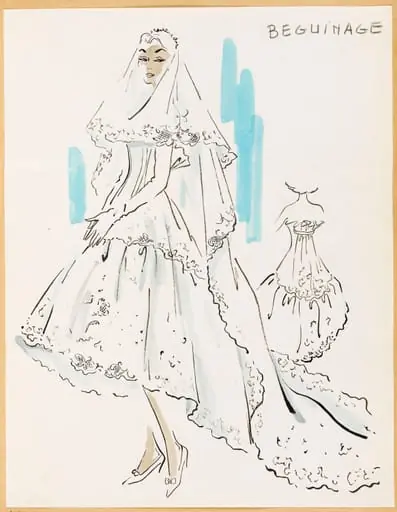 Béguinage