Artwork
Aligator - Arc-en-ciel - Tamise - Martin-pêcheur
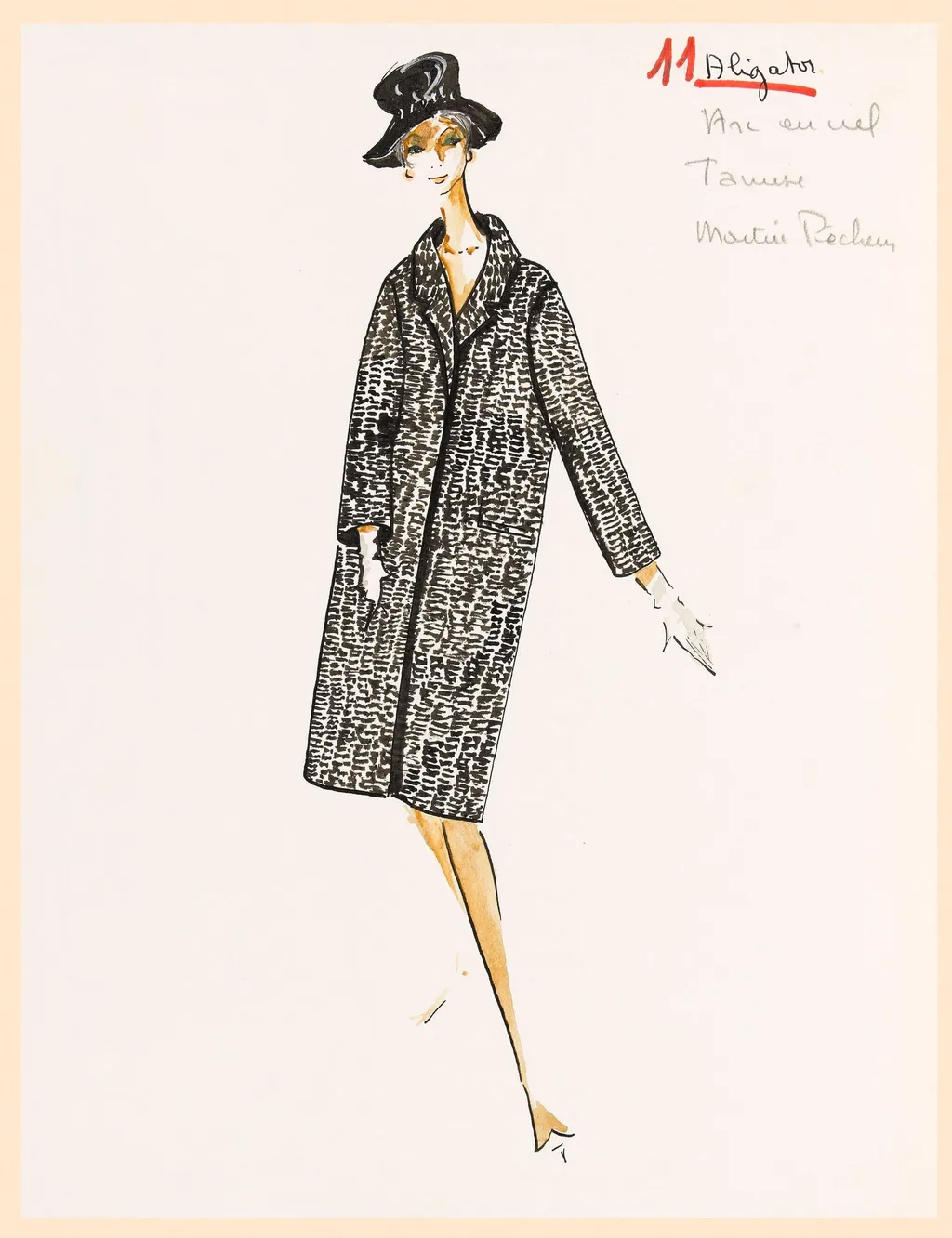
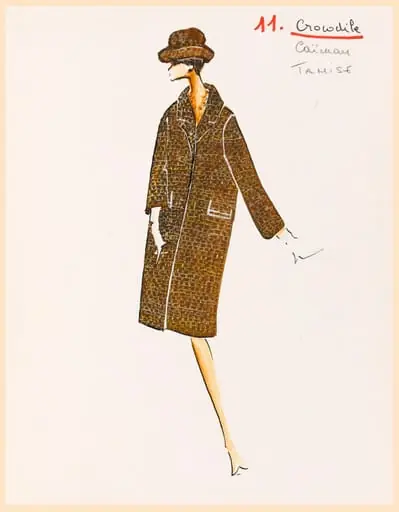
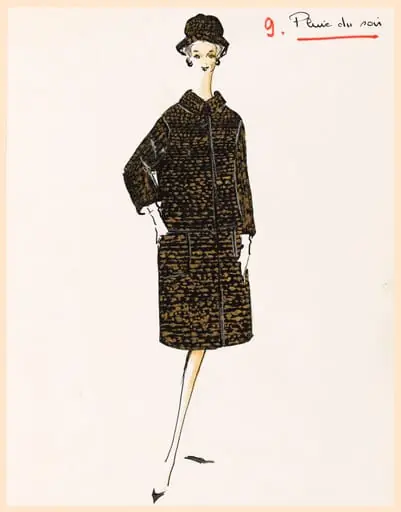
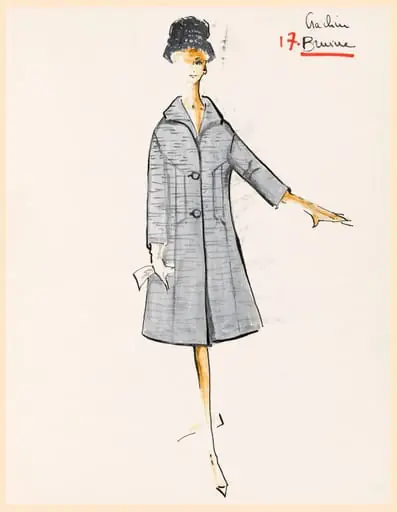
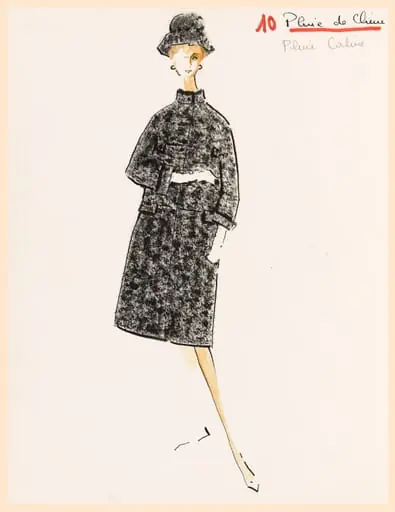
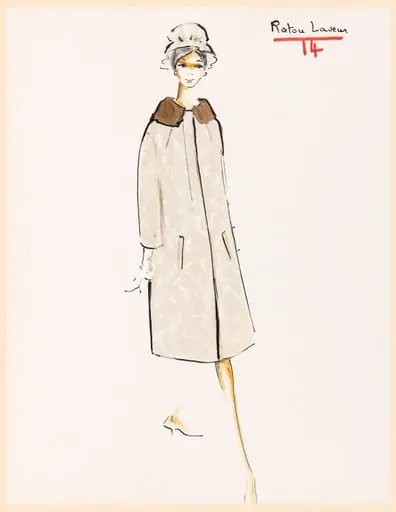
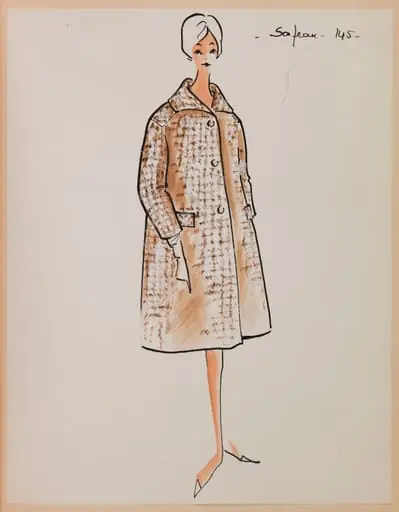
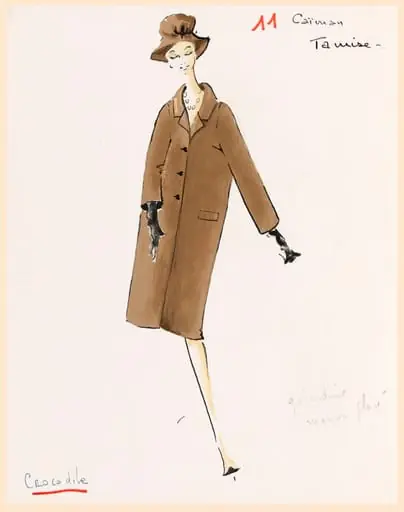
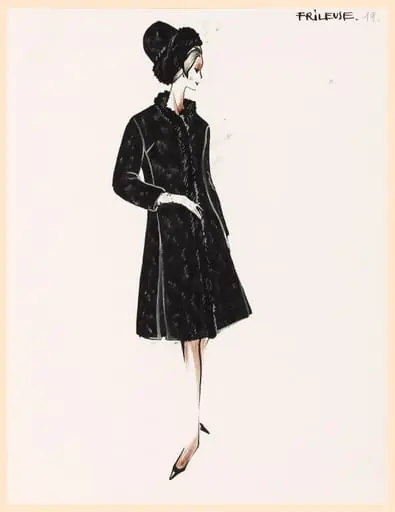
Aligator - Arc-en-ciel - Tamise - Martin-pêcheur is a drawing by Marie-Louise Carven. It dates from 1967 and is held in the collection of the Palais Galliera - Musée de la Mode de la Ville de Paris.
About this work
Overview
The piece is held in the Museum of Ethnography, reflecting its significance beyond commercial fashion into the realm of visual documentation.
Created around 1967, this drawing by Marie-Louise Carven is part of a series titled *Aligator - Arc-en-ciel - Tamise - Martin-pêcheur*. Though best known as a fashion designer, Carven extended her creative vision into graphic art, producing detailed illustrations that captured the movement and texture of clothing. The piece is held in the Museum of Ethnography, reflecting its significance beyond commercial fashion into the realm of visual documentation.
Subject & Meaning
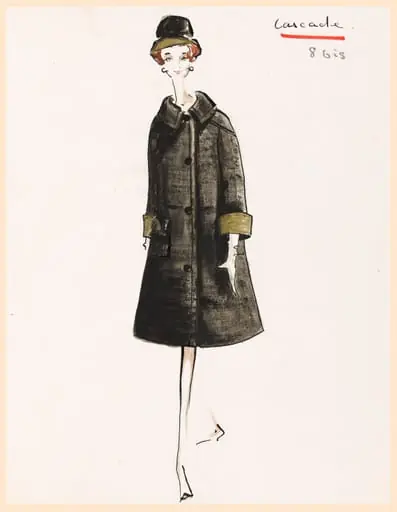
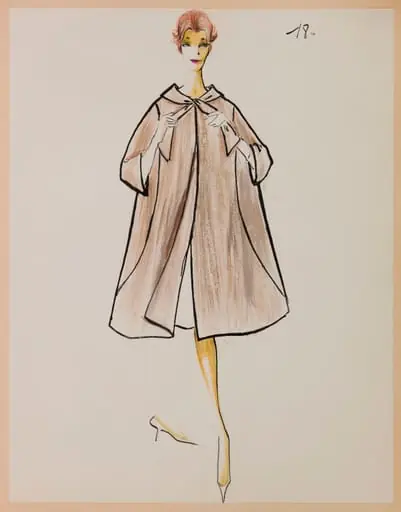
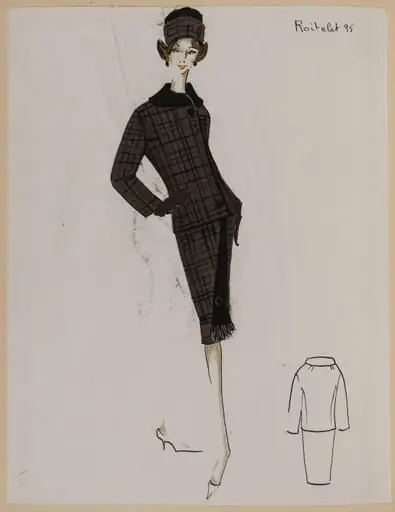
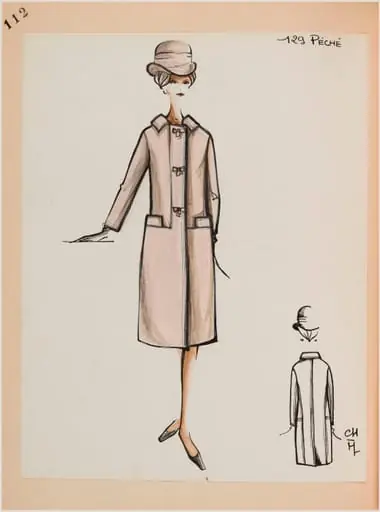
The drawing depicts a woman in mid-stride, dressed in a black-and-white patterned coat, black hat, white gloves, and a matching purse. Her posture suggests quiet motion, one hand in her pocket, the other holding a handkerchief. The composition conveys a sense of composed elegance, emphasizing the relationship between the body and the garments it wears. The absence of facial detail shifts focus to the silhouette and fabric, reinforcing Carven’s interest in form and function.
Technique & Style
Carven employed fine, controlled linework to render textures ranging from the smoothness of skin to the coarse weave of the coat. Shading and hatching create subtle depth, while the stark white background isolates the figure, heightening attention to detail. The drawing’s precision reflects her background in tailoring, where minute distinctions in fabric and fit were essential. Her technique merges observational drawing with an intimate understanding of garment construction.
History & Provenance
The drawing entered the collection of the Museum of Ethnography as part of a broader effort to document 20th-century fashion as cultural artifact. Carven, who founded her label in 1945, was among the first Parisian designers to launch a prêt-à-porter line. This work, produced during the height of her influence, represents a lesser-known facet of her practice—personal, non-commercial illustrations that preserved her aesthetic principles outside the runway.
Context
In the 1960s, fashion illustration evolved as designers sought to articulate style beyond garments themselves. Carven’s drawings aligned with a growing interest in capturing movement and daily life in fashion. Her focus on petite silhouettes and wearable elegance resonated with postwar urban women. This piece reflects a moment when fashion design intersected with graphic art, documenting not just clothing but the rhythm of its wearers.
Legacy
Carven’s drawings, including this one, remain rare examples of a couturier translating design philosophy into standalone visual art. They offer insight into how fashion was conceived beyond production, as a study of form, motion, and identity. While her brand faded from prominence, these works preserve her contribution to the visual language of modern French dress and the quiet dignity of everyday attire.
Artist & collection
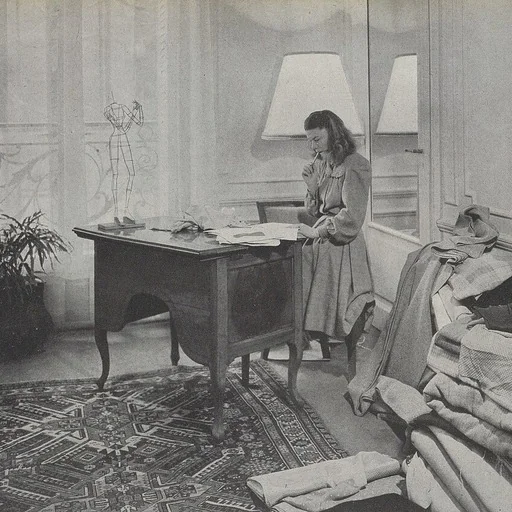
Artist
Marie-Louise Carven (31 August 1909 – 8 June 2015), born Carmen de Tommaso, was a French fashion designer who founded the house of Carven in 1945.
Museum
Palais Galliera - Musée de la Mode de la Ville de Paris
Continue through works from the same source collection.
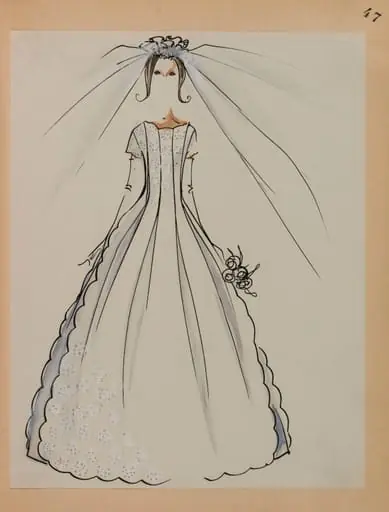 Robe de mariée festonnée et son voile
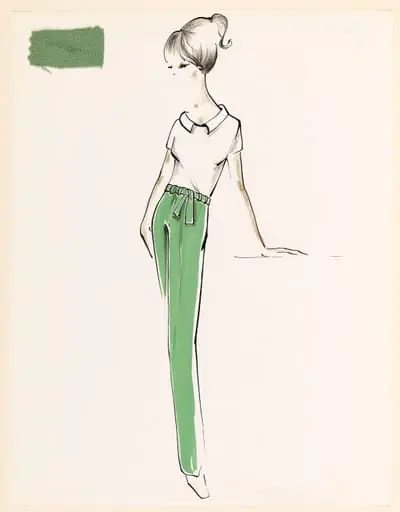 Haut blanc à manches courtes et pantalon vert à ceinture nouée
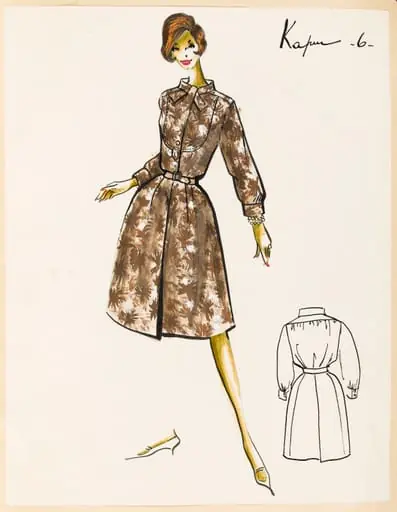 Kapur
Kapur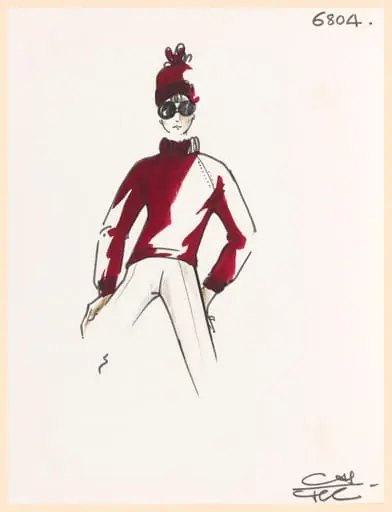 Pull-over à manches longues pourpre, bonnet assorti, pantalon et lunettes de soleil
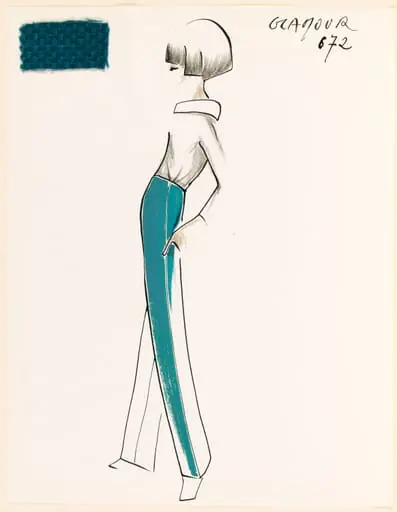 GLAMOUR
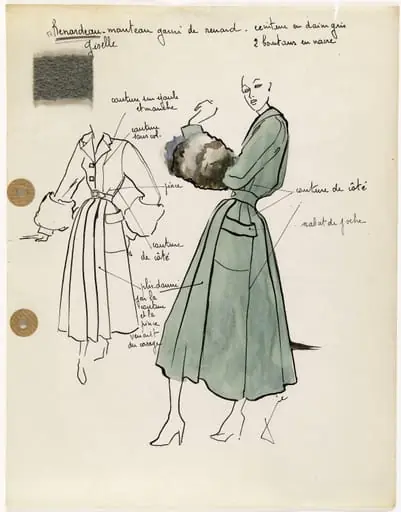 'Renardeau'
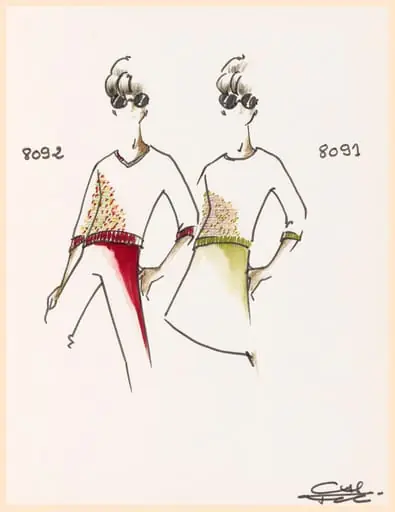 Pull-over à manches trois quarts et à encolure V à motifs multicolores, pantalon cerise et lunettes de soleil
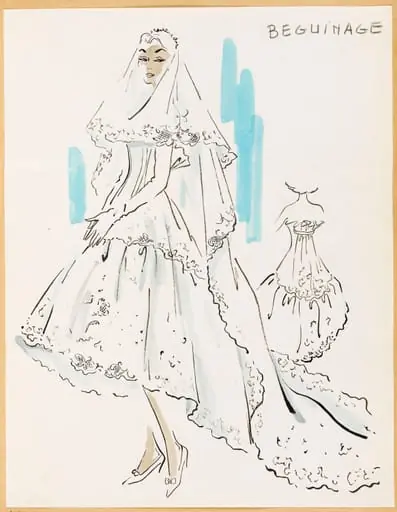 Béguinage