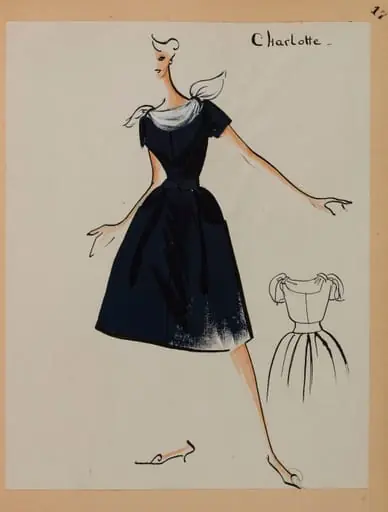
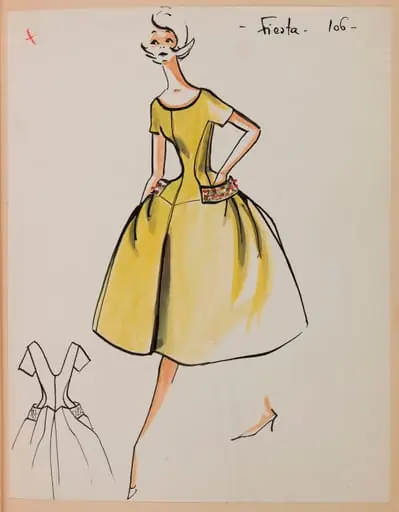
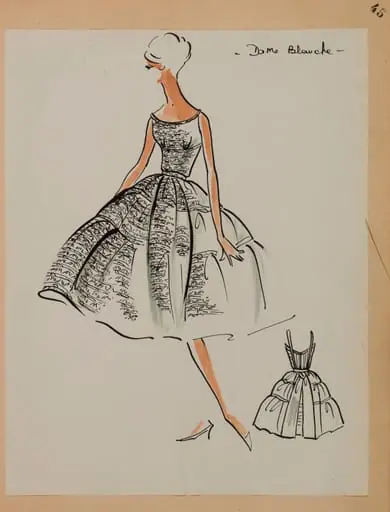
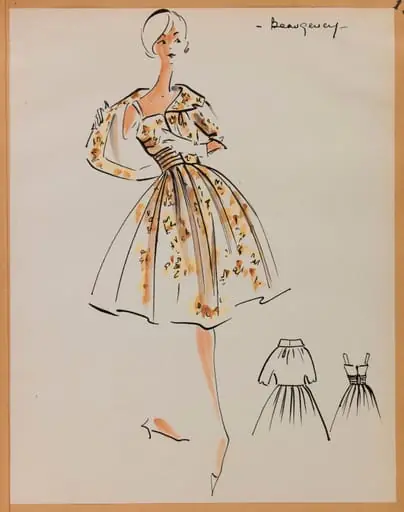
Artwork
Anis
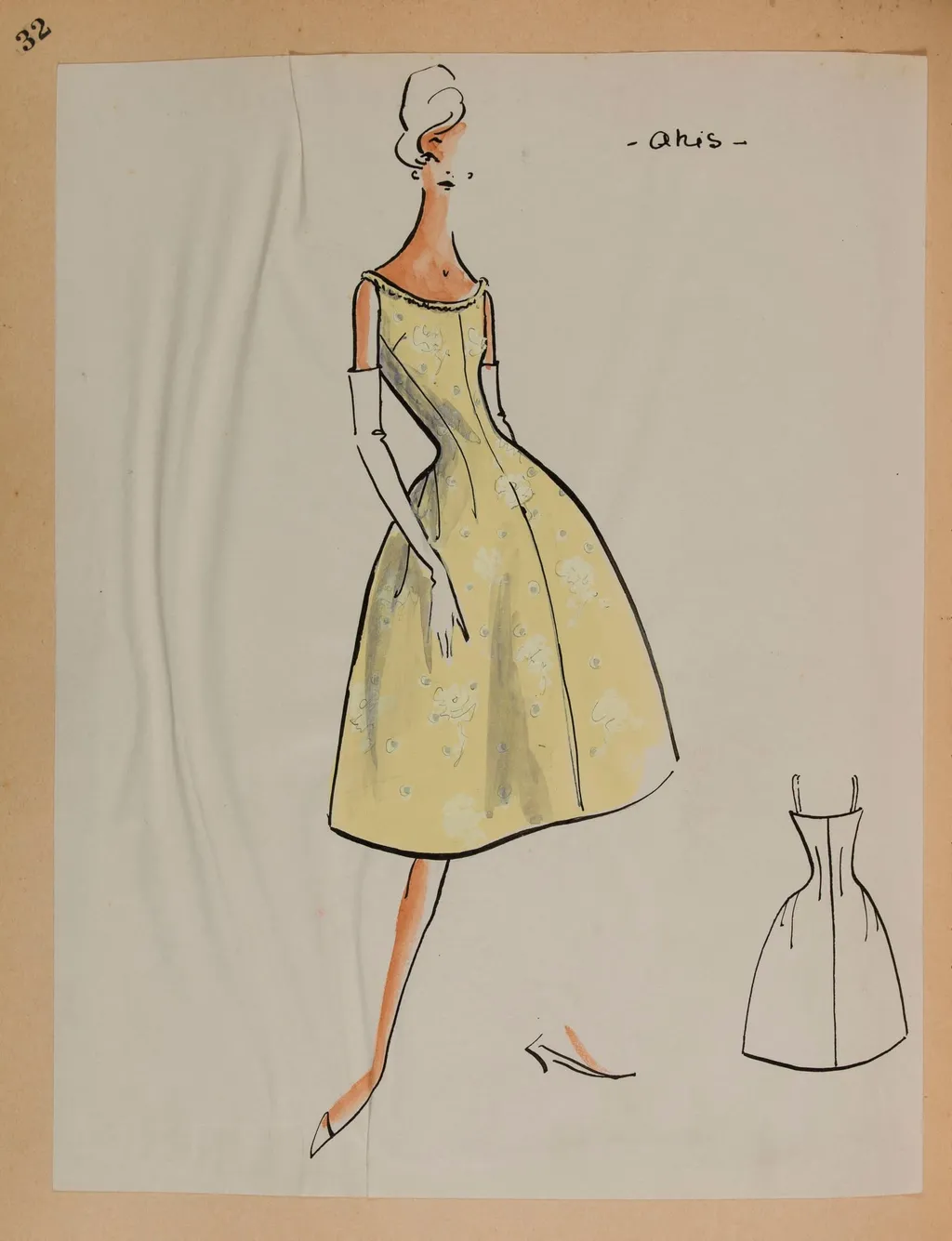
Anis is a drawing by Marie-Louise Carven. It dates from 1958 and is held in the collection of the Palais Galliera - Musée de la Mode de la Ville de Paris.
About this work
Overview
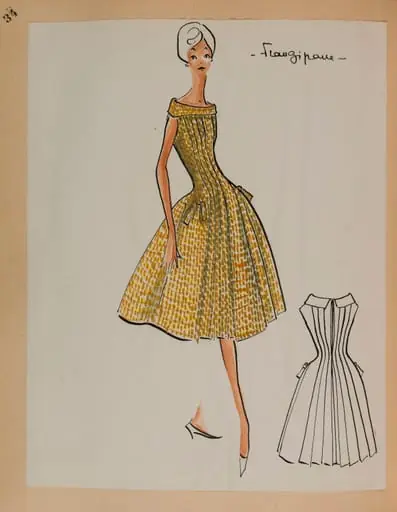
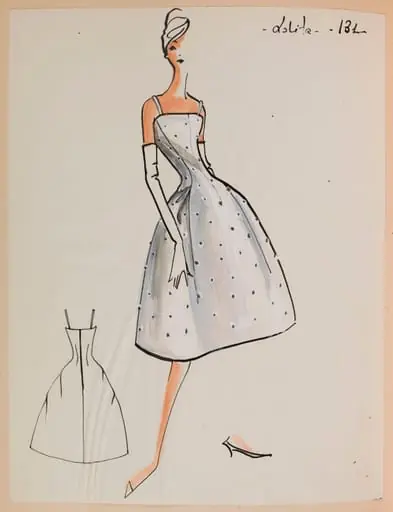
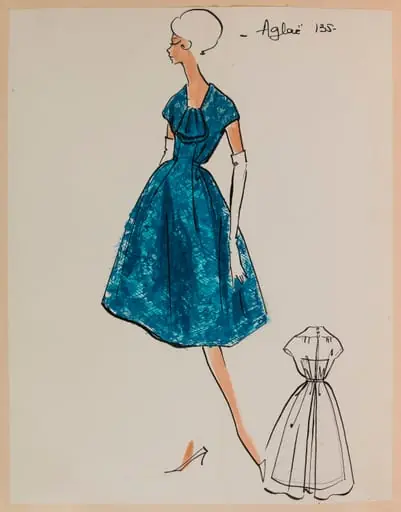
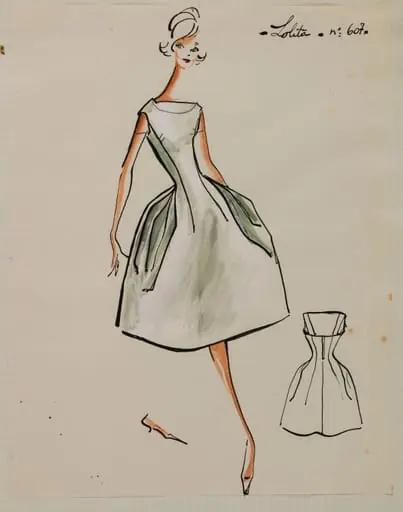
The drawing depicts a lightweight, daywear dress designed for ease and movement, reflecting Carven’s focus on practical elegance for smaller frames.
Anis is a fashion sketch created around 1958 by Marie-Louise Carven, founder of the Parisian fashion house Carven established in 1945. The drawing depicts a lightweight, daywear dress designed for ease and movement, reflecting Carven’s focus on practical elegance for smaller frames. Executed in ink with fluid lines, it captures both the garment’s form and the implied motion of its wearer. The sketch is part of the Museum of Ethnography’s collection, highlighting its significance beyond runway fashion.
Subject & Meaning
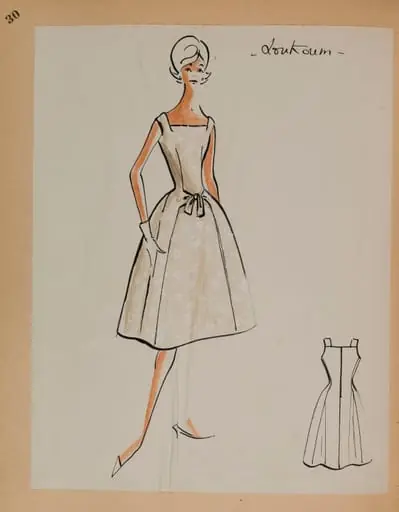
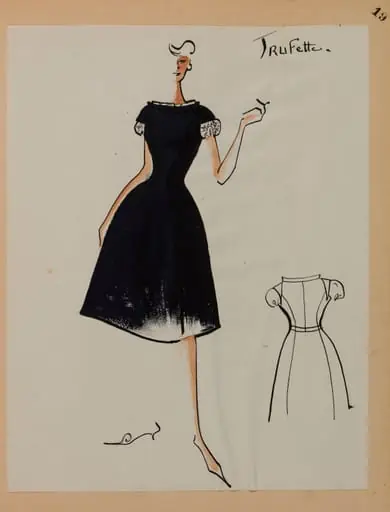
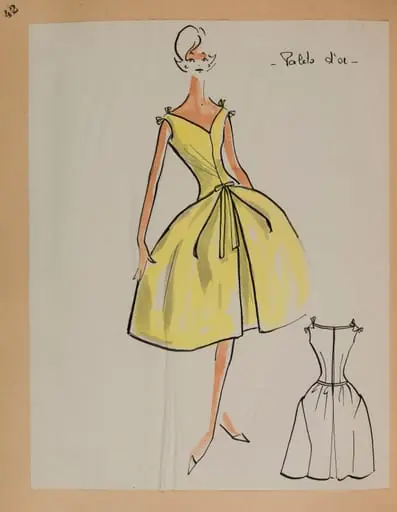
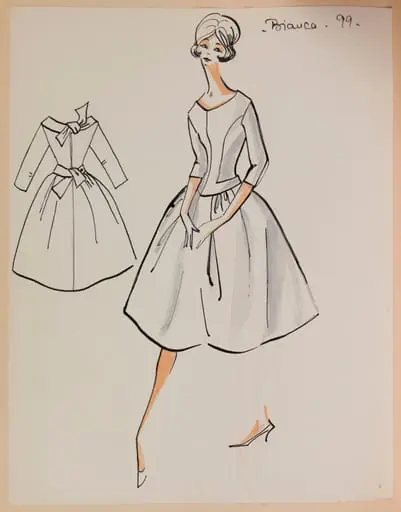
The figure in Anis wears a simple, flared dress with short sleeves and a round neckline, rendered in pale yellow with faint, irregular motifs suggesting foliage. Her posture—slightly asymmetrical, one foot forward—conveys natural ease rather than staged pose. The design avoids ornamentation, emphasizing comfort and understated grace. This reflects Carven’s philosophy of clothing as an extension of daily life, not spectacle, tailored to the active, modern woman of the late 1950s.
Technique & Style
Carven employed loose, rapid ink strokes to suggest fabric drape and body movement, avoiding rigid outlines. The dress’s silhouette is defined by flowing contours, while the abstract floral motifs are lightly suggested rather than detailed. A secondary, smaller frontal view in the corner clarifies the fitted waist and A-line skirt. The technique prioritizes immediacy and clarity over finish, characteristic of working drawings used to communicate design intent to ateliers or clients.
History & Provenance
Created during Carven’s expansion into prêt-à-porter, Anis represents a shift toward accessible fashion design in postwar France. The sketch was likely used internally or presented to clients before production. It entered the Museum of Ethnography’s collection as part of a broader effort to document everyday dress as cultural artifact, distinguishing it from high couture archives and affirming its role in shaping modern women’s wardrobes.
Context
In the late 1950s, Parisian fashion was diversifying as ready-to-wear gained legitimacy. Carven, one of the first couturiers to embrace this trend, designed garments that balanced sophistication with wearability. Anis aligns with broader societal changes—women’s increasing mobility, demand for practical clothing, and the decline of rigid formal dress codes. The sketch embodies this transition, bridging haute couture tradition with emerging mass-market sensibilities.
Legacy
Anis stands as a quiet testament to Carven’s influence on democratizing fashion. Its unadorned form and focus on fit over decoration prefigured later minimalist trends. Preserved in an ethnographic context, the sketch is valued not for celebrity or rarity, but for its representation of everyday design thinking. It remains a reference point in studies of mid-century women’s wear and the evolution of accessible fashion.
Artist & collection
Artist
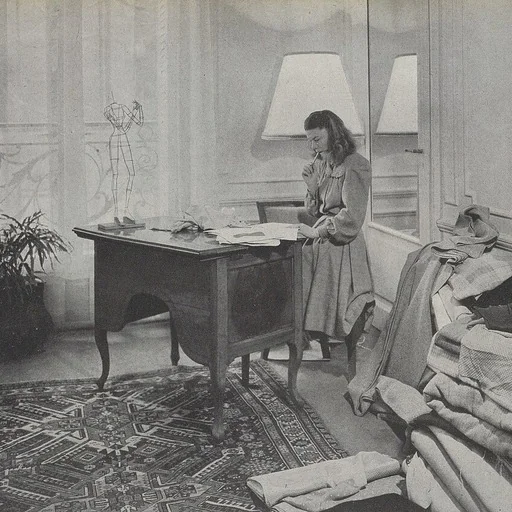
Marie-Louise Carven (31 August 1909 – 8 June 2015), born Carmen de Tommaso, was a French fashion designer who founded the house of Carven in 1945.
Museum
Palais Galliera - Musée de la Mode de la Ville de Paris
Continue through works from the same source collection.
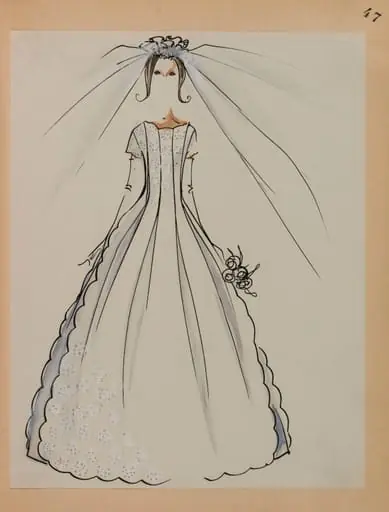 Robe de mariée festonnée et son voile
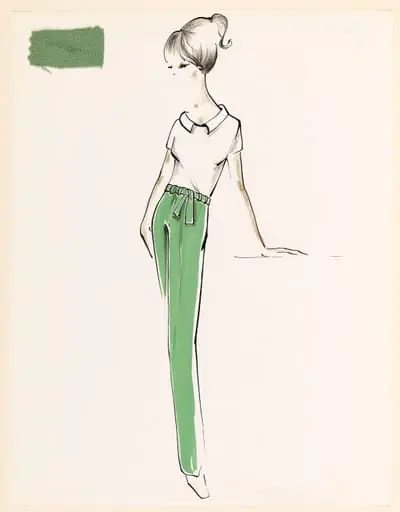 Haut blanc à manches courtes et pantalon vert à ceinture nouée
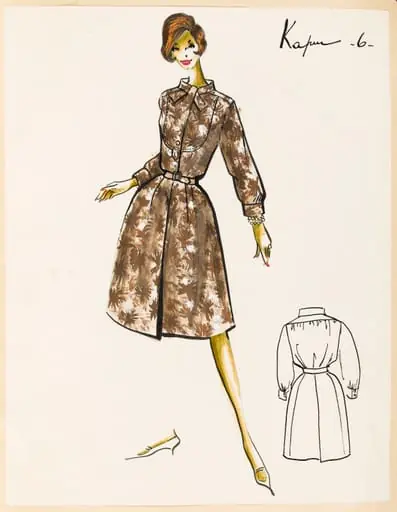 Kapur
Kapur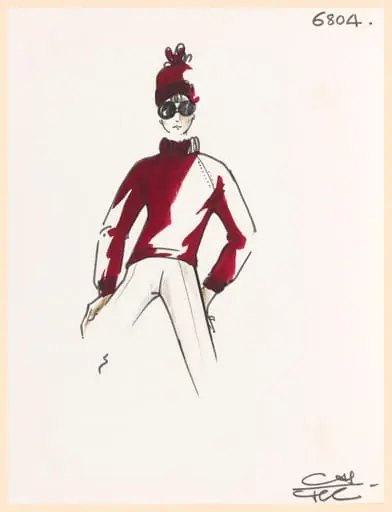 Pull-over à manches longues pourpre, bonnet assorti, pantalon et lunettes de soleil
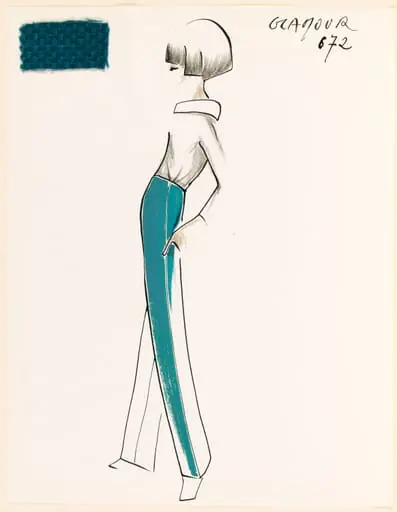 GLAMOUR
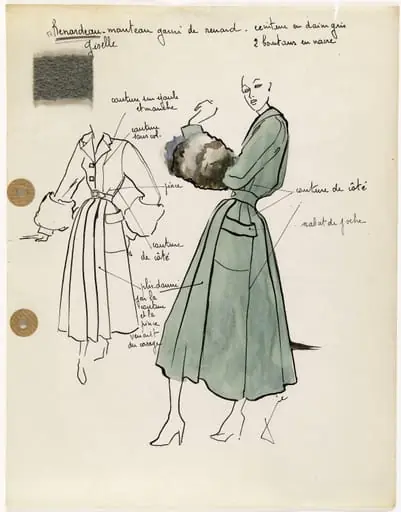 'Renardeau'
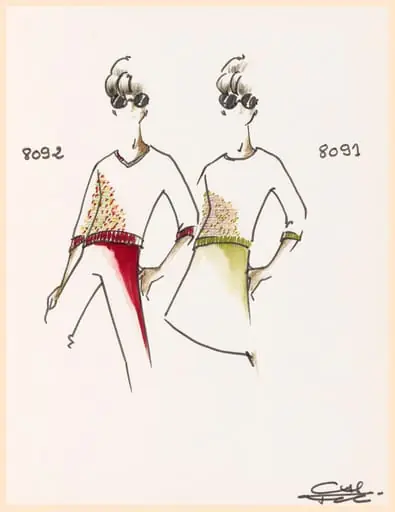 Pull-over à manches trois quarts et à encolure V à motifs multicolores, pantalon cerise et lunettes de soleil
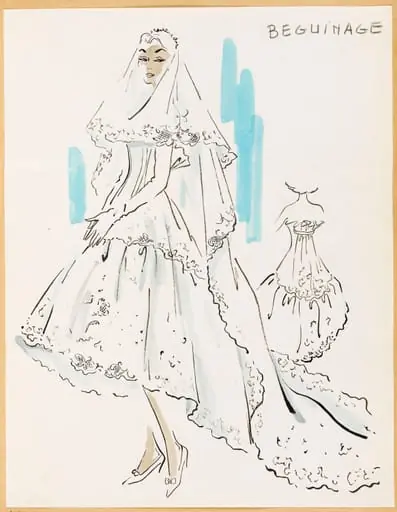 Béguinage