Artwork
Bernard Buffet
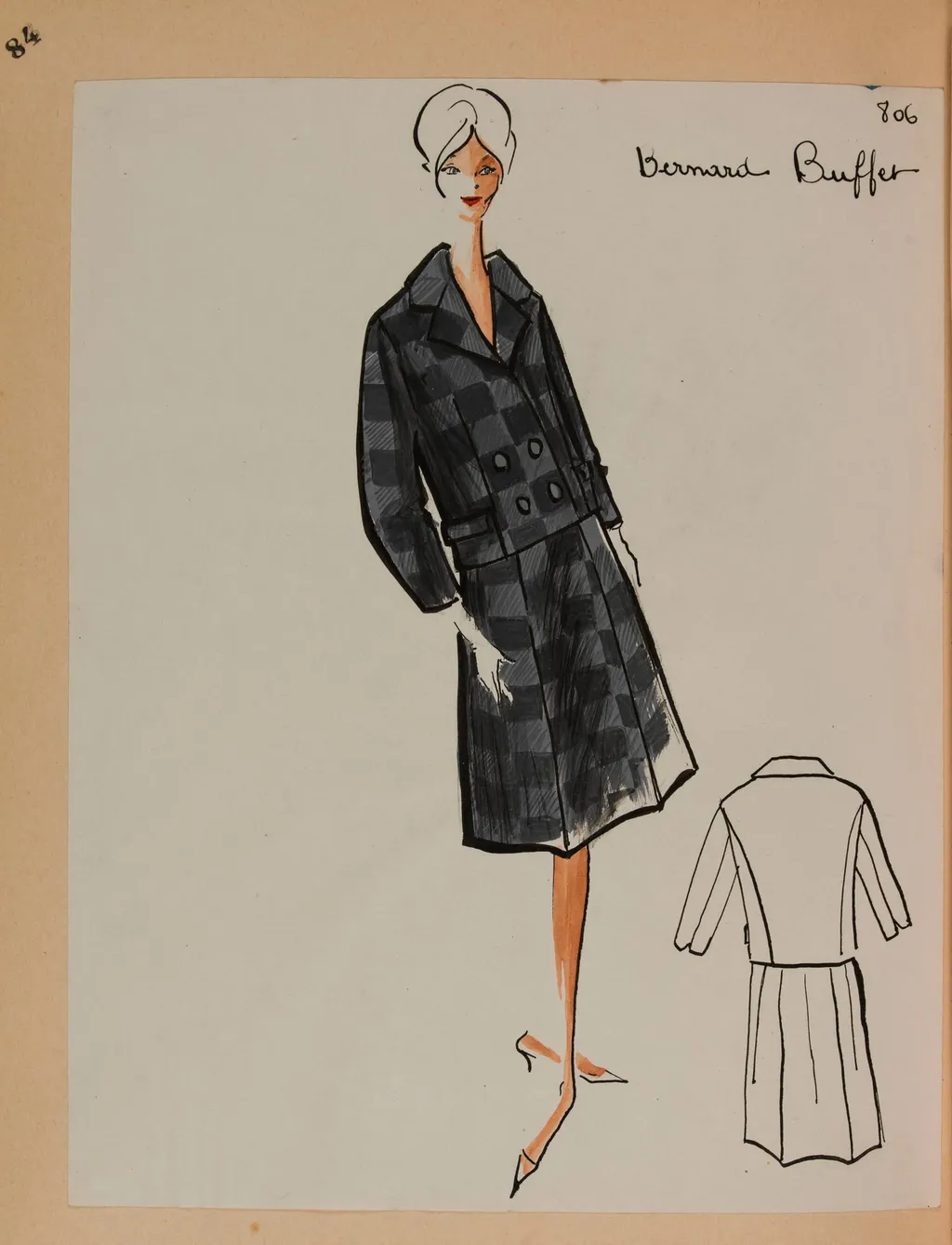
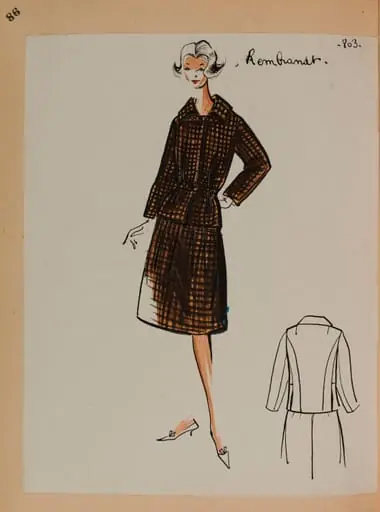
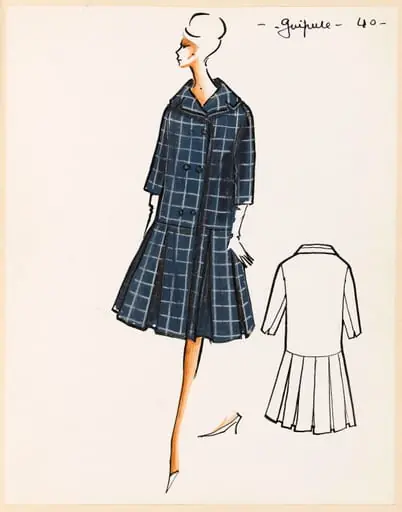
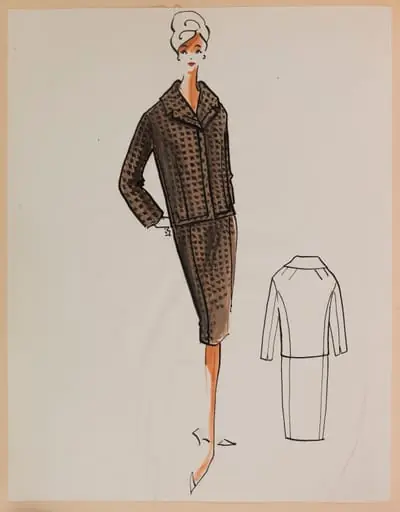
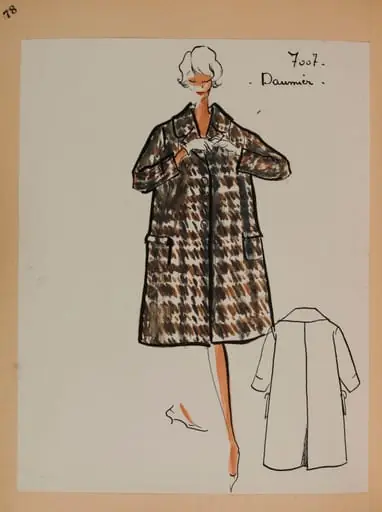
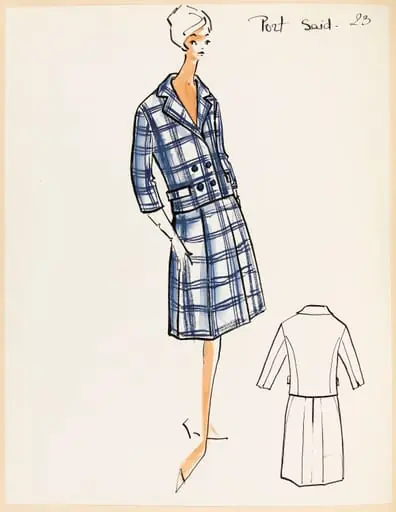
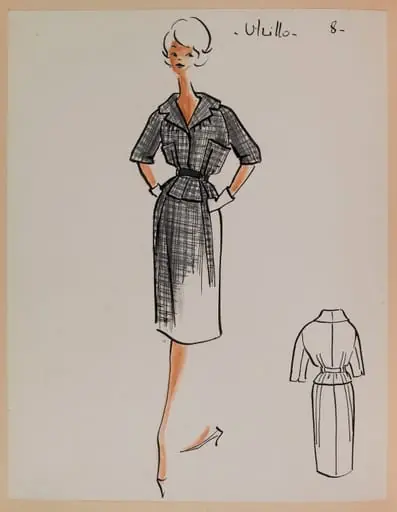
Bernard Buffet is a drawing by Marie-Louise Carven. It dates from 1958 and is held in the collection of the Palais Galliera - Musée de la Mode de la Ville de Paris. This drawing depicts a woman in a tailored black-and-grey checkered suit, rendered in restrained line work against a pale beige background.
About this work
Overview
This drawing depicts a woman in a tailored black-and-grey checkered suit, rendered in restrained line work against a pale beige background.
This drawing depicts a woman in a tailored black-and-grey checkered suit, rendered in restrained line work against a pale beige background. The figure stands with one hand at her side and the other behind her back, conveying quiet composure. A second jacket, shown from behind, appears beside her, suggesting a contextual or compositional emphasis on clothing rather than identity. The work is cataloged in the Museum of Ethnography’s collection under the title *Bernard Buffet*, though its connection to the artist named in the title remains unexplained.
Subject & Meaning
The subject is a woman dressed in a structured, mid-century ensemble, likely intended as a study of fashion rather than a portrait. The absence of facial detail and the inclusion of a second garment imply an interest in silhouette and garment construction over individuality. The title referencing Bernard Buffet, a painter known for stark, expressive figures, may signal an artistic dialogue, though no direct link between the two creators is documented.
Technique & Style
The drawing employs minimal, precise linework to define form, avoiding shading or texture. The monochrome palette and flat background focus attention on the cut and arrangement of the clothing. The figure’s posture and the placement of the secondary jacket suggest a deliberate composition, possibly inspired by fashion illustration conventions of the 1950s. The style is restrained, favoring clarity over ornamentation.
History & Provenance
The work is attributed to Marie-Louise Carven, founder of the Parisian fashion house Carven, established in 1945. While Carven was known for ready-to-wear innovation and design for petite figures, this drawing does not appear in her known published collections. Its presence in the Museum of Ethnography suggests it may have been acquired as an artifact of postwar French fashion culture, though its origin and date of creation remain unverified.
Context
Created around 1958, the drawing reflects the era’s emphasis on structured, feminine silhouettes in women’s wear. Carven’s brand was associated with accessible elegance and playful details, yet this piece is austere, contrasting with her more decorative designs. The inclusion of a second garment may reference the practicality of wardrobe planning in mid-century fashion, or serve as a visual metaphor for duality in self-presentation.
Legacy
As a non-commercial sketch, this work offers insight into Carven’s design process beyond finished garments. Its preservation in an ethnographic museum underscores its value as a cultural artifact rather than a fine art object. While not widely reproduced or studied, it contributes to broader understandings of how fashion designers documented and conceptualized form during the postwar period.
Artist & collection
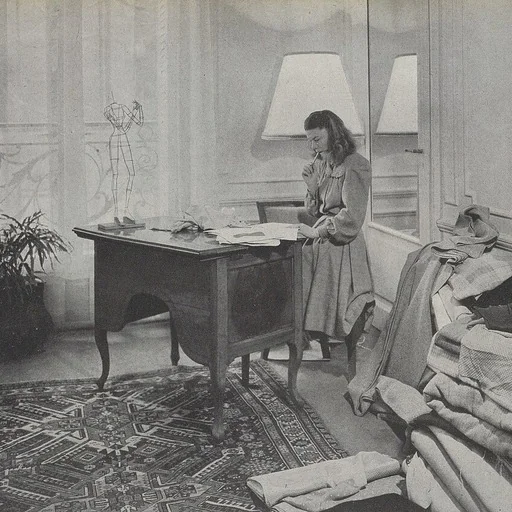
Artist
Marie-Louise Carven (31 August 1909 – 8 June 2015), born Carmen de Tommaso, was a French fashion designer who founded the house of Carven in 1945.
Museum
Palais Galliera - Musée de la Mode de la Ville de Paris
Continue through works from the same source collection.
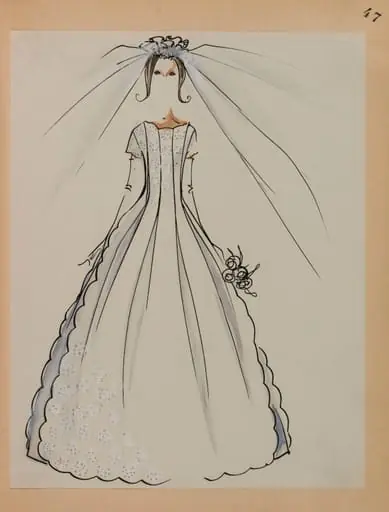 Robe de mariée festonnée et son voile
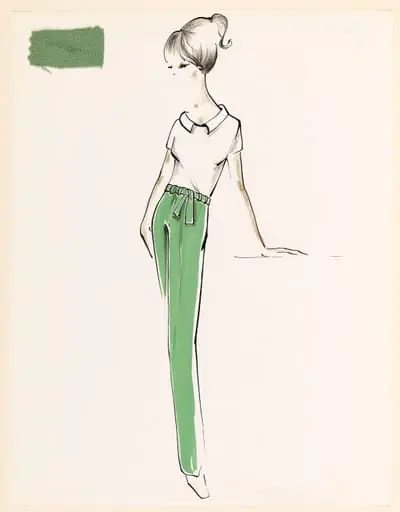 Haut blanc à manches courtes et pantalon vert à ceinture nouée
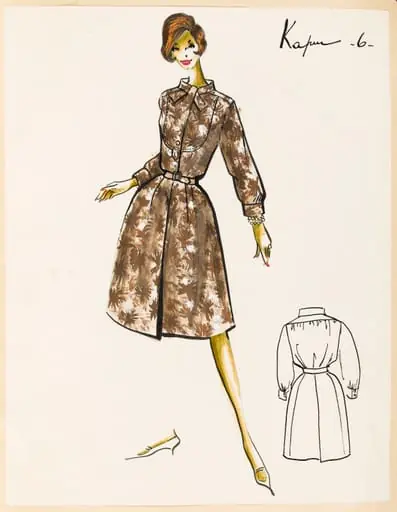 Kapur
Kapur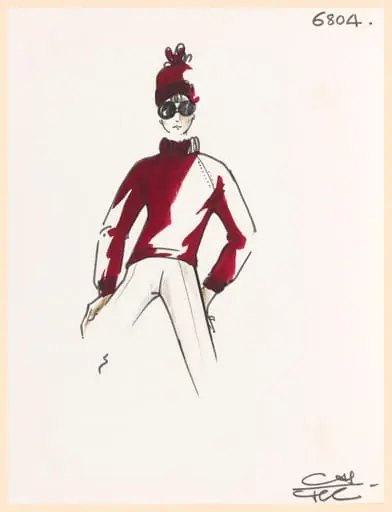 Pull-over à manches longues pourpre, bonnet assorti, pantalon et lunettes de soleil
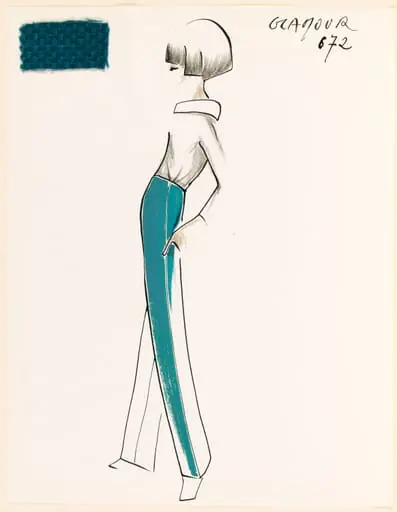 GLAMOUR
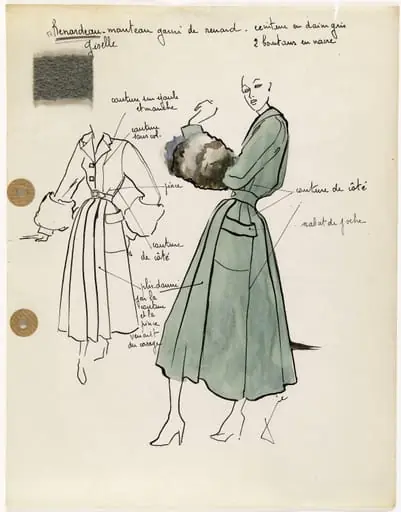 'Renardeau'
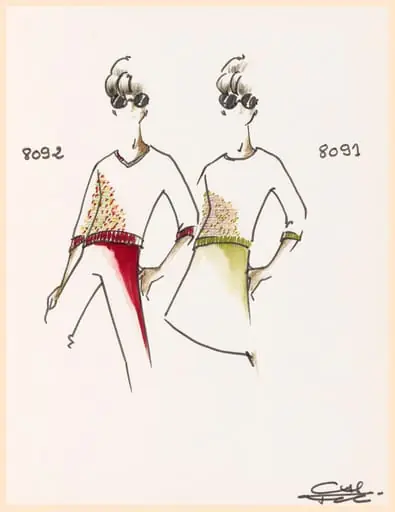 Pull-over à manches trois quarts et à encolure V à motifs multicolores, pantalon cerise et lunettes de soleil
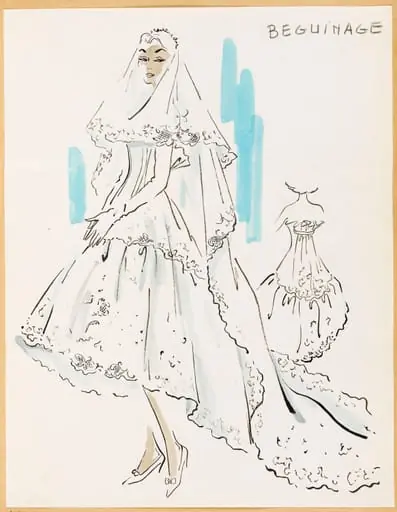 Béguinage