Artwork
Caravane
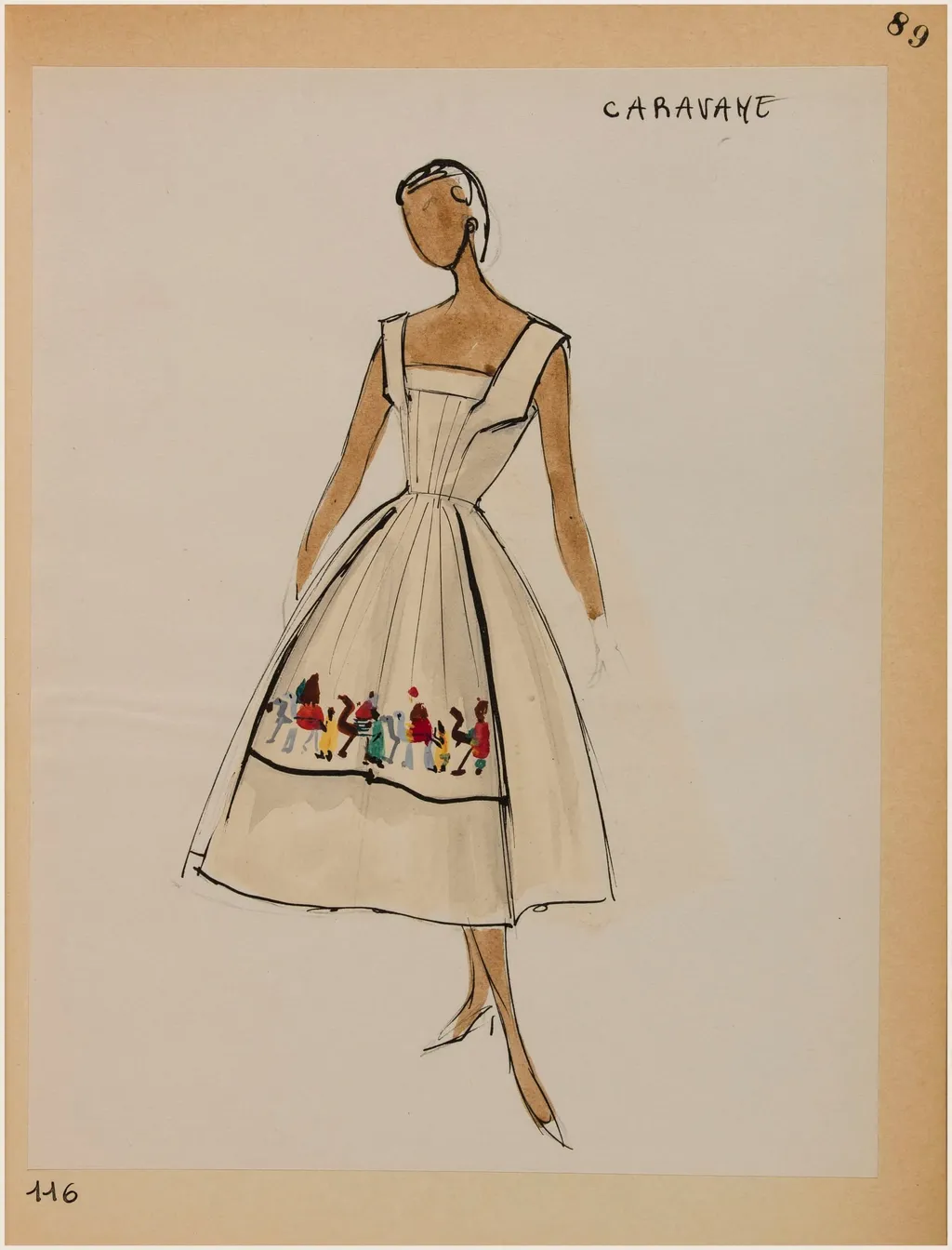
Caravane is a drawing by Marie-Louise Carven. It dates from 1956 and is held in the collection of the Palais Galliera - Musée de la Mode de la Ville de Paris.
About this work
Overview
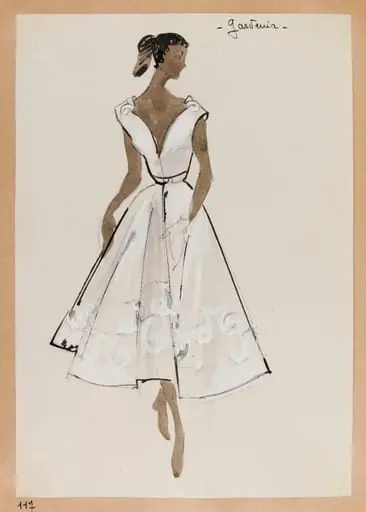
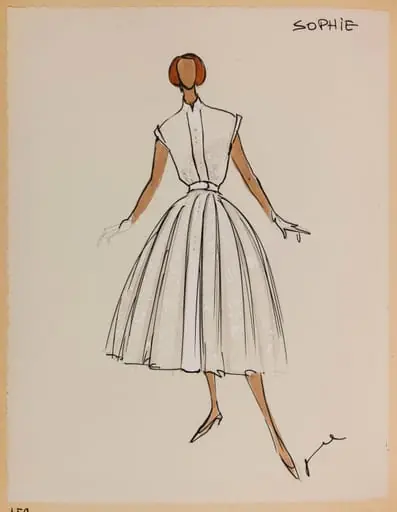
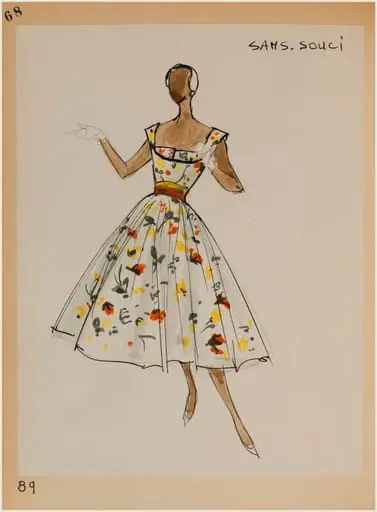
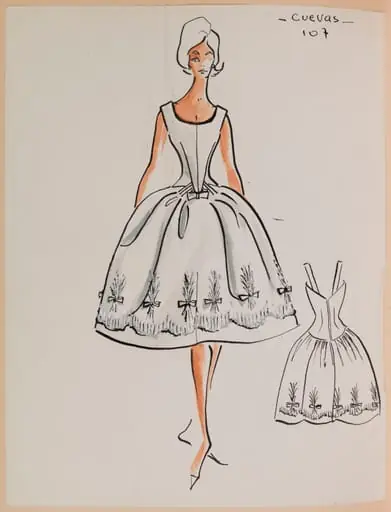
Caravane, a 1956 fashion sketch by Marie-Louise Carven, depicts a woman in a simple yet distinctive dress with a full, flowing skirt. The design incorporates a unique element: a row of tiny, colorful figures visible along the skirt's lower hem.
Subject & Meaning
The subject is a woman in a Carven design, characterized by a straightforward dress silhouette paired with a vibrant, animated skirt detail. The 'caravan' motif, implied by the title, suggests themes of travel or movement, contrasting with the overall static pose.
Technique & Style
Executed in loose, quick pencil lines with select watercolor accents, the sketch reflects Carven's spontaneous design approach. The combination of simple lines for the dress and detailed, colorful figures at the hem showcases her ability to balance restraint with playful embellishment.
History & Provenance
Created in 1956 by Marie-Louise Carven, founder of the House of Carven (established in 1945), *Caravane* is now part of the Museum of Ethnography's collection. Carven was a pioneer among Parisian couturiers in introducing prêt-à-porter lines.
Context
Within the context of 1950s French fashion, *Caravane* represents Carven's focus on designs for petite women and her preference for lightweight fabrics, though these aspects are more implied than explicitly showcased in the sketch.
Legacy
As part of the Museum of Ethnography, *Caravane* contributes to the historical record of French fashion's evolution, particularly the transition towards more accessible, prêt-à-porter designs. It also highlights Carven's signature blend of simplicity and whimsical detail.
Artist & collection
Artist
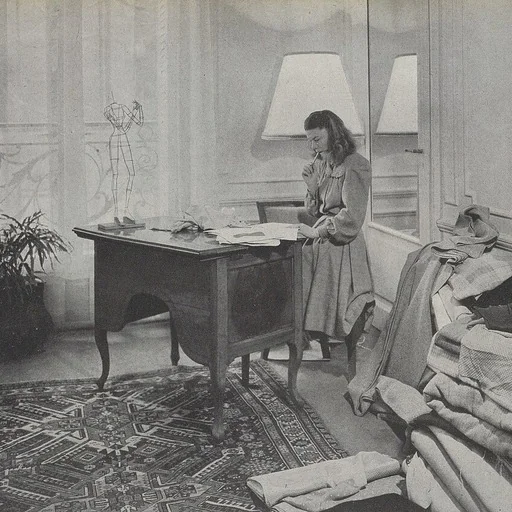
Marie-Louise Carven (31 August 1909 – 8 June 2015), born Carmen de Tommaso, was a French fashion designer who founded the house of Carven in 1945.
Museum
Palais Galliera - Musée de la Mode de la Ville de Paris
Continue through works from the same source collection.
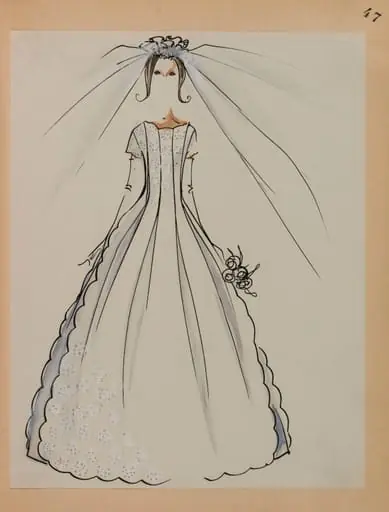 Robe de mariée festonnée et son voile
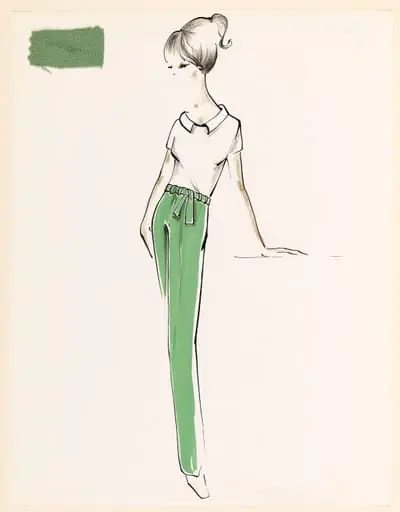 Haut blanc à manches courtes et pantalon vert à ceinture nouée
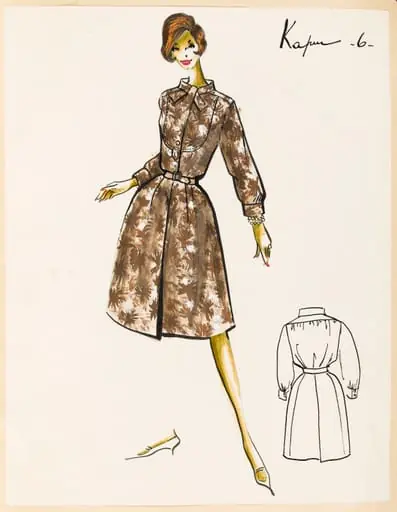 Kapur
Kapur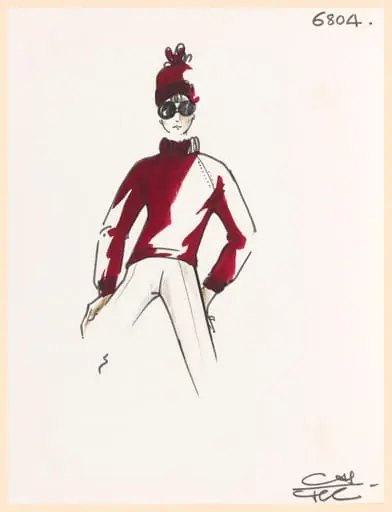 Pull-over à manches longues pourpre, bonnet assorti, pantalon et lunettes de soleil
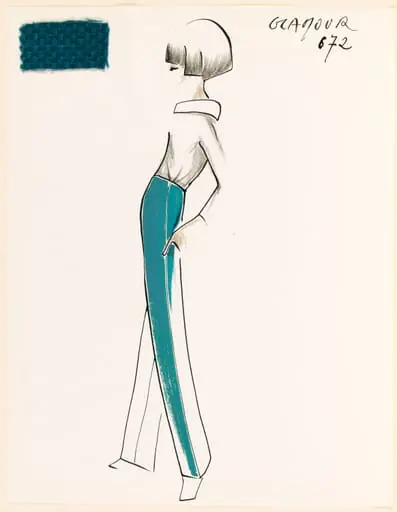 GLAMOUR
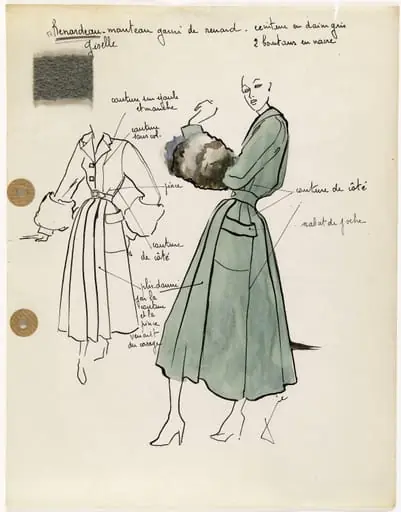 'Renardeau'
 Pull-over à manches trois quarts et à encolure V à motifs multicolores, pantalon cerise et lunettes de soleil
 Béguinage