Artwork
'Flamboyant'
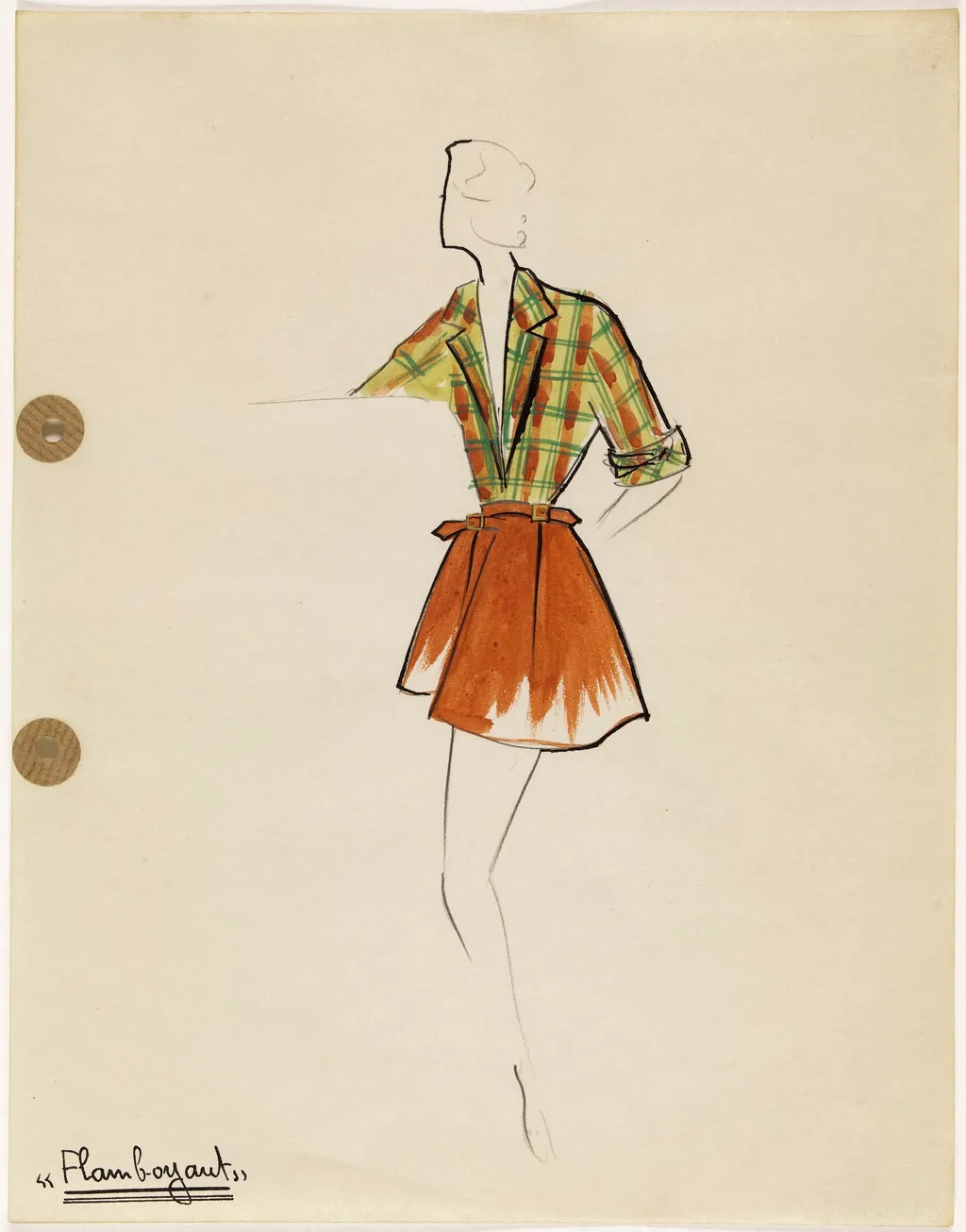
'Flamboyant' is a drawing by Marie-Louise Carven. It dates from 1949 and is held in the collection of the Palais Galliera - Musée de la Mode de la Ville de Paris.
About this work
Overview
Executed in ink or pencil on paper, the drawing reflects Carven’s approach to design: clean lines, restrained composition, and an emphasis on color and cut.
Created in 1949 by French designer Marie-Louise Carven, *Flamboyant* is a fashion sketch that captures a minimalist yet vivid ensemble. Executed in ink or pencil on paper, the drawing reflects Carven’s approach to design: clean lines, restrained composition, and an emphasis on color and cut. It resides in the Museum of Ethnography’s collection, underscoring its significance as a document of mid-century fashion practice rather than a finished garment.
Subject & Meaning
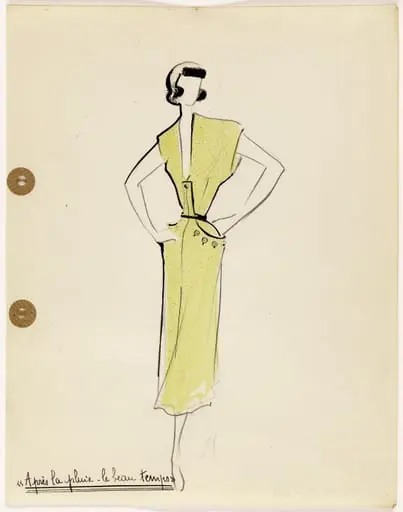
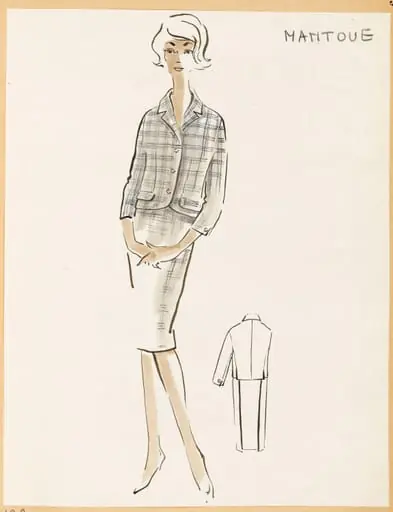
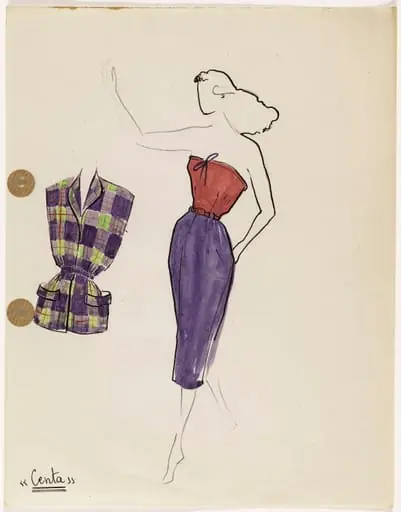
The sketch depicts a woman in a simple standing pose, dressed in a short orange skirt and a loose plaid jacket marked by bold green and orange squares. The title *Flamboyant* refers to the vivid palette and geometric pattern, which contrast with the figure’s stillness. The thin waist belt and cropped silhouette suggest a youthful, modern aesthetic, aligning with postwar shifts toward casual, wearable design for smaller frames.
Technique & Style
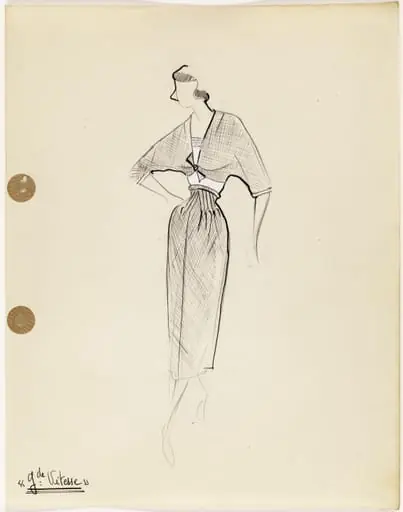
Carven rendered the outfit with swift, flat lines and no background, focusing attention on form and pattern. The drawing lacks shading or texture, relying instead on contour and color contrast to convey volume. This economical style reflects her background in illustration and her emphasis on clarity—essential for communicating design ideas to ateliers and clients without ornamental distraction.
History & Provenance
Marie-Louise Carven founded her fashion house in 1945 and was among the earliest couturiers to develop a prêt-à-porter line, making fashion more accessible. *Flamboyant* emerged during this transitional period, capturing the spirit of emerging ready-to-wear aesthetics. Its preservation in the Museum of Ethnography indicates recognition of its role in documenting everyday fashion evolution, not just haute couture.
Context
In postwar France, fashion was redefining itself around practicality and new materials. Carven’s designs catered to petite women, a demographic often overlooked by larger couture houses. *Flamboyant* reflects this niche focus, blending bold patterns with modest proportions. The sketch’s immediacy mirrors the growing demand for quick-turnaround designs as ready-to-wear began to challenge traditional atelier systems.
Legacy
Though not a garment, *Flamboyant* endures as a representative artifact of Carven’s design philosophy: clarity, accessibility, and quiet innovation. Its presence in a museum of ethnography signals its value as cultural evidence—capturing how fashion responded to social change through form, color, and scale. It remains a quiet testament to the shift from exclusivity to everyday style in mid-century Europe.
Artist & collection
Artist
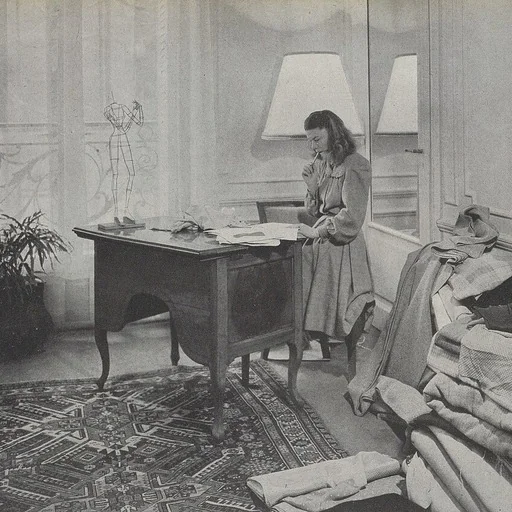
Marie-Louise Carven (31 August 1909 – 8 June 2015), born Carmen de Tommaso, was a French fashion designer who founded the house of Carven in 1945.
Museum
Palais Galliera - Musée de la Mode de la Ville de Paris
Continue through works from the same source collection.
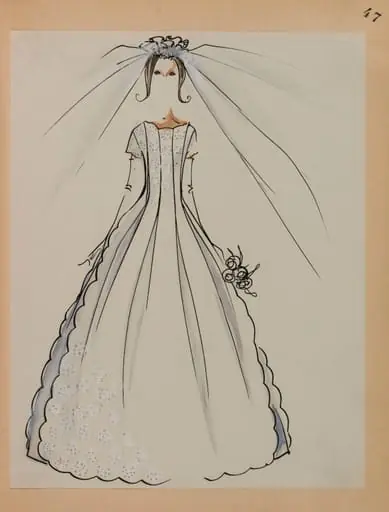 Robe de mariée festonnée et son voile
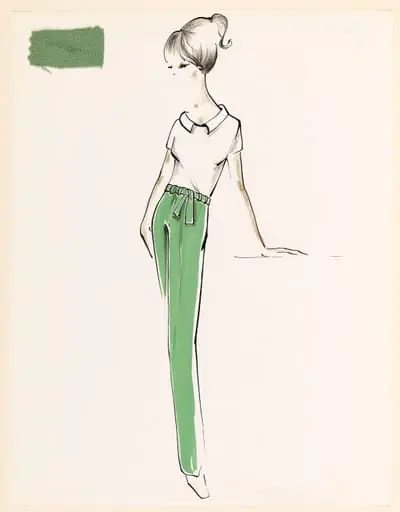 Haut blanc à manches courtes et pantalon vert à ceinture nouée
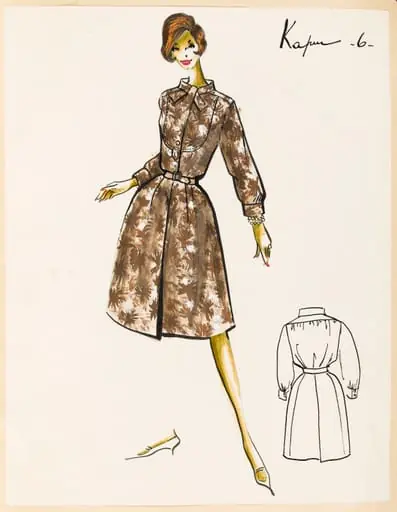 Kapur
Kapur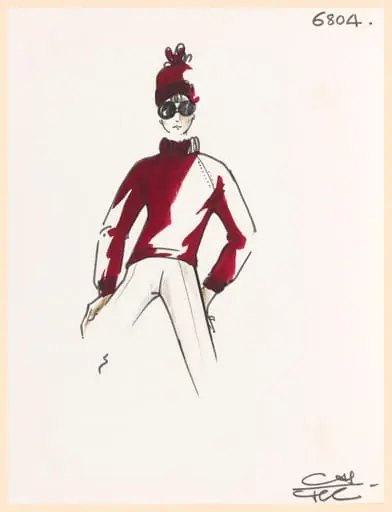 Pull-over à manches longues pourpre, bonnet assorti, pantalon et lunettes de soleil
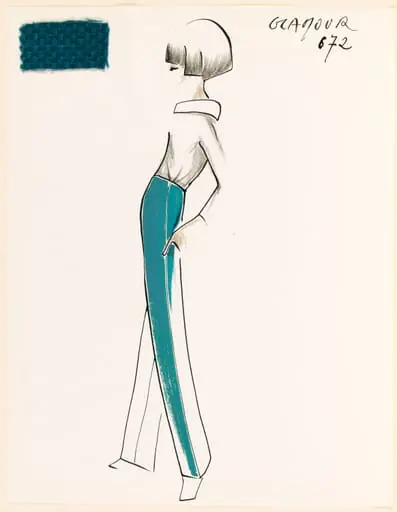 GLAMOUR
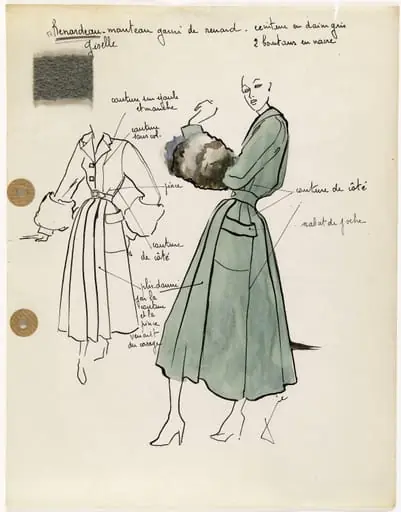 'Renardeau'
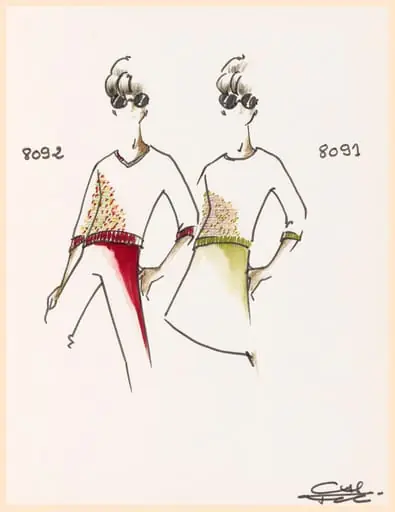 Pull-over à manches trois quarts et à encolure V à motifs multicolores, pantalon cerise et lunettes de soleil
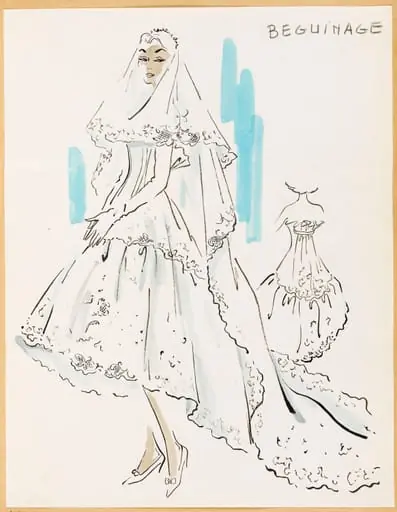 Béguinage