Artwork
Mélisande
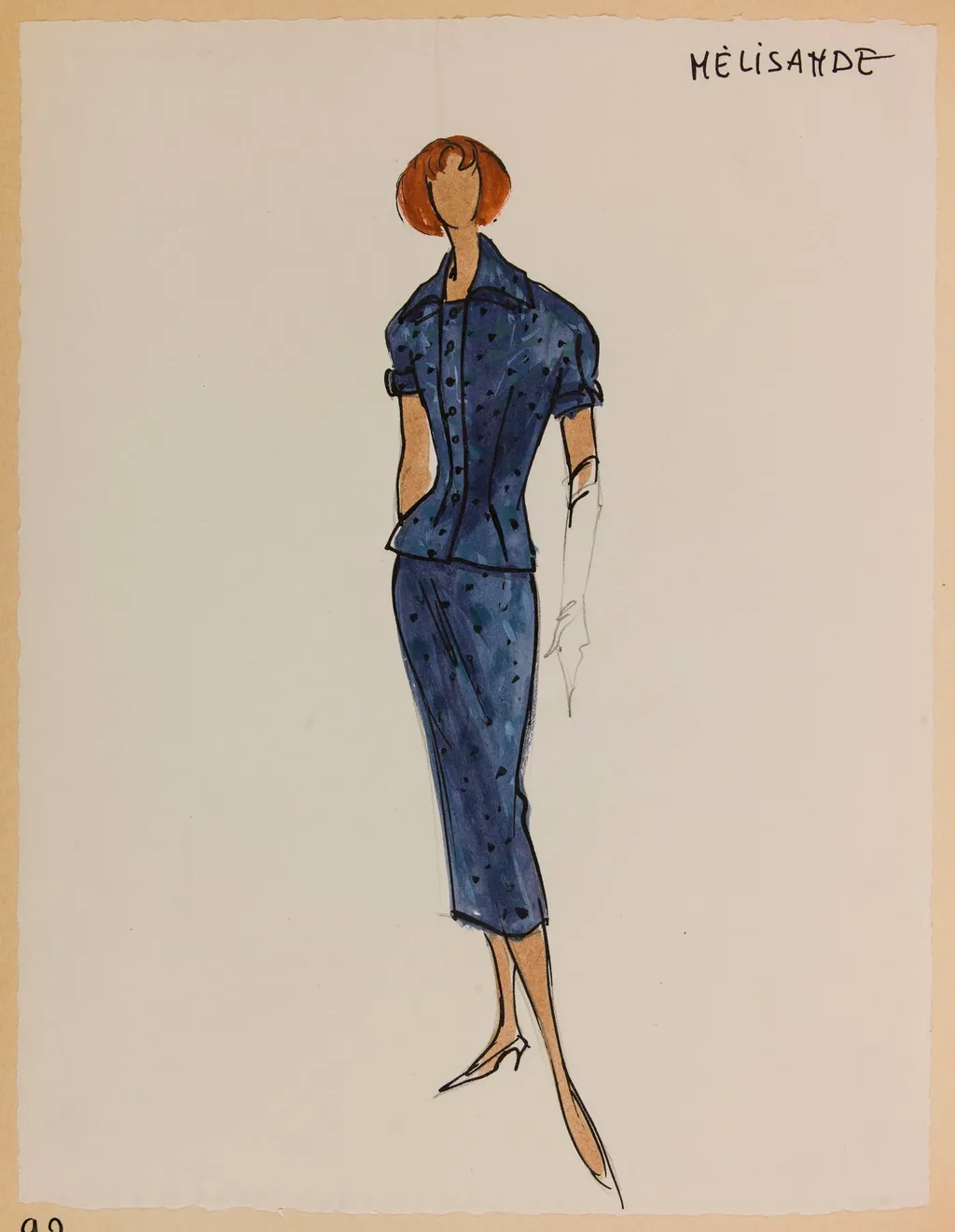
Mélisande is a drawing by Marie-Louise Carven. It dates from 1956 and is held in the collection of the Palais Galliera - Musée de la Mode de la Ville de Paris.
About this work
Overview
Though labeled as an image, it functions as a design record rather than a finished garment, preserved in the Museum of Ethnography’s collection.
Created around 1956, *Mélisande* is a fashion sketch by Marie-Louise Carven, founder of the Parisian house Carven established in 1945. The drawing captures a tailored ensemble in ink or pencil, rendered with fluid, informal lines typical of design drafts. It reflects Carven’s interest in wearable, modest silhouettes suited to petite figures. Though labeled as an image, it functions as a design record rather than a finished garment, preserved in the Museum of Ethnography’s collection.
Subject & Meaning
The figure depicted is a woman viewed from behind, dressed in a dark blue jacket with three front buttons and matching trousers ending above the ankle. Her short, neatly pinned hair and the small object held in one hand suggest a quiet, composed demeanor. The name *Mélisande*, likely referencing Debussy’s opera character, evokes an air of delicate introspection, aligning the design with a literary sensibility common in mid-century French fashion.
Technique & Style
Carven rendered the design with loose, rapid strokes that prioritize movement and form over precision. The absence of color and minimal shading emphasize structure, while the dotted pattern on the fabric implies texture without detailed rendering. This sketch-like approach reflects the immediacy of fashion drafting, where ideas are captured quickly for later development, characteristic of Carven’s design process during the rise of ready-to-wear.
History & Provenance
Marie-Louise Carven pioneered one of France’s earliest prêt-à-porter lines, making her designs accessible beyond haute couture clients. *Mélisande* was produced during this transitional period in fashion, when design sketches transitioned from private atelier tools to archival materials. Its inclusion in the Museum of Ethnography suggests recognition of its cultural significance as a document of everyday mid-century French style.
Context
In the 1950s, Parisian fashion was redefining femininity through practical elegance. Carven’s work responded to postwar demands for simpler, more mobile clothing. *Mélisande* exemplifies this shift: its clean lines and modest proportions contrasted with the volume of Dior’s New Look, offering an alternative rooted in restraint and daily utility, reflecting broader societal changes in women’s roles and dress.
Legacy
Though not a surviving garment, *Mélisande* endures as a testament to Carven’s influence on accessible fashion. Her integration of couture sensibility into ready-to-wear helped shape modern retail fashion. The sketch’s preservation underscores the growing scholarly interest in design documentation as cultural artifacts, positioning such drawings as vital records of 20th-century aesthetic evolution.
Artist & collection
Artist
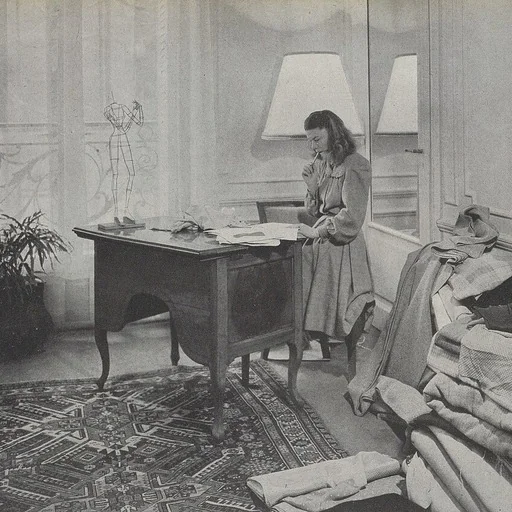
Marie-Louise Carven (31 August 1909 – 8 June 2015), born Carmen de Tommaso, was a French fashion designer who founded the house of Carven in 1945.
Museum
Palais Galliera - Musée de la Mode de la Ville de Paris
Continue through works from the same source collection.
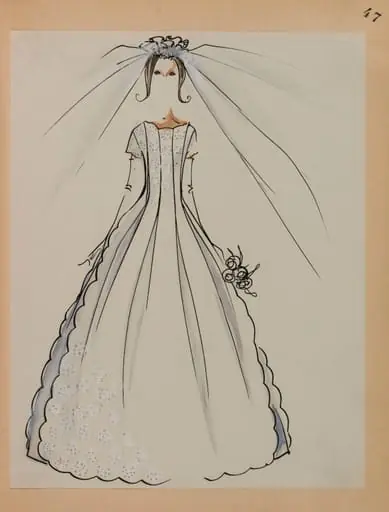 Robe de mariée festonnée et son voile
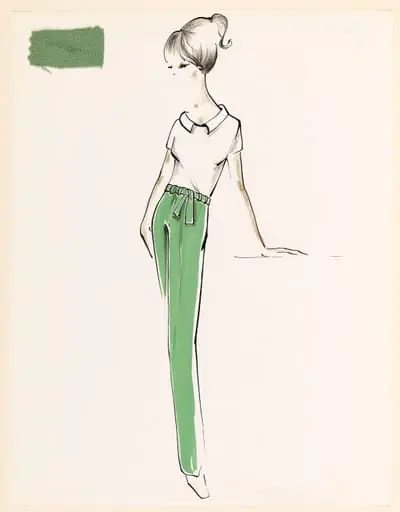 Haut blanc à manches courtes et pantalon vert à ceinture nouée
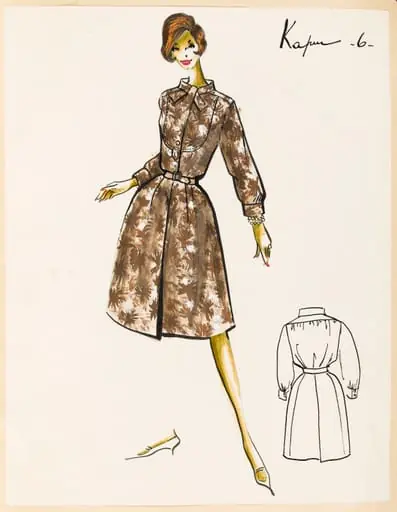 Kapur
Kapur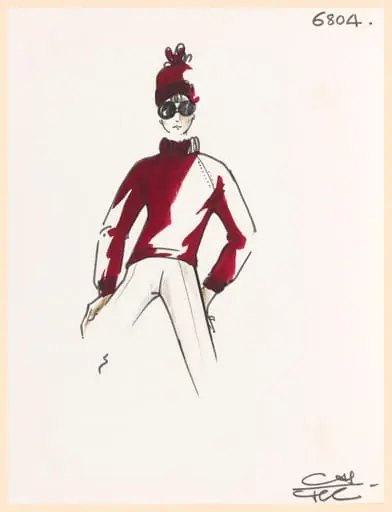 Pull-over à manches longues pourpre, bonnet assorti, pantalon et lunettes de soleil
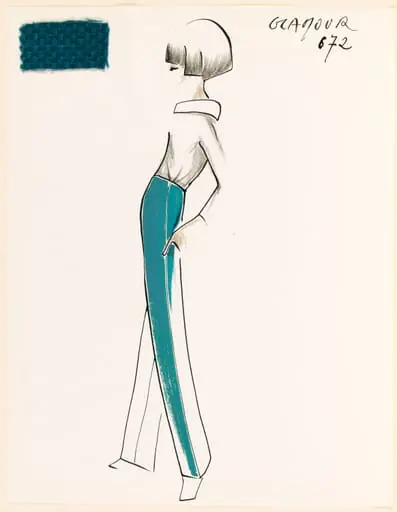 GLAMOUR
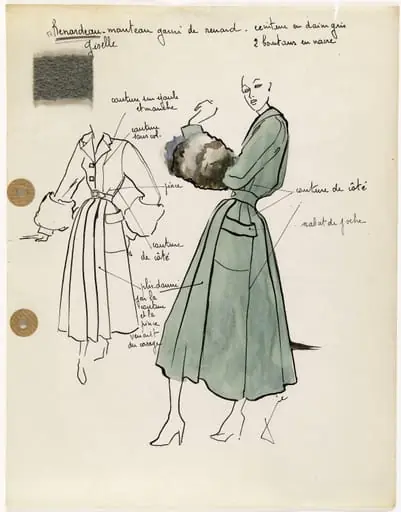 'Renardeau'
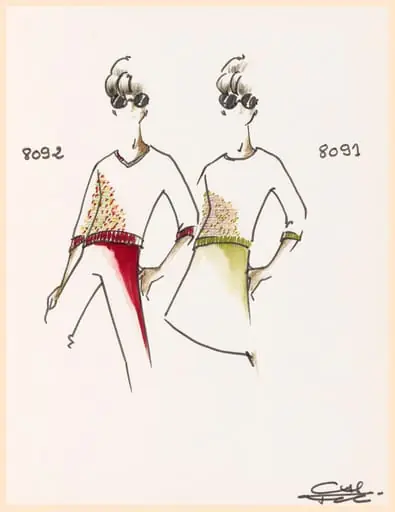 Pull-over à manches trois quarts et à encolure V à motifs multicolores, pantalon cerise et lunettes de soleil
 Béguinage