Artwork
'Puma'
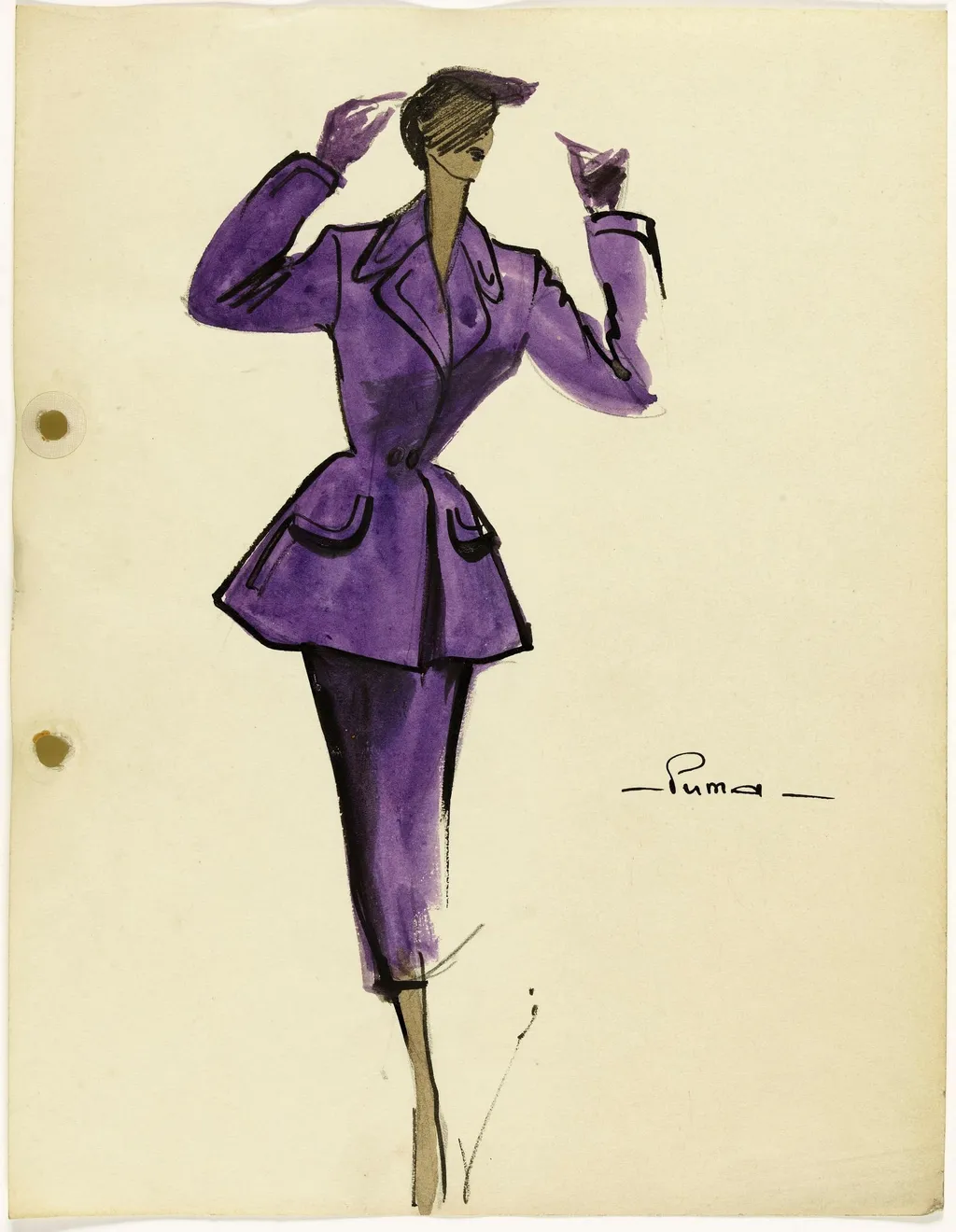
'Puma' is a drawing by Marie-Louise Carven. It dates from 1951 and is held in the collection of the Palais Galliera - Musée de la Mode de la Ville de Paris.
About this work
Her face is obscured by a series of lines, and she is shown in profile, with her right arm raised and her left arm at her side.
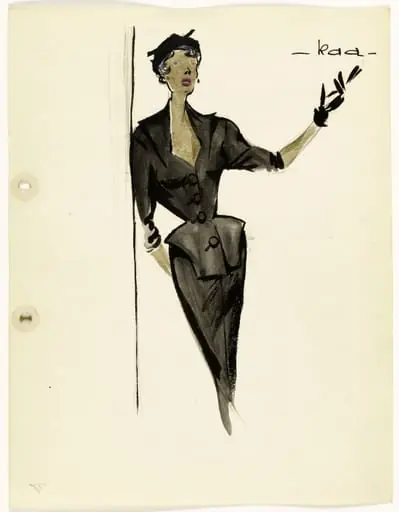
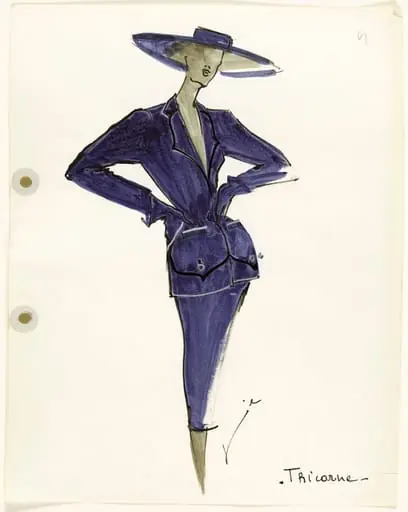
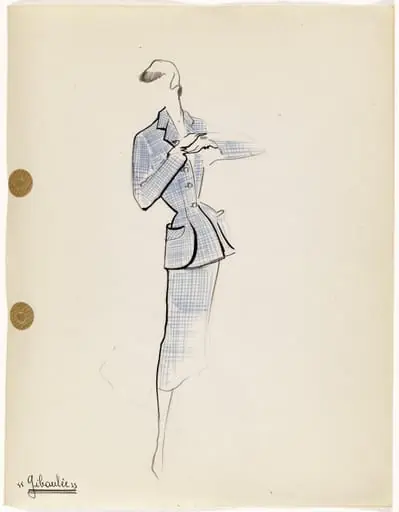
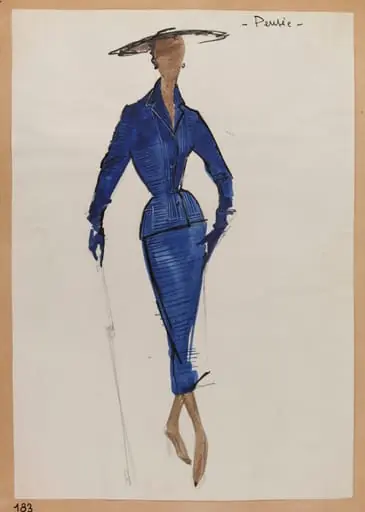
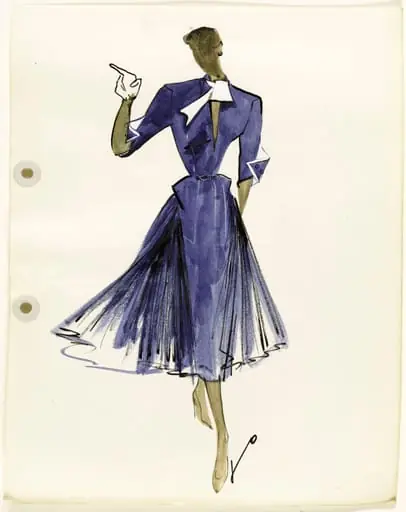
The painting depicts a woman dressed in a purple suit, complete with a jacket, pants, and a hat. Her face is obscured by a series of lines, and she is shown in profile, with her right arm raised and her left arm at her side. The background of the painting is a pale yellow color.
The woman's attire appears to be a formal outfit, possibly from the mid-20th century. The style of the painting suggests that it may have been created during this time period as well.
For more information on the artist's work, consider exploring the portfolio of Marie-Louise Carven.
Overview
Created around 1951, the work titled 'Puma' is a painted image attributed to Marie-Louise Carven, a French designer known for her refined approach to women’s fashion. Though primarily recognized for clothing, Carven occasionally extended her aesthetic into graphic art. This piece reflects her broader design sensibility, merging fashion illustration with symbolic imagery, and stands as a rare visual artifact outside her textile work.
Subject & Meaning
The image portrays a woman in profile, dressed in a tailored purple suit with hat, jacket, and trousers — attire consistent with mid-century Parisian style. Her face is abstracted by intersecting lines, suggesting anonymity or psychological distance. The raised right arm and the title 'Puma' imply a connection between the figure’s poised energy and the animal’s grace, evoking strength and elegance without literal representation.
Technique & Style
Carven employed flat, unmodulated color and clean contours, aligning with the graphic clarity of mid-century fashion illustration. The pale yellow background isolates the figure, enhancing its stylized form. The obscured facial features and simplified anatomy reflect a deliberate move away from realism, favoring symbolic abstraction — a technique consistent with her fashion sketches and promotional materials of the era.
History & Provenance
The work emerged during Carven’s active years as a couturier, following the founding of her house in 1945. It likely served as a design study or promotional piece, possibly linked to a collection theme or editorial feature. No documented exhibition history or public collection record exists, suggesting it remained within private or internal use, consistent with the limited archival trace of her non-fashion artworks.
Context
In the early 1950s, Parisian designers increasingly blurred boundaries between fashion, graphic design, and fine art. Carven’s move into painted imagery mirrored broader trends among couturiers who used visual art to extend their brand identity. 'Puma' reflects this cultural moment, where fashion’s influence extended beyond garments into symbolic, stylized visuals that communicated aesthetic values beyond clothing.
Legacy
While Carven’s legacy rests primarily on her contributions to ready-to-wear fashion and petite tailoring, 'Puma' offers insight into her visual language beyond textiles. It remains a quiet testament to her interdisciplinary approach, illustrating how her design principles — precision, restraint, and elegance — translated into other media, influencing later generations who saw fashion as a holistic visual practice.
Artist & collection
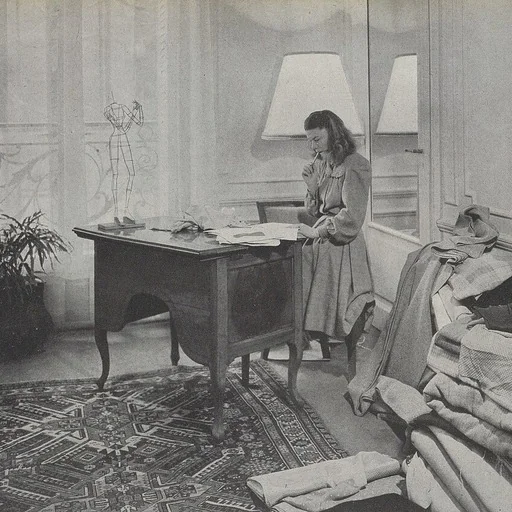
Artist
Marie-Louise Carven (31 August 1909 – 8 June 2015), born Carmen de Tommaso, was a French fashion designer who founded the house of Carven in 1945.
Museum
Palais Galliera - Musée de la Mode de la Ville de Paris
Continue through works from the same source collection.
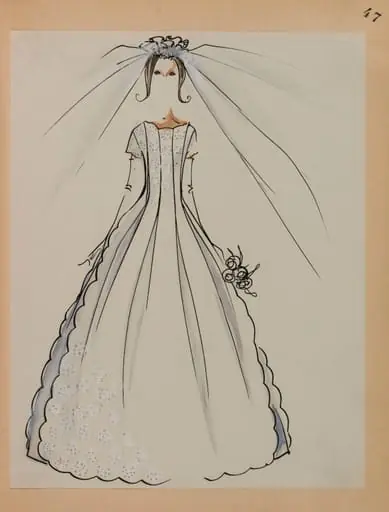 Robe de mariée festonnée et son voile
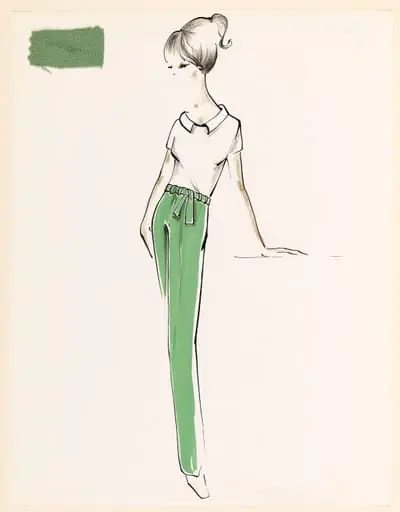 Haut blanc à manches courtes et pantalon vert à ceinture nouée
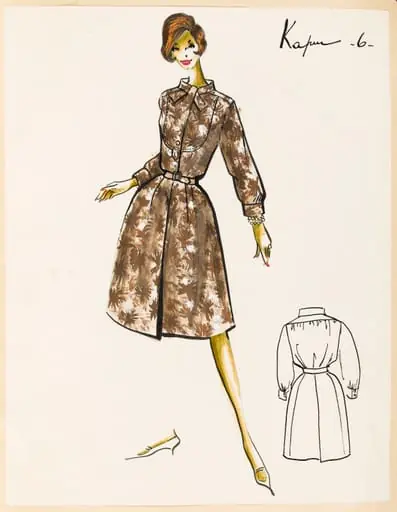 Kapur
Kapur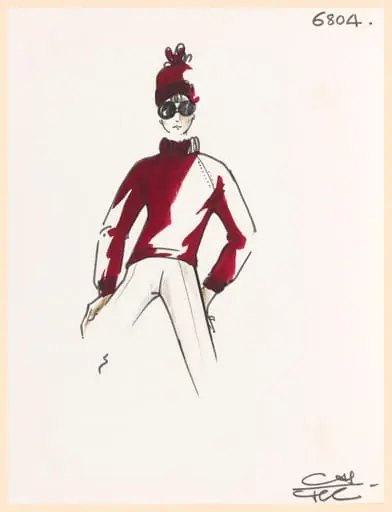 Pull-over à manches longues pourpre, bonnet assorti, pantalon et lunettes de soleil
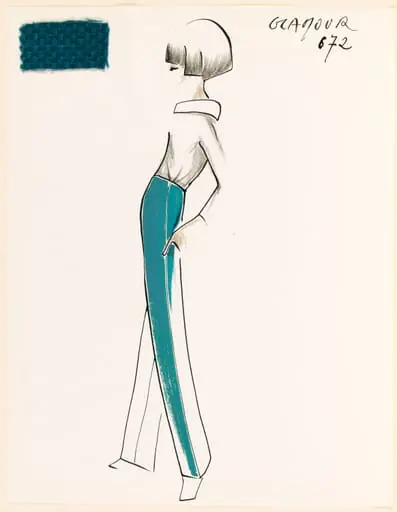 GLAMOUR
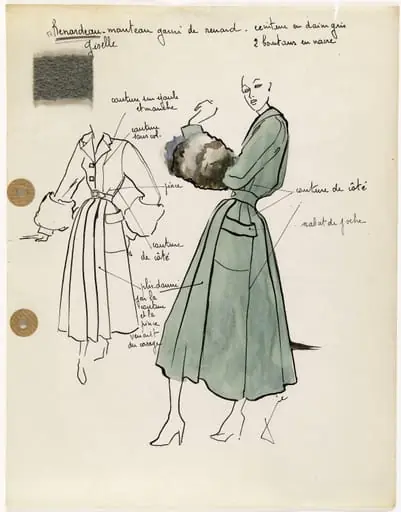 'Renardeau'
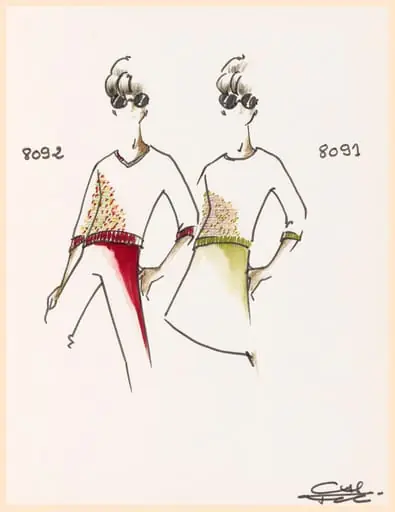 Pull-over à manches trois quarts et à encolure V à motifs multicolores, pantalon cerise et lunettes de soleil
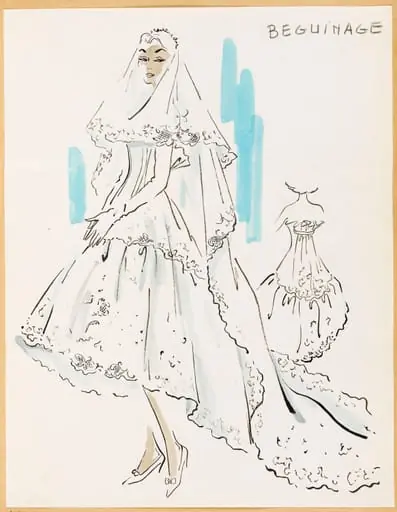 Béguinage