Artwork
Ramage
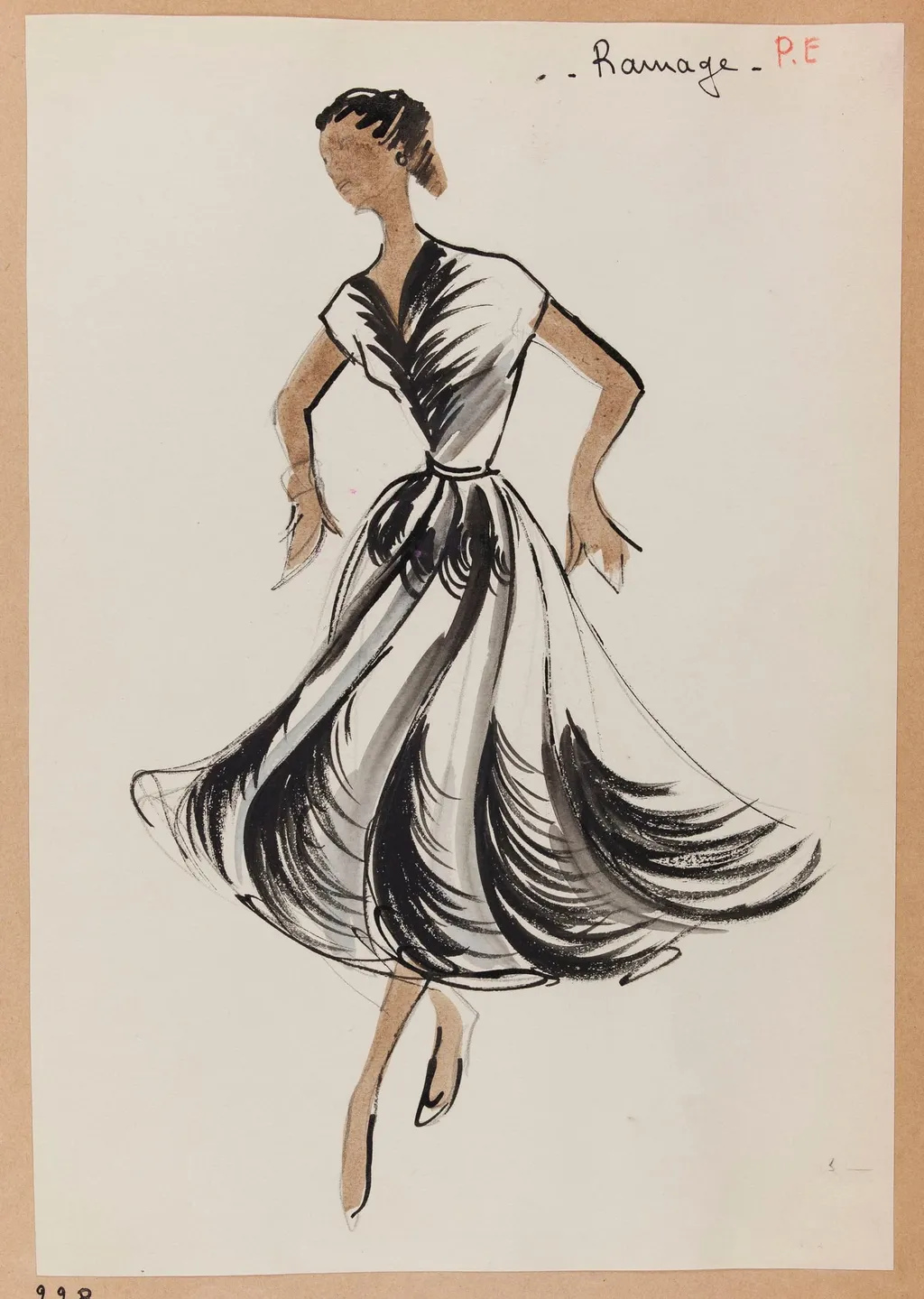
Ramage is a drawing by Marie-Louise Carven. It dates from 1951 and is held in the collection of the Palais Galliera - Musée de la Mode de la Ville de Paris.
About this work
Overview
The sketch resides in the Museum of Ethnography’s collection, underscoring its significance as a document of mid-century French fashion design.
Created around 1951, Ramage is a fashion sketch by Marie-Louise Carven, founder of the Parisian label Carven established in 1945. Executed in ink with fluid, spontaneous lines, the drawing captures a full-length figure in a lightweight dress. It reflects Carven’s focus on wearable, feminine silhouettes and was likely produced as a design proposal. The sketch resides in the Museum of Ethnography’s collection, underscoring its significance as a document of mid-century French fashion design.
Subject & Meaning
The figure depicts a woman in a long, flowing dress with a full skirt and a fitted bodice cinched by a waist belt. Short sleeves and a restrained neckline emphasize simplicity, while the pose—one hand on the hip—suggests ease and natural movement. The label 'Ramage - P.E.' may reference the garment’s name or a pattern code, possibly indicating a floral or vine-like motif, aligning with Carven’s affinity for delicate, nature-inspired details in textile design.
Technique & Style
Carven rendered the sketch with loose, confident ink lines that convey motion and volume without heavy shading. The absence of color and minimal detail focus attention on form and proportion, characteristic of fashion illustrations intended for production. The quick, gestural strokes reflect the immediacy of design thinking, typical of preparatory sketches used to communicate ideas to ateliers rather than for public display.
History & Provenance
Marie-Louise Carven founded her fashion house in 1945 and was among the first Paris designers to develop a ready-to-wear line, democratizing access to chic design. Ramage dates from the early years of this innovation, when couture houses began bridging haute couture and mass-market fashion. The sketch entered the Museum of Ethnography’s collection as part of a broader effort to document everyday fashion as cultural artifact, rather than solely as high art.
Context
In postwar France, fashion was redefining femininity with lighter materials and less rigid structures. Carven’s designs catered to petite frames and emphasized comfort without sacrificing elegance. Ramage reflects this shift, aligning with trends toward practical yet stylish clothing for modern women. The sketch’s informal quality contrasts with the formality of traditional couture drawings, signaling a new approach to design documentation.
Legacy
Ramage exemplifies Carven’s role in transforming fashion from exclusive couture to accessible design. Her innovations in ready-to-wear and functional undergarments influenced later generations of designers. Though a modest sketch, it preserves the ethos of a designer who prioritized wearability and grace. Today, such drawings are valued as primary sources in the study of 20th-century fashion evolution.
Artist & collection
Artist
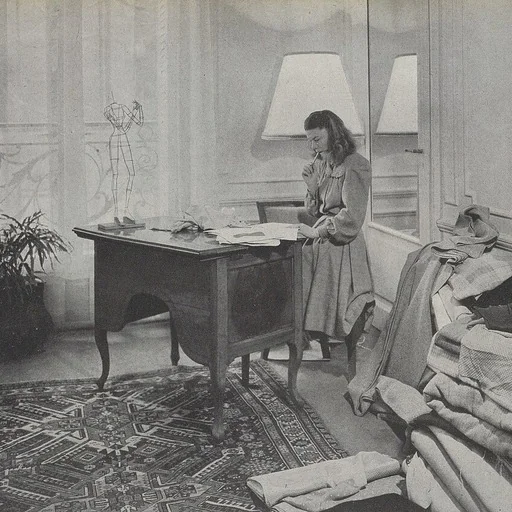
Marie-Louise Carven (31 August 1909 – 8 June 2015), born Carmen de Tommaso, was a French fashion designer who founded the house of Carven in 1945.
Museum
Palais Galliera - Musée de la Mode de la Ville de Paris
Continue through works from the same source collection.
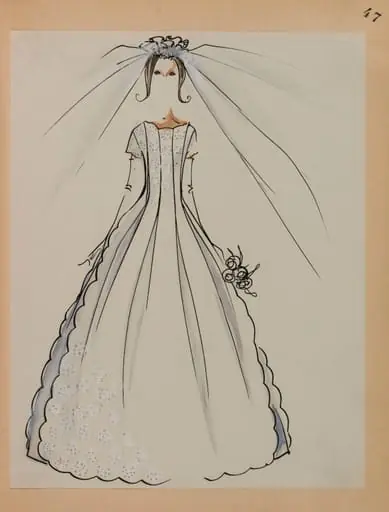 Robe de mariée festonnée et son voile
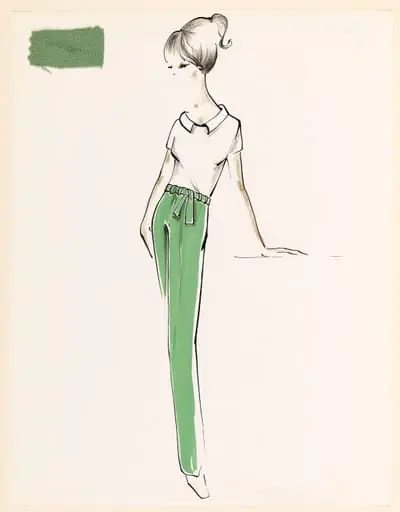 Haut blanc à manches courtes et pantalon vert à ceinture nouée
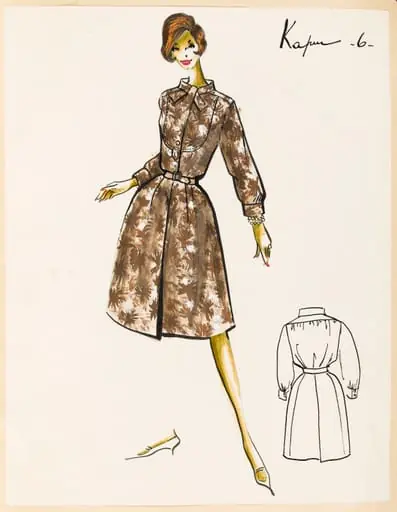 Kapur
Kapur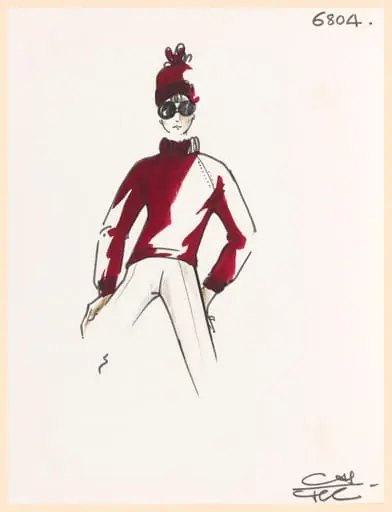 Pull-over à manches longues pourpre, bonnet assorti, pantalon et lunettes de soleil
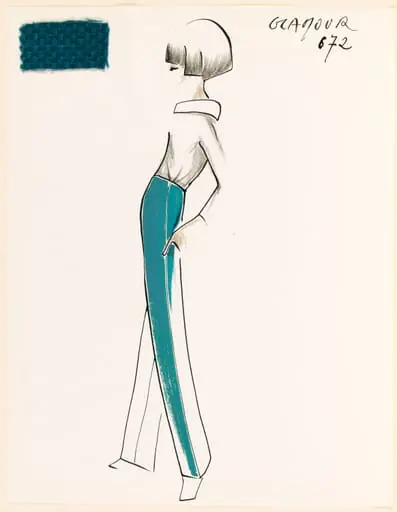 GLAMOUR
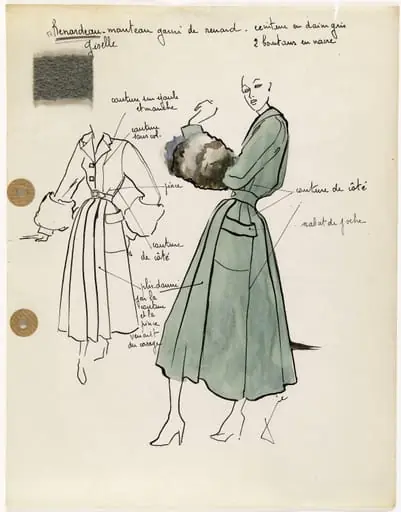 'Renardeau'
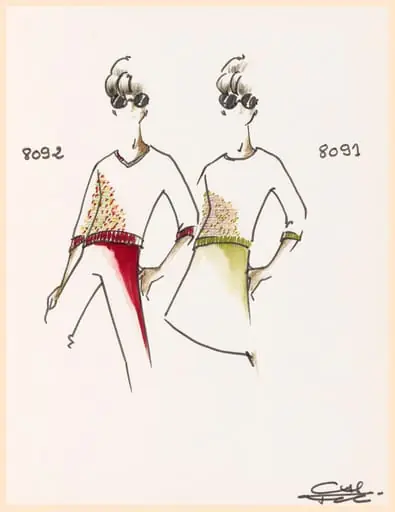 Pull-over à manches trois quarts et à encolure V à motifs multicolores, pantalon cerise et lunettes de soleil
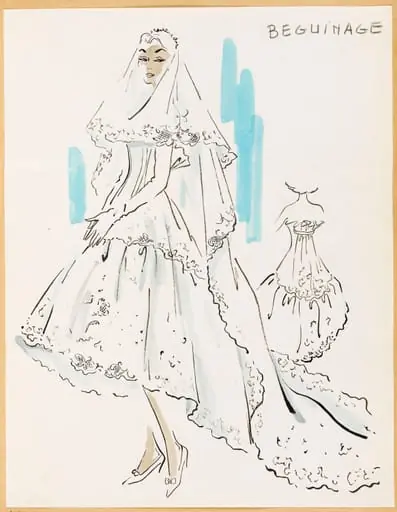 Béguinage