Artwork
Roudoudou
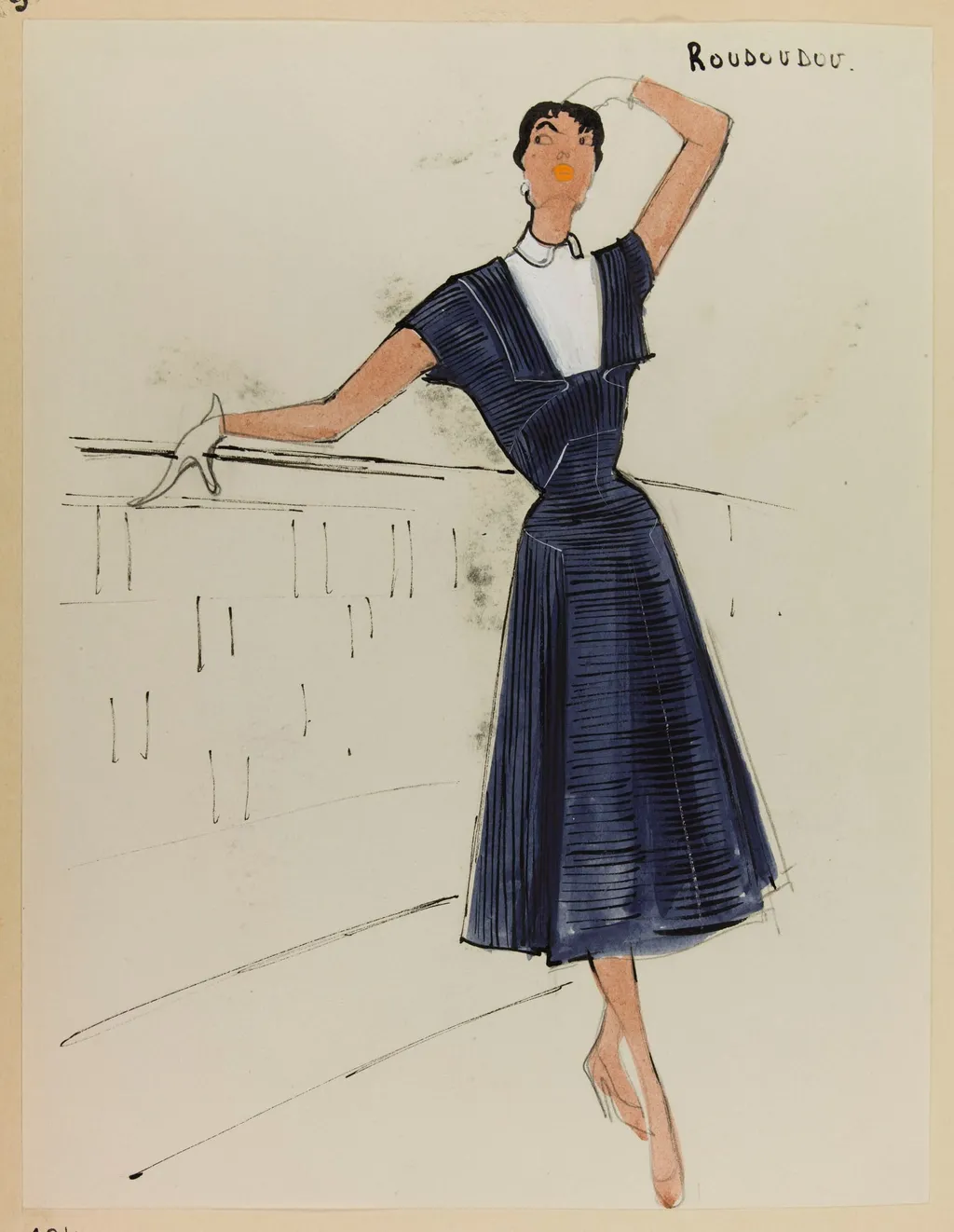
Roudoudou is a drawing by Marie-Louise Carven. It dates from 1953 and is held in the collection of the Palais Galliera - Musée de la Mode de la Ville de Paris.
About this work
Overview
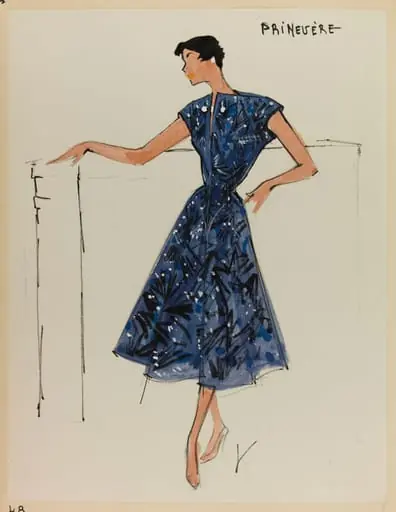
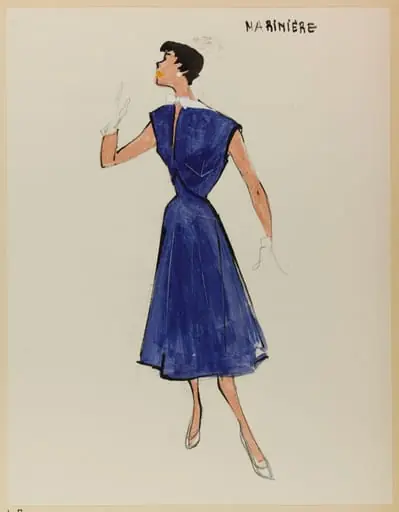
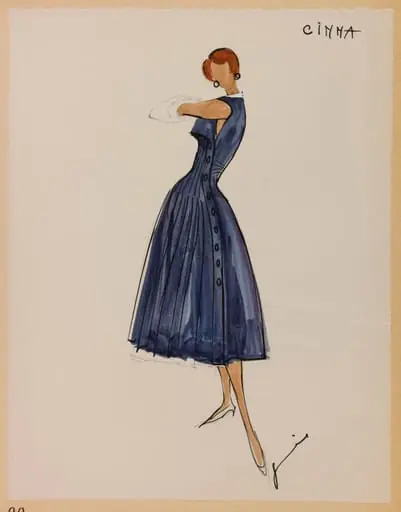
The image titled *Roudoudou* is a drawing from approximately 1953, depicting a woman in a dark blue dress designed by French couturier Marie-Louise Carven.
The image titled *Roudoudou* is a drawing from approximately 1953, depicting a woman in a dark blue dress designed by French couturier Marie-Louise Carven. Though labeled as an image and not a physical garment, it captures a moment of fashion illustration tied to Carven’s ready-to-wear designs. The work resides in the Museum of Ethnography’s collection, reflecting its role in documenting mid-century fashion culture beyond haute couture.
Subject & Meaning
The figure, posed with one arm raised and the other resting on a railing, conveys a quiet confidence. Her short bob, white collar, and gloves suggest a refined, urban woman of the early 1950s. The drawing’s informal lines and minimal background avoid theatricality, instead emphasizing everyday elegance. The garment’s name, *Roudoudou*, evokes playfulness, contrasting with the poised demeanor of the wearer and hinting at Carven’s blend of charm and practicality.
Technique & Style
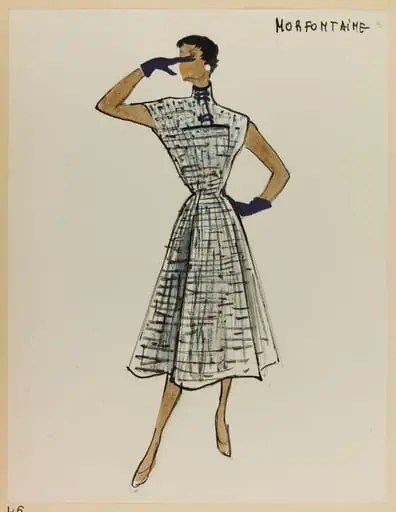
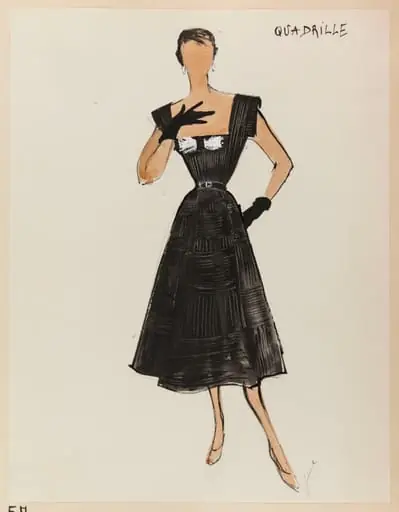
Rendered in loose, sketch-like lines, the image uses minimal shading and a light beige paper ground to suggest form without detail. Dark smudges and faint contours imply movement and texture, particularly in the dress and hair. The absence of rich color or elaborate background focuses attention on silhouette and posture. This restrained technique aligns with fashion illustration of the period, prioritizing gesture and garment over realism.
History & Provenance
Created around 1953, the drawing is linked to Marie-Louise Carven’s early ready-to-wear collections, which targeted petite women with accessible, delicate designs. While the original garment may no longer exist, this illustration preserves its aesthetic. It entered the Museum of Ethnography’s holdings as part of a broader effort to document everyday fashion, distinguishing it from museum collections focused solely on haute couture.
Context
In postwar France, fashion was shifting toward practicality and mass production. Carven’s designs, including pieces like *Roudoudou*, responded to women seeking stylish yet affordable clothing. This drawing reflects that transition—capturing a garment meant for daily life, not just special occasions. Its presence in an ethnographic museum underscores its value as a cultural artifact of middle-class women’s lives in the 1950s.
Legacy
Marie-Louise Carven’s influence extended beyond her lifetime, helping to normalize ready-to-wear as a legitimate fashion category. This illustration, though modest in execution, represents a broader movement toward democratizing style. It remains a quiet testament to how fashion design intersected with the routines and aspirations of ordinary women during a period of social change.
Artist & collection
Artist
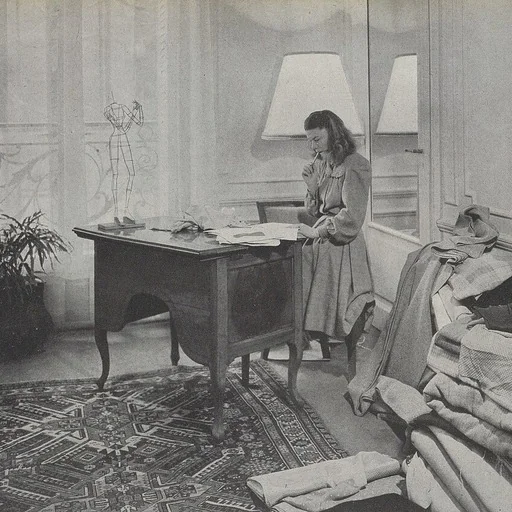
Marie-Louise Carven (31 August 1909 – 8 June 2015), born Carmen de Tommaso, was a French fashion designer who founded the house of Carven in 1945.
Museum
Palais Galliera - Musée de la Mode de la Ville de Paris
Continue through works from the same source collection.
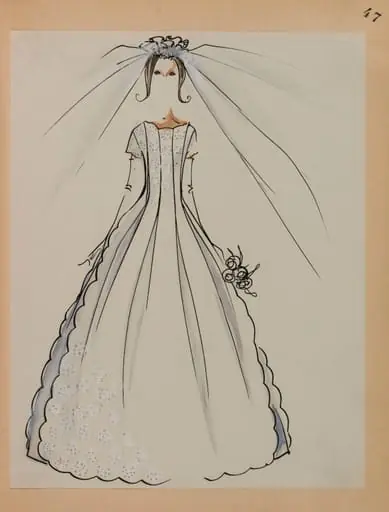 Robe de mariée festonnée et son voile
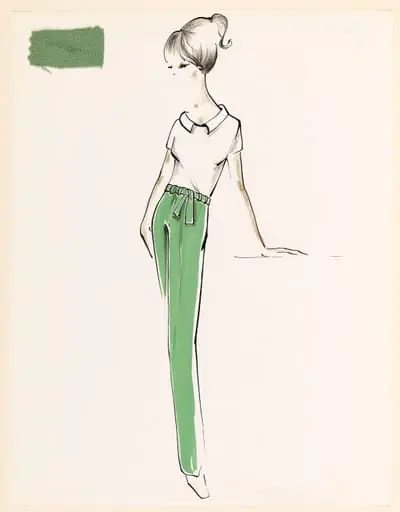 Haut blanc à manches courtes et pantalon vert à ceinture nouée
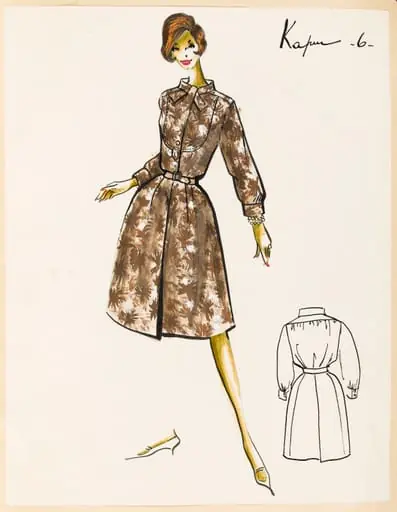 Kapur
Kapur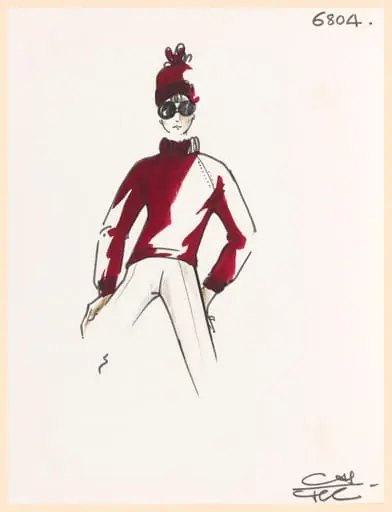 Pull-over à manches longues pourpre, bonnet assorti, pantalon et lunettes de soleil
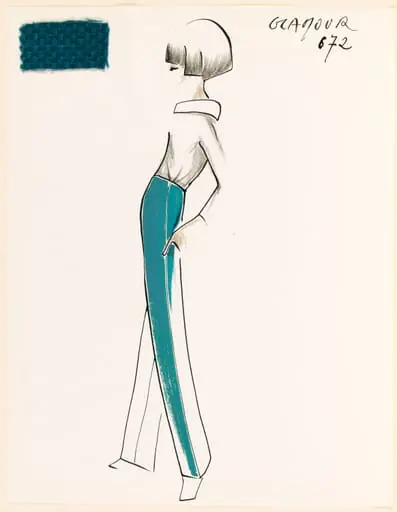 GLAMOUR
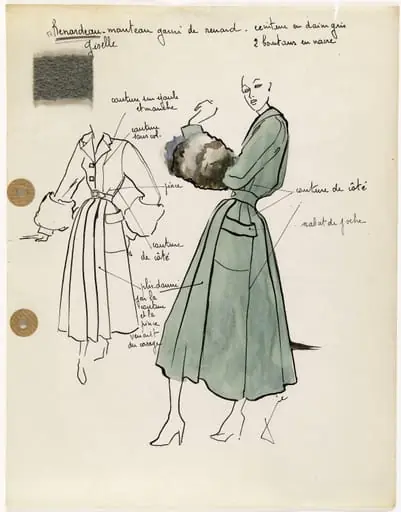 'Renardeau'
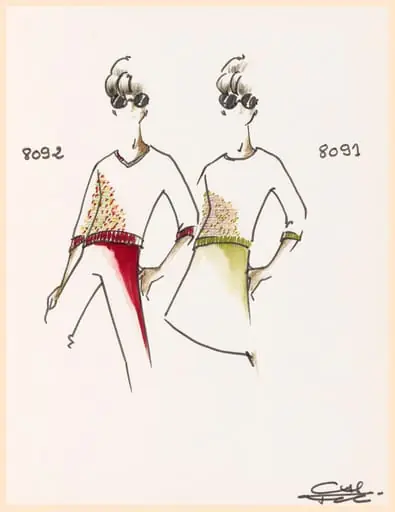 Pull-over à manches trois quarts et à encolure V à motifs multicolores, pantalon cerise et lunettes de soleil
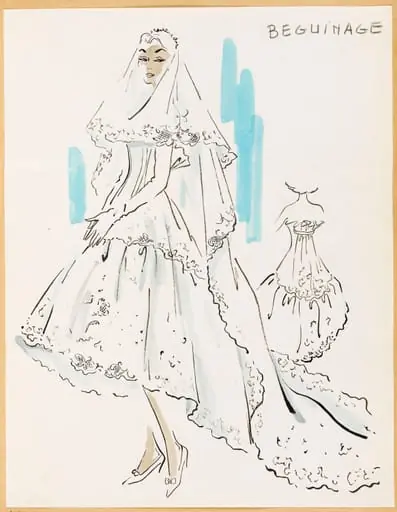 Béguinage