Artwork
'Séville'
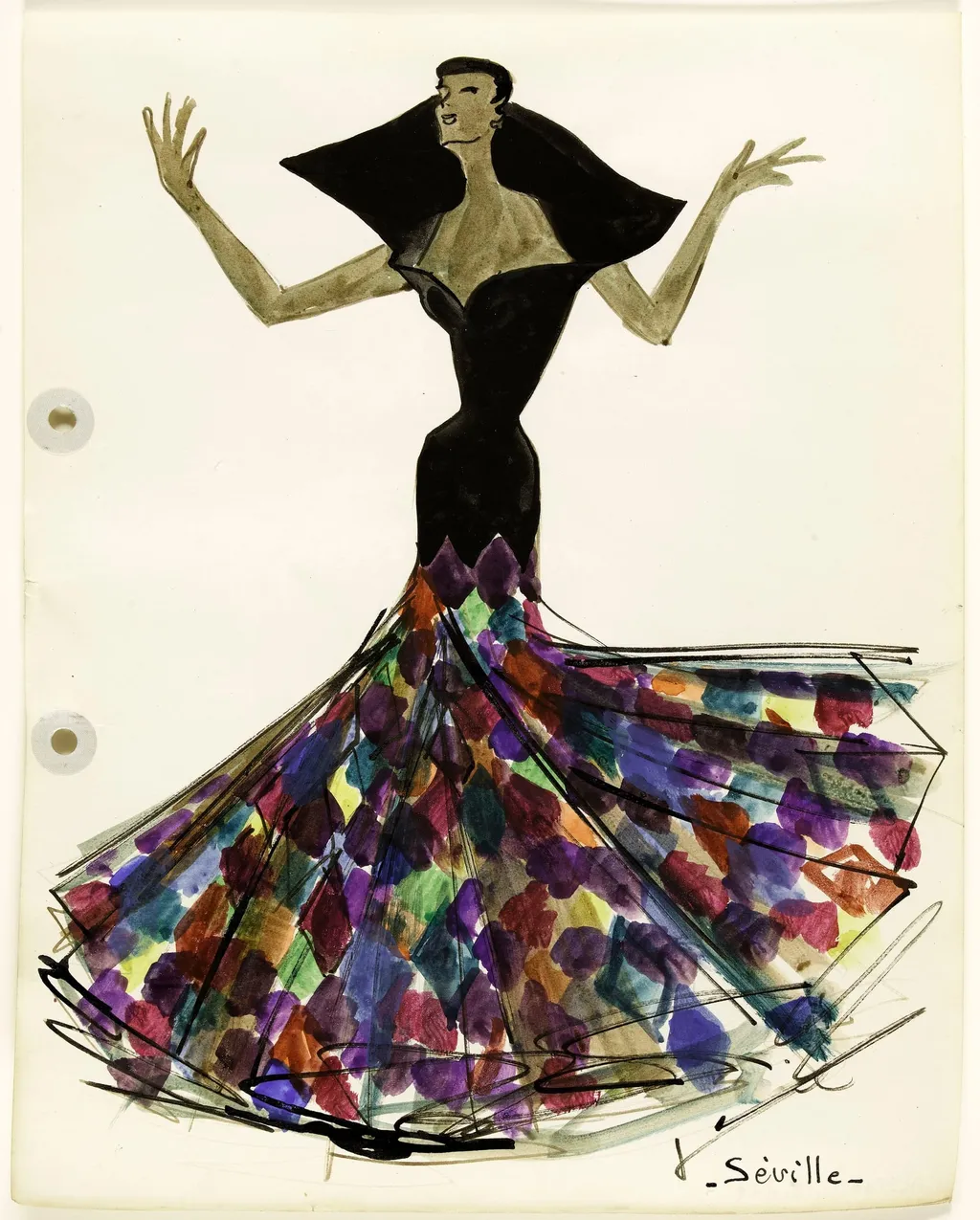
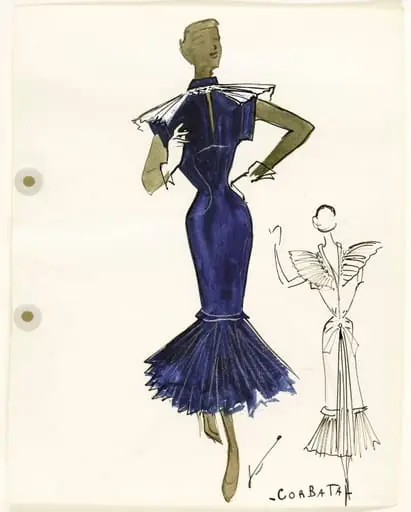
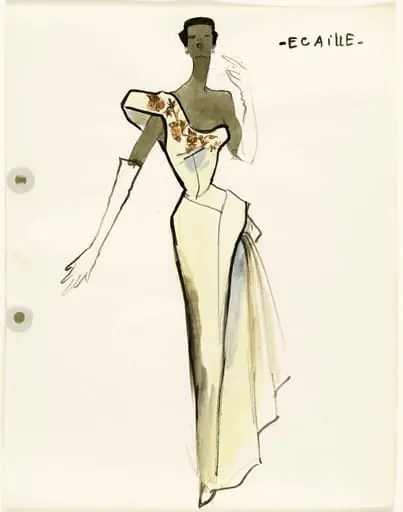
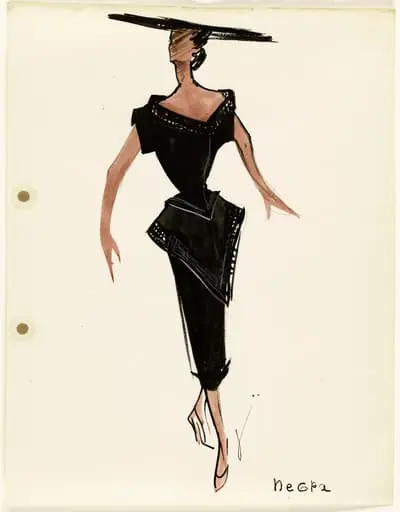
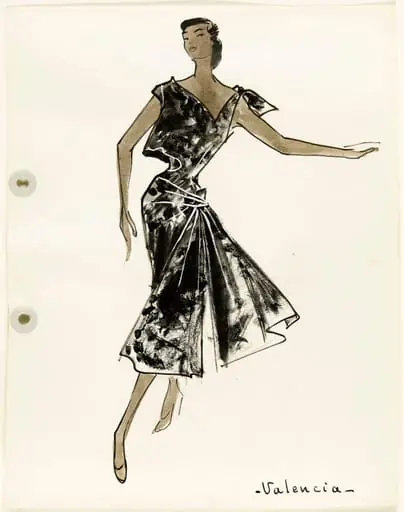
'Séville' is a drawing by Marie-Louise Carven. It dates from 1951 and is held in the collection of the Palais Galliera - Musée de la Mode de la Ville de Paris.
About this work
Overview
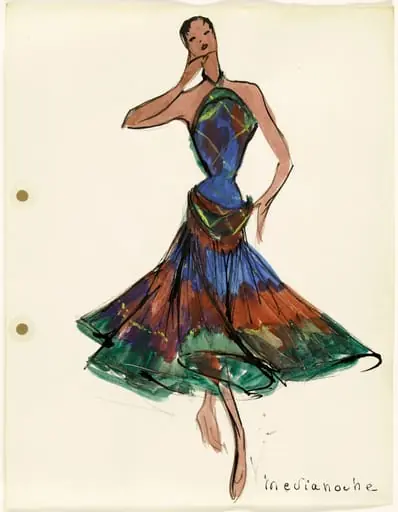
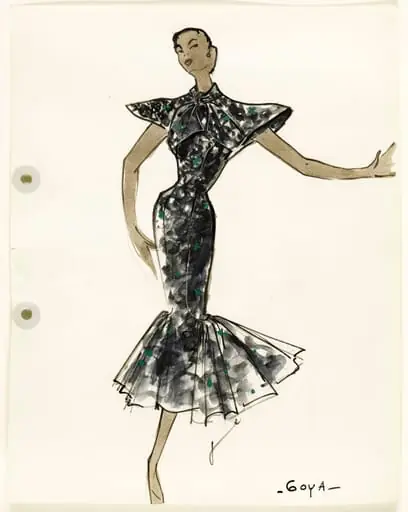
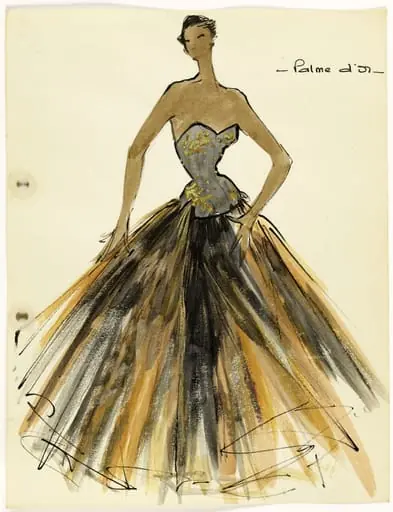
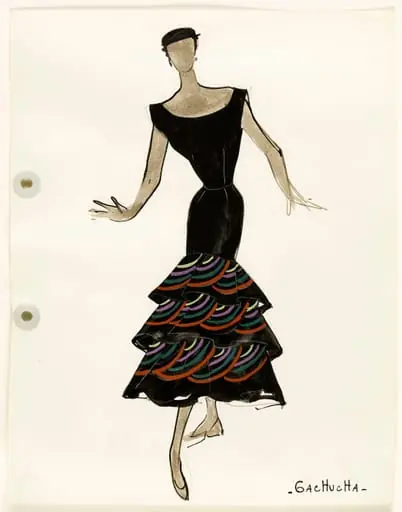
Séville is a painted representation of a woman in motion, created in 1951 by Marie-Louise Carven, a French designer best known for her contributions to fashion.
Séville is a painted representation of a woman in motion, created in 1951 by Marie-Louise Carven, a French designer best known for her contributions to fashion. Though primarily recognized for clothing design, Carven produced this artwork as a visual extension of her aesthetic sensibilities. The piece is held in the collection of the Museum of Ethnography, where it is cataloged as an image rather than a garment, reflecting its status as a standalone artistic expression.
Subject & Meaning
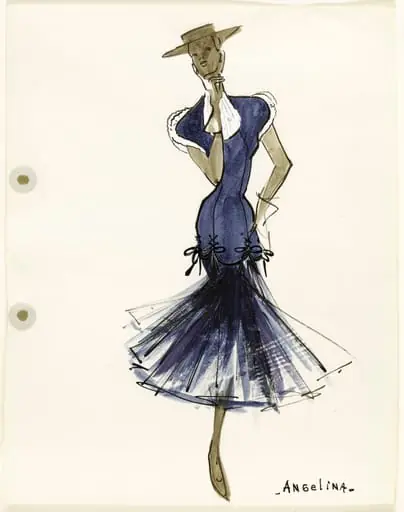
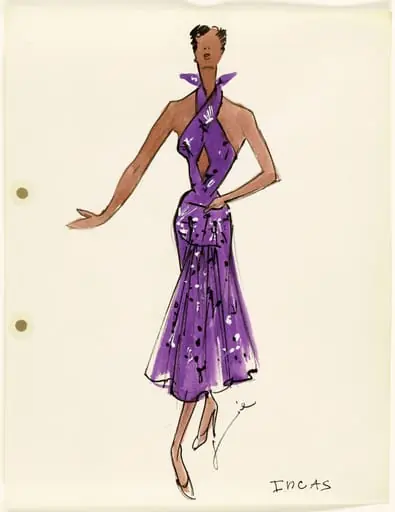
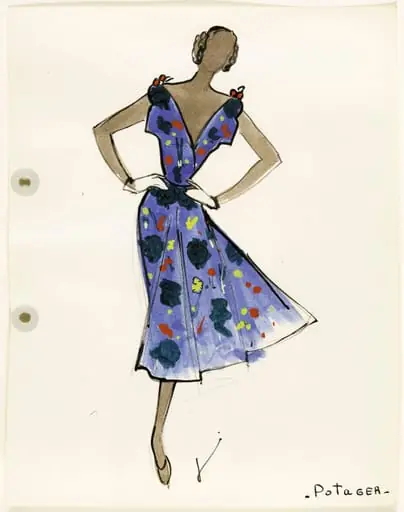
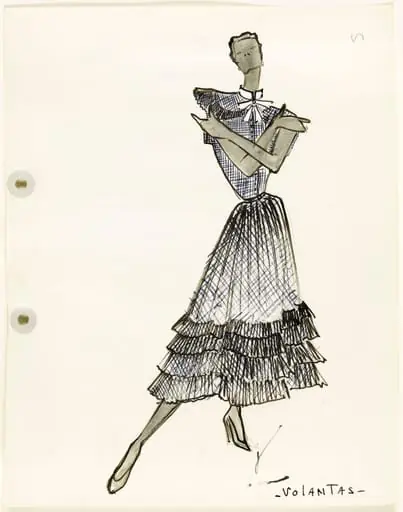
The central figure is a woman with short dark hair, dressed in a black bodice and a vividly patterned skirt, her arms raised as if dancing. The posture suggests rhythm and performance, evoking cultural or celebratory movement. The focus on attire implies an interest in how clothing interacts with bodily expression. There is no overt narrative, but the energy conveyed aligns with Carven’s broader fascination with women’s autonomy and movement in everyday life.
Technique & Style
The painting employs bold contrasts between the dark upper garment and the lively, multicolored skirt, drawing the eye to the lower half of the figure. Brushwork is loose yet deliberate, emphasizing texture and motion over fine detail. Facial features are rendered with clarity, anchoring the figure’s presence, while the background remains indistinct, isolating the subject in a moment of dynamic gesture. The style reflects a synthesis of fashion illustration and expressive figuration.
History & Provenance
Created in 1951, Séville emerged during Carven’s active years as a couturier and early pioneer of ready-to-wear fashion. It was not produced for commercial sale but likely served as a personal study or artistic experiment. The work entered the Museum of Ethnography’s collection through unknown means, possibly as a donation or acquisition tied to mid-century interest in the intersection of fashion and visual culture.
Context
In postwar France, fashion designers increasingly engaged with broader artistic movements, blurring lines between textile design and fine art. Carven’s work, including Séville, reflects this trend—her interest in movement, color, and the female form paralleled contemporaneous developments in painting and performance. The piece resonates with broader cultural shifts toward celebrating everyday vitality and feminine agency in the arts.
Legacy
Séville stands as a rare visual artifact from a designer more widely known for garments than paintings. It offers insight into Carven’s personal artistic language and her commitment to portraying women with energy and dignity. While not widely exhibited, the work contributes to scholarly understanding of how fashion designers extended their creative vision beyond textiles into other media.
Artist & collection
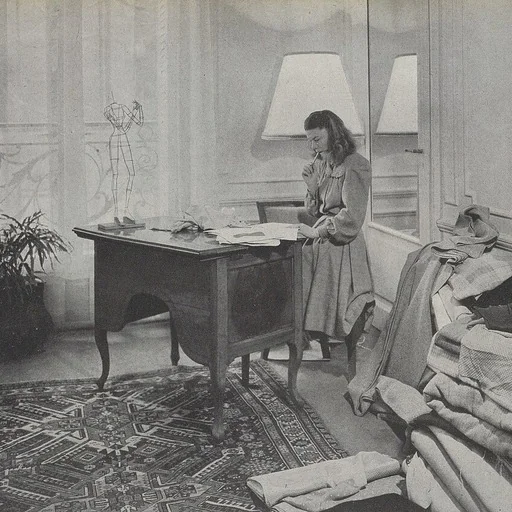
Artist
Marie-Louise Carven (31 August 1909 – 8 June 2015), born Carmen de Tommaso, was a French fashion designer who founded the house of Carven in 1945.
Museum
Palais Galliera - Musée de la Mode de la Ville de Paris
Continue through works from the same source collection.
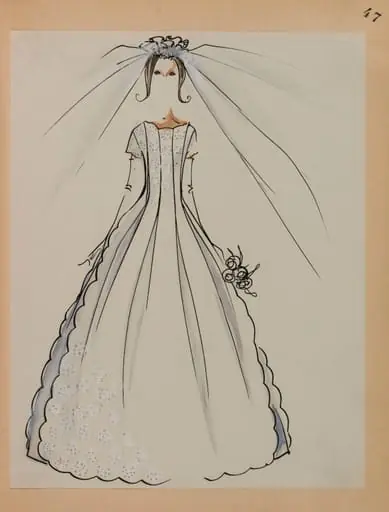 Robe de mariée festonnée et son voile
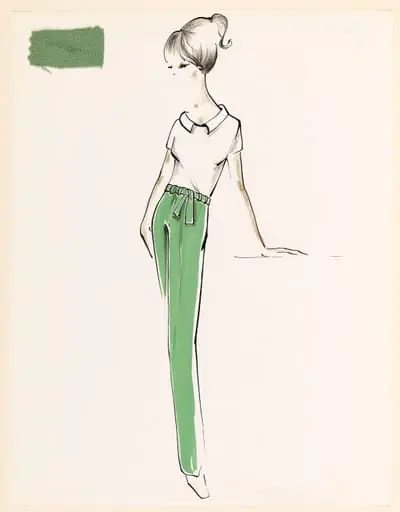 Haut blanc à manches courtes et pantalon vert à ceinture nouée
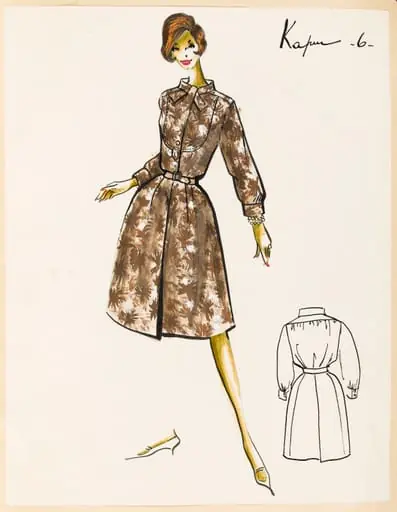 Kapur
Kapur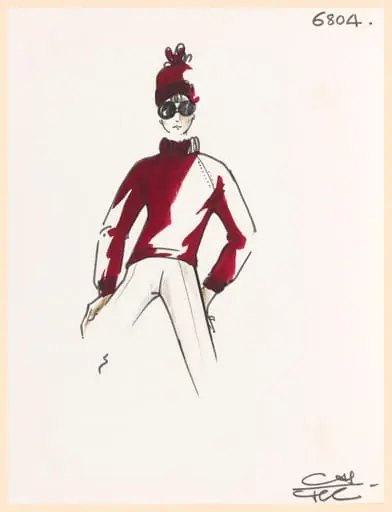 Pull-over à manches longues pourpre, bonnet assorti, pantalon et lunettes de soleil
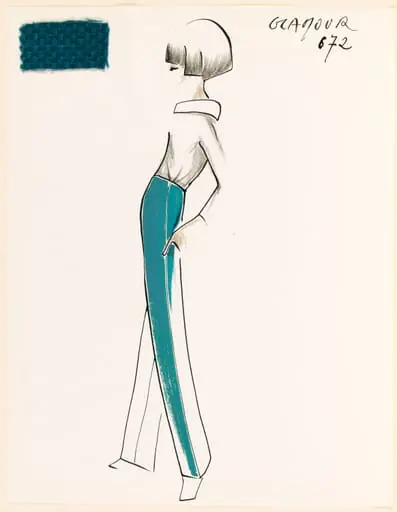 GLAMOUR
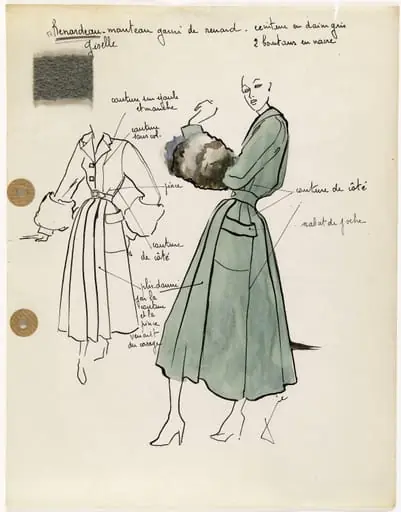 'Renardeau'
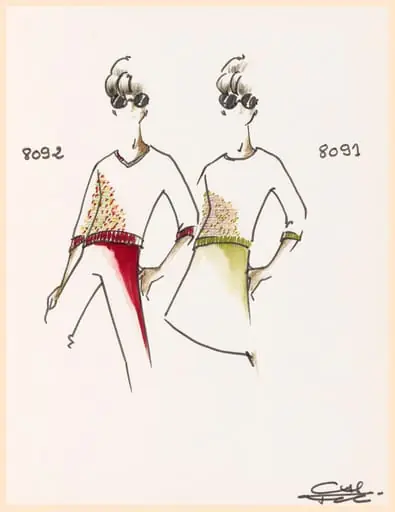 Pull-over à manches trois quarts et à encolure V à motifs multicolores, pantalon cerise et lunettes de soleil
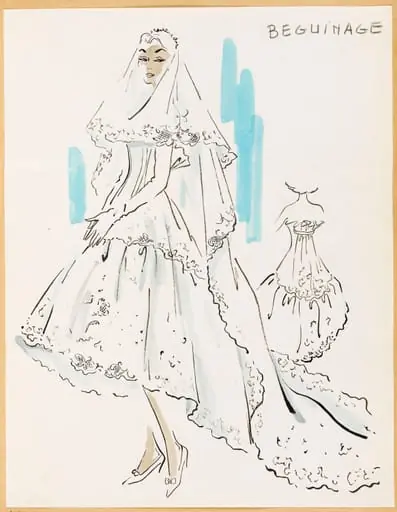 Béguinage