Artwork
Thermidor
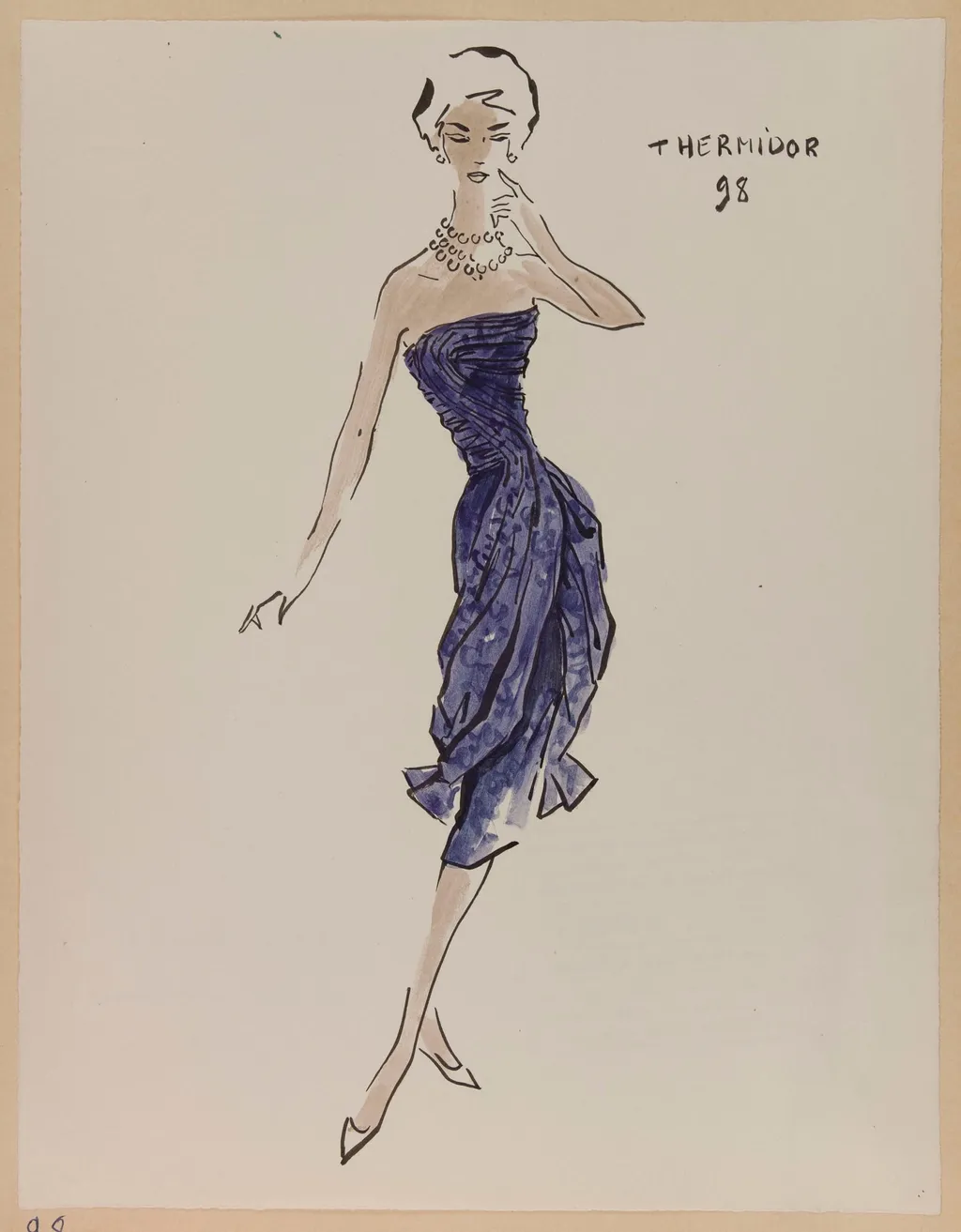
Thermidor is a drawing by Marie-Louise Carven. It dates from 1956 and is held in the collection of the Palais Galliera - Musée de la Mode de la Ville de Paris.
About this work
Overview
This piece, held at the Museum of Ethnography, presents a stylized figure in motion, embodying the elegance and simplicity characteristic of her aesthetic.
Created around 1956, *Thermidor* is a pencil drawing by French designer Marie-Louise Carven, reflecting her work beyond fashion into visual art. Though primarily known for founding her eponymous couture house in 1945 and pioneering ready-to-wear in Paris, Carven also produced illustrative works that captured the spirit of her designs. This piece, held at the Museum of Ethnography, presents a stylized figure in motion, embodying the elegance and simplicity characteristic of her aesthetic.
Subject & Meaning
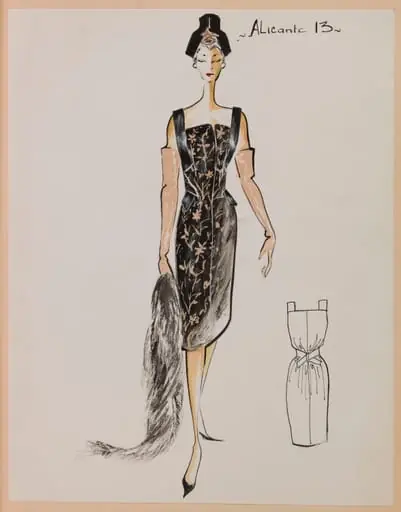
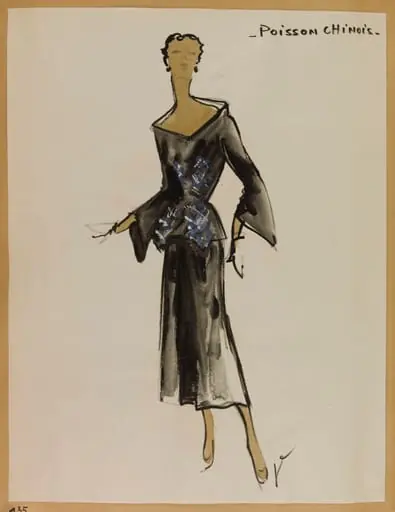
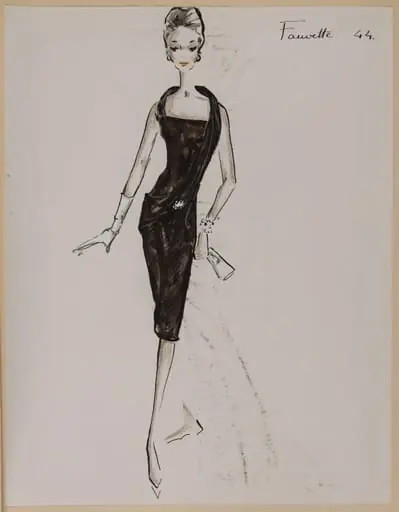
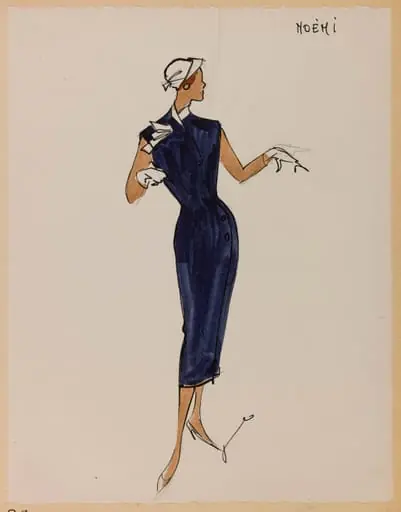
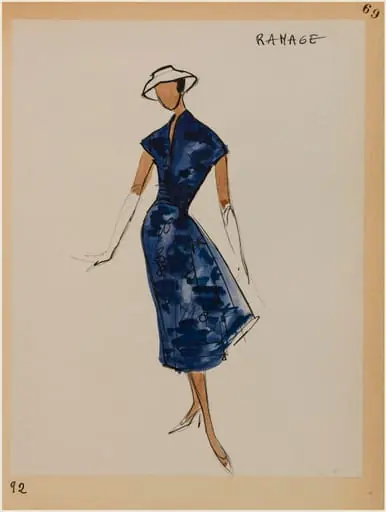
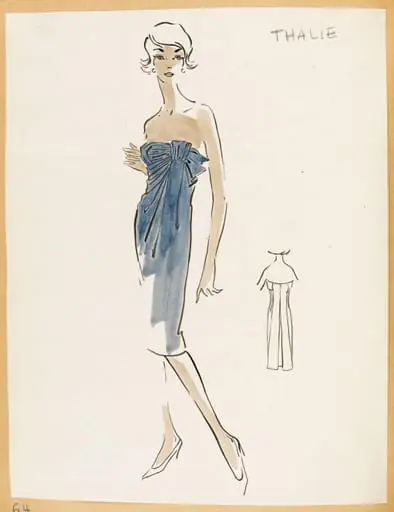
The drawing depicts a woman in a blue dress with a ruffled bodice and short skirt, adorned with a pearl necklace and high heels. Her raised hand near the face and poised stance suggest self-assurance rather than vulnerability. The lack of facial detail shifts focus to posture and silhouette, emphasizing an idealized modern femininity aligned with Carven’s vision of effortless grace. The figure’s short hair and confident bearing reflect mid-century shifts in women’s self-presentation.
Technique & Style
Executed in bold, clean lines with minimal shading, the drawing avoids intricate detail in favor of expressive simplicity. The absence of cross-hatching or tonal modeling reinforces a graphic, almost cartoon-like clarity. This restrained technique mirrors Carven’s fashion philosophy—lightness, precision, and restraint. The flatness of the form and emphasis on contour align with illustrative traditions used in fashion sketches of the era, prioritizing silhouette over realism.
History & Provenance
The drawing entered the collection of the Museum of Ethnography, though its exact acquisition history is not documented. It likely originated from Carven’s personal archive, possibly created as a study or promotional sketch for her 1950s collections. Unlike her garments, this work was not mass-produced, making it a rare surviving example of her non-textile art. Its preservation suggests recognition of its cultural value within the broader context of mid-century French design.
Context
In the mid-1950s, Parisian fashion was transitioning from haute couture exclusivity toward accessible ready-to-wear. Carven, among the first to embrace this shift, designed for the modern, active woman. *Thermidor* reflects this ethos: the dress’s playful ruffles and short hemline echo her commercial lines, while the figure’s posture signals independence. The drawing exists at the intersection of fashion illustration and cultural portraiture, capturing a moment when style became synonymous with personal autonomy.
Legacy
Though Carven’s fashion house continued under new leadership, her illustrative work remains a quiet testament to her multidisciplinary approach. *Thermidor* stands as a physical link between her textile designs and her visual language, offering insight into how she conceptualized movement and identity in clothing. It contributes to broader scholarship on women designers who shaped modern fashion through both production and personal artistic expression.
Artist & collection
Artist
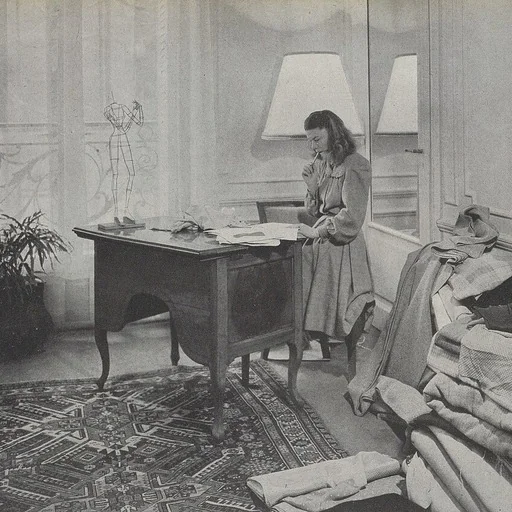
Marie-Louise Carven (31 August 1909 – 8 June 2015), born Carmen de Tommaso, was a French fashion designer who founded the house of Carven in 1945.
Museum
Palais Galliera - Musée de la Mode de la Ville de Paris
Continue through works from the same source collection.
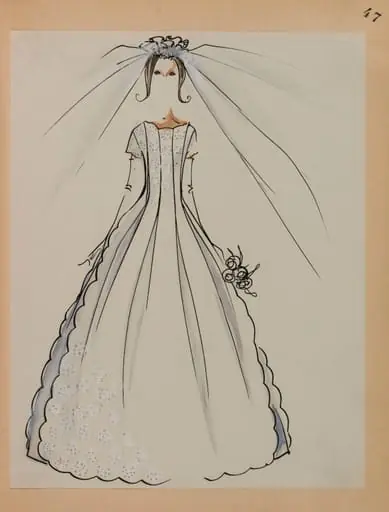 Robe de mariée festonnée et son voile
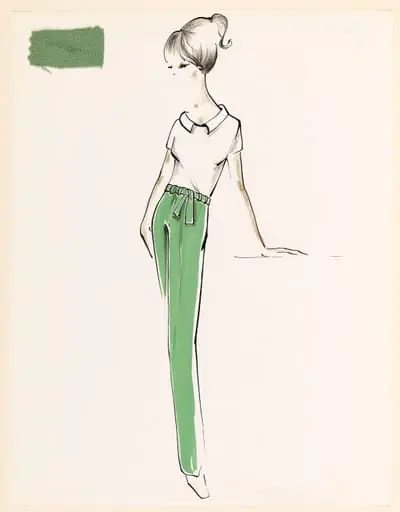 Haut blanc à manches courtes et pantalon vert à ceinture nouée
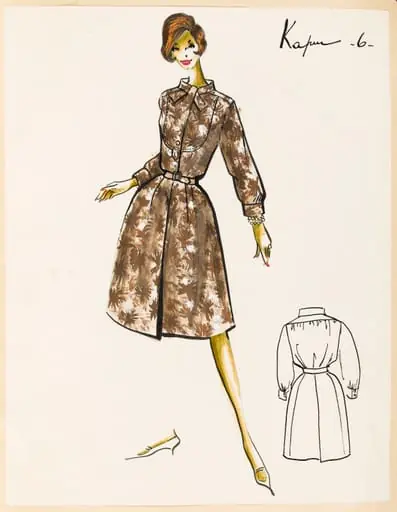 Kapur
Kapur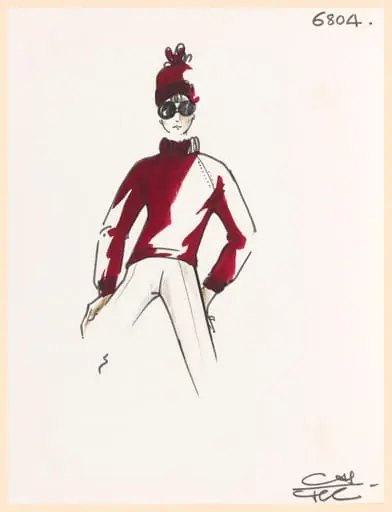 Pull-over à manches longues pourpre, bonnet assorti, pantalon et lunettes de soleil
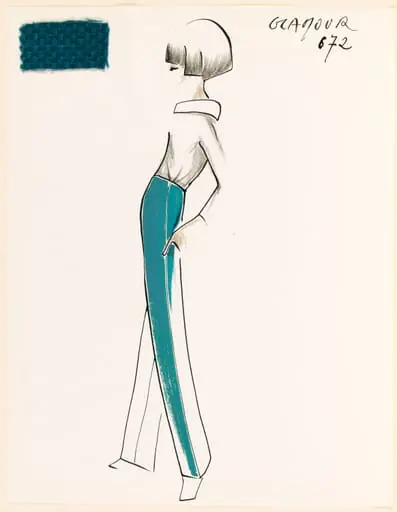 GLAMOUR
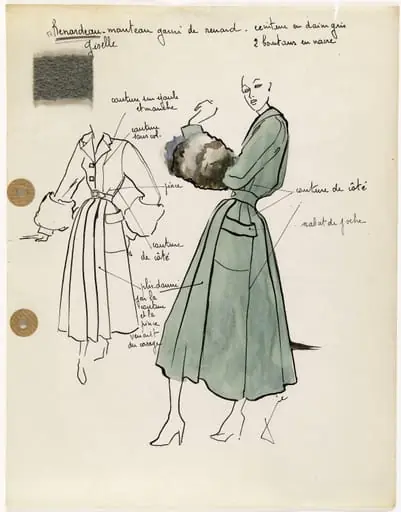 'Renardeau'
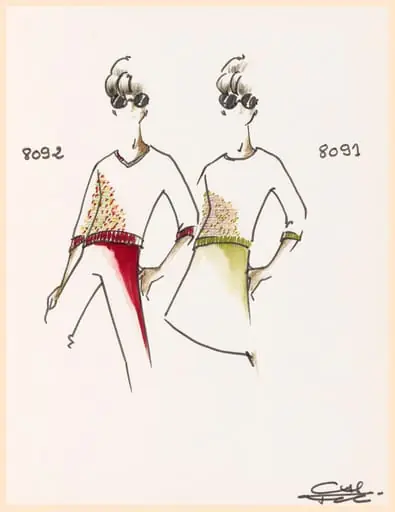 Pull-over à manches trois quarts et à encolure V à motifs multicolores, pantalon cerise et lunettes de soleil
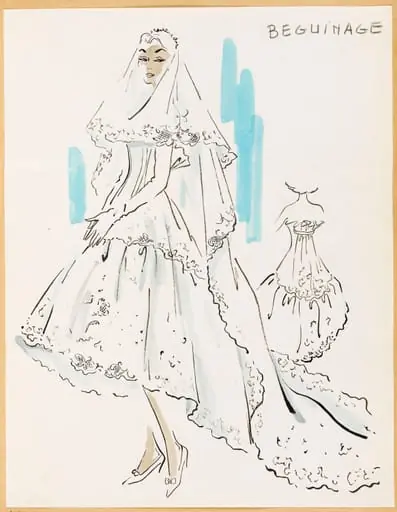 Béguinage