Artwork
Still Life with Flowers and Fruit
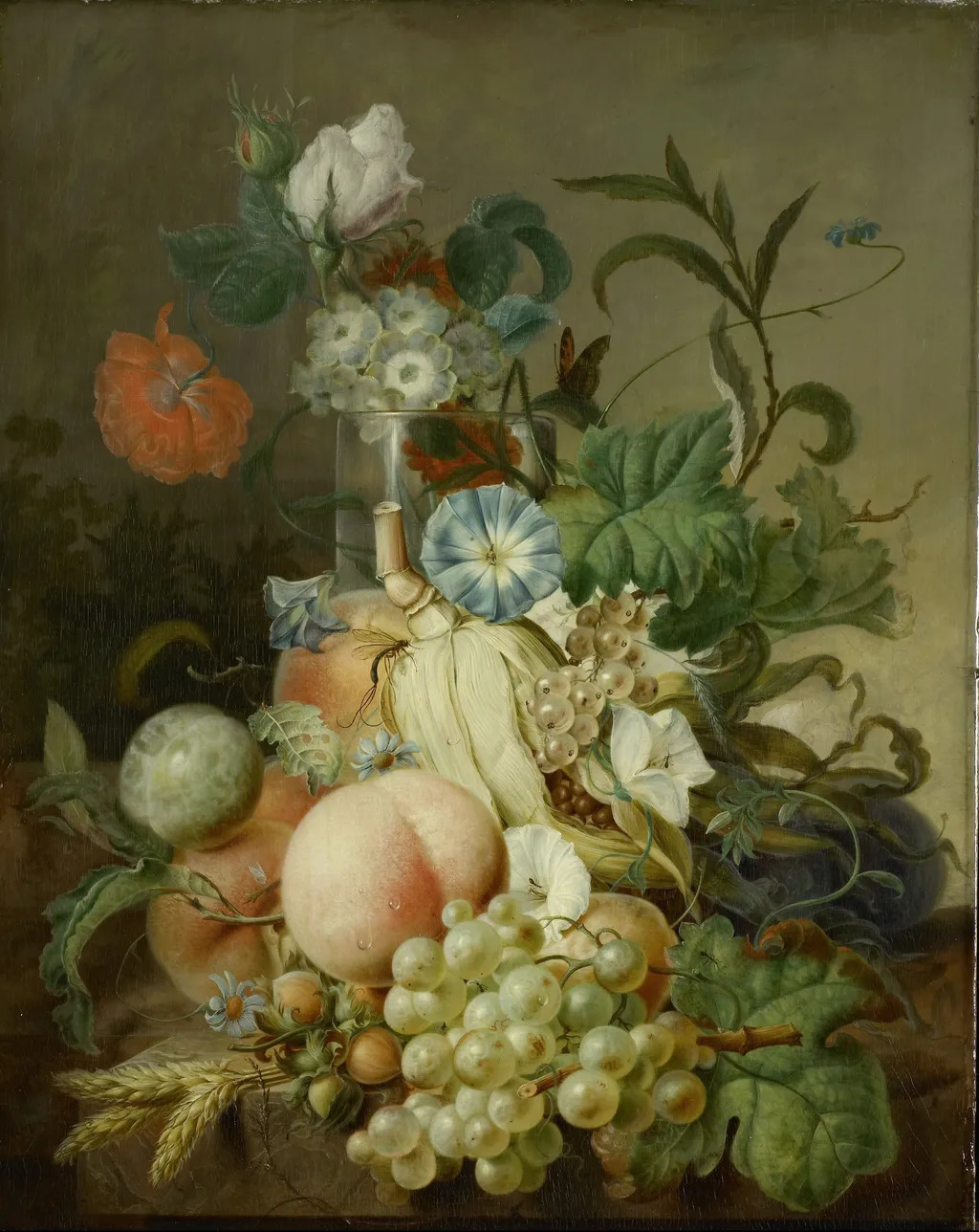
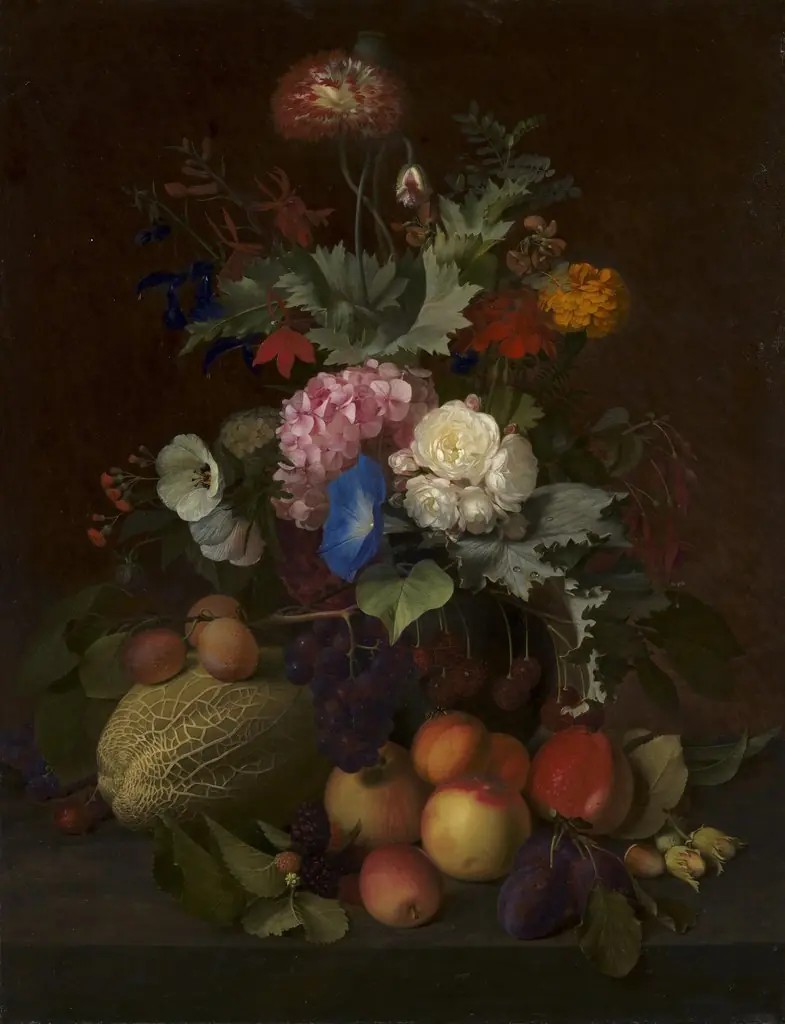
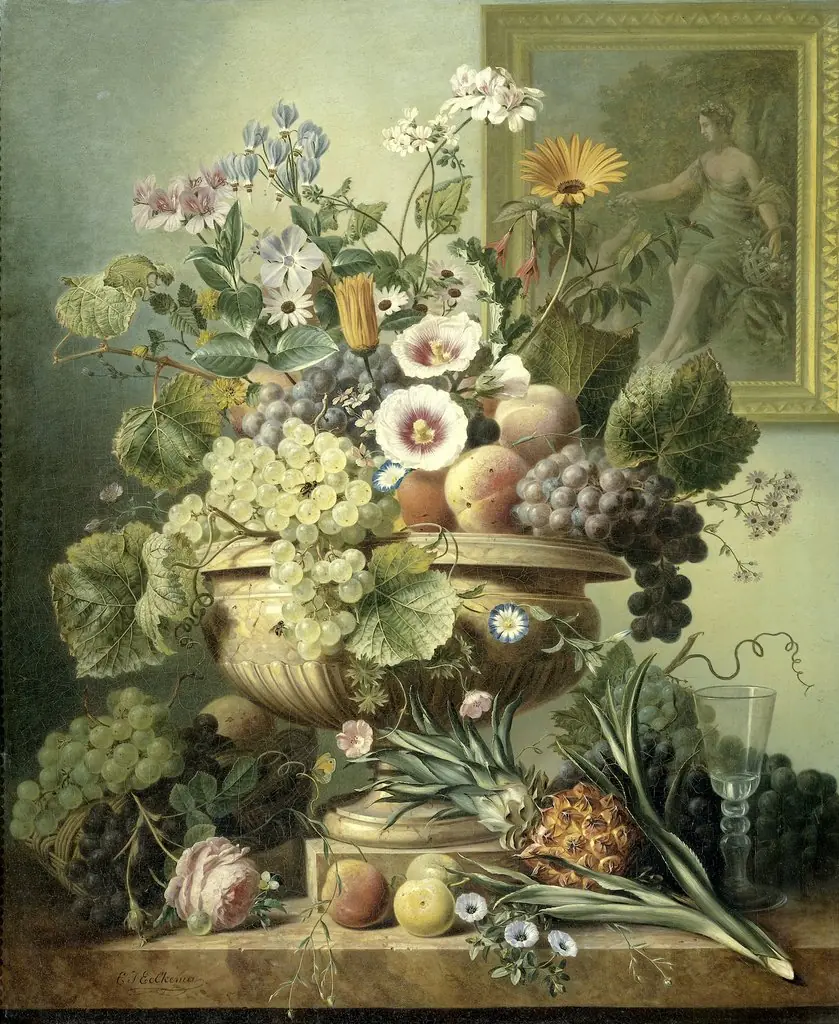
Still Life with Flowers and Fruit is an oil painting by Jan Evert Morel. It dates from 1800 and is held in the collection of the Rijksmuseum.
About this work
Technique & Style
The arrangement of flowers and fruit demonstrates a restrained yet expressive brushwork, reflecting the formal conventions of the genre during that period.
The work is executed in oil paint on a wooden panel, measuring 40.5 cm by 32.5 cm. Its surface shows typical handling marks from centuries of display and has been carefully preserved within the Rijksmuseum collection, retaining the vibrant coloration and compositional balance characteristic of early 19th-century Dutch still-life painting. The arrangement of flowers and fruit demonstrates a restrained yet expressive brushwork, reflecting the formal conventions of the genre during that period.
History & Provenance
Still Life with Flowers and Fruit was painted by Jan Evert Morel in 1800. The oil on panel painting, measuring 40.5 × 32.5 cm, depicts flowers and fruit. The work was owned by Jacobus Salomon Hendrik van de Poll before entering the collection of the Rijksmuseum, where it is currently held.
The painting Still Life with Flowers and Fruit by Jan Evert Morel is held in the collection of the Rijksmuseum. The work was created in 1800 and is executed in oil on panel. While the current holding institution is the Rijksmuseum, the inventory history notes that the artwork was previously owned by Jacobus Salomon Hendrik van de Poll.
The provided sources do not contain specific accession numbers or a detailed record of public exhibitions for this piece.
Overview
Jan Evert Morel’s Still Life with Flowers and Fruit, executed in oil around 1800, presents a carefully arranged composition of blossoms and produce. The work is part of the Rijksmuseum’s collection and exemplifies the Dutch tradition of still‑life painting that emphasizes visual richness and compositional balance.
Subject & Meaning
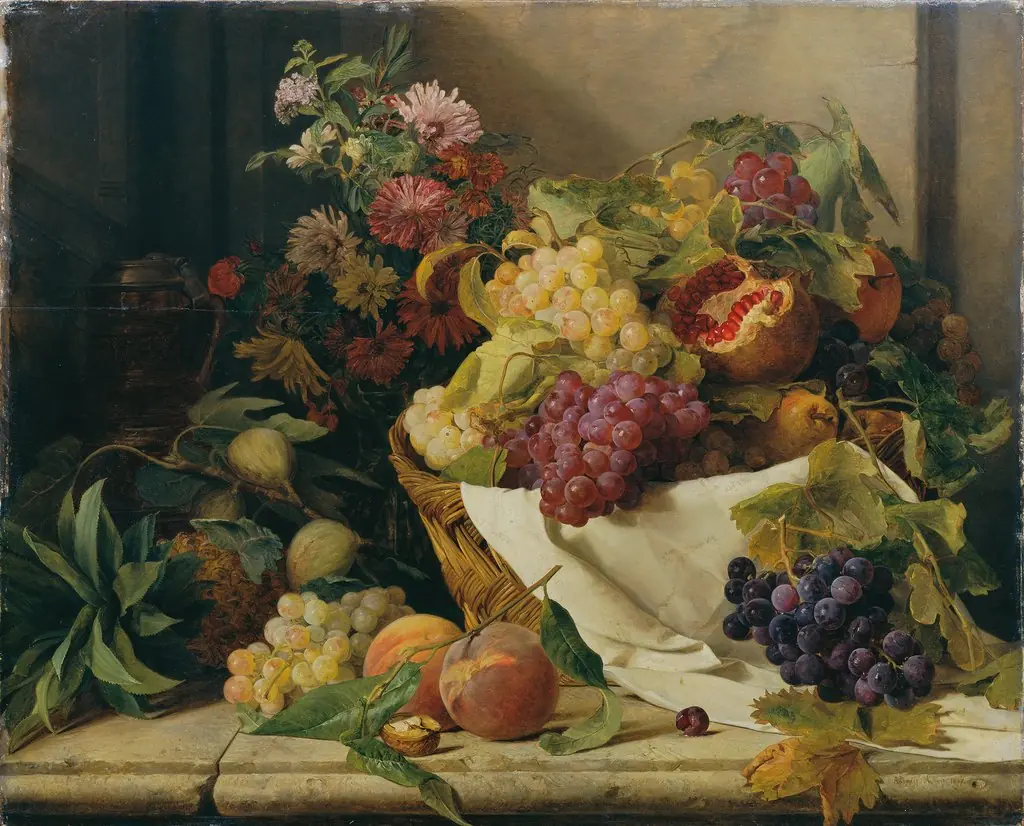
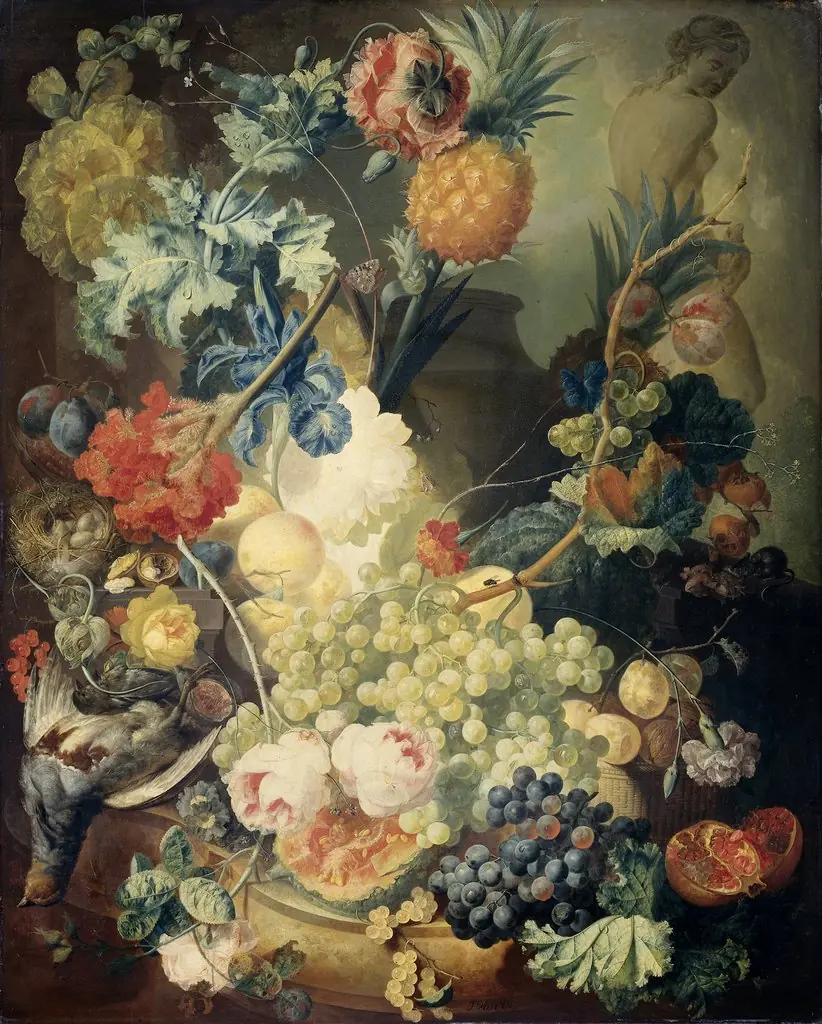
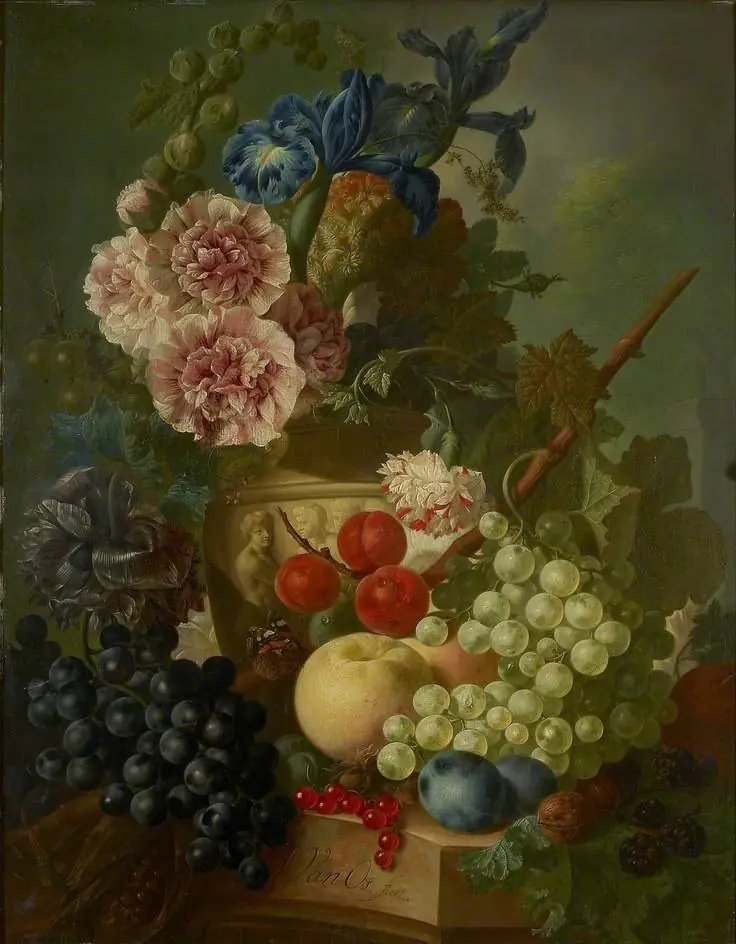
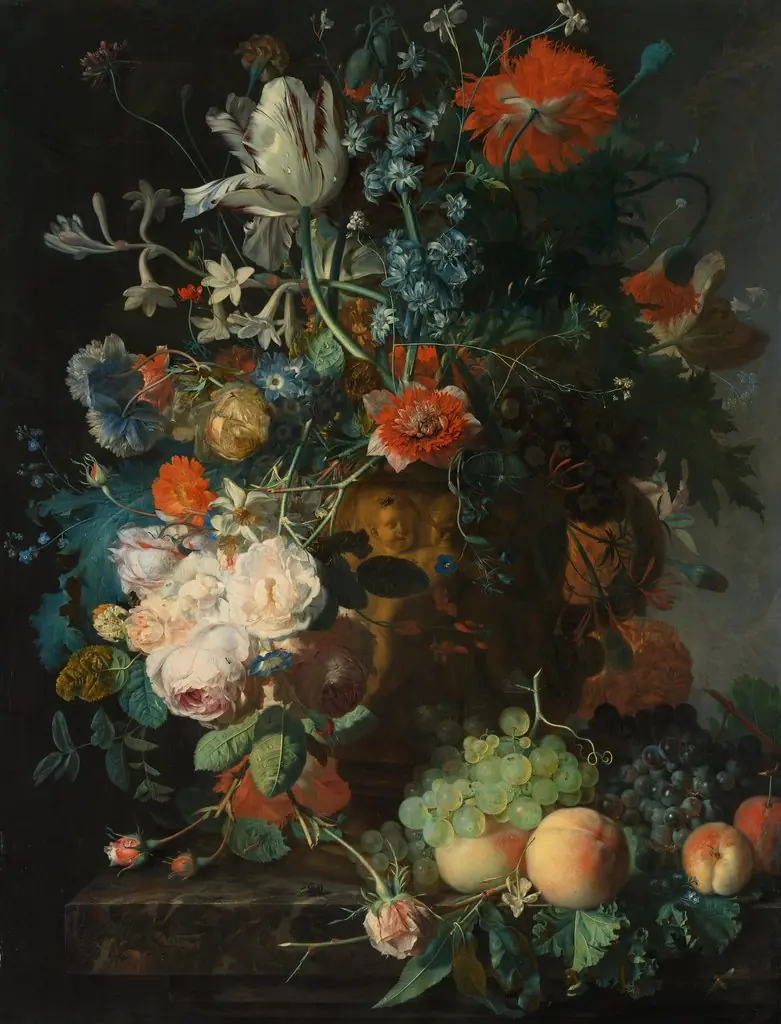
The canvas features a vase holding white, blue and orange flowers surrounded by verdant foliage. Adjacent to the vase lie ripe peaches, clusters of grapes and a corn ear, together suggesting a celebration of seasonal bounty and the transient beauty of nature’s harvest.
Context
During the late eighteenth and early nineteenth centuries, Dutch artists continued to explore still‑life subjects as a means of demonstrating technical skill and moral symbolism. Morel’s inclusion of both floral and edible elements aligns with contemporary interests in naturalism and the didactic representation of abundance.
Own this work as a print
Artist & collection