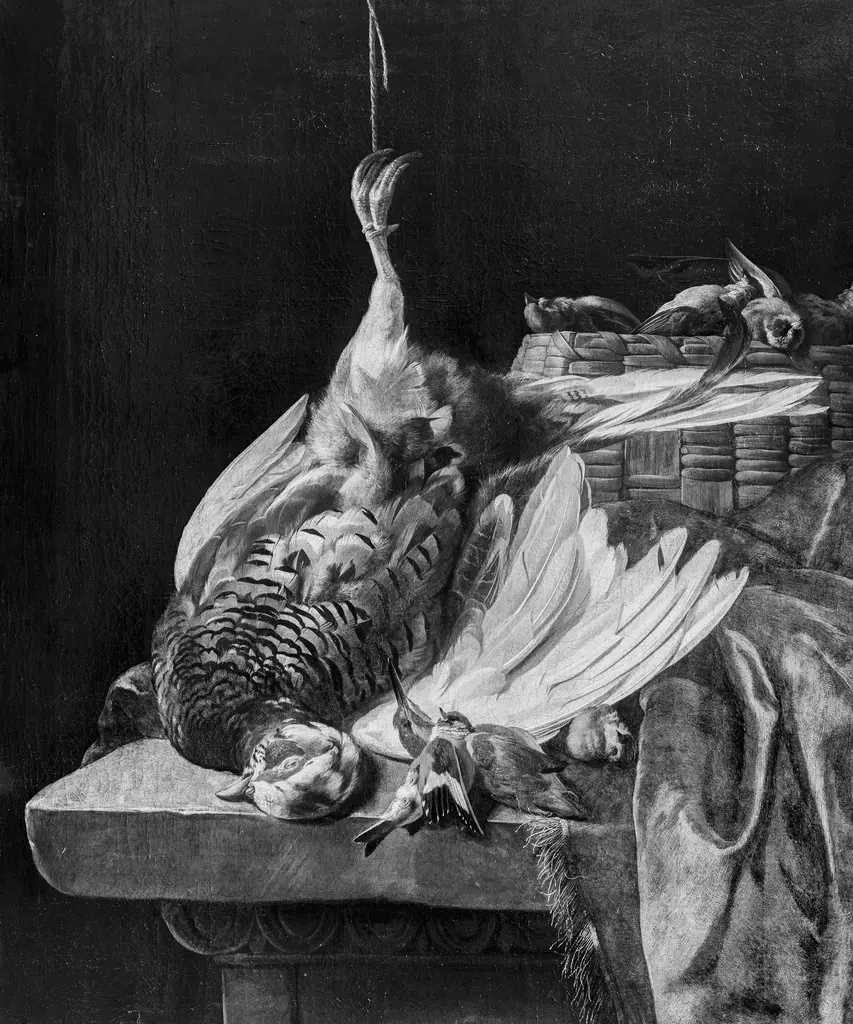
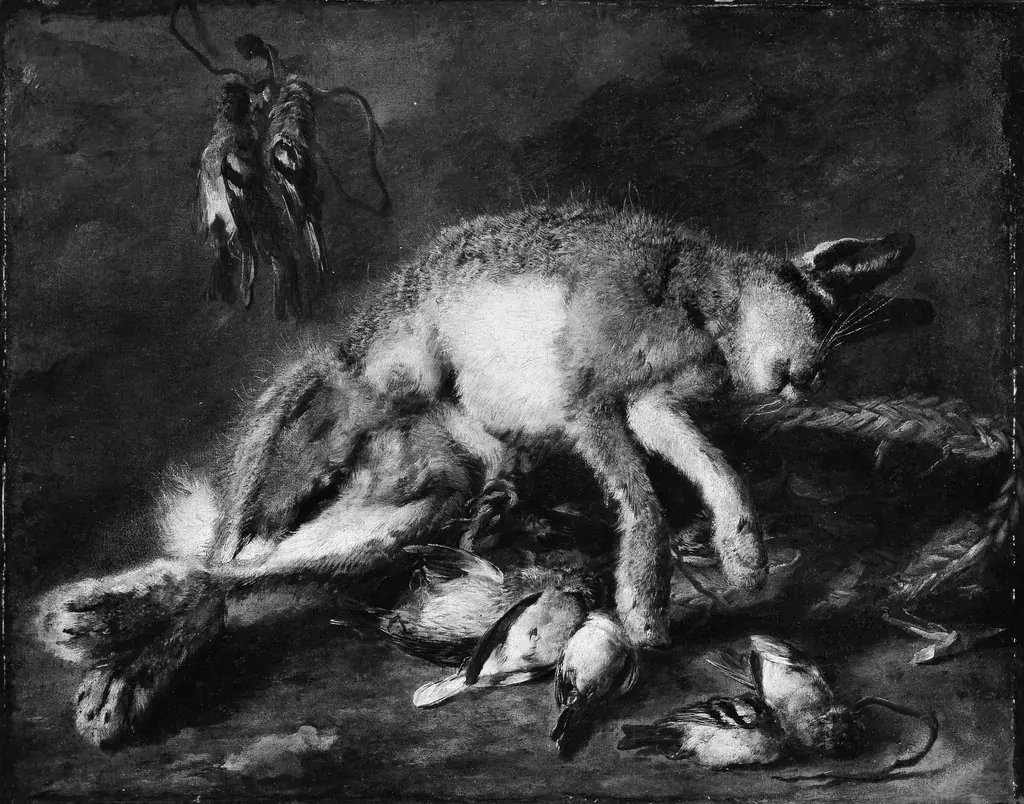
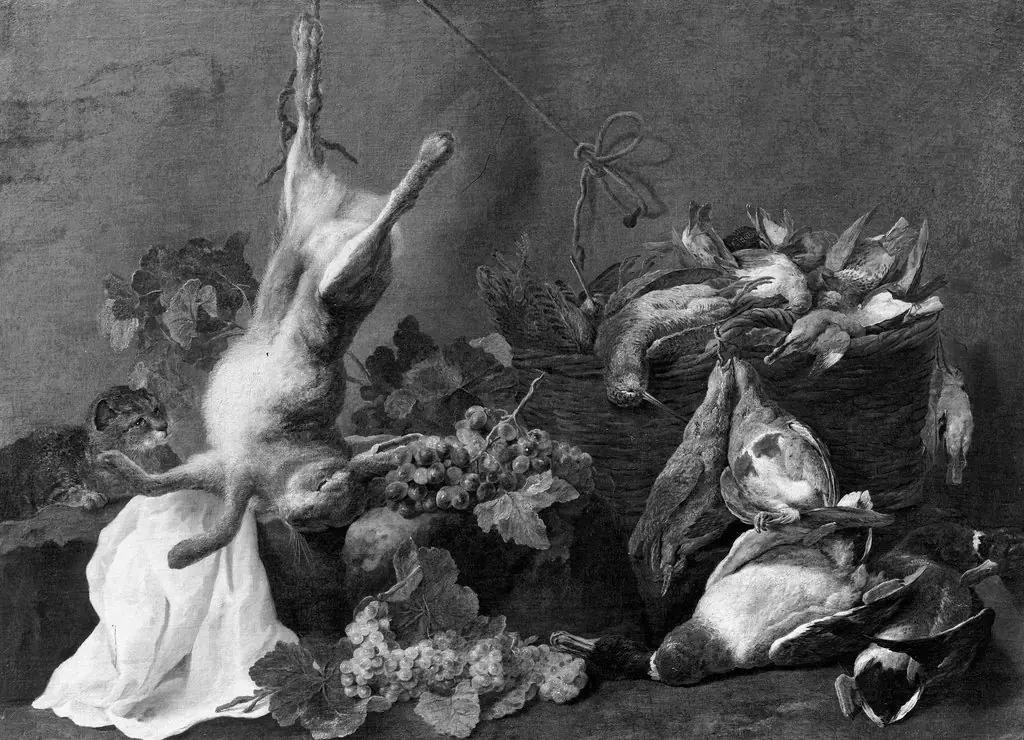
Artwork
Dead Game
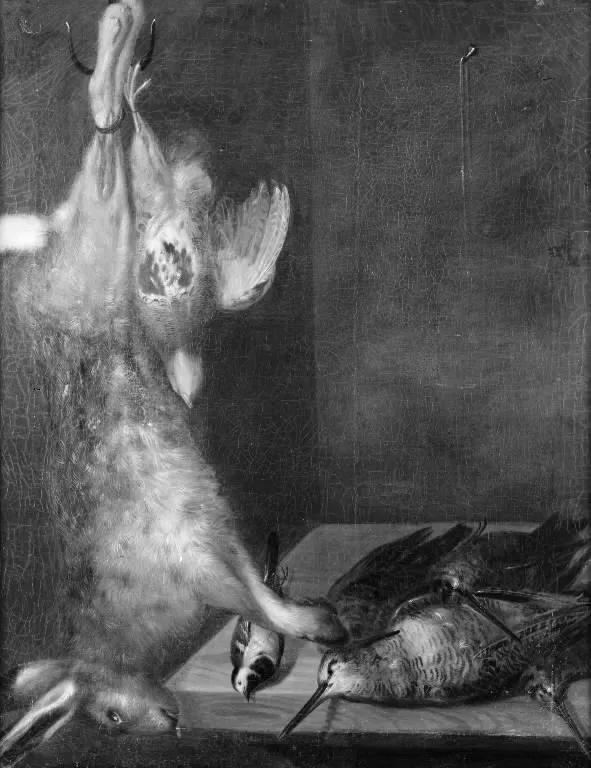
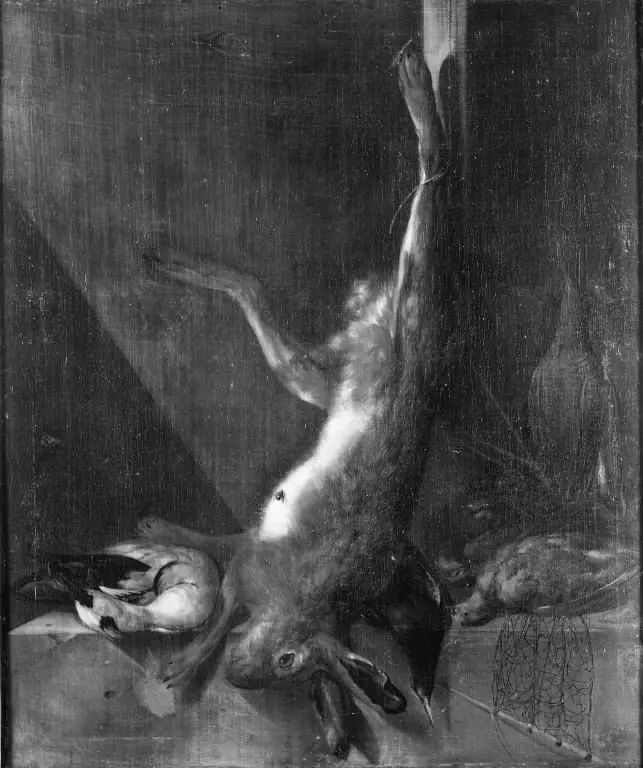
Dead Game is an oil painting by Johann Georg de Hamilton. It dates from 1712 and is held in the collection of the Statens Museum for Kunst.
About this work
Subject & Meaning
As a work within the still life genre, the painting focuses on the representation of these dead creatures, capturing them as trophies of the hunt.
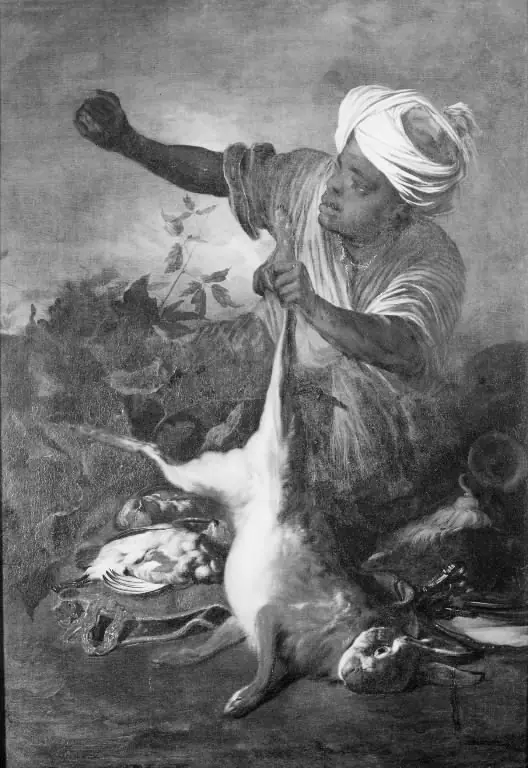
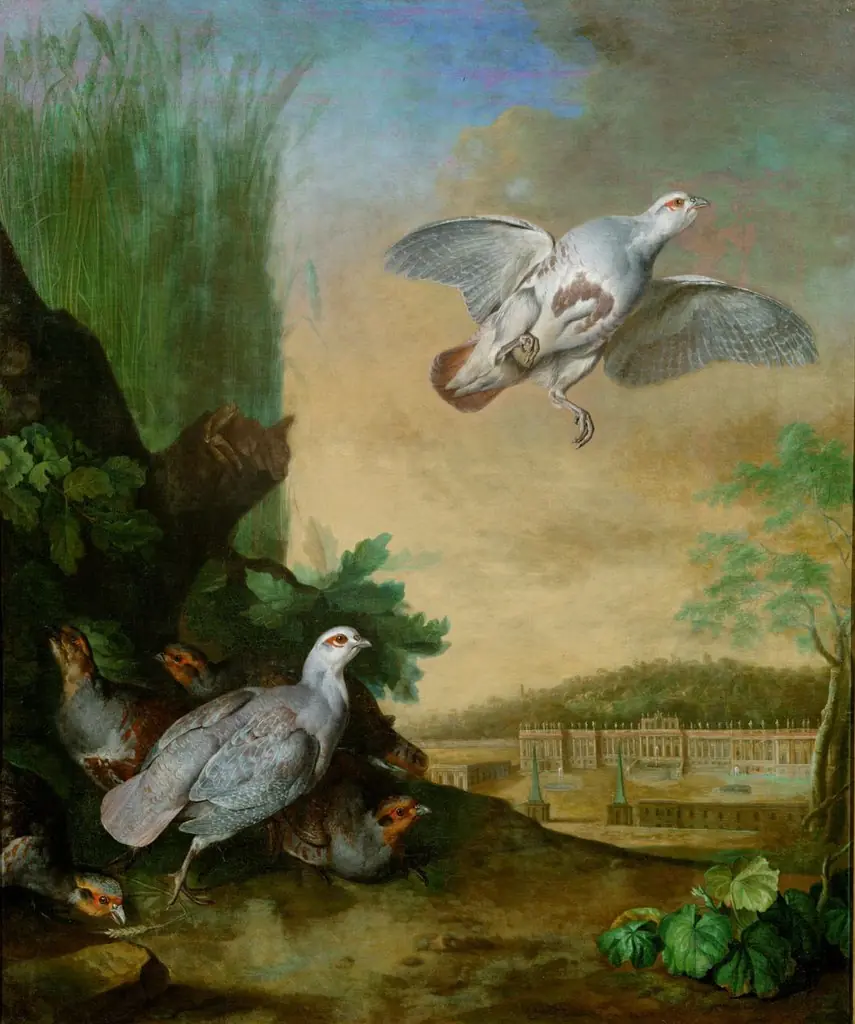
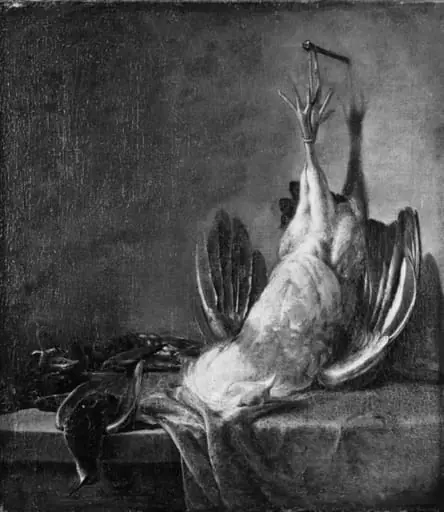
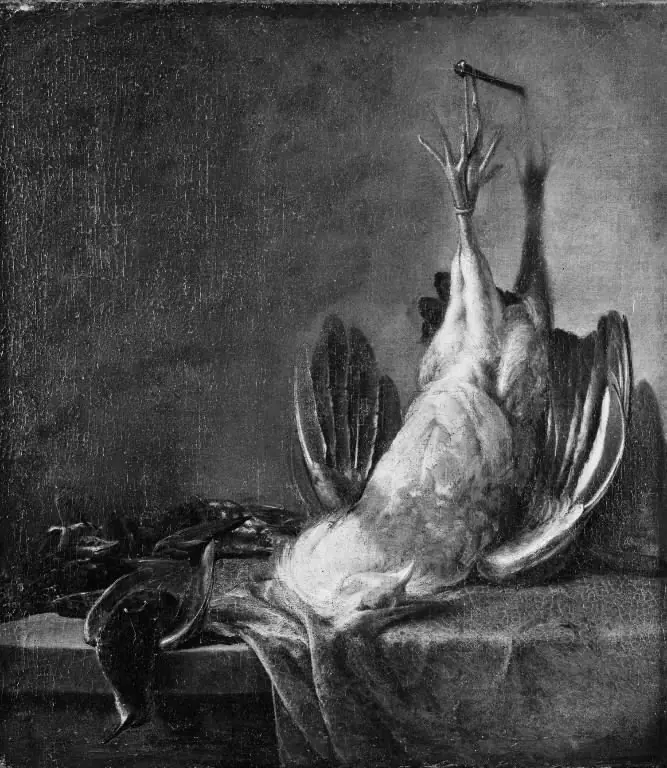
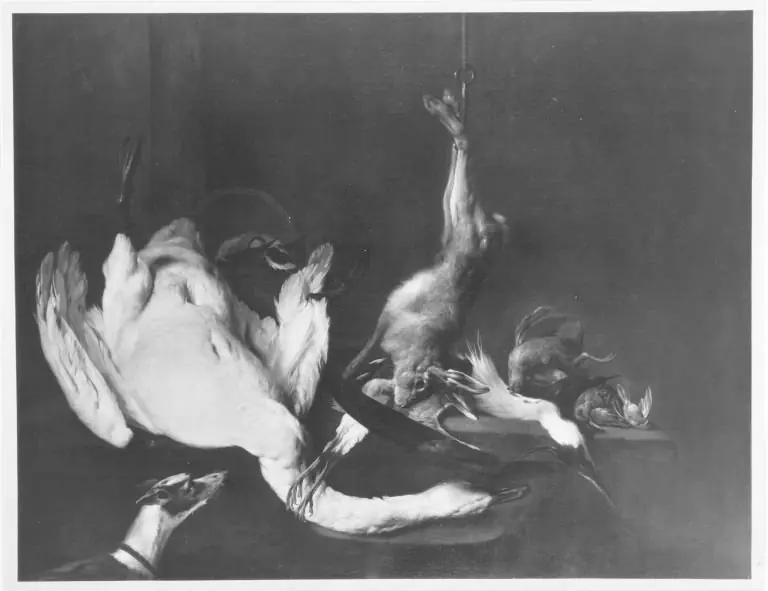
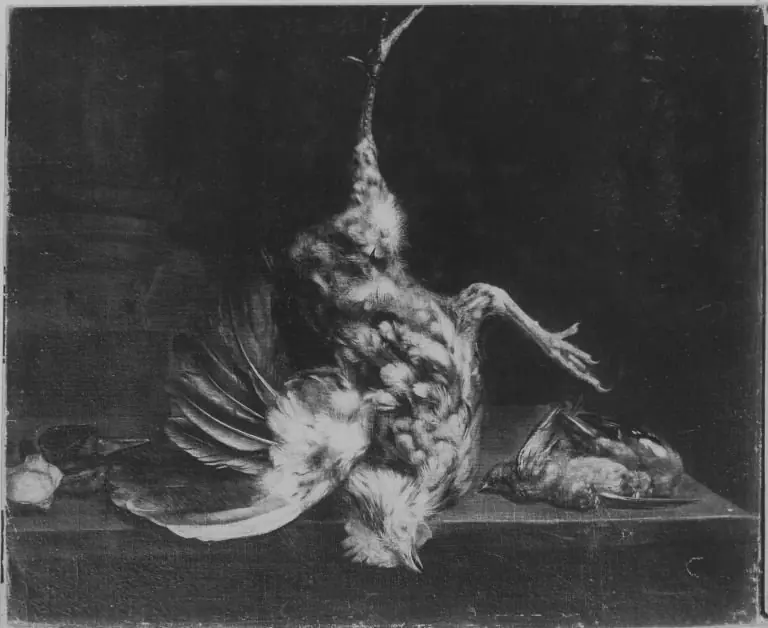
Johann Georg de Hamilton's 1712 oil painting Dead Game is a still life that depicts the carcasses of hunted animals. The composition specifically features a rabbit and a bird as its primary subjects. As a work within the still life genre, the painting focuses on the representation of these dead creatures, capturing them as trophies of the hunt.
The title itself directly indicates the nature of the subject matter, emphasizing the lifeless state of the game animals portrayed on the canvas.
History & Provenance
The painting Dead Game was created in 1712 by the artist Johann Georg de Hamilton. Executed in oil on canvas, the work measures 775 cm in height and 600 cm in width. The piece depicts a still life arrangement featuring a rabbit and a bird. It is currently held in the collection of the Statens Museum for Kunst, where it remains located.
Dead Game is held in the collection of the Statens Museum for Kunst in Denmark. According to the Wikidata record for the painting, its location is listed as the Statens Museum for Kunst, which is also identified as the holding collection.
No specific inventory or accession number is recorded in the available sources, and no exhibition history is documented.
Context
Dead Game is a still life painted in oil on canvas by Johann Georg de Hamilton in 1712. The work depicts a dead rabbit alongside a bird and measures 775 cm by 600 cm. It belongs to the collection of the Statens Museum for Kunst in Copenhagen, where it is displayed as part of their holdings of Northern European painting. Scholars have examined the painting in studies of early 18th-century hunting imagery and the symbolic use of slaughtered game in European art, situating it within de Hamilton's broader practice of naturalistic still lifes and his influence on later Dutch and German genre painters.
Its composition and iconography have been cited in analyses of aristocratic pastimes and moralizing themes in Baroque visual culture.
The painting's provenance and display history at the Statens Museum for Kunst underscore its significance within institutional collections of German Baroque art.
Scholarly discourse on Dead Game contributes to ongoing interpretations of still life as a genre that encodes social and ethical narratives, reinforcing its standing in art historical narratives of the period.
Overview
Dead Game is a still life painting executed in oil by Johann Georg de Hamilton in 1712. It is now held at the Statens Museum for Kunst.
Technique & Style
De Hamilton's use of chiaroscuro creates a sense of depth and volume, with light and shadow dramatizing the scene and drawing attention to the central figures. The oil paint is rendered to emphasize the textures and forms of the dead animals.
Artist & collection