Artwork
Untitled
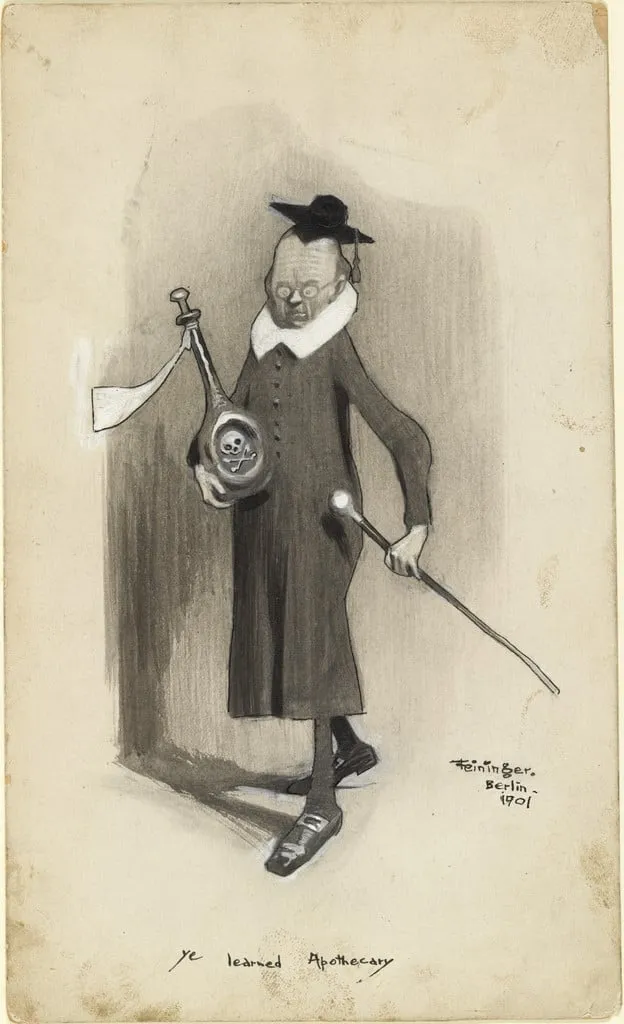
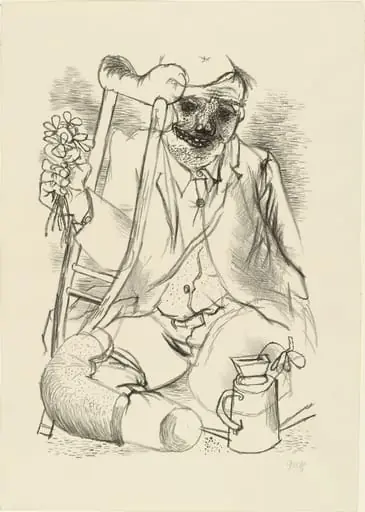
Untitled is a watercolor drawing by Lyonel Feininger. It dates from 1901 and is held in the collection of the Museum of Modern Art.
About this work
The caption at the bottom says *"Ye learned Apothecary,"* which hints this might be a joke about a pharmacist or healer.
This drawing shows a tall, lanky figure in old-fashioned clothes. The person wears a long coat, a ruffled collar, and a black hat. In one hand, they hold a walking stick and a small sign with a skull on it. The other hand clutches a strange, hat-like object. The whole scene looks like a sketchy, dark outline with some shading.
The caption at the bottom says *"Ye learned Apothecary,"* which hints this might be a joke about a pharmacist or healer. The artist signed it in the corner with the year 1901.
If you like this style, check out Lyonel Feininger.
Overview
Created in 1901, this drawing by Lyonel Feininger is executed in opaque watercolor, pencil, and ink on paper-faced board. It is part of the collection at The Museum of Modern Art. The work is a small-scale, highly detailed figure study that blends observational sketching with satirical intent, reflecting Feininger’s early interest in character types and social commentary before his later shift toward abstraction.
Subject & Meaning
The figure depicts a gaunt, elderly man dressed in outdated attire—long coat, ruffled collar, and wide-brimmed hat—carrying a walking stick and a small sign bearing a skull. In his other hand, he holds an ambiguous, hat-like object, possibly a vessel or apothecary tool. The inscription 'Ye learned Apothecary' suggests a tongue-in-cheek portrayal of a quack healer, critiquing outdated medical practices through exaggerated costume and demeanor.
Technique & Style
Feininger employs loose, sketchy lines and subtle ink washes to define form, with minimal color applied in flat, opaque watercolor tones. Pencil underdrawing remains visible in places, emphasizing the work’s preparatory quality. The shading is restrained, creating a somber, atmospheric effect without heavy modeling. The composition is tightly focused, isolating the figure against an empty ground to heighten its eccentricity.
History & Provenance
The drawing was made during Feininger’s early years in Germany, before his move to the United States and his association with the Bauhaus. It remained in private hands until acquired by The Museum of Modern Art, where it entered the collection as part of a broader effort to document the artist’s formative graphic work. Its date and signature confirm its origin in 1901, placing it among his earliest surviving drawings.
Context
In early 20th-century Europe, caricature and satirical illustration were common in periodicals, and Feininger contributed to such publications before turning to fine art. This drawing reflects his engagement with folkloric and grotesque archetypes, a trend seen in German and French graphic traditions. The apothecary motif may reference contemporary skepticism toward traditional medicine and the rise of scientific pharmacy.
Legacy
Though less known than his later abstract compositions, this work illustrates Feininger’s foundational skill in observational drawing and narrative economy. It reveals his early fascination with human types and social roles, themes that would subtly inform his later architectural and mechanistic forms. The drawing stands as a quiet precursor to his mature style, anchored in human observation rather than pure abstraction.
Artist & collection

Artist
Lyonel Charles Adrian Feininger was a German-American painter, and a leading exponent of Expressionism.

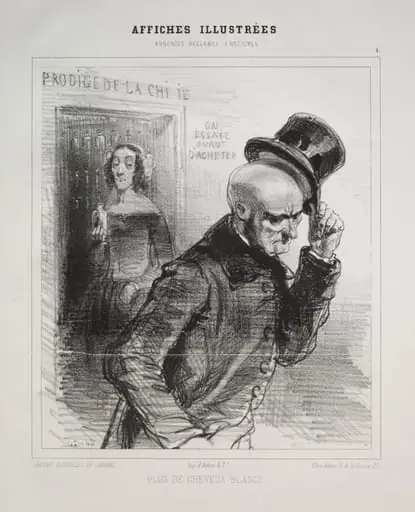 Affliches Illustrées
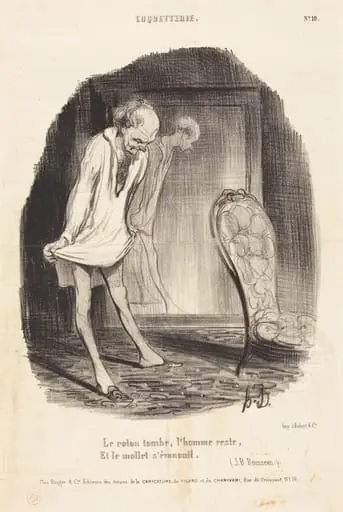 Le coton tombe, l'homme reste...
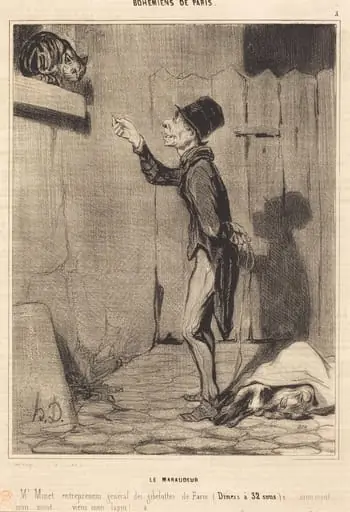 Le Maraudeur
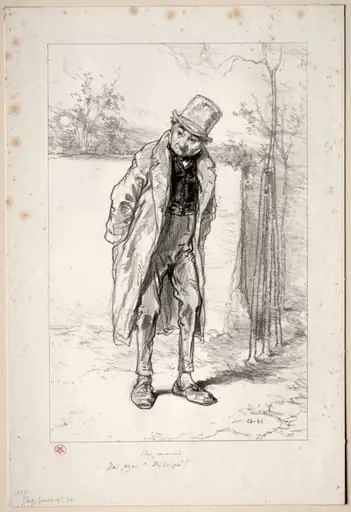 Physionomies Parisiennes: Au Marais. Ici, Azor! ici!
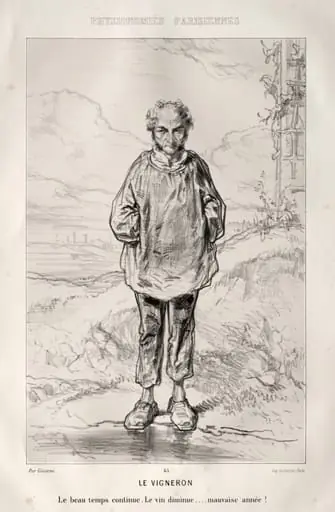 Le Vigneron
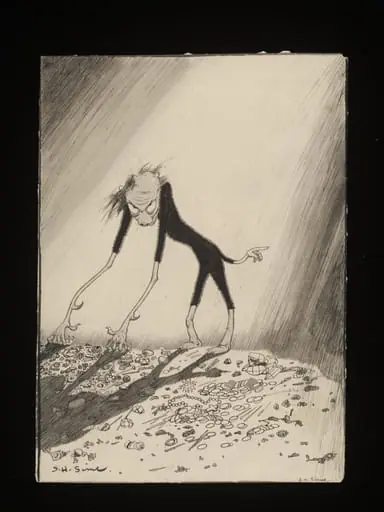 The Snide
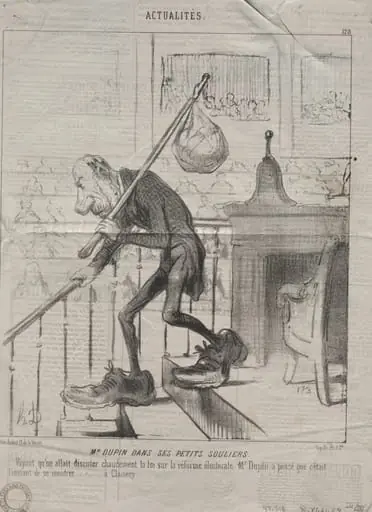 Mr. Dupin in His Little Shoes
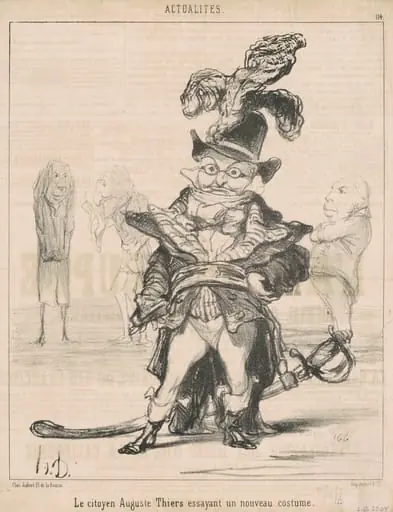 Le Citoyen ... Thiers essayant un nouveau costume
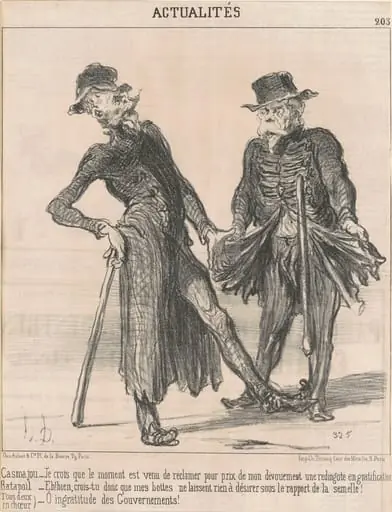 Casmajou -- Ratapoil (tous deux en choeur)
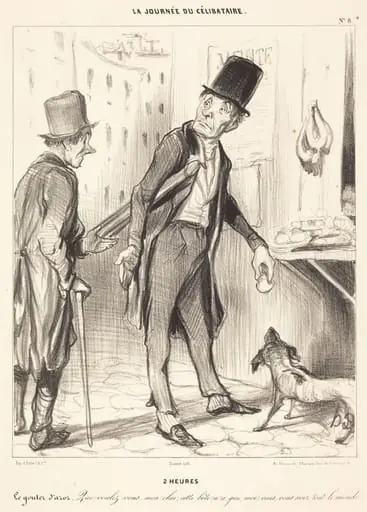 2 heures
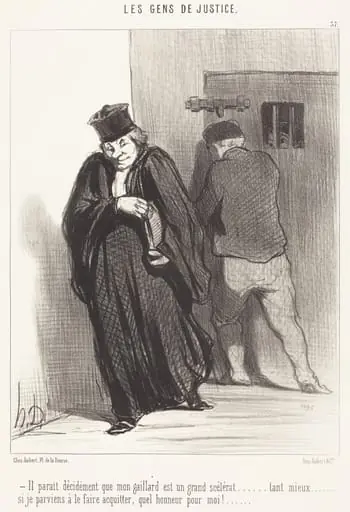 Il parait... que mon gaillard est un grand scélérat...
 Untitled