Artwork
Interior la Șopârlița
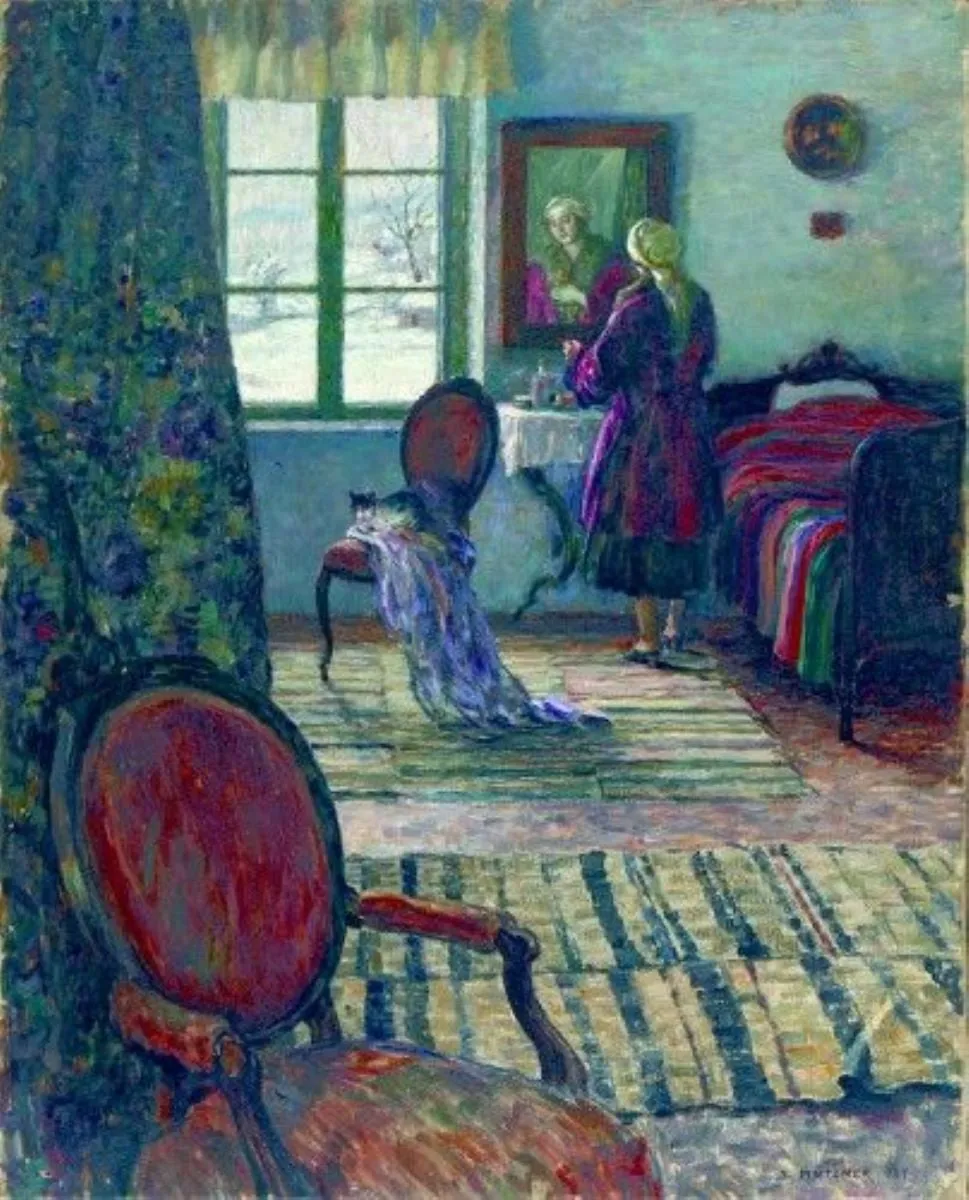
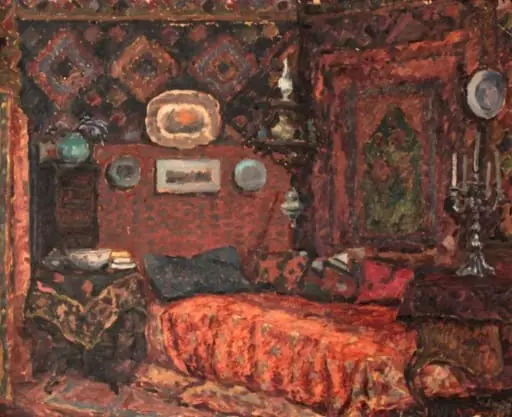
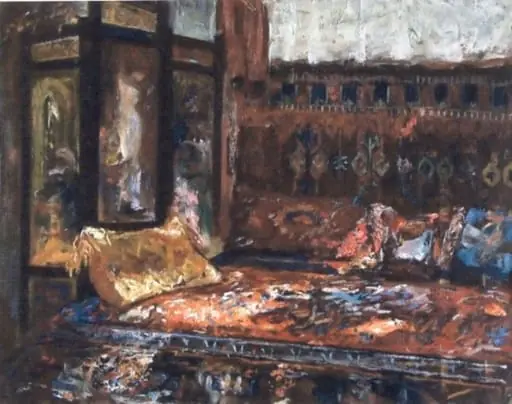
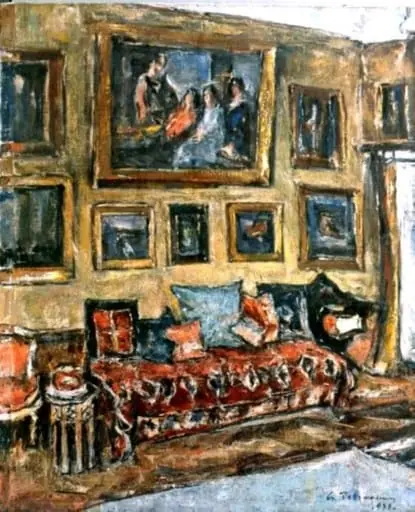
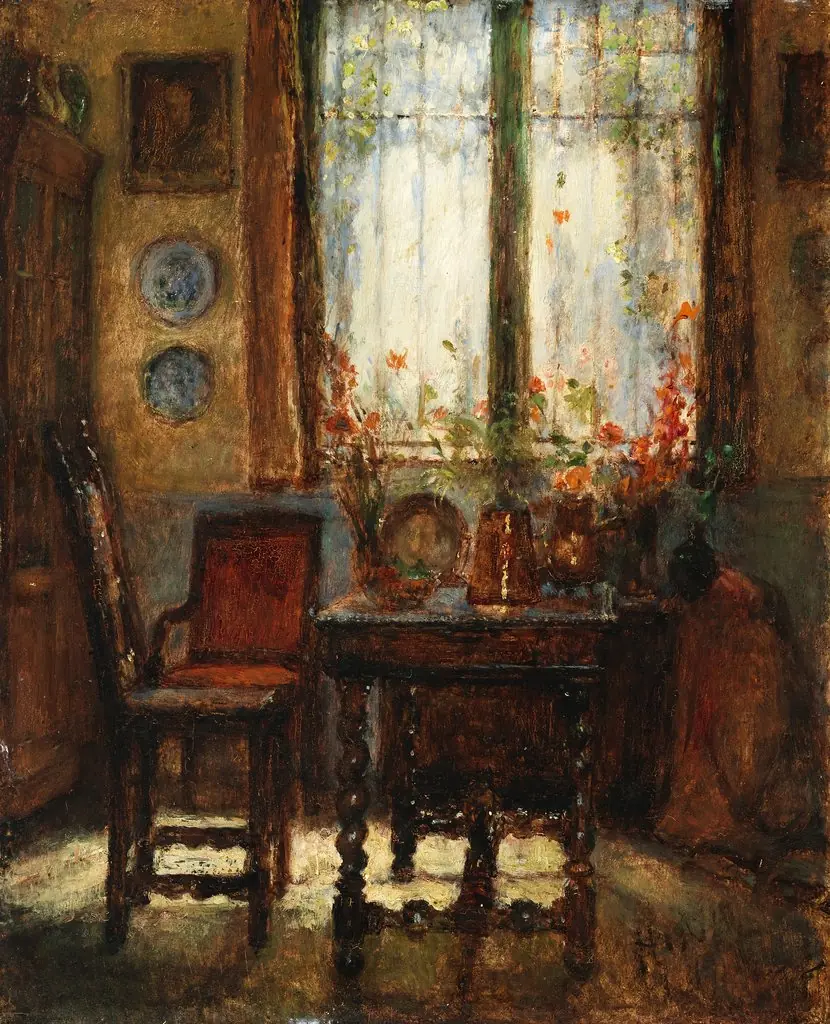
Interior la Șopârlița is a print by Samuel Mützner. It dates from 1924 and is held in the collection of the Colecție particulară - Elveția.
About this work
Overview
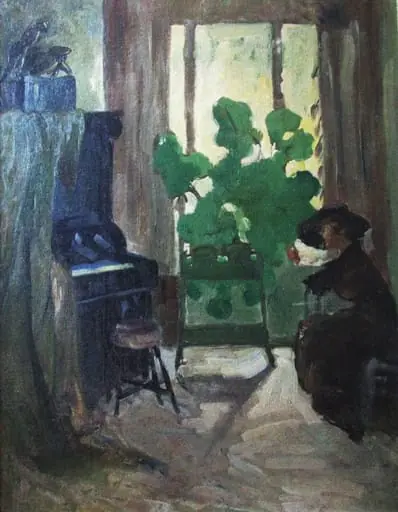
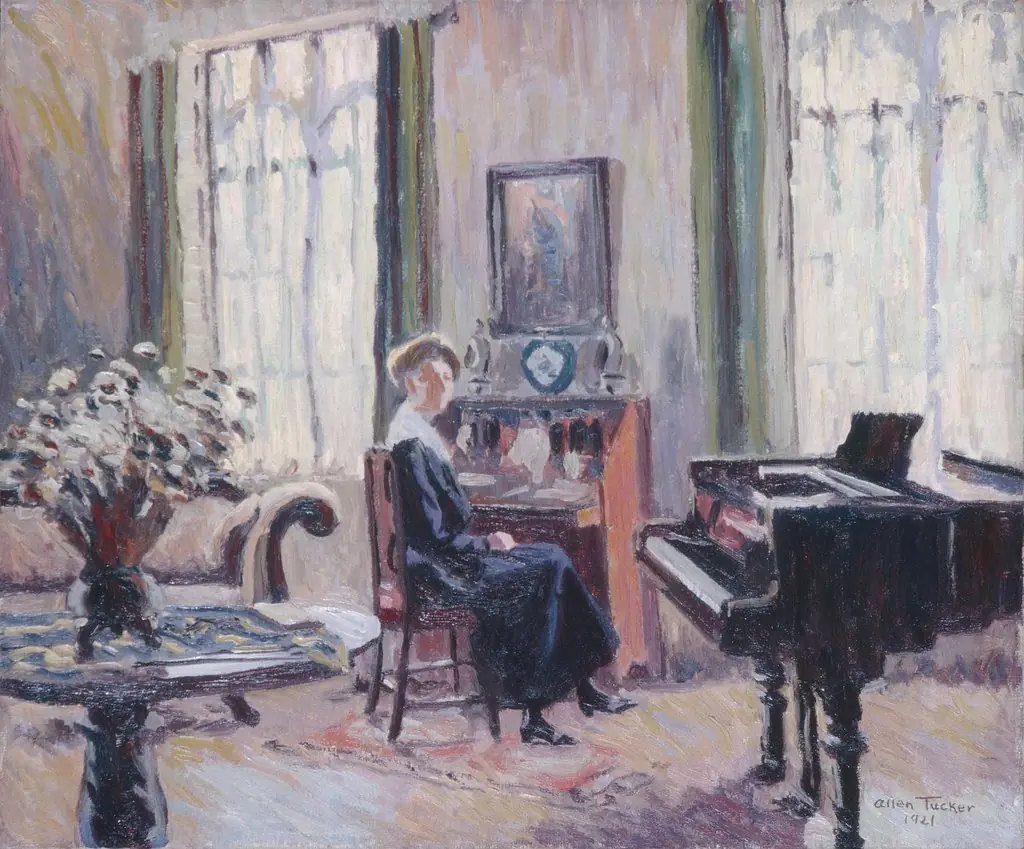
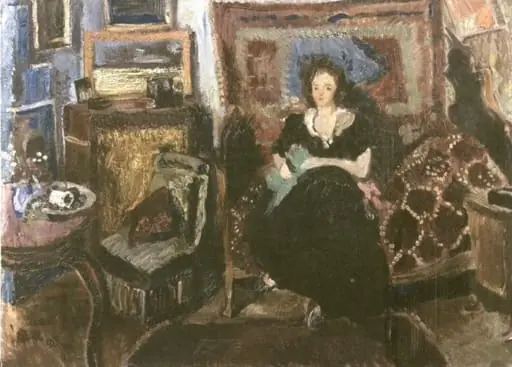
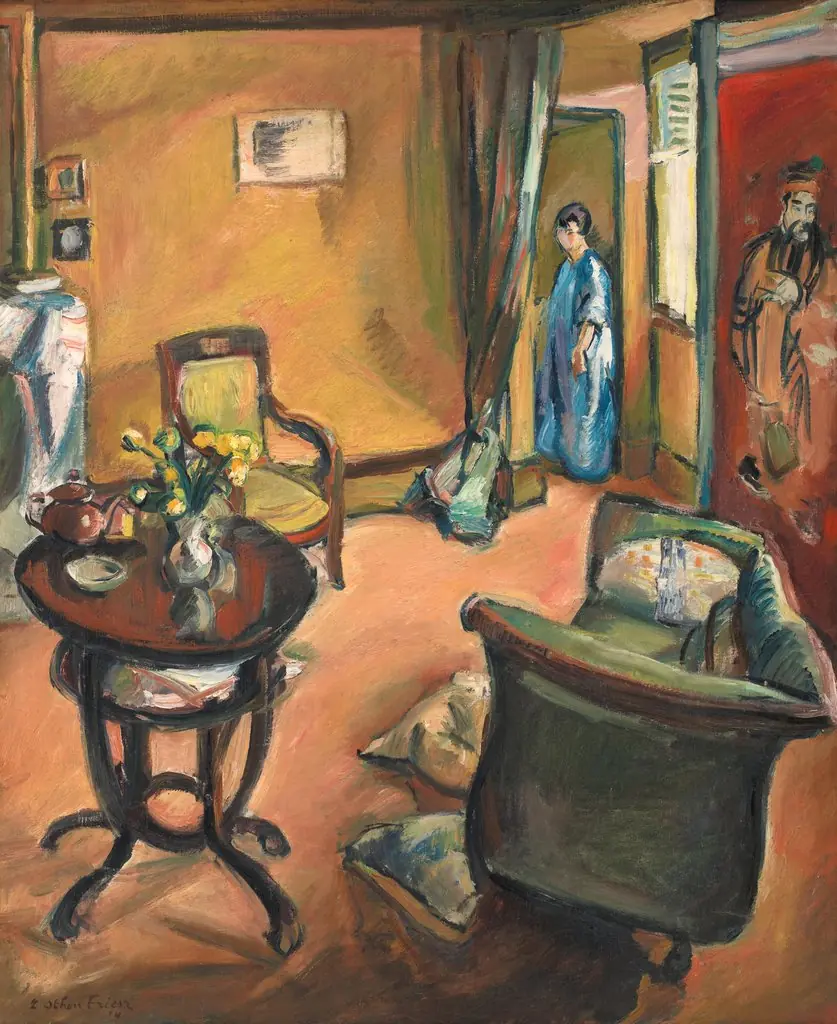
Painted in 1924 by Samuel Mützner, Interior la Șopârlița depicts an intimate domestic scene from a rural Romanian home. The work is part of the Museum of Ethnography’s collection, where it is preserved as a record of everyday life in early 20th-century Transylvania. Its quiet composition and tactile brushwork reflect a deliberate focus on ordinary moments rather than grand narratives.
Subject & Meaning
Two women are shown near a bed with striped bedding, one holding a teapot, suggesting a pause in daily routine. The presence of a cat on a chair and a pushed-back cushioned seat implies a space of rest and familiarity. The scene conveys no overt drama, instead emphasizing the rhythm of domestic life, quiet, unremarkable, yet deeply rooted in tradition and personal habit.
Technique & Style
Mützner employed thick, textured brushstrokes to render surfaces like fabric, wood, and skin, creating a sense of physical presence. The palette blends muted blues, greens, and earth tones with warm highlights from sunlight, enhancing the room’s coziness. The impasto technique gives weight to the blankets and floorboards, inviting the viewer to perceive texture as much as form.
History & Provenance
The painting was completed in 1924 and entered the Museum of Ethnography’s holdings shortly thereafter. It was likely acquired as part of a broader effort to document regional domestic interiors during a period of national cultural preservation. Its journey from private observation to institutional archive reflects shifting attitudes toward vernacular life as worthy of historical record.
Context
Created during a time of heightened interest in Romanian folk identity, the work aligns with efforts to capture rural customs before rapid modernization. Unlike idealized folk art, Mützner’s approach avoids romanticism, presenting a real, unadorned interior. The scene’s specificity, down to the pattern of the blankets, grounds it in a particular time and place.
Legacy
Interior la Șopârlița remains a quiet reference in studies of Romanian interwar painting and ethnographic art. It is not widely reproduced, but its attention to domestic detail and material texture has influenced later artists interested in the poetry of everyday spaces. Its value lies in its unembellished witness to a vanishing way of life.
Artist & collection