Artwork
Mona
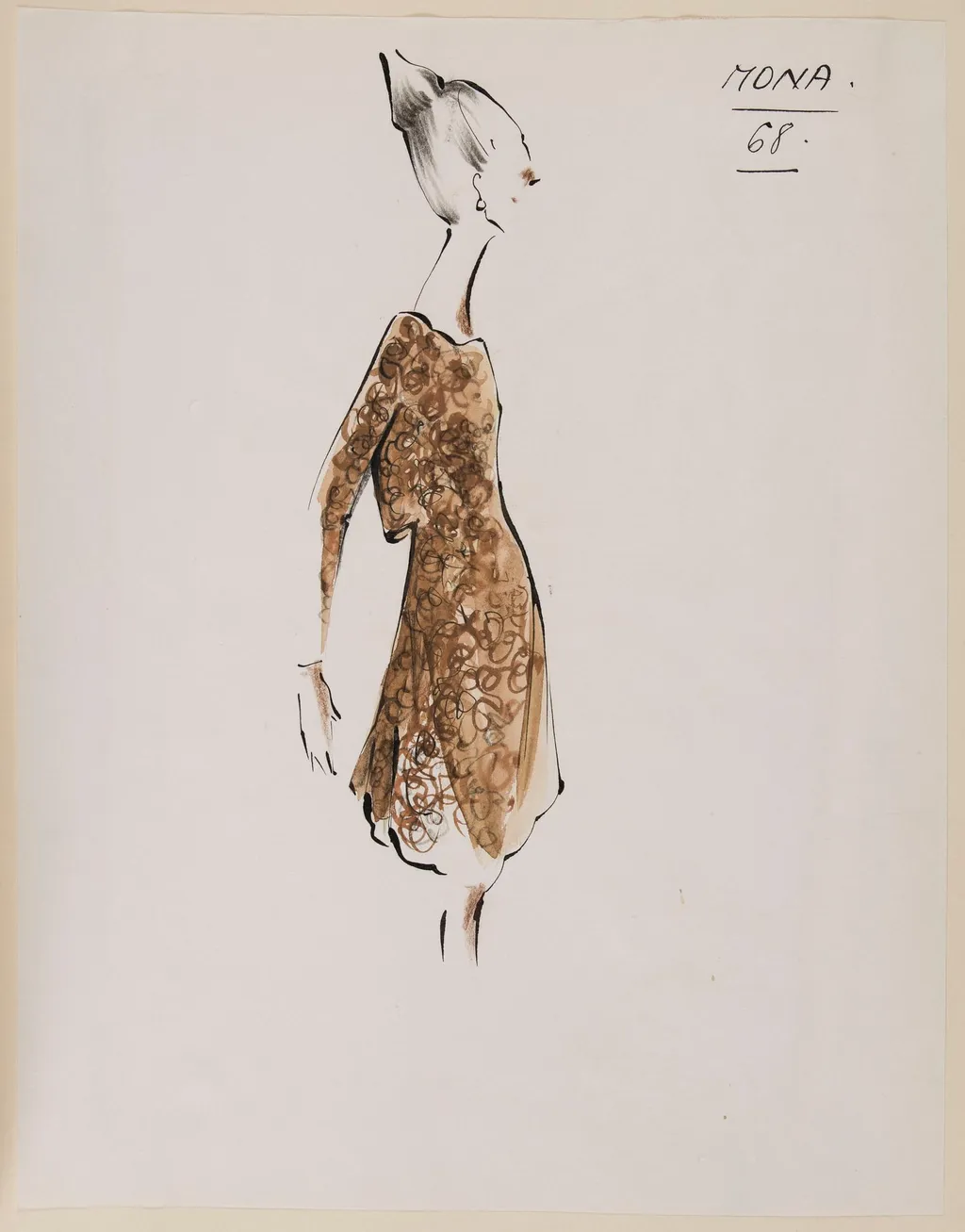
Mona is a drawing by Marie-Louise Carven. It dates from 1963 and is held in the collection of the Palais Galliera - Musée de la Mode de la Ville de Paris.
About this work
Overview
Though best known for founding her eponymous fashion house in 1945 and pioneering ready-to-wear couture, Carven also produced detailed illustrative works.
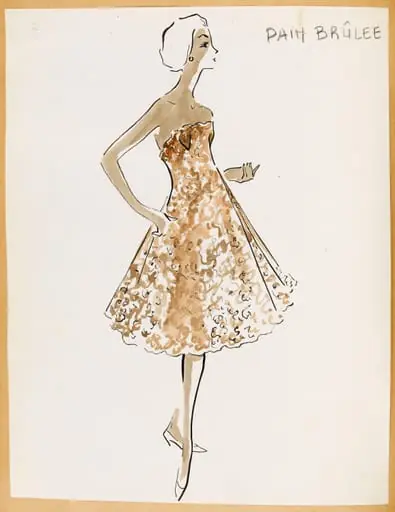
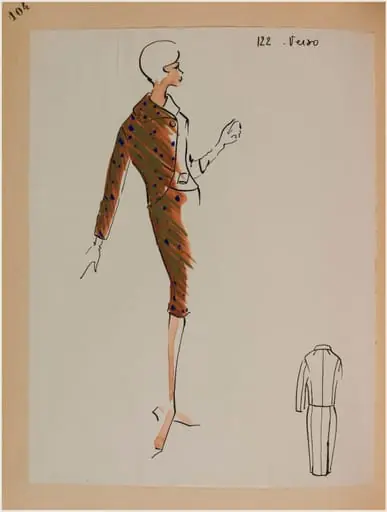
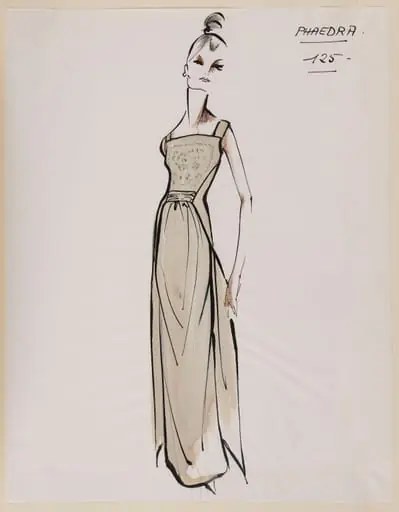
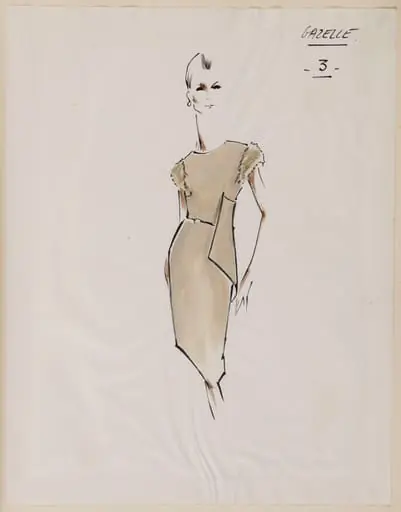
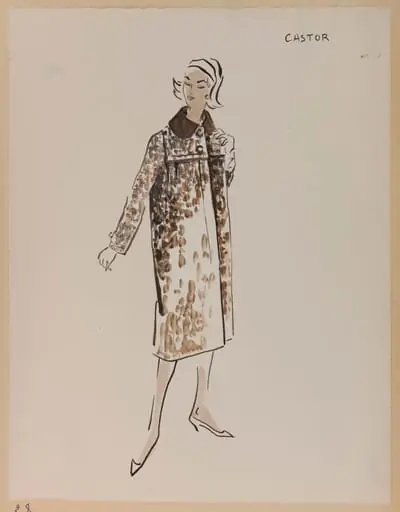
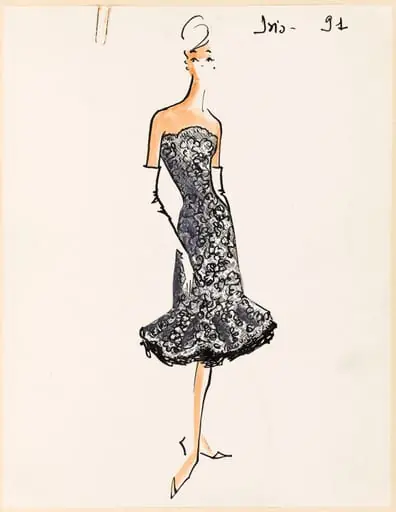
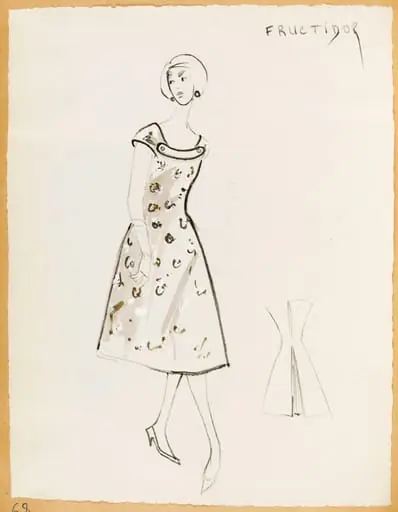
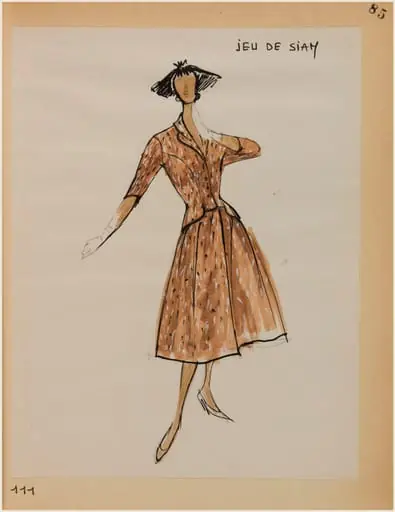
Created around 1963 by French designer Marie-Louise Carven, this drawing titled Mona is a study in textile form and feminine silhouette. Though best known for founding her eponymous fashion house in 1945 and pioneering ready-to-wear couture, Carven also produced detailed illustrative works. This piece, held in the Museum of Ethnography’s collection, reflects her engagement with fashion as both art and craft, rendered not as a garment but as a visual meditation on fabric and posture.
Subject & Meaning
The subject is a woman viewed in profile, her posture composed and still, suggesting quiet dignity. The focus rests on her dress, whose pattern and flow dominate the composition. There is no indication of identity beyond the title; Mona functions less as a portrait and more as an emblem of Carven’s design ethos, elegance scaled to the petite form, where textile becomes identity. The absence of facial detail shifts attention entirely to the interplay of cloth and body.
Technique & Style
Carven employed fine, controlled lines and subtle tonal shading to suggest the weight and movement of fabric. The dress’s pattern is rendered with precision, each repeat carefully placed to imply repetition without rigidity. Folds are suggested through graduated hatching, not heavy contouring, lending a lightness that mirrors the lightweight materials she favored in clothing. The drawing’s restraint reflects a designer’s eye: form is revealed through structure, not ornament.
History & Provenance
The drawing entered the Museum of Ethnography’s collection as part of a broader effort to document 20th-century fashion as cultural artifact. While Carven’s commercial designs were widely worn, her illustrative works remained largely private or used internally. Mona survives as one of few surviving drawings from her personal archive, offering insight into her design process beyond the runway.
Context
In the early 1960s, fashion illustration was transitioning from studio sketches to mass-produced advertising. Carven, already established in prêt-à-porter, continued to value hand-drawn studies as tools for refining form. Mona aligns with a European tradition of designer-as-draughtsman, where the line was not merely preparatory but a final expression of aesthetic intent, distinct from the commercial imagery of the era.
Legacy
Though not widely exhibited, Mona stands as a quiet testament to Carven’s commitment to the intimacy of design. It reveals how her understanding of fabric, proportion, and movement extended beyond garments into the language of drawing. The work contributes to a growing recognition of fashion illustrators as artists whose medium was both technical and expressive, bridging craft and visual culture.
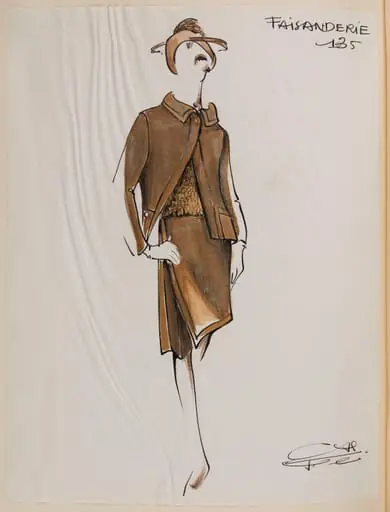
Artist & collection
Artist
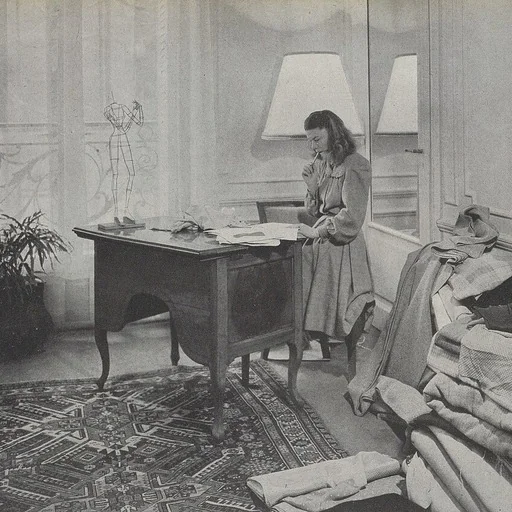
Marie-Louise Carven (31 August 1909 – 8 June 2015), born Carmen de Tommaso, was a French fashion designer who founded the house of Carven in 1945.
Museum
Palais Galliera - Musée de la Mode de la Ville de Paris
Continue through works from the same source collection.
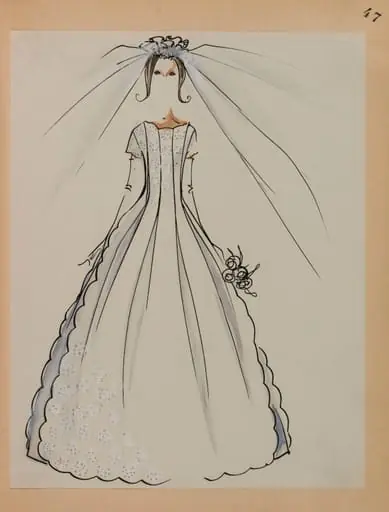 Robe de mariée festonnée et son voile
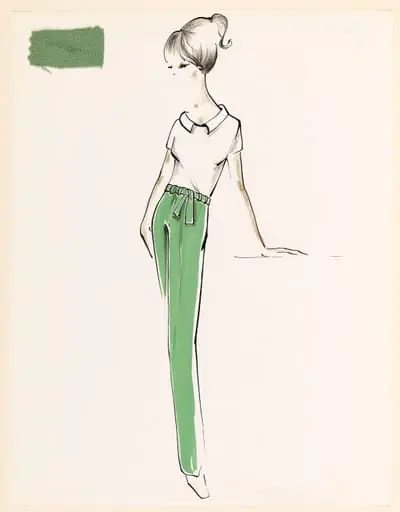 Haut blanc à manches courtes et pantalon vert à ceinture nouée
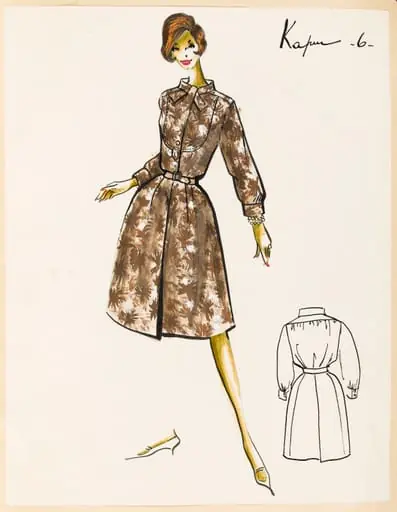 Kapur
Kapur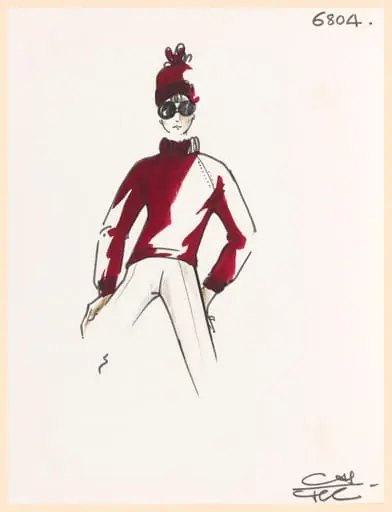 Pull-over à manches longues pourpre, bonnet assorti, pantalon et lunettes de soleil
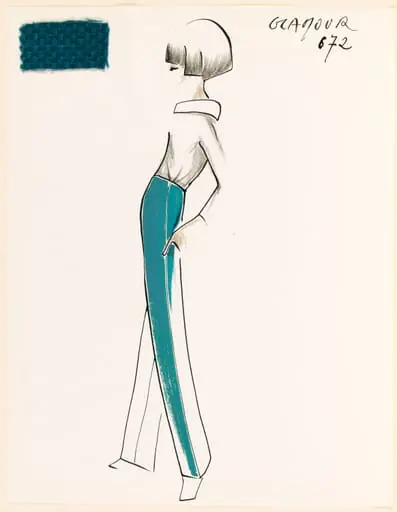 GLAMOUR
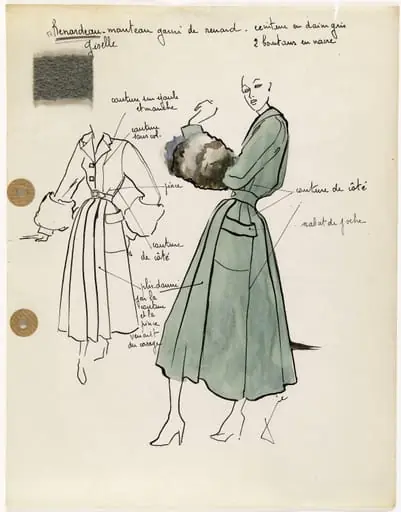 'Renardeau'
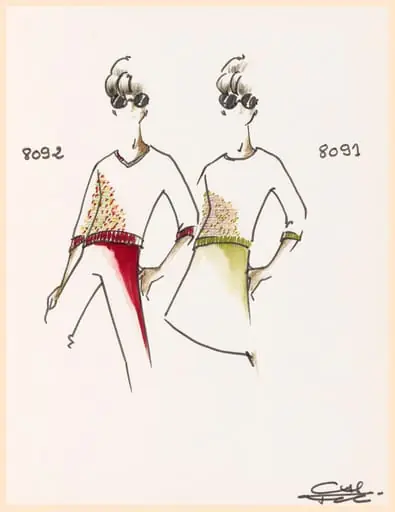 Pull-over à manches trois quarts et à encolure V à motifs multicolores, pantalon cerise et lunettes de soleil
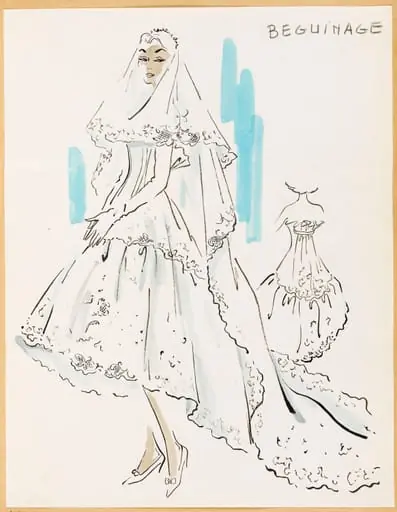 Béguinage