Artwork
Eight Apostles in Four Roundels
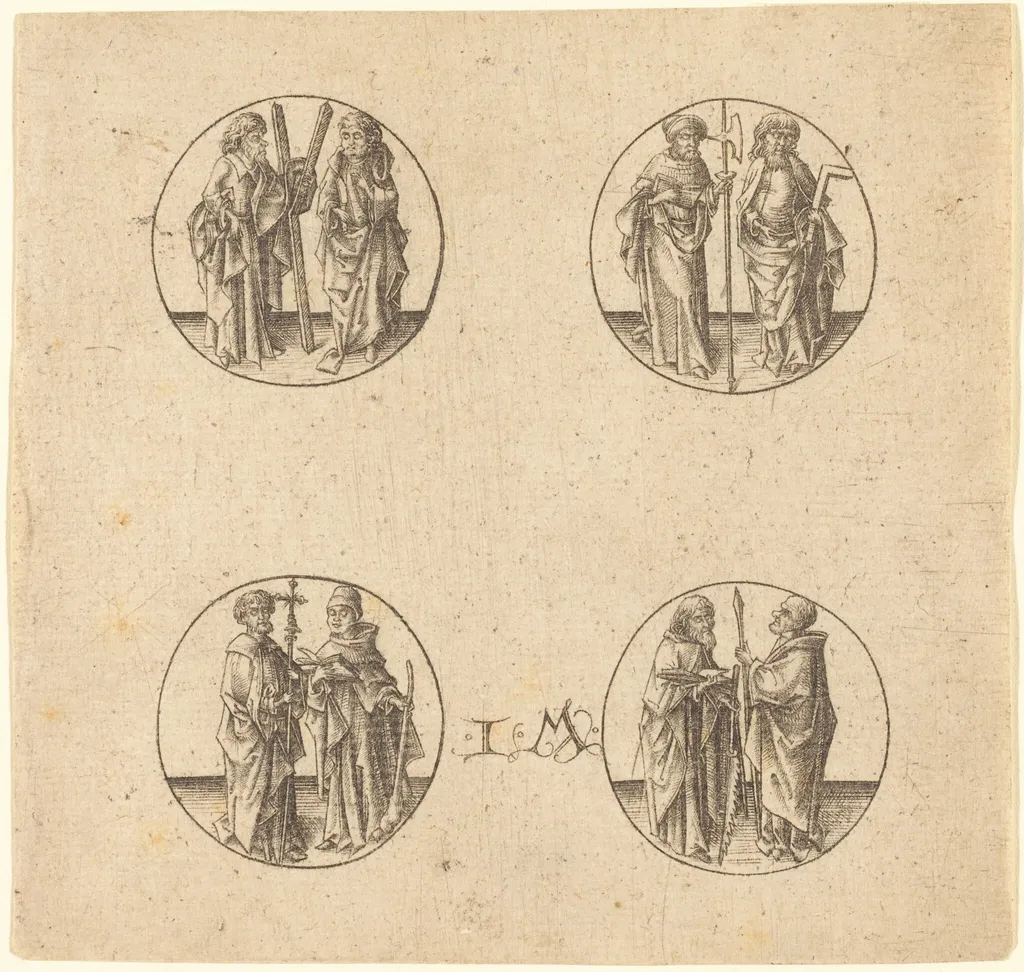
Eight Apostles in Four Roundels is an ink print by the Renaissance artist Israhel van Meckenem. It dates from 1474 and is held in the collection of the National Gallery of Art.
About this work
Overview
Created in 1474 by Israhel van Meckenem, this engraving presents eight apostles distributed across four circular frames.
Created in 1474 by Israhel van Meckenem, this engraving presents eight apostles distributed across four circular frames. As a German printmaker and goldsmith, van Meckenem was among the most active engravers of the 15th century, producing hundreds of works that often reinterpreted existing imagery. This piece exemplifies his skill in translating religious subjects into the intimate scale of printed graphics, suited for private devotion or scholarly circulation.
Subject & Meaning
The eight apostles depicted are arranged in pairs within each roundel, their identities not individually labeled but understood through conventional iconography. Each figure holds a staff or book, symbols of their apostolic authority and scriptural mission. The formal, frontal poses and restrained expressions reflect a devotional tone, emphasizing spiritual gravity over narrative drama, aligning with the contemplative function of such prints in late medieval piety.
Technique & Style
Van Meckenem employed fine, controlled lines to model volume and texture, particularly in the folds of the apostles’ robes. Shading is achieved through hatching and cross-hatching rather than tone, characteristic of early engraving. The backgrounds are minimal, flat walls and simple steps, directing focus to the figures.
This restrained composition highlights the precision of the medium and the artist’s command over line as a means of expression.
History & Provenance
The print was produced during the height of van Meckenem’s career in the Rhineland, a region known for its thriving print culture. While no early ownership records are documented for this specific impression, similar works by the artist circulated widely across Northern Europe. Its survival in multiple copies suggests it was reproduced and distributed for both religious and artistic purposes, reflecting the growing market for printed devotional images.
Context
In the late 15th century, engraved prints became accessible tools for religious instruction and personal meditation. Van Meckenem’s work emerged alongside the rise of movable type, sharing a cultural moment in which images, like texts, could be multiplied and disseminated. This print fits within a broader tradition of Northern European art that favored clarity, detail, and symbolic economy over grandeur or theatricality.
Legacy
Though not widely known today, van Meckenem’s prints influenced later engravers through their technical discipline and compositional clarity. His adaptation of religious subjects into compact, repeatable formats helped standardize iconography in print. This work remains a representative example of how early printmakers shaped the visual language of faith, bridging manuscript illumination and the emerging age of mechanical reproduction.
Own this work as a print
Artist & collection
Artist
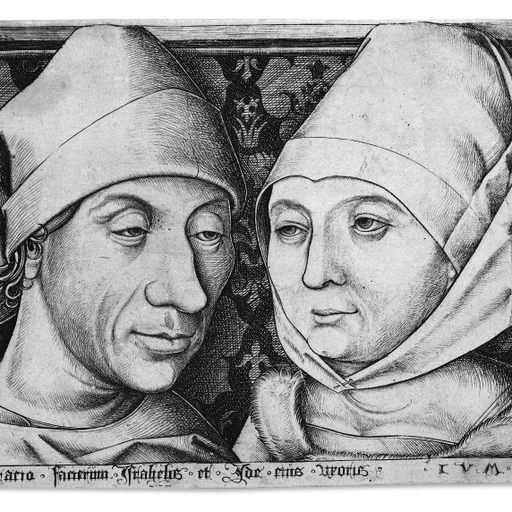
Israhel van Meckenem (c. 1445 – 10 November 1503), also known as Israhel van Meckenem the Younger, was a German printmaker and goldsmith, perhaps of a Dutch family origin. He was the most prolific engraver of the…

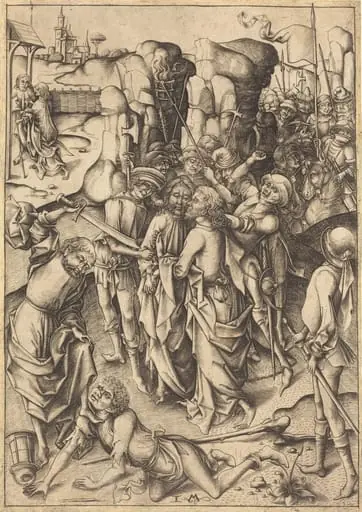
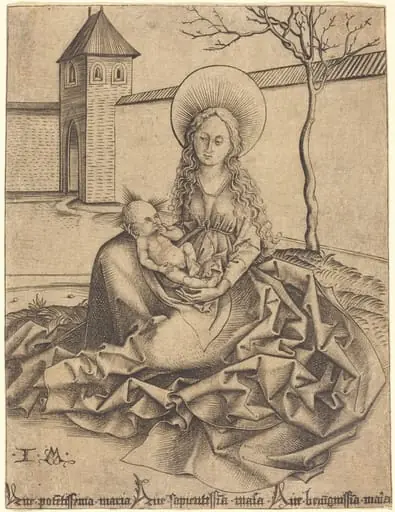
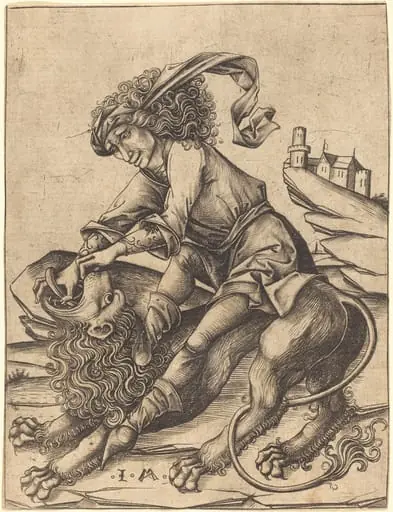
- Sts. Gorgonius & Dorothy; St. Nicholas of Tolentino; St. Polianus & Nemesian; St. Pulcheria
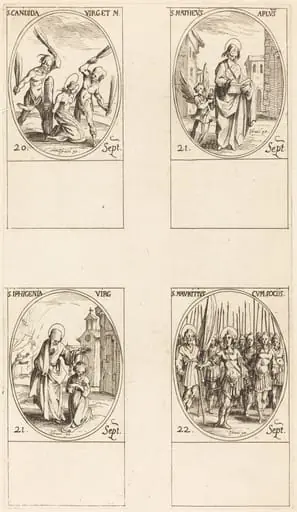 St. Canida; St. Matthew; St. Ipigenia; St. Maurice and Companions
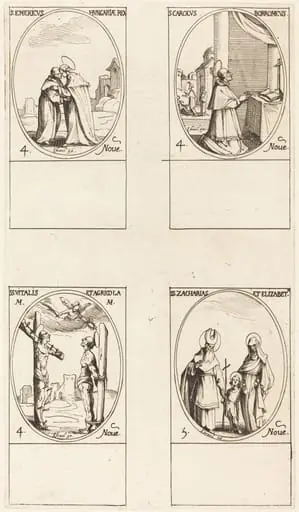 St. Emeric; St. Charles Borromeo; St. Vitalis & Agricola; Sts. Zachary & Elizabeth
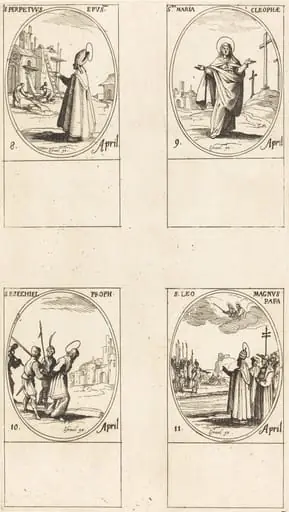 St. Perpetuus; St. Mary of Cleophas; St. Ezechiel; St. Leo the Great
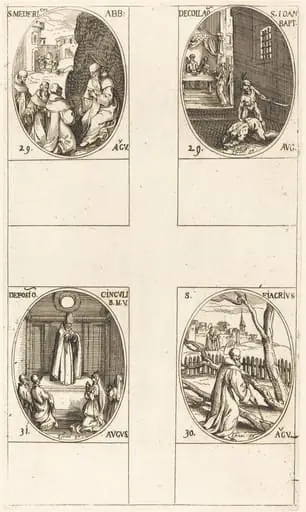 St. Mederic, Abbot; Beheading of John the Baptist; St. Fiacre; Festival of the Belt of the Virgin
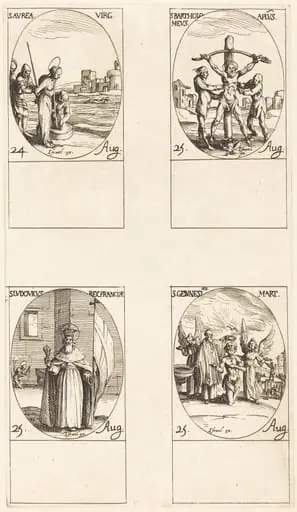 St. Aurea; St. Bartholomew; St. Louis; St. Genesius
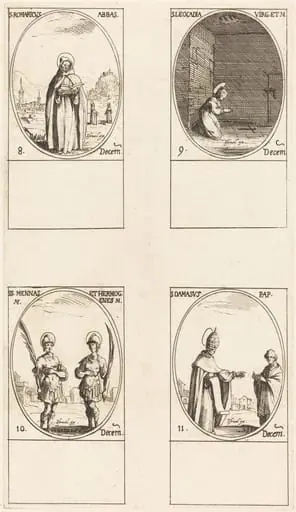 St. Romaricus; St. Leocadia; Sts. Mennas and Hermogenes; St. Damasus
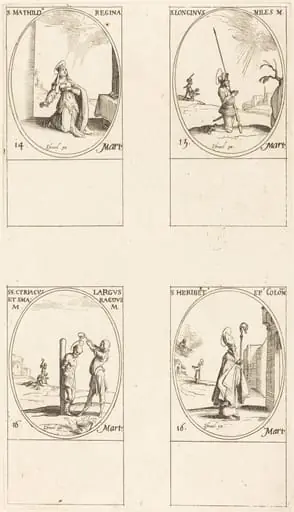 St. Matilda; St. Longinus; St. Cyriacus; St. Heribert
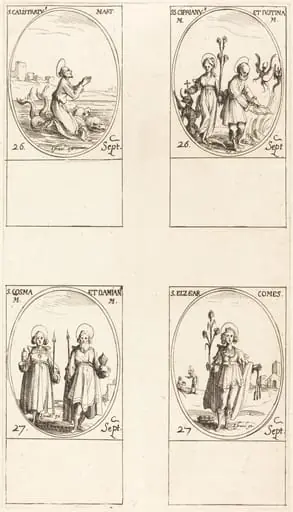 St. Calistratus; Sts. Cyprian and Justina; Sts. Comus and Damian; St. Elzear, Count
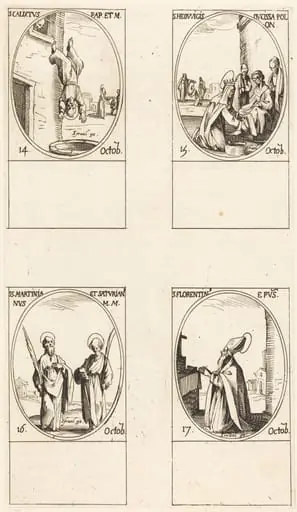 St. Calixtus; St. Hedwiges; Sts. Martinian and Saturian; St. Florentinus
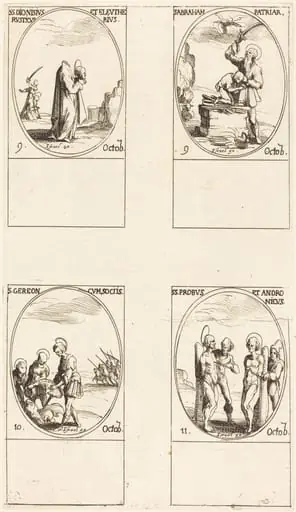 St. Dionysius, Rusticus & Eleutherius; St. Abraham; St. Gereon & Companions; Sts. Probus & Andronichus
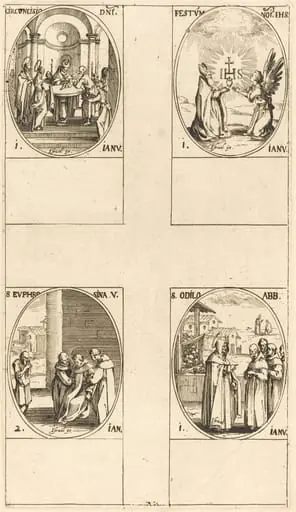 Circumcision; Festival of Name of Christ; St. Odilo; St. Euphrosyna