Artwork
House with Storerooms, Tomb of Ineni
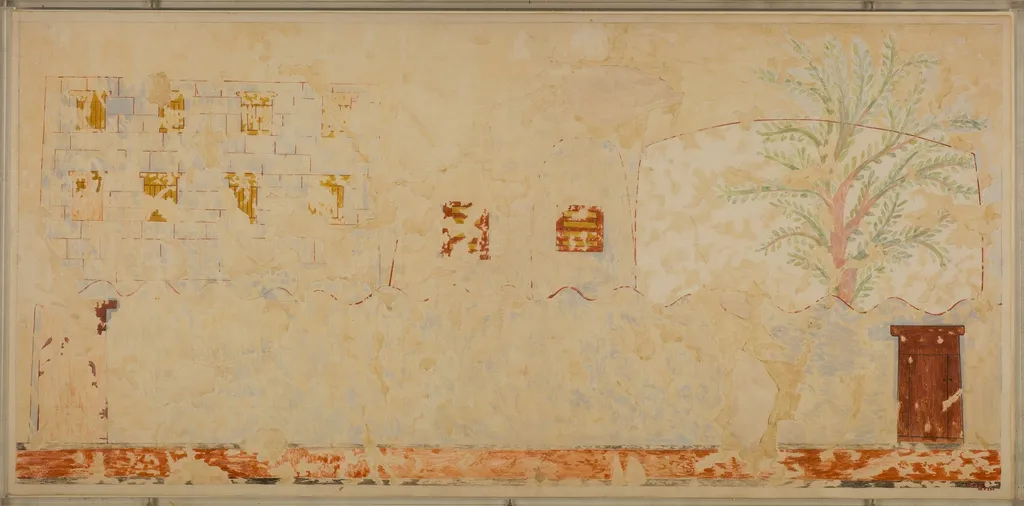
House with Storerooms, Tomb of Ineni is an unspecified painting by Nina M. Davies. It dates from 1550 and is held in the collection of the Metropolitan Museum of Art.
About this work
Subject & Meaning
This iconography ties the physical space to spiritual nourishment, a common motif in Theban tomb art where material provisions are rendered in pictorial form.
The painting shows a storage house within an Egyptian tomb complex, reflecting the funerary practice of providing the deceased with domestic necessities for the afterlife. Storerooms symbolize sustenance and abundance, ensuring the tomb owner's continued prosperity beyond death. This iconography ties the physical space to spiritual nourishment, a common motif in Theban tomb art where material provisions are rendered in pictorial form.
History & Provenance
The painting House with Storerooms, Tomb of Ineni was created by Nina de Garis Davies around 1550 BCE, depicting the storeroom scene from the tomb of Ineni at Theban Tomb 81 (TT 81).
The work is a facsimile executed by Davies, likely as part of her broader program of recording and reconstructing scenes from New Kingdom tombs. It entered the collection of the Metropolitan Museum of Art (accession no. 30.4.234) as part of its holdings of facsimile paintings by Davies.
Overview
This work is a hand‑drawn reproduction of a wall scene from the tomb of Ineni, an official who served during Egypt’s early 18th Dynasty (circa 1550 BCE). Executed by British Egyptologist and illustrator Nina M. Davies in the mid‑20th century, the image records the original tomb painting for scholarly study. The drawing is part of the Metropolitan Museum of Art’s collection of Egyptian documentation.
Technique & Style
Davies employed fine ink lines and a restrained palette of light browns, muted greens, and soft blues to mirror the faded pigments of the original tomb painting. Areas where the ancient paint has worn away are left blank, exposing the underlying plaster. The overall effect emphasizes the delicate, weathered quality of the source while maintaining clarity for academic reference.
Context
Ineni’s tomb, located in the Theban necropolis, contains a range of funerary scenes that illustrate both ritual practices and aspects of daily life. The domestic vignette fits within a broader program intended to provide the deceased with familiar comforts in the afterlife, reflecting a New Kingdom belief in the continuity between earthly and eternal existence.
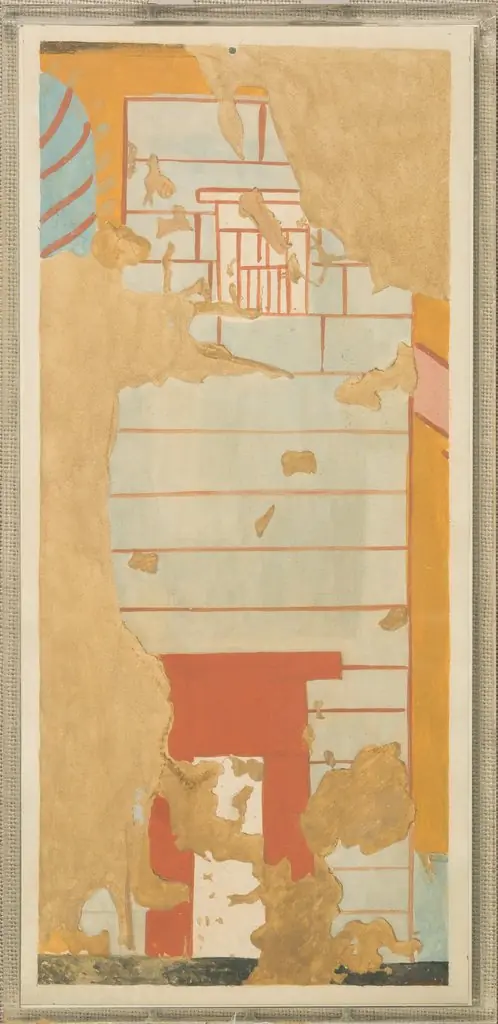
Artist & collection
Artist
The Egyptologists Nina M. Davies (6 January 1881 – 21 April 1965) and Norman de Garis Davies (1865–5 November 1941) were a married couple of illustrators and copyists who worked in the early and mid-twentieth century…

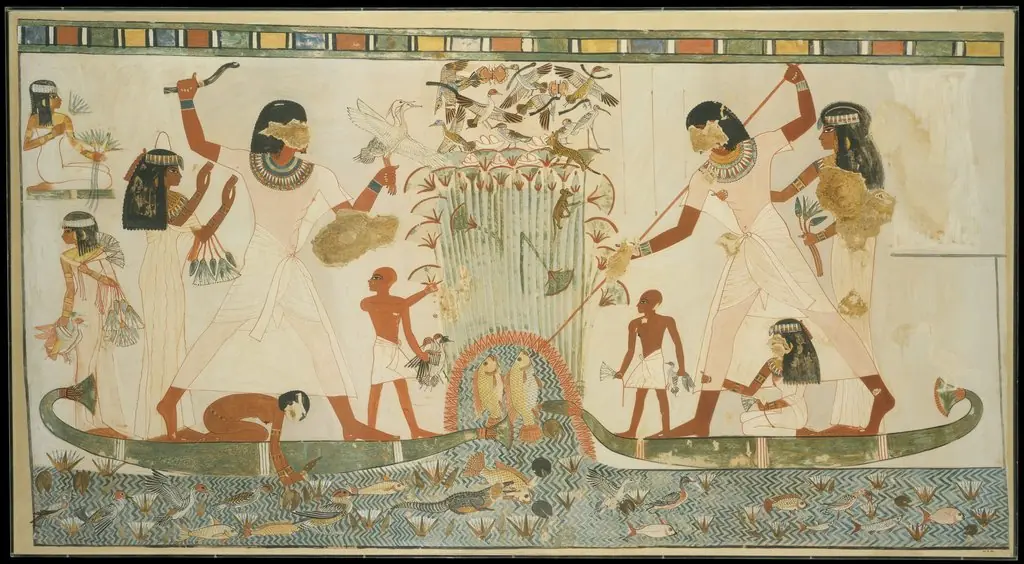 Menna and Family Hunting in the Marshes, Tomb of Menna
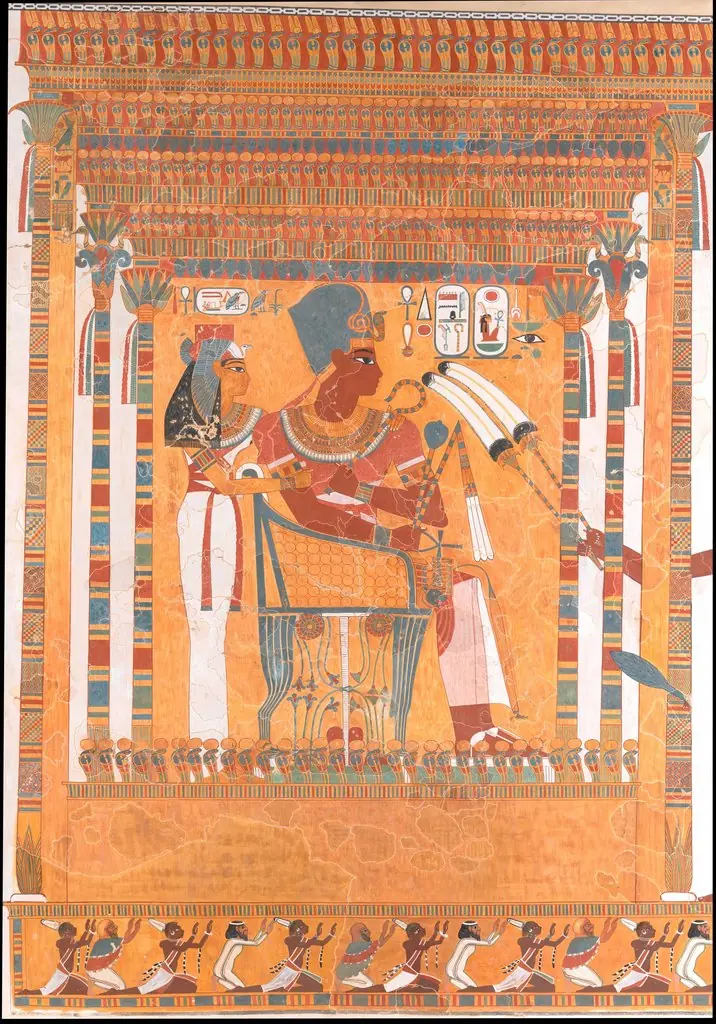 Amenhotep III and his Mother, Mutemwia, in a Kiosk
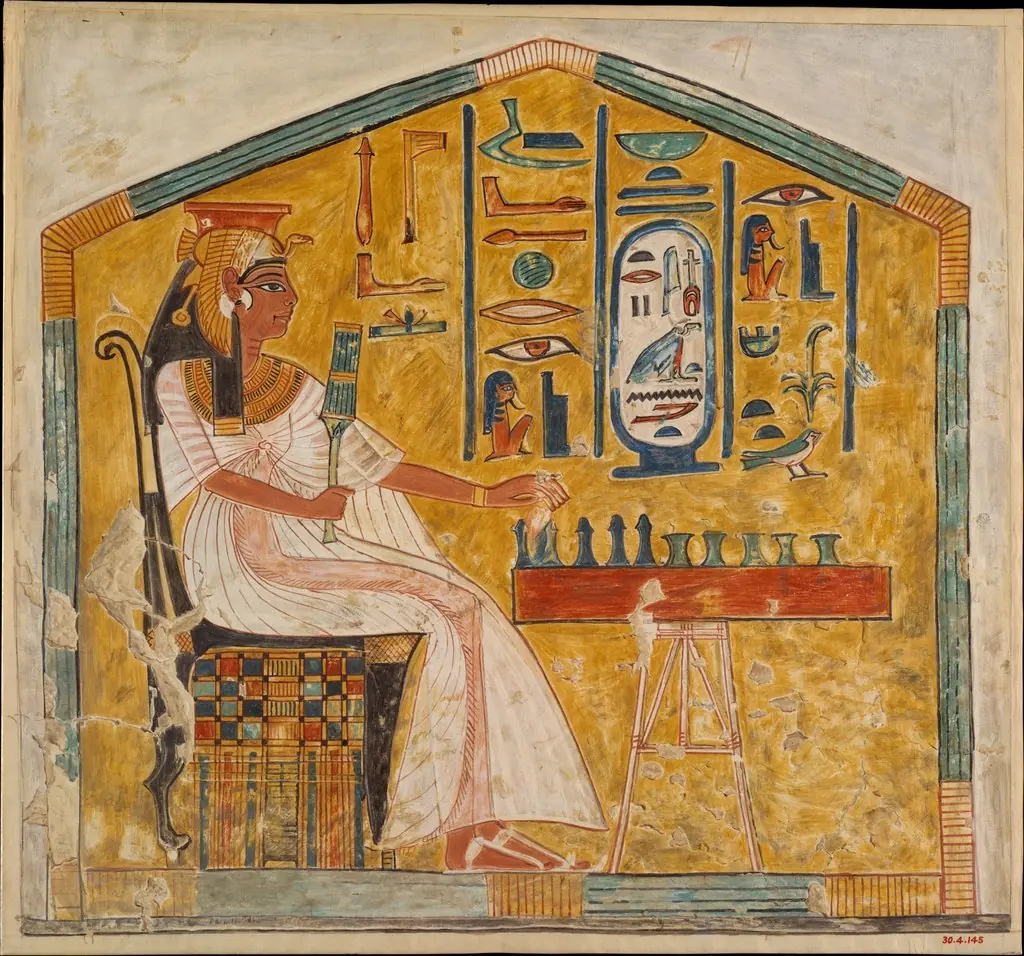 Queen Nefertari Playing Senet
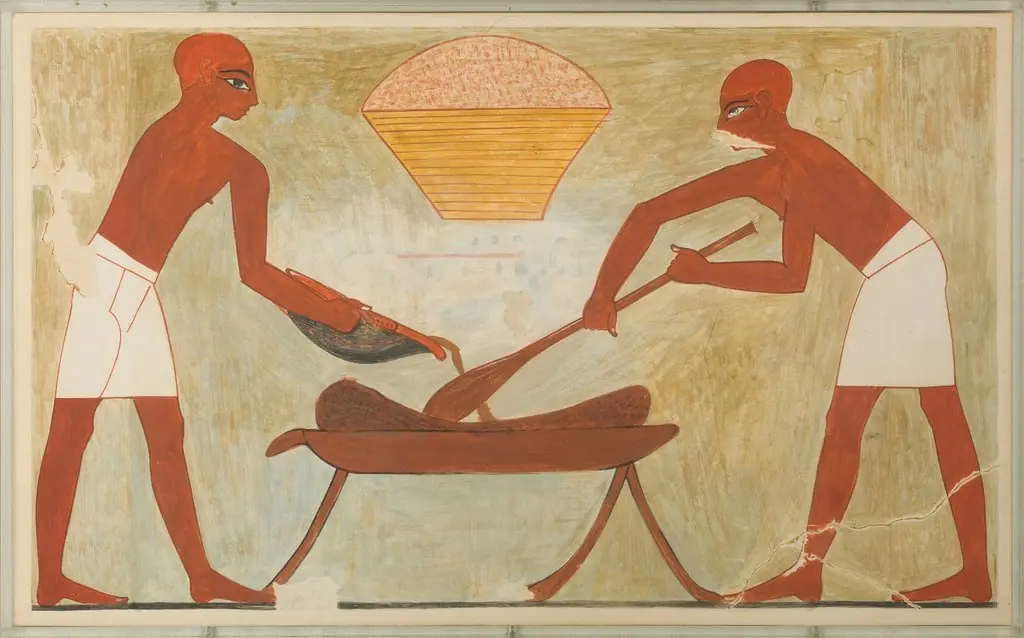 Preparing Dough, Tomb of Rekhmire
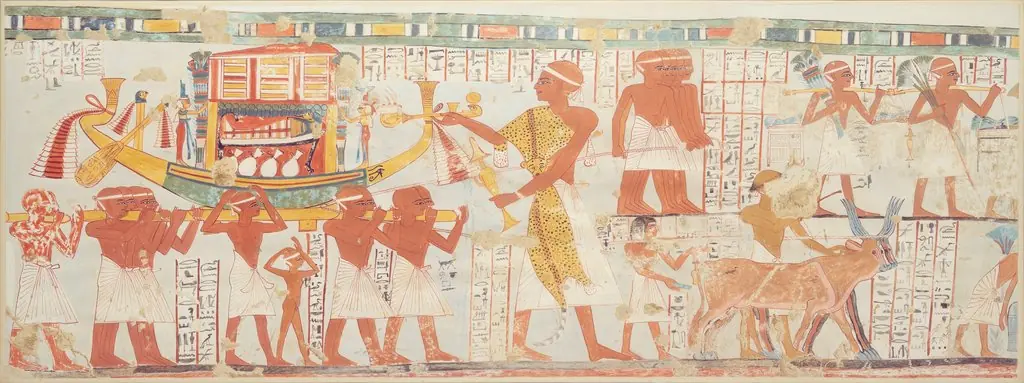 Nakhtamun's Funeral Procession, Tomb of Nakhtamun
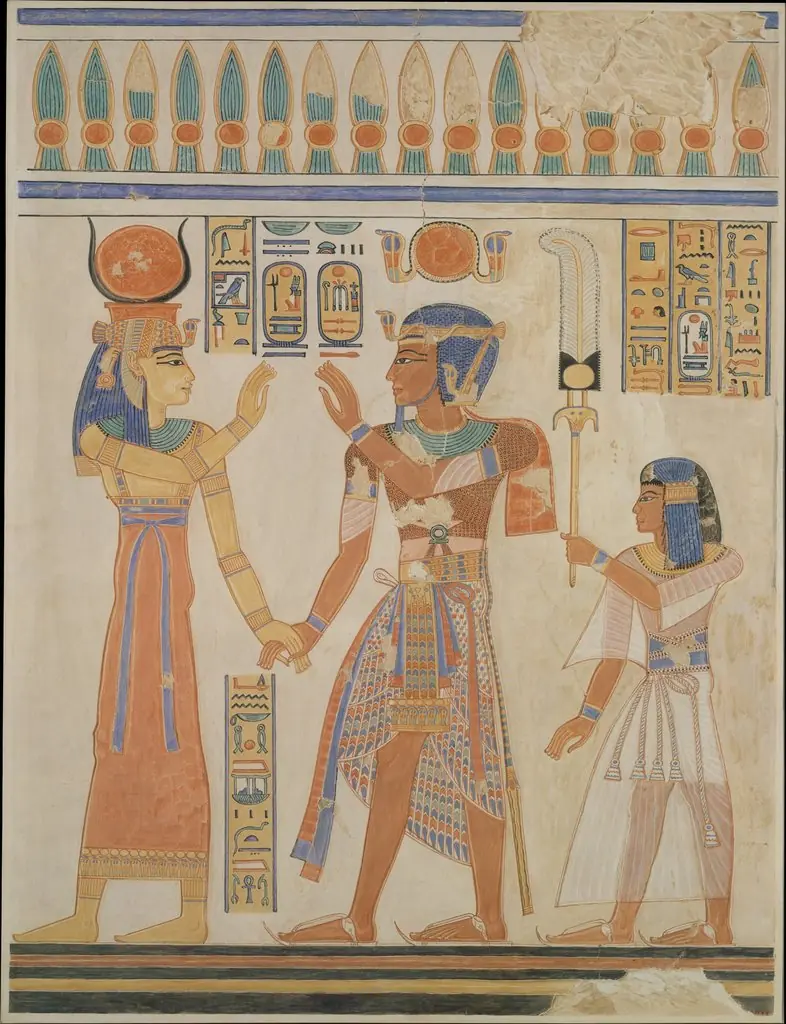 Ramesses III and Prince Amenherkhepeshef before Hathor
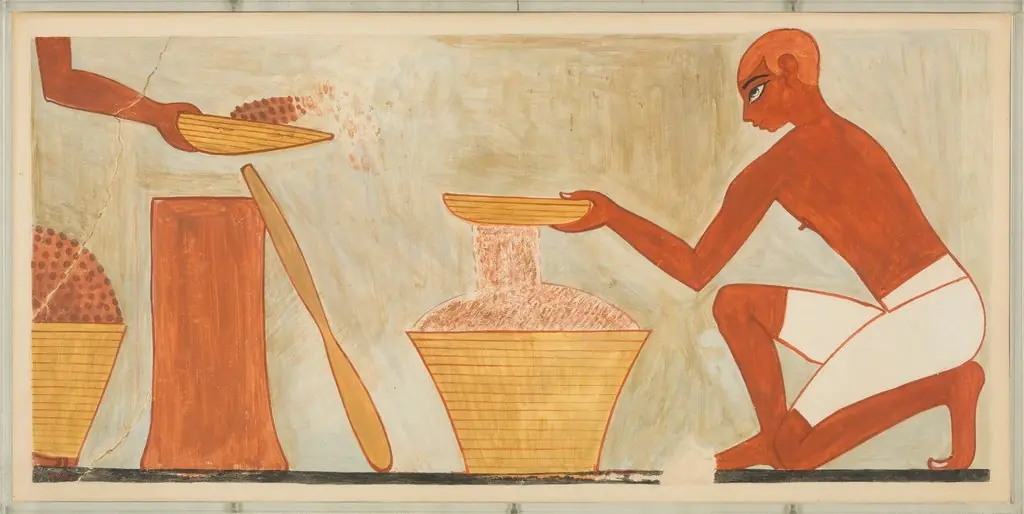 Sifting Meal, Tomb of Rekhmire
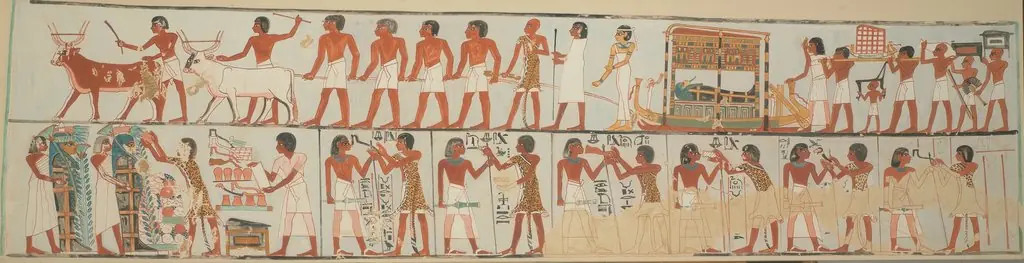 Funeral Procession, Tomb of Pairy
 Profane paintings from Sigena: Knights leaving a castle for battle
 Profane paintings from Sigena: Courtly and battle scenes
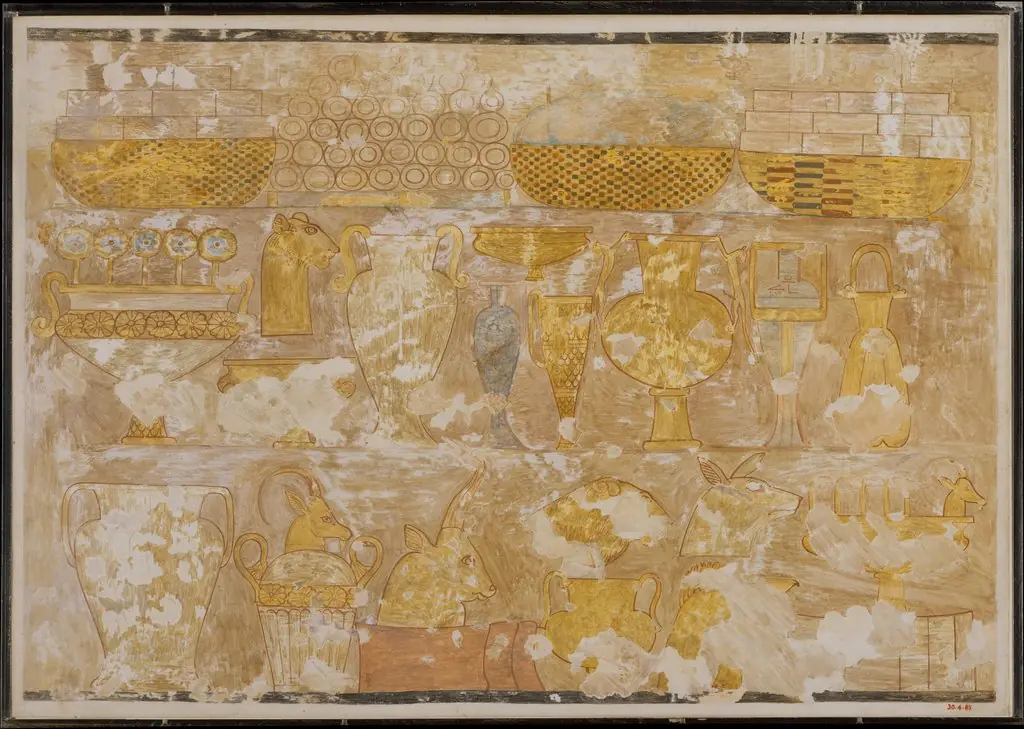 Gifts from the Keftiu, Tomb of Rekhmire
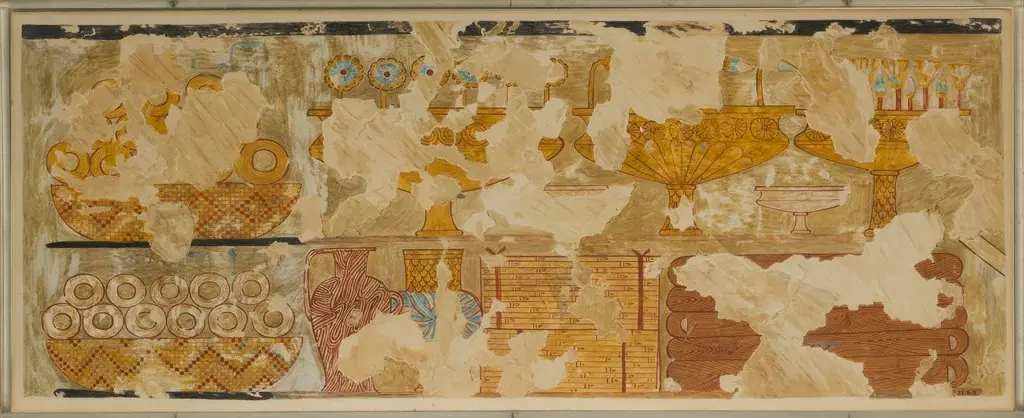 Gifts from Western Asia, Tomb of Rekhmire
 Naval battle between a Christian galley and a Saracen galley, profane paintings from Sigena
 Untitled
 Octombrie în deltă
 Figures, buildings and bestiary from Boí
 Untitled
 Untitled