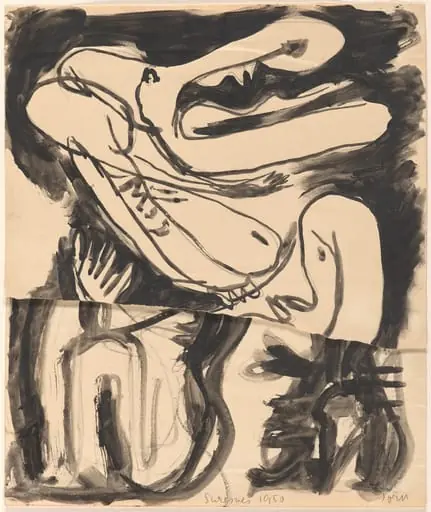
Artwork
Untitled
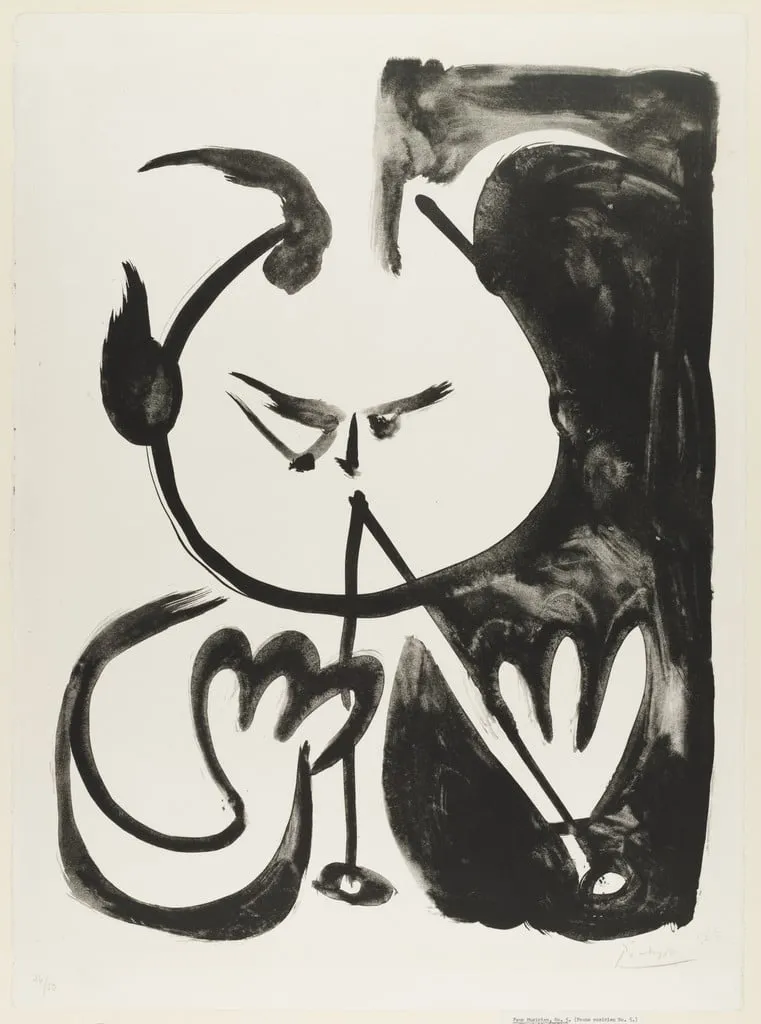
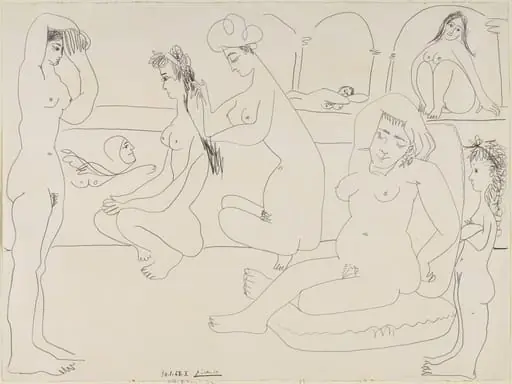
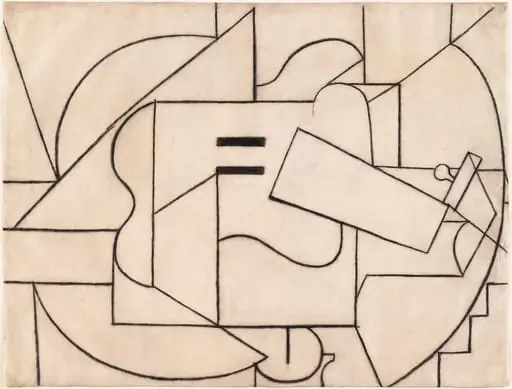
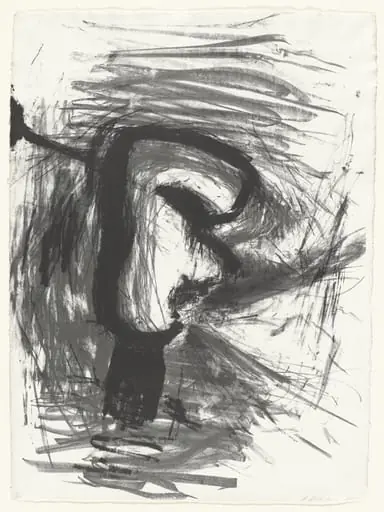
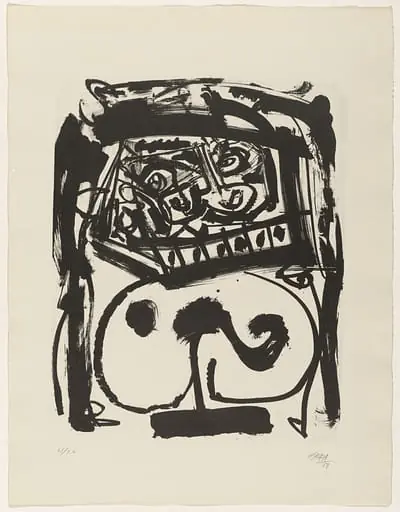
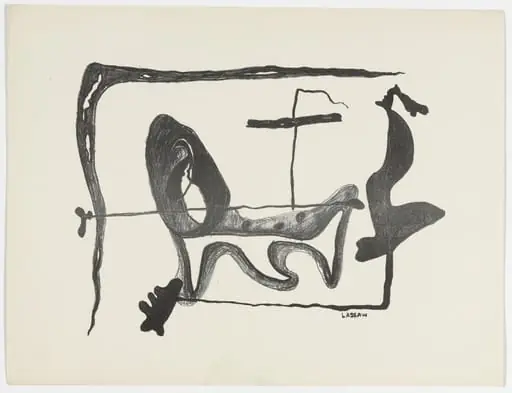
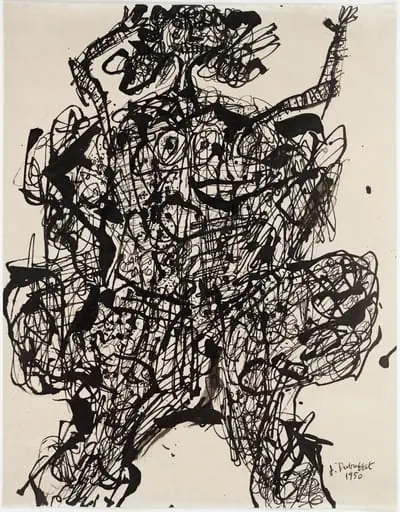
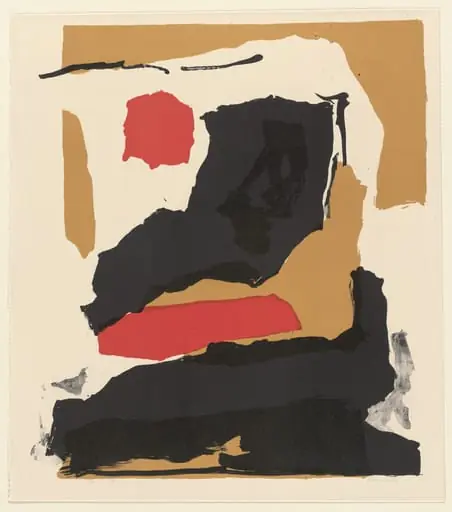
Untitled is an ink print by Pablo Picasso. It dates from 10 and is held in the collection of the Museum of Modern Art.
About this work
Overview
This lithograph, created by Pablo Picasso in 1910, is part of a series of graphic works produced during a phase of intense formal inquiry.
This lithograph, created by Pablo Picasso in 1910, is part of a series of graphic works produced during a phase of intense formal inquiry. Executed in black ink on white paper, it reflects his engagement with abstraction and the possibilities of printmaking. The piece is held in the collection of The Museum of Modern Art, where it contributes to the understanding of Picasso’s evolving visual language beyond painting and sculpture.
Subject & Meaning
The composition suggests a fragmented human form, hinted at through curved, gestural lines and a central circular motif that may allude to a face or head. No clear narrative is present; instead, the work prioritizes the expression of structure and movement over representation. The ambiguity invites multiple readings, aligning with Cubist interests in deconstructing perception rather than depicting reality literally.
Technique & Style
Picasso employed lithography to achieve rapid, fluid marks, using bold, unmodulated black strokes against a bare ground. The lines are spontaneous and energetic, conveying motion through their density and direction. The absence of tone or color emphasizes contrast and form, reflecting his interest in reducing visual elements to their essential contours while retaining expressive force.
History & Provenance
Created in 1910, this lithograph emerged during Picasso’s Cubist period, when he was actively experimenting with new methods of representation across media. It entered the collection of The Museum of Modern Art in the 20th century, likely as part of early efforts to document modern printmaking. Its preservation reflects its significance in tracing Picasso’s graphic innovations during a transformative decade.
Context
In 1910, Picasso was deeply immersed in Analytic Cubism, collaborating with Georges Braque to dismantle traditional perspective. While painting dominated his output, this lithograph reveals how he extended Cubist principles into printmaking—using minimal means to suggest complex spatial relationships. The work aligns with contemporaneous explorations by other modernists seeking to challenge representational norms.
Legacy
This lithograph exemplifies Picasso’s ability to translate radical ideas into accessible graphic forms. Its influence can be seen in later artists who embraced abstraction and expressive line in print media. As a document of his graphic experimentation, it remains a reference point for understanding how Cubist concepts were adapted beyond canvas into the realm of paper and ink.
Artist & collection
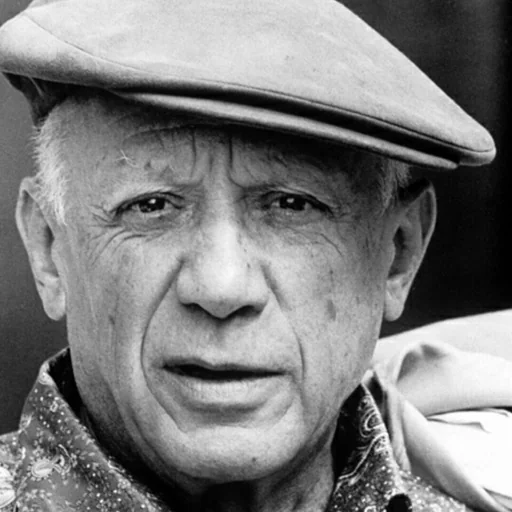
Artist
Pablo Ruiz Picasso (25 October 1881 – 8 April 1973) was a Spanish painter and sculptor who spent most of his adult life in France.