Artwork
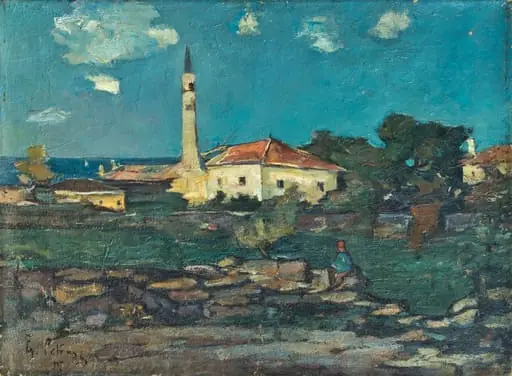
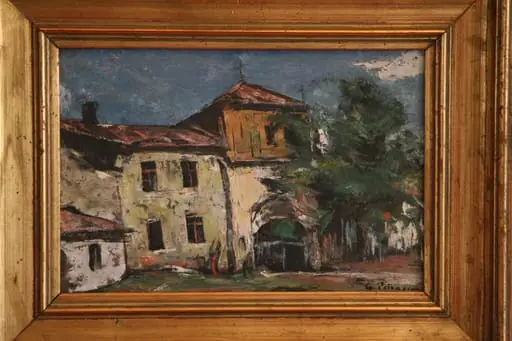
Clopotniță la Târgoviște
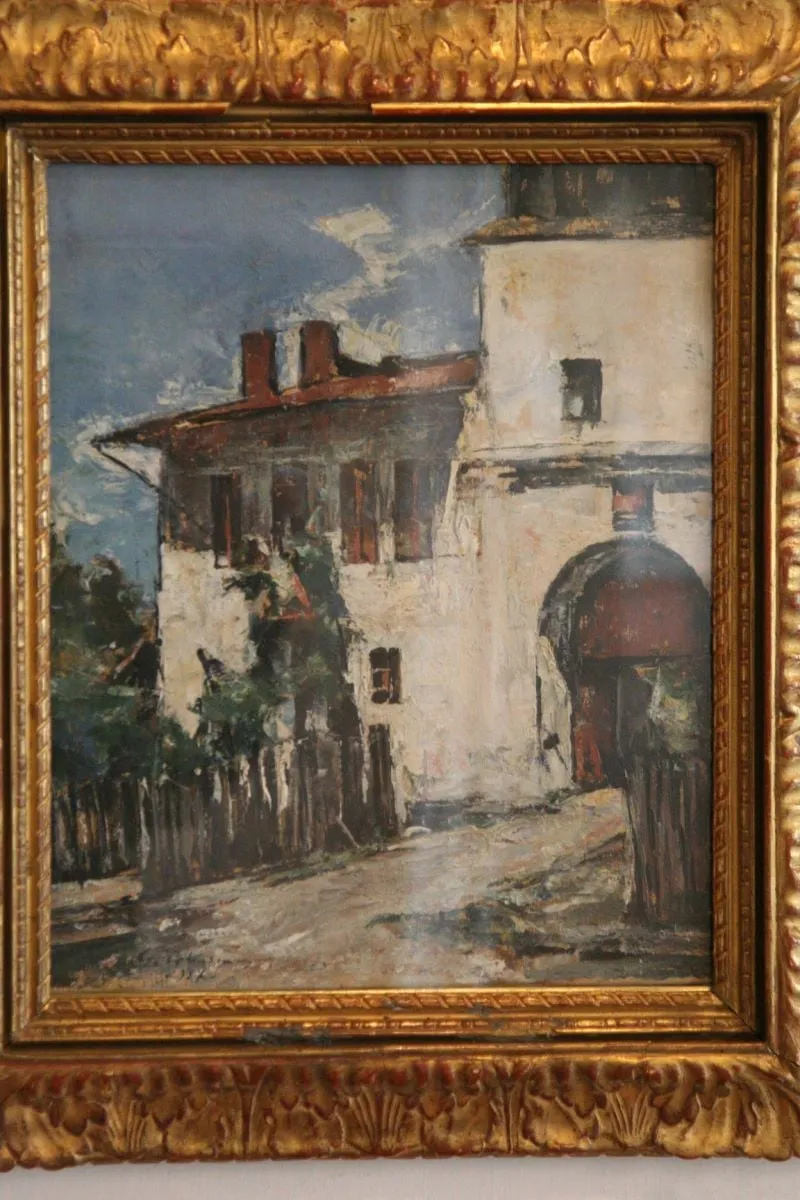
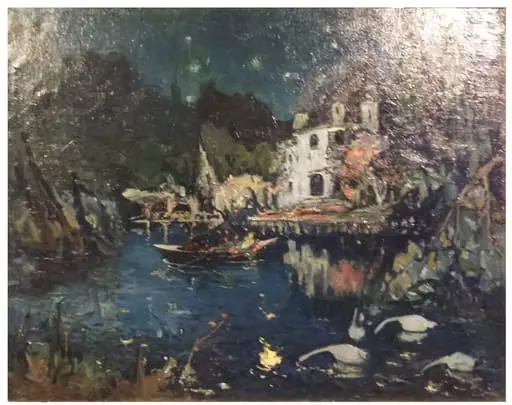
Clopotniță la Târgoviște is a print by Gheorghe Petrașcu. It dates from 927 and is held in the collection of the Museum of Art Cluj-Napoca.
About this work
Overview
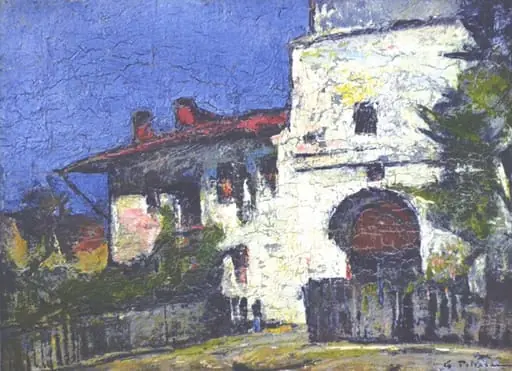
Created in 1927 by Romanian painter Gheorghe Petrașcu, Clopotniță la Târgoviță captures a modest bell tower set within the historic town of Târgoviște. The work is part of the Museum of Ethnography’s collection, where it serves as a visual record of a specific urban scene rendered with a distinctive, tactile brushwork.
Subject & Meaning
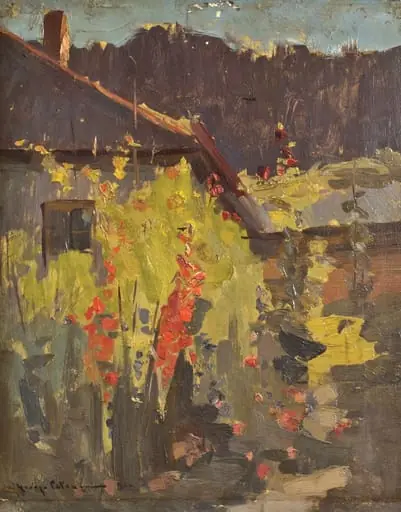
The composition centers on a weathered white structure with a red‑tiled roof that projects over a narrow alley. Dark wooden shutters, a modest patch of grass, and a solitary red barrel near a shadowed archway frame the bell tower, suggesting everyday life in a small Romanian town while emphasizing the passage of time through the building’s worn surfaces.
Technique & Style
Petrașcu employs a thick, uneven application of paint that creates a pronounced impasto surface. The heavy brushstrokes generate a rough texture, conveying the fleeting quality of light and shadow. This approach reflects the artist’s intent to seize the momentary atmospheric conditions rather than render a polished, detailed study.
History & Provenance
Born in 1872, Petrașcu was a prominent figure in early‑20th‑century Romanian art, earning several awards during his career and posthumous recognition at international exhibitions. After its creation, Clopotniță la Târgoviște entered the holdings of the Museum of Ethnography, where it remains accessible to the public as part of the institution’s representation of Romanian cultural heritage.
Artist & collection
Artist
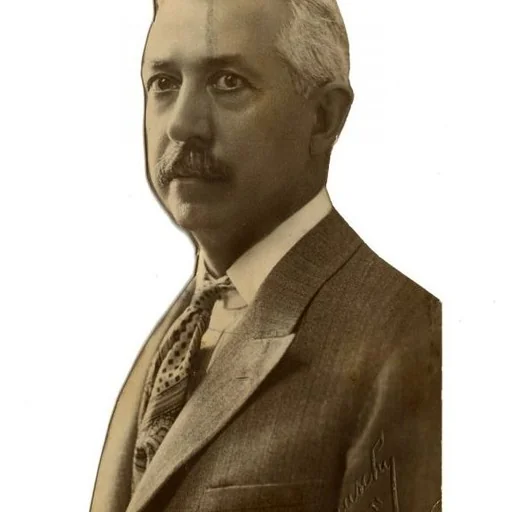
Gheorghe Petrașcu (Romanian pronunciation:; 20 November 1872, Tecuci – 1 May 1949, Bucharest) was a Romanian painter.