Artwork
The Forum of Nerva, Rome
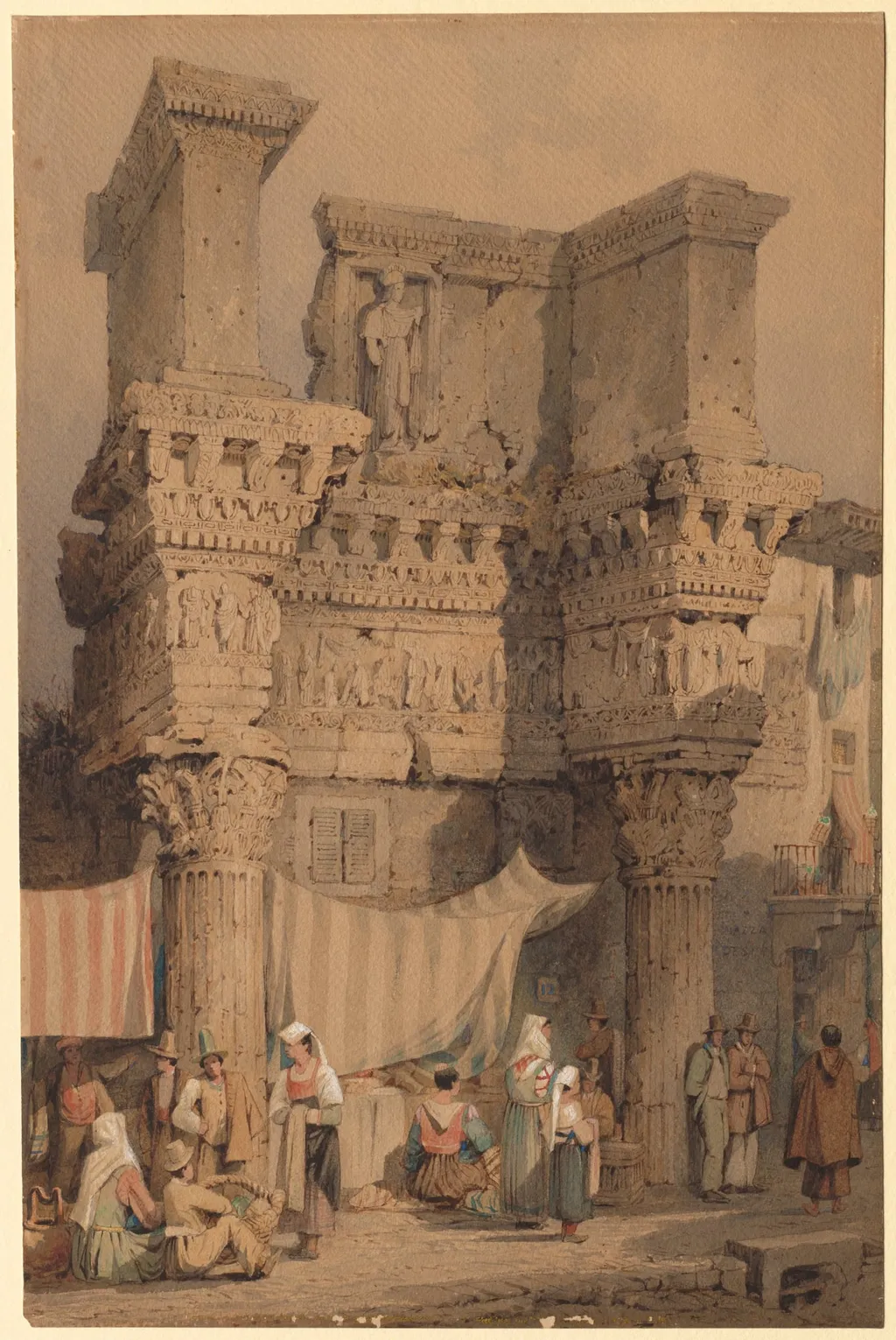
The Forum of Nerva, Rome is a drawing by Samuel Prout. It dates from 1827 and is held in the collection of the Cleveland Museum of Art.
- Accession no.
- 1940.561
- Credit line
- Bequest of James Parmelee
About this work
Overview
Created around 1827, this drawing by Samuel Prout depicts the ruins of the Forum of Nerva in Rome. Executed in ink and watercolor, it captures the architectural remnants of the ancient imperial complex with careful attention to structural detail and atmospheric tone. The work is part of the collection at The Cleveland Museum of Art, acquired as an example of 19th-century topographical drawing.
Subject & Meaning
The drawing focuses on the surviving columns and arches of the Forum of Nerva, once a public space linking the Imperial Fora. Prout emphasizes the quiet decay of the structure, framing its fragments against a soft sky. The image conveys a sense of historical layering, where Roman grandeur meets the passage of time, without overt romanticization or narrative embellishment.
Technique & Style
Prout employed fine ink lines to define architectural forms, complemented by translucent watercolor washes to suggest light and shadow. His approach favors precision over dramatic effect, reflecting the influence of topographical tradition. The composition is balanced and restrained, with a low horizon line that draws attention to the verticality of the ruins.
History & Provenance
The drawing was made during Prout’s travels in Italy, part of a broader series documenting Roman antiquities. It entered the Cleveland Museum of Art’s collection in the 20th century, likely through a donation or acquisition of European drawings. Its provenance traces back to Prout’s personal sketchbooks, later dispersed among collectors and institutions.
Context
Prout’s work emerged during a period of renewed interest in classical ruins among British artists and travelers. His drawings contributed to a visual record of Rome’s antiquities before extensive restoration efforts. Unlike contemporaries who idealized ancient sites, Prout recorded them with documentary fidelity, aligning with emerging archaeological sensibilities.
Legacy
The drawing stands as a representative example of early 19th-century topographical art, valued for its observational clarity rather than stylistic innovation. It reflects a shift toward empirical recording of heritage sites and remains a reference for studies of Roman architecture and the evolution of architectural drawing as a discipline.
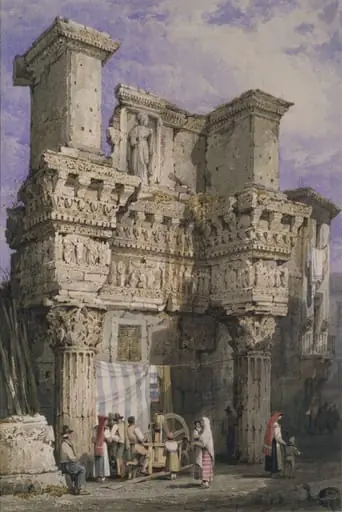
Own this work as a print
Artist & collection

Artist
Samuel Prout was a British watercolourist, and one of the masters of watercolour architectural painting, who largely invented the genre of the grand steet scene in British watercolour painting, mostly with picturesque scenes from…

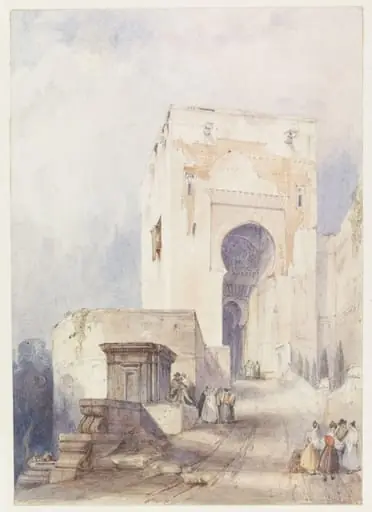 Gate of Justice Alhambra Granada
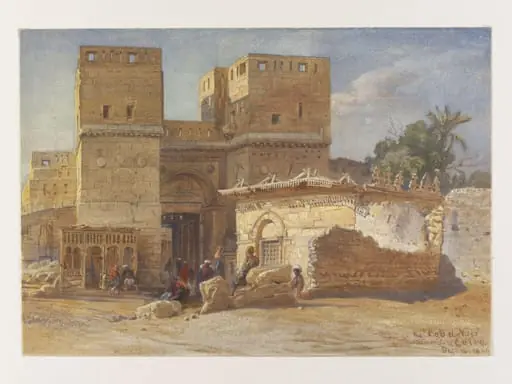 The Bab el Nasr. Cairo
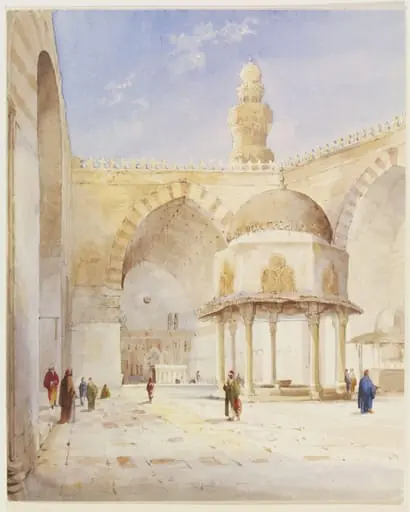 Interior of the Mosque of Sultan Hassan
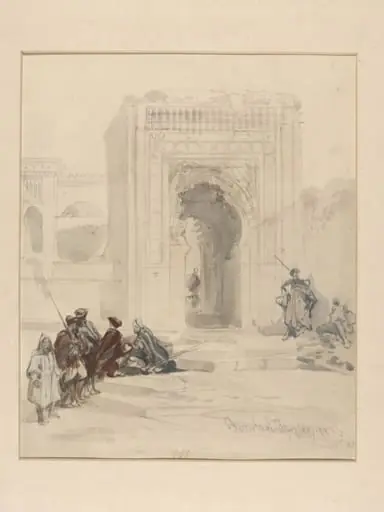 Fortress of Tangier
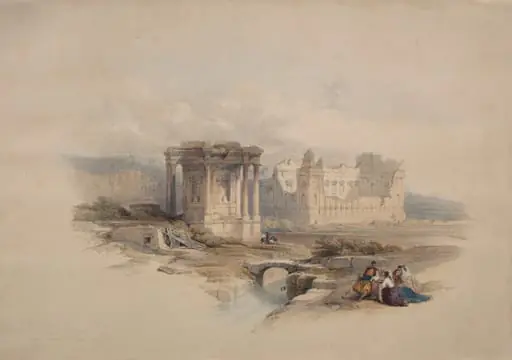 Circular Temple at Baalbec
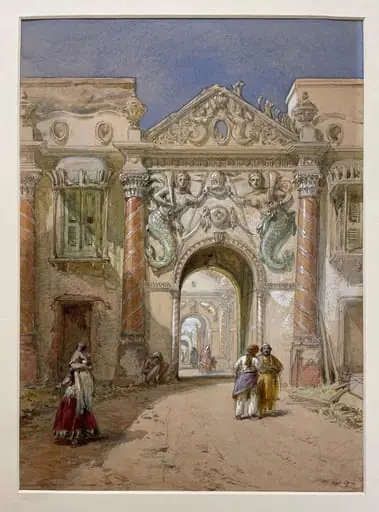 Mermaid gate, Kaiserbagh, Lucknow
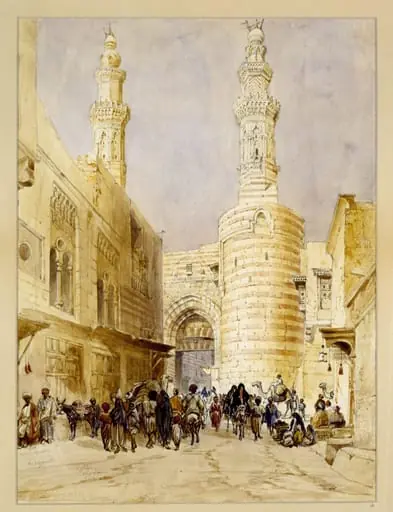 Bab Zooayleh
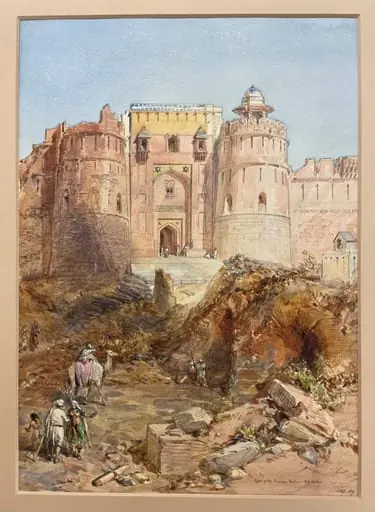 Gate of Purana Qila, Old Delhi
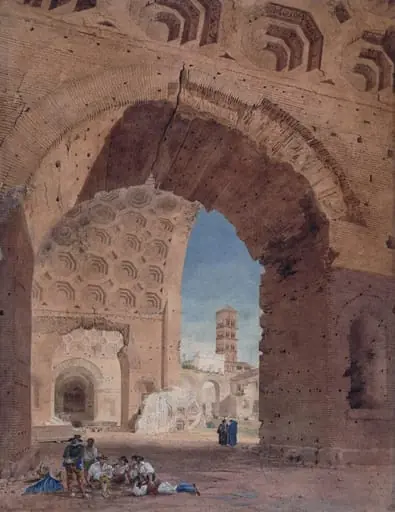 Ruins of the basilica of Constantine, Rome
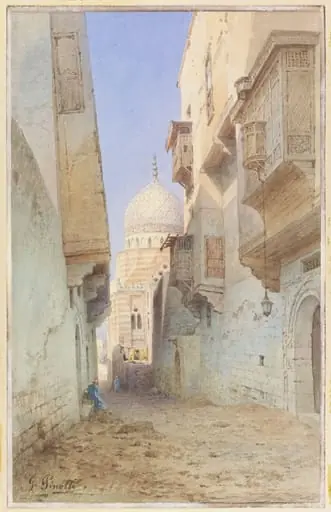 Street Scene in Cairo, with the dome of a tomb
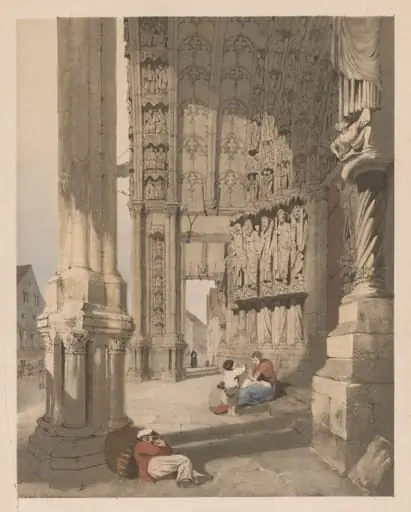 Picturesque Architecture in Paris, Ghent, Antwerp, Rouen, Etc.: South Porch of Chartres Cathedral,
- Forum of Nerva, Rome