Artwork
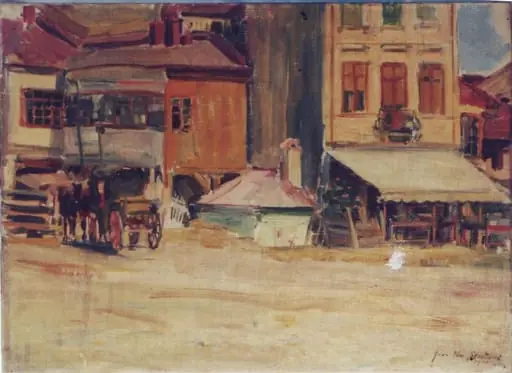
Piața din Sibiu

Piața din Sibiu is a print by Rudolf Schweitzer-Cumpăna. It dates from 1936 and is held in the collection of the Colecție particulară - Elveția.
About this work
Overview
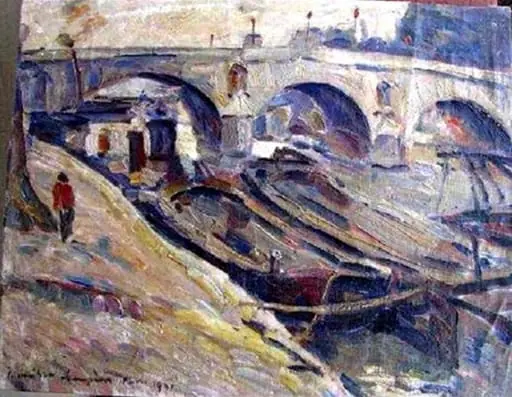
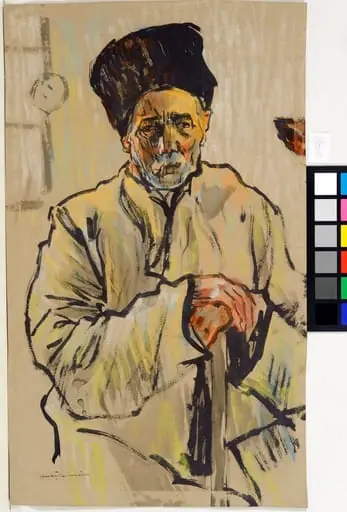
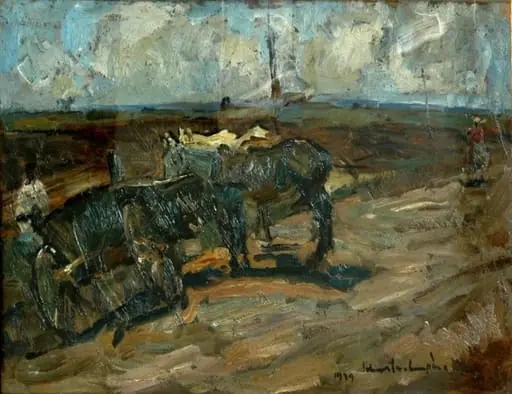
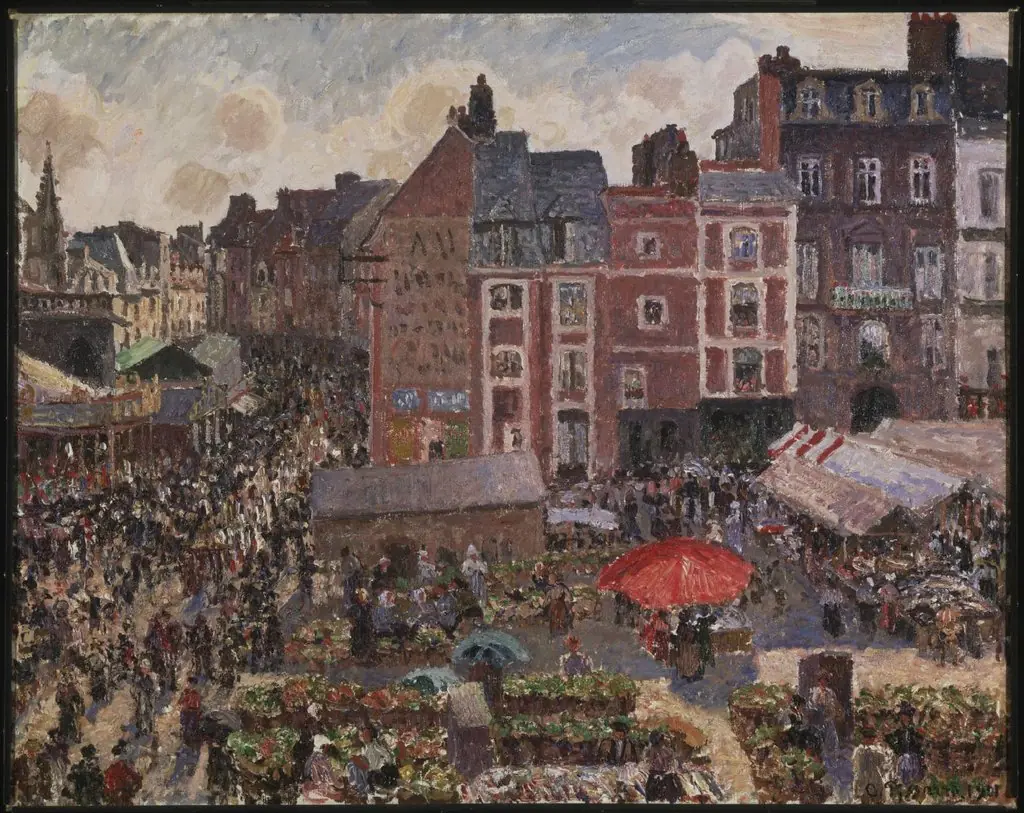
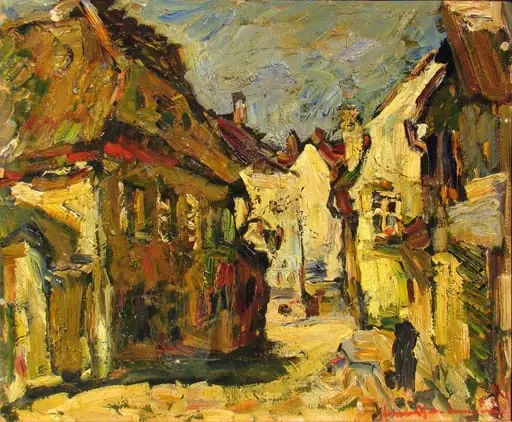
Piața din Sibiu, painted circa 1936 by Rudolf Schweitzer-Cumpăna, is a vibrant depiction of a town's central marketplace. Now part of the Museum of Ethnography's collection, the work captures the dynamism of everyday life in a pre-war setting.
Subject & Meaning
The painting focuses on the communal hub of a marketplace, emphasizing the interaction among people gathered around stalls. The scene conveys a sense of bustling community life, with umbrellas and varied activities adding to the narrative.
Technique & Style
Schweitzer-Cumpăna employed a loose, expressive technique to render buildings and stalls, imparting a sense of energy and movement. The palette, rich in earth tones with accents of brighter colors, is further enhanced by the strategic use of light and shadow to achieve depth and texture, reminiscent of chiaroscuro principles.
History & Provenance
Created around 1936, the painting is now housed at the Museum of Ethnography, though specific details of its acquisition or earlier ownership are not provided in the available information.
Context
Painted on the eve of World War II, Piața din Sibiu offers a glimpse into the everyday life of a Romanian town before the onset of global conflict, preserving a moment of communal normalcy.
Legacy
While specific influences or direct artistic legacies of Piața din Sibiu are not detailed, the work contributes to the broader record of interwar Romanian art, capturing the essence of a bygone era's daily life.
Artist & collection
Artist
Rudolf Schweitzer-Cumpăna was a Romanian painter. Born in Pitești into an ethnic German family, he finished high school in his native town before attending the Royal Academy of Arts at Berlin from 1904 to 1909, studying…