Artwork
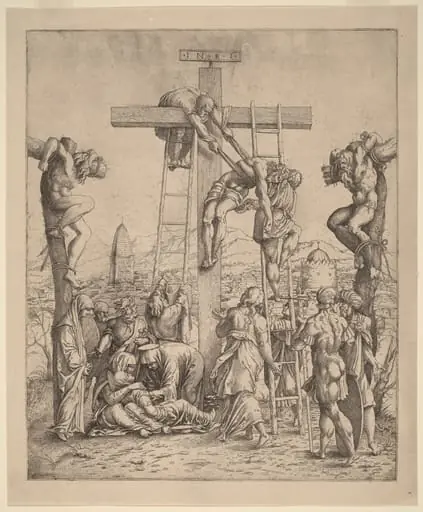
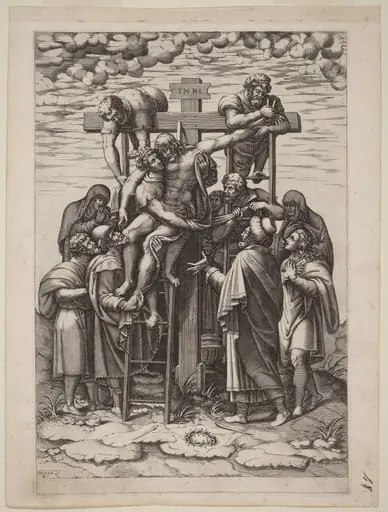
Descent from the Cross
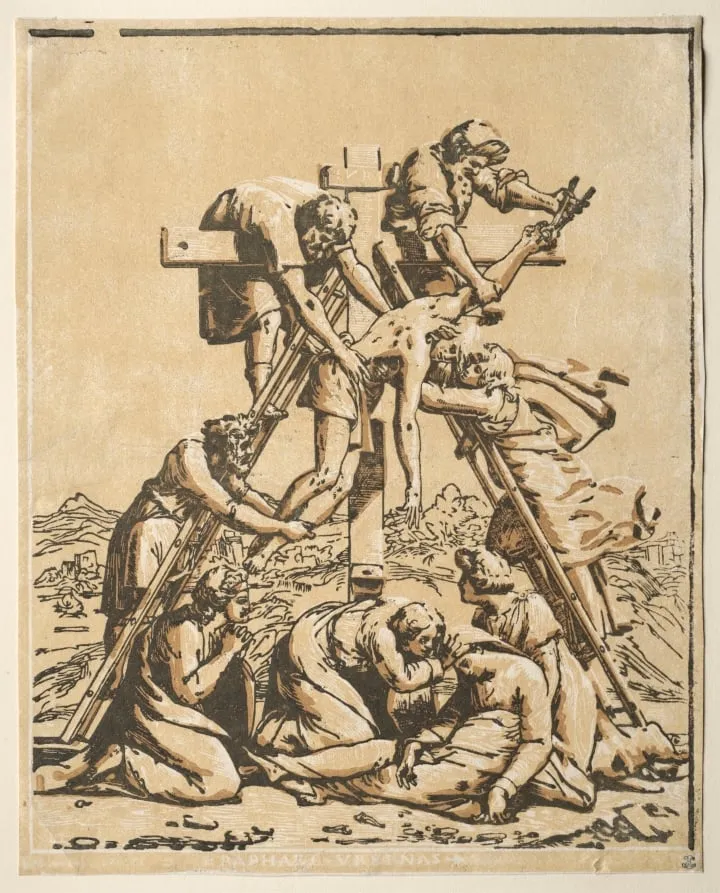
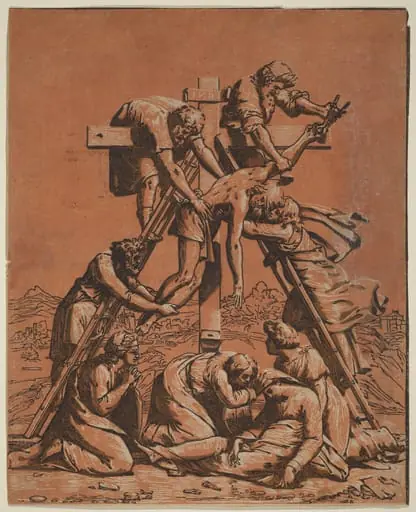
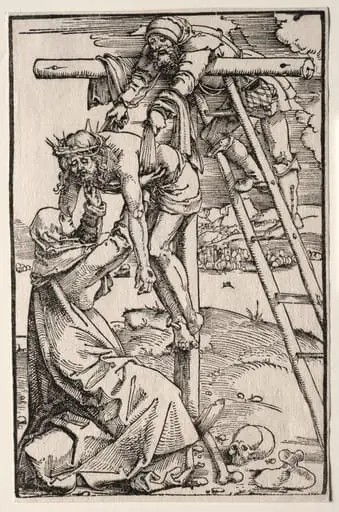
Descent from the Cross is a print by the Renaissance artist Ugo da Carpi. It dates from 1518 and is held in the collection of the Cleveland Museum of Art.
- Accession no.
- 1925.984
- Credit line
- Gift of the President and Directors of the Baltimore and Ohio Railroad
About this work
Overview
Descent from the Cross is a chiaroscuro woodcut print by Ugo da Carpi, created using multiple woodblocks to achieve a range of tones.
Subject & Meaning
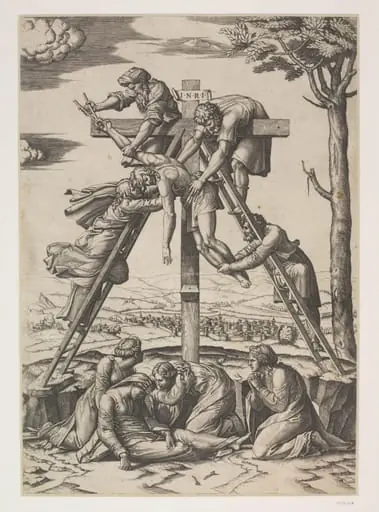
The print depicts the scene of Christ being lowered from the cross, surrounded by figures including the three Marys and the fainted Virgin, set against a hilly landscape.
Technique & Style
Ugo da Carpi employed three woodblocks, in light brown, dark brown, and black, to layer different tones and create depth, exemplifying the chiaroscuro technique.
History & Provenance
The design is credited to Raphael, inspired by one of his lost drawings for a Deposition scene intended for the Loggie Vaticane.
Artist & collection
Artist
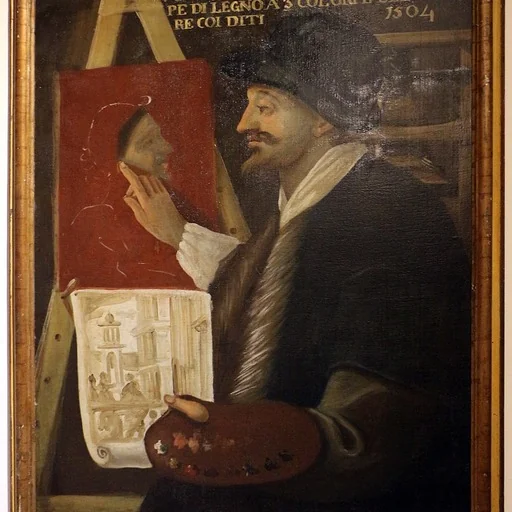
Ugo da Carpi (c. 1450–1480 – c. 1523–1532) was an Italian printmaker active between 1502 and 1532 in the cities of Venice, Rome and Bologna. He is known for his technical and stylistic contributions to the chiaroscuro…