Artwork
Untitled
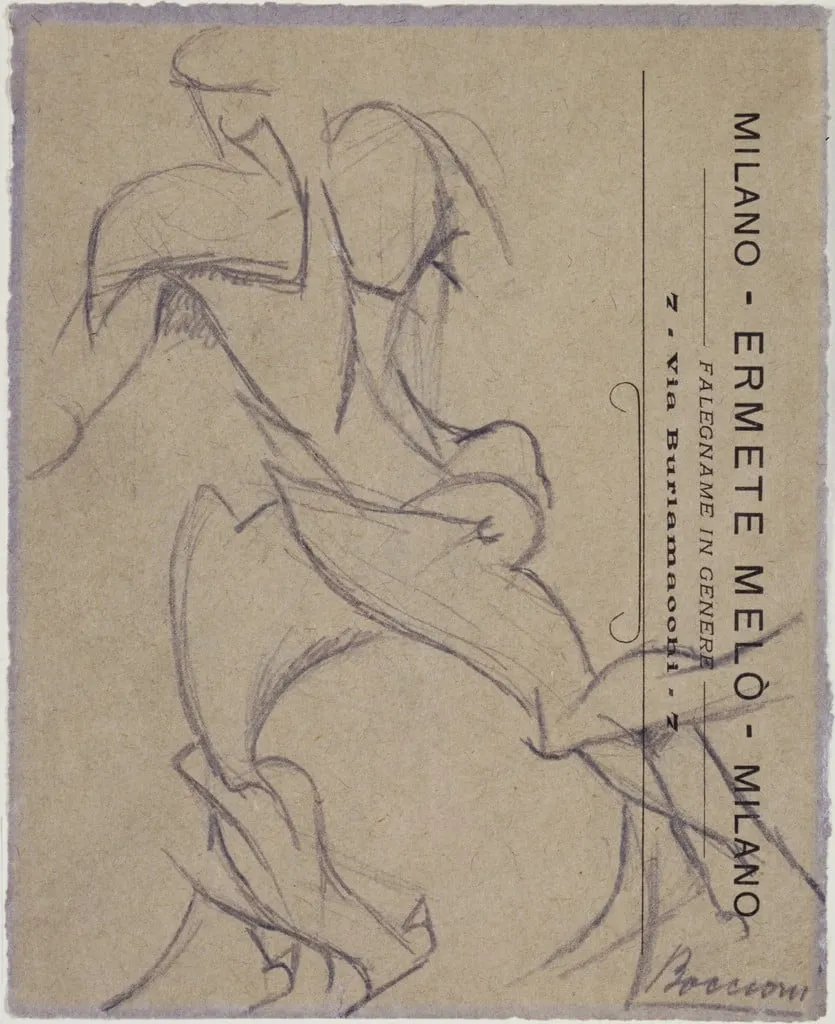
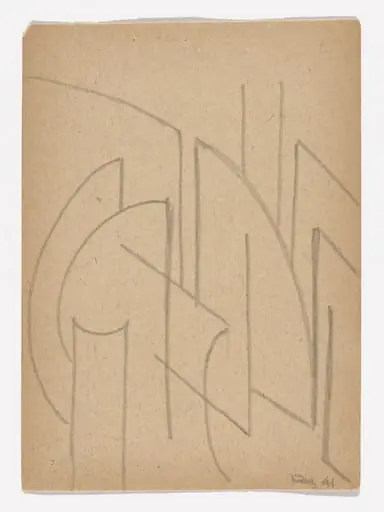
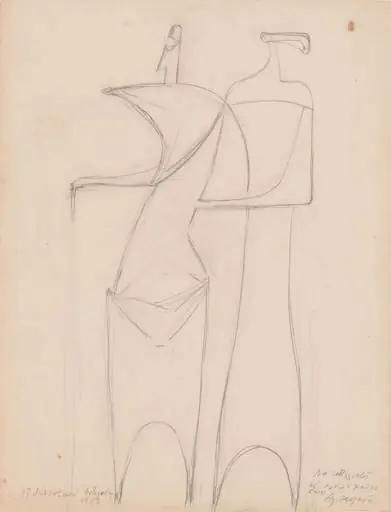
Untitled is a graphite drawing by Umberto Boccioni. It dates from 1913 and is held in the collection of the Museum of Modern Art.
About this work
Overview
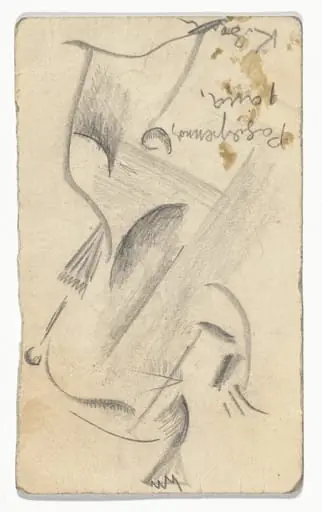
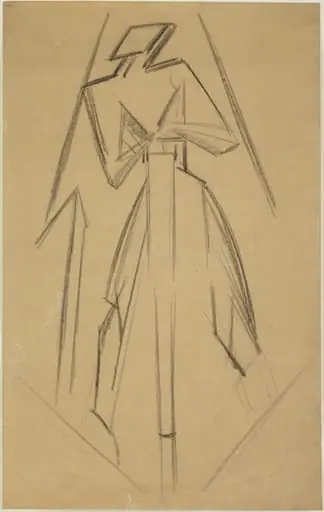
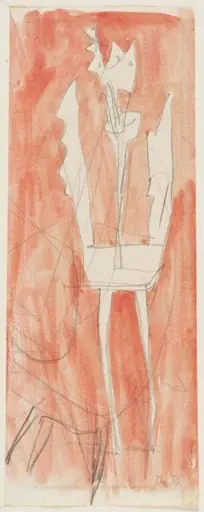
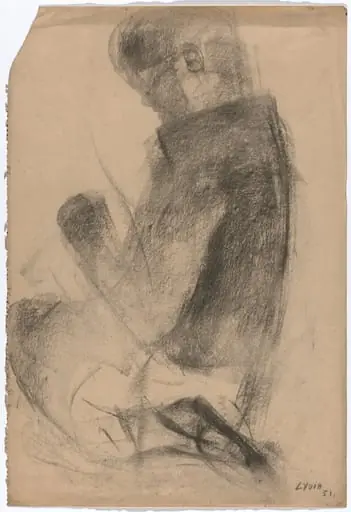
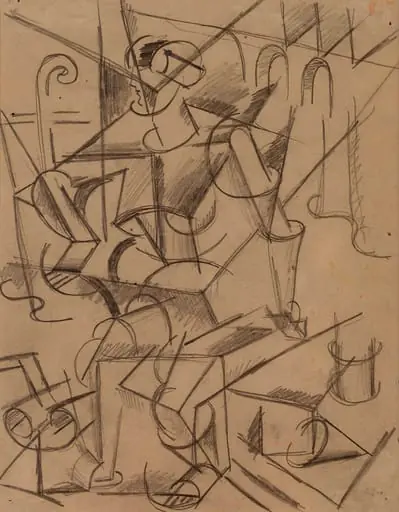
Created in 1913, this pencil drawing on colored paper is attributed to Umberto Boccioni. It resides in the collection of The Museum of Modern Art. The work is a dynamic sketch, capturing motion through fragmented lines rather than defined form. Its medium and scale suggest it was made as a preparatory study, reflecting the artist’s interest in capturing transient physical energy.
Subject & Meaning
Two nude figures are entwined in a posture of physical tension, their limbs overlapping in a way that suggests struggle or intimacy.
Two nude figures are entwined in a posture of physical tension, their limbs overlapping in a way that suggests struggle or intimacy. The composition avoids idealization, instead emphasizing instability and kinetic force. The figures are not individualized; they function as abstracted elements in a larger exploration of bodily movement and spatial conflict, central themes in Boccioni’s early Futurist inquiries.
Technique & Style
Boccioni employed sharp, irregular pencil strokes to convey urgency and motion. Lines vary from faint, sketched contours to dense, dark accents, creating rhythmic contrast. The warm off-white paper enhances the tactile quality of the marks. Forms are suggested through cumulative gesture rather than contour, rejecting classical modeling in favor of a raw, almost chaotic energy that aligns with Futurist principles.
History & Provenance
The drawing was produced during Boccioni’s active involvement with the Futurist movement, a period marked by intense experimentation in drawing and sculpture. It entered The Museum of Modern Art’s collection in the mid-20th century, likely through acquisition from a European source. Its provenance reflects its status as a significant, though lesser-known, component of his broader artistic output.
Context
Made in 1913, the work coincides with Boccioni’s shift from painting to sculptural studies and his writings on dynamism in art. It reflects his attempt to translate the sensation of motion into static form, influenced by contemporary scientific theories of movement and the rapid pace of modern life. Unlike his finished sculptures, this drawing reveals the immediacy of his process, unfiltered by final composition.
Legacy
Though not widely exhibited, this drawing exemplifies Boccioni’s contribution to modernist drawing practices. It demonstrates how Futurist ideals were tested in intimate, private sketches before being realized in larger works. Its rawness has informed later studies of gesture and abstraction, positioning it as a quiet but vital link between early 20th-century experimentation and postwar expressive drawing.
Artist & collection

Artist
Umberto Boccioni was an influential Italian painter and sculptor. He helped shape the revolutionary aesthetic of the Futurism movement as one of its principal figures. Despite his short life, his approach to the…

![Mia madre che lavora [My Mother Working], by Umberto Boccioni](https://artifactworldgallery.com/img/umberto-boccioni--mia-madre-che-lavora-my-mother-working--ce84f1205dd9eec1-w320.webp)
![Woman Reading [Donna che legge], by Umberto Boccioni](https://artifactworldgallery.com/img/umberto-boccioni--woman-reading-donna-che-legge--d9496ecdedc4f414-w320.webp)
![Periphery [Periferia], by Umberto Boccioni](https://artifactworldgallery.com/img/umberto-boccioni--periphery-periferia--ea91379039261e85-w320.webp)
![Study for "Shoeing Calvary Horses at the Front" [verso], by John Singer Sargent](https://artifactworldgallery.com/img/john-singer-sargent--study-for-shoeing-calvary-horses-at-the-front-verso--6f6d1a163e84e9ab-w320.webp)