Artwork
Radha and Hindu God Krishna Celebrating the Festival Holi
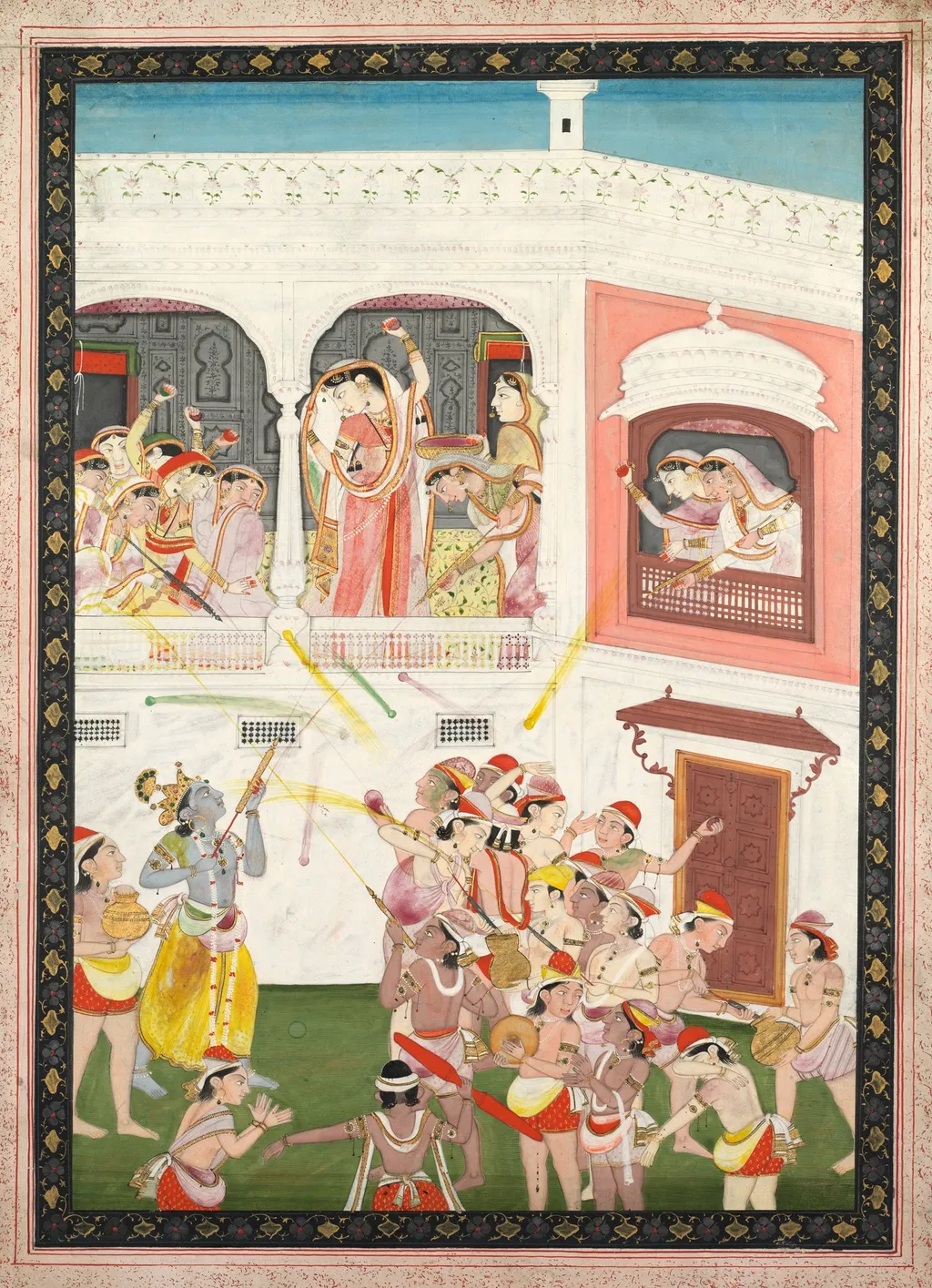
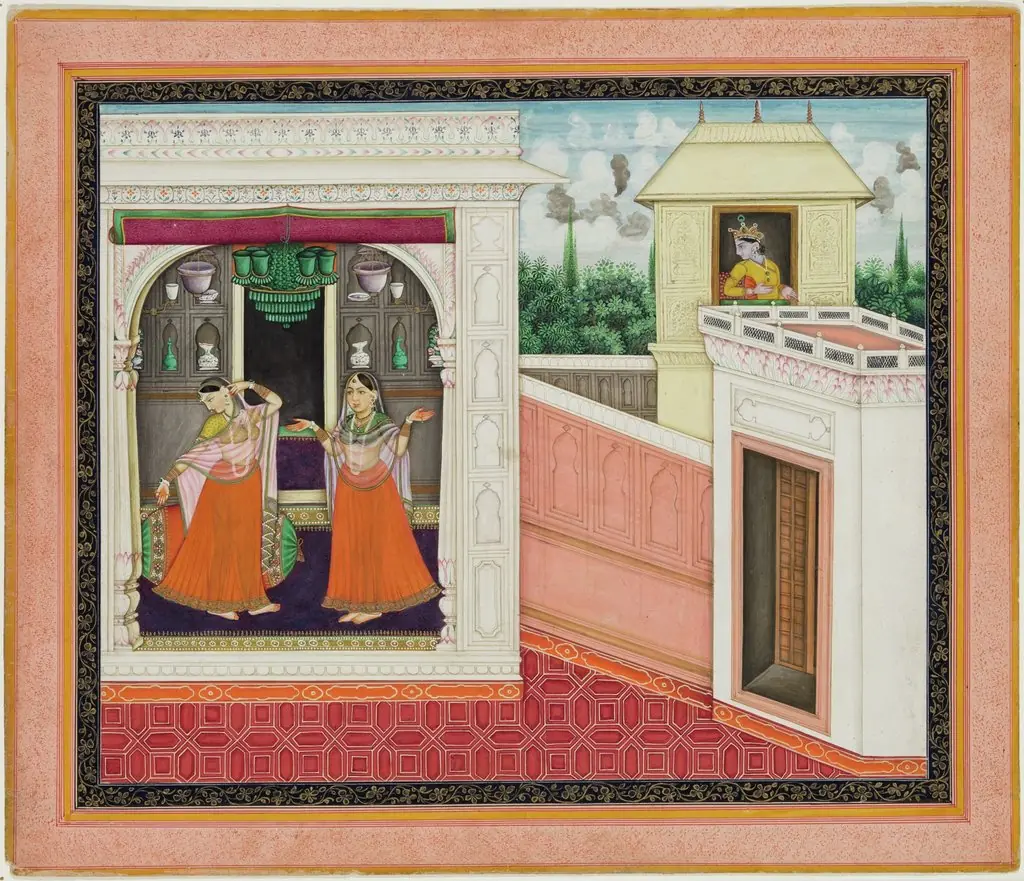
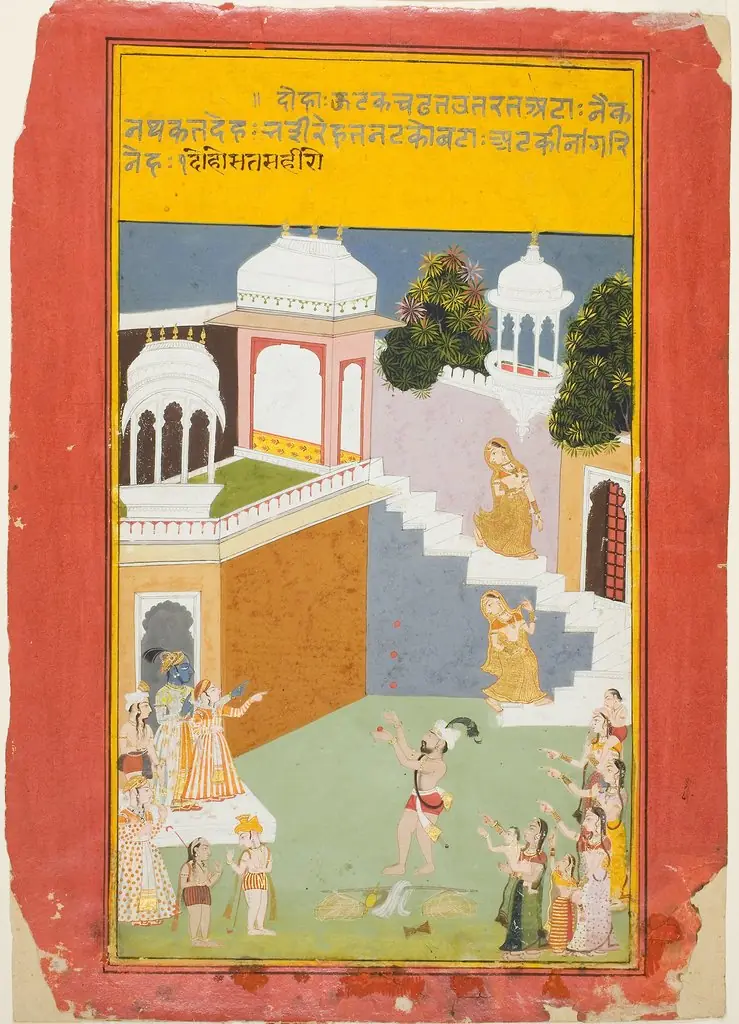
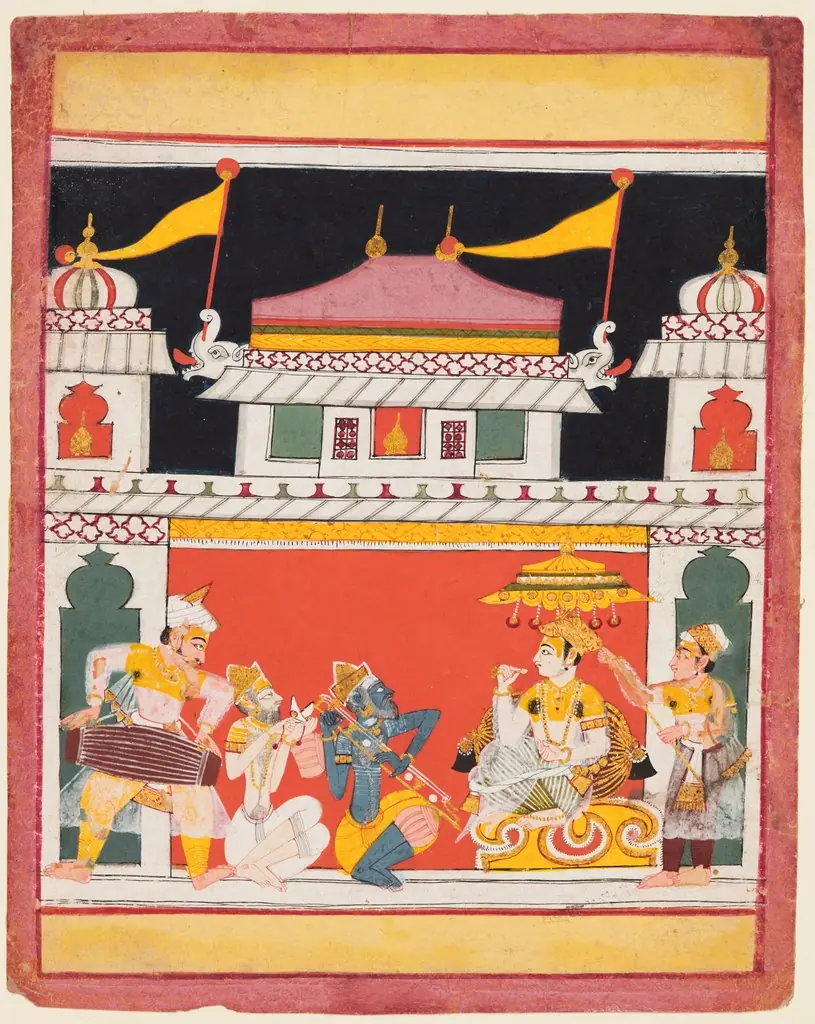
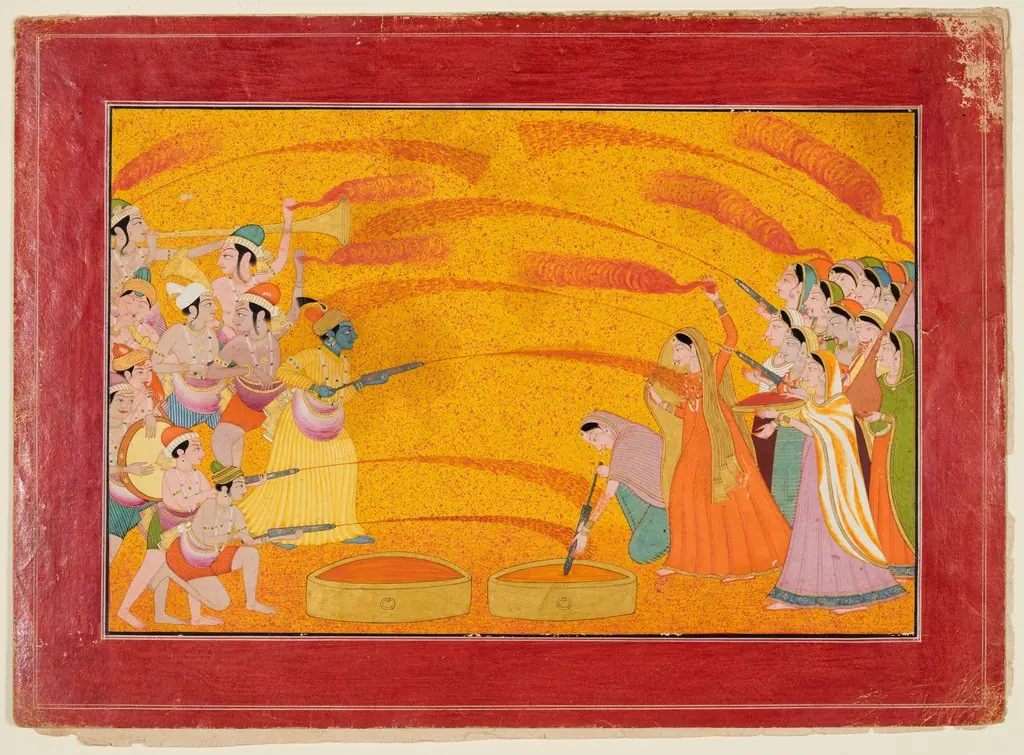
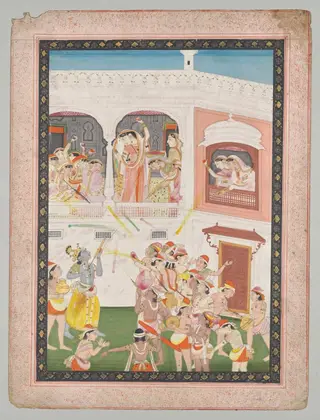
Radha and Hindu God Krishna Celebrating the Festival Holi is an unspecified painting. It dates from 1805 and is held in the collection of the Cleveland Museum of Art. The work depicts an exuberant outdoor celebration of Holi, the Hindu festival of colors.
About this work
Subject & Meaning
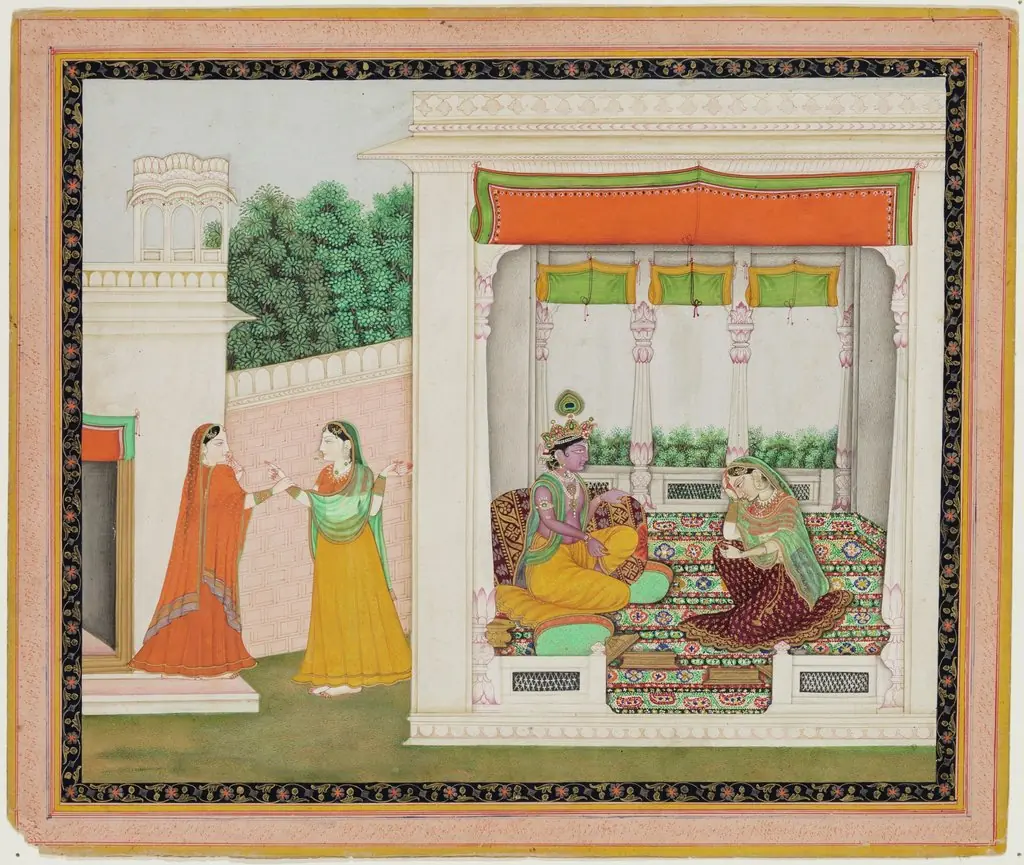
The painting depicts Radha and Krishna celebrating the Holi festival, capturing their divine love and playful interaction. Krishna is shown with his consort Radha, surrounded by vibrant colors and symbols of spring renewal, embodying themes of devotion, joy, and the triumph of love over adversity.
History & Provenance
Radha and Hindu God Krishna Celebrating the Festival Holi was created in 1805 by an unknown artist. The painting is classified as a painting and depicts the Hindu deity Krishna. It subsequently entered the collection of the Cleveland Museum of Art, where it is currently held under the accession number 1989.340.
Overview
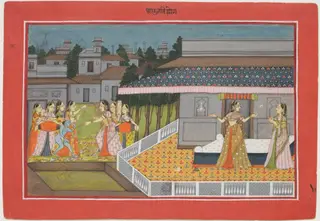
The work depicts an exuberant outdoor celebration of Holi, the Hindu festival of colors. A blue‑skinned deity stands centrally, flanked by a woman with a pot, while two groups of revelers engage in the throwing of colored powder. In the background, two women observe the scene from an open window and doorway, their garments bright red and gold.
Technique & Style
Rendered in vivid hues, the composition balances dynamic movement with static observation. The artist employs a lively palette to convey the dusted pigments of Holi, while the blue skin of the deity contrasts sharply with the surrounding colors. Figures are loosely modeled, suggesting motion, and the architectural elements, window and doorway, provide depth and frame the celebratory tableau.
Context
Holi, celebrated across the Indian subcontinent, marks the arrival of spring and the victory of good over evil. Artistic representations of Krishna during this festival have a long tradition, often highlighting his playful nature and his role as a lover and protector. This painting continues that lineage, situating the divine within a communal, earthly setting.
Artist & collection