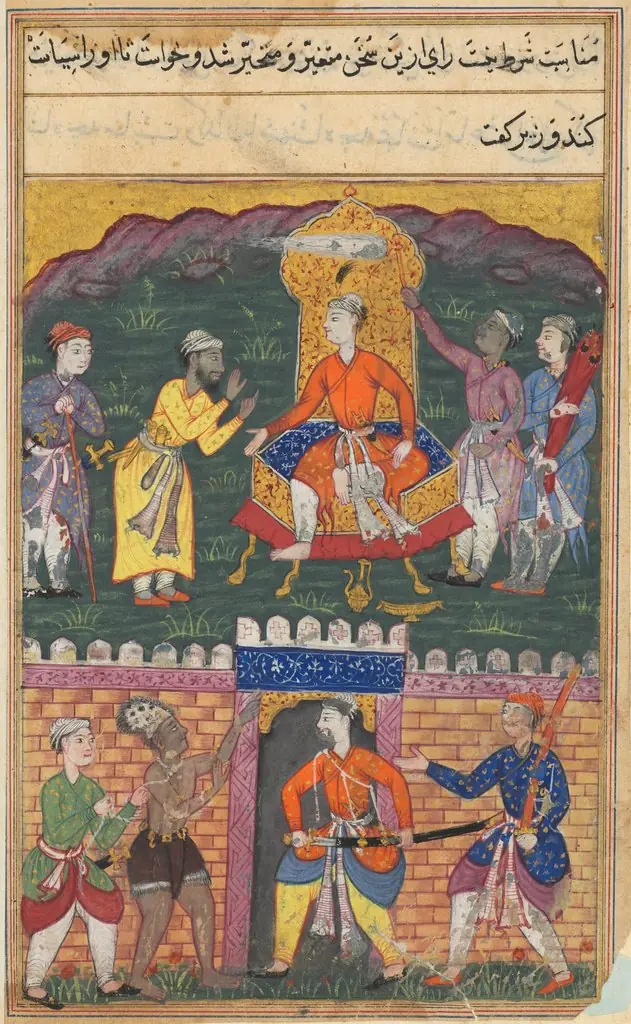
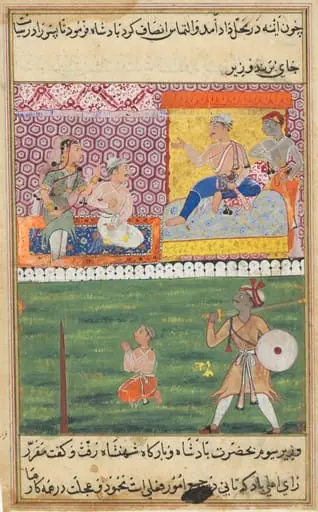
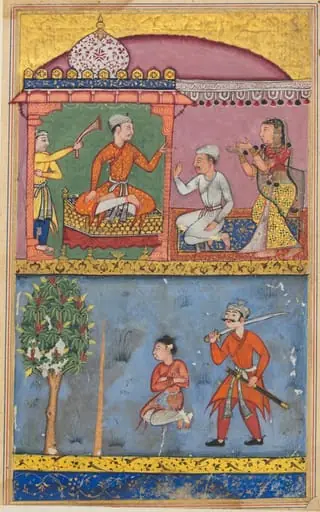
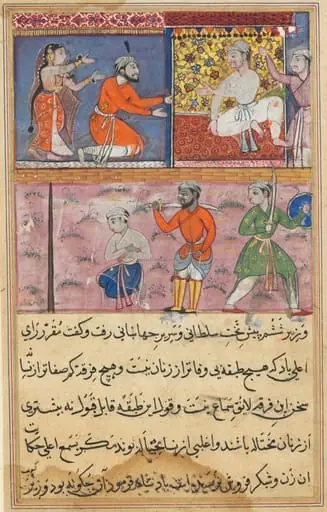
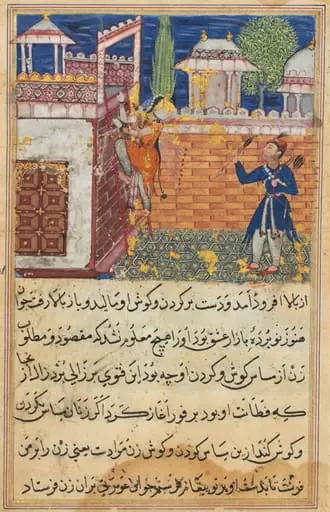
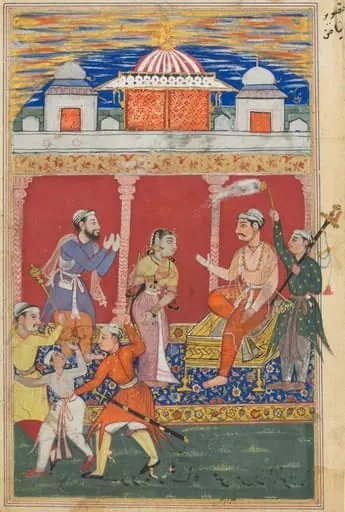
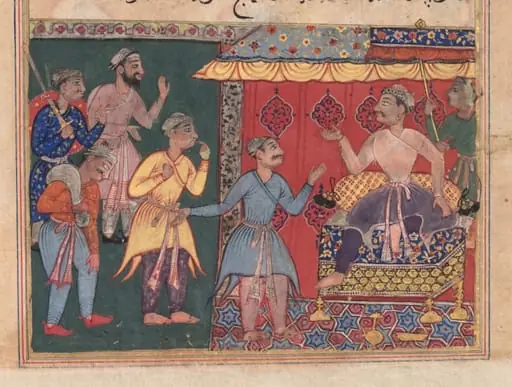
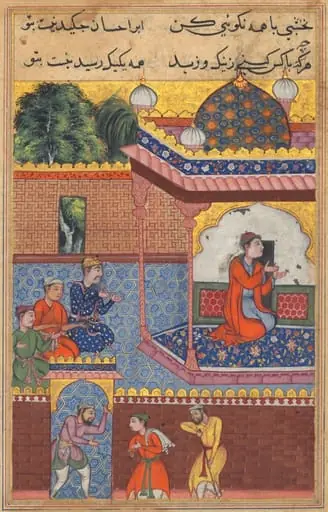
The vizier dissuades the king of Bahilistan from executing the dervish who asks for his daughter’s hand in marriage, from a Tuti-nama (Tales of a Parrot): Seventh Night
1560
unspecified
From the collection of Cleveland Museum of Art
1560
unspecified
From the collection of Cleveland Museum of Art
The vizier dissuades the king of Bahilistan from executing the dervish who asks for his daughter’s hand in marriage, from a Tuti-nama (Tales of a Parrot): Seventh Night is a 1560 unspecified by Unknown, a Mughal Painting work, held at Cleveland Museum of Art.
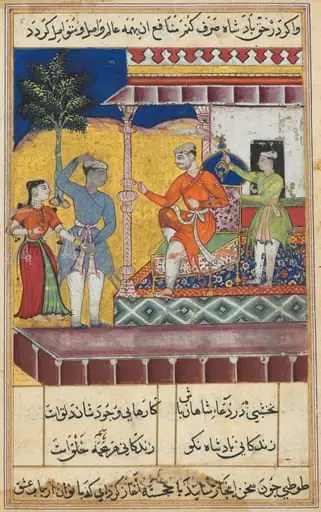
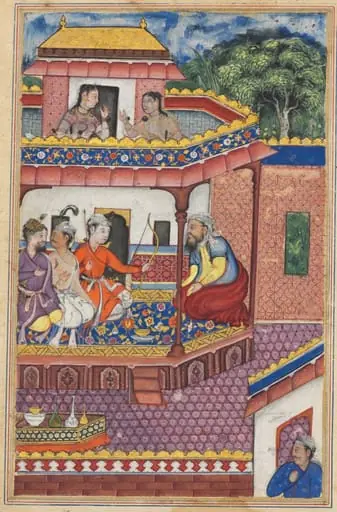
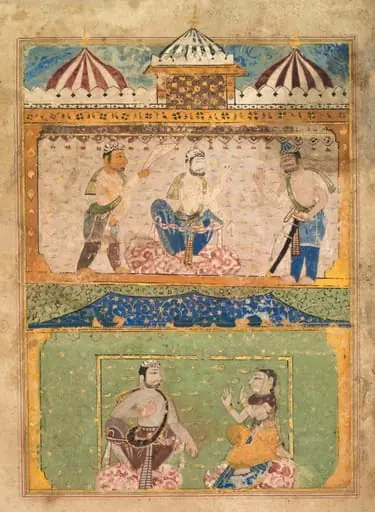
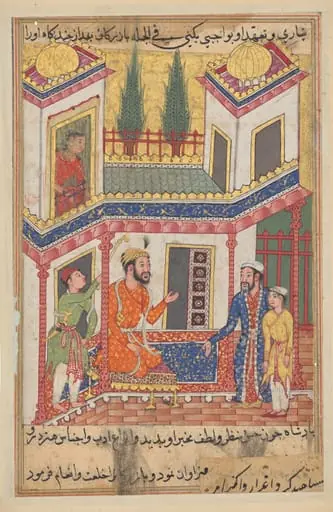
A king in a red robe points his sword at a ragged man in a fur cap. Behind them, a vizier in green whispers in the king’s ear. Servants and guards stand frozen, watching. This scene comes from a *Tuti-nama*, a book of parrot tales told to a Mughal emperor. The story warns kings not to act in anger. The artist packed the moment with tiny details—embroidered slippers, a jeweled dagger, even the parrot perched above. To see more stories like this, look up Mughal India, court of Akbar (reigned 1556–1605).
A poor dervish, wearing a fur cap and short brown lower garment, stands captive before the furious king of Bahilistan. Before he can kill the dervish, a vizier reminds him that it is beneath a king to stain his sword with the blood of a mendicant. The dervish is ordered to prove his worth by offering the king’s daughter an elephant laden with gold.
Bahilistan was once an independent state in India.
Read the full account in the museum source.