Artwork
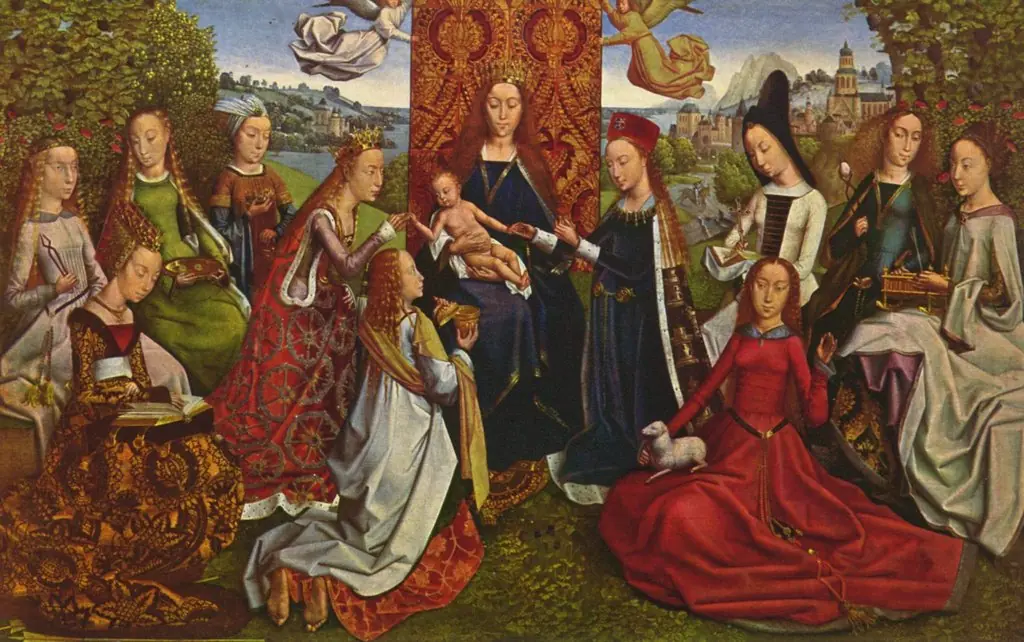
Madonna and Child with Saints in the Enclosed Garden
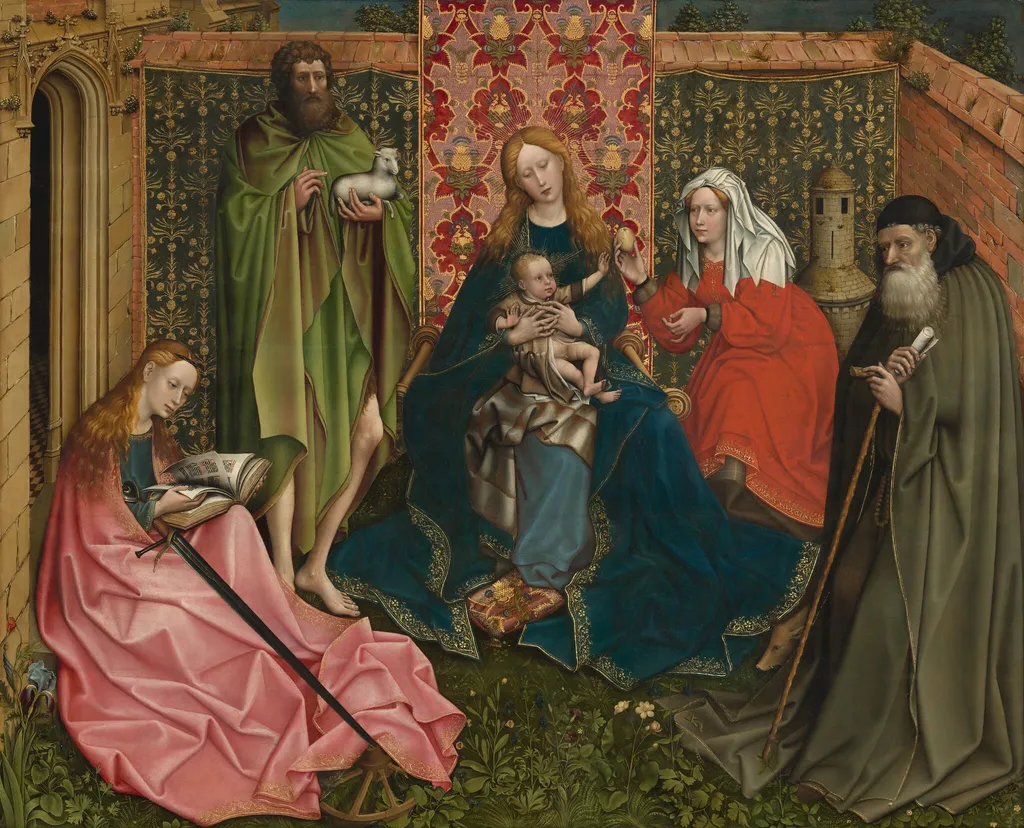
Madonna and Child with Saints in the Enclosed Garden is an oil painting by the Early Renaissance artist Follower of Robert Campin. It dates from 1450 and is held in the collection of the National Gallery of Art.
About this work
A follower of Robert Campin painted this monumental panel in oil around 1440 to 1460. The Virgin and Christ Child sit encircled by four saints in a walled garden, with St. Barbara offering an apple to the infant Christ. It reached the National Gallery of Art in 1959 through the Samuel H. Kress Collection.
Subject & Meaning
The work's religious subject and garden setting align with its genre as devotional art, intended to inspire contemplation.
The painting depicts the Virgin Mary and the Christ Child accompanied by four saints: Catherine of Alexandria, John the Baptist, Saint Barbara, and Anthony the Great, all set within an enclosed garden. The work's religious subject and garden setting align with its genre as devotional art, intended to inspire contemplation. The title itself identifies the enclosed garden as a key element of the composition, a motif commonly associated with Marian symbolism in fifteenth-century Netherlandish painting.
Technique & Style
The painting is executed in oil on panel, a medium confirmed when disfiguring overpaint was removed during a cleaning in the late 1830s, revealing it was not a tempera work as earlier thought. The panel support measures 119.8 × 148.5 cm. The oil technique allows for rich translucency and fine detail, characteristic of Early Netherlandish painting. Sources note no further details on handling or current condition, but the cleaning history indicates the work was restored to reveal its original oil layering.
History & Provenance
The painting is dated to 1450, and its artist remains unknown. Its earliest known location was a church in Bruges. By 1831 it belonged to Imbert de Mottelettes in Bruges, and by 1839 it was in the collection of Jonkheer de Potter-Soenens in Ghent, where it was cleaned and disfiguring overpaint removed.
It subsequently passed to Countess de Oudemard. In 1946 Wildenstein and Co., New York, held the painting, and in June 1949 it was purchased by the Samuel H. Kress Foundation. The work was gifted by exchange to the National Gallery of Art in Washington, D.C., in 1959.
The painting is held at the National Gallery of Art, Washington, D.C., as part of the Samuel H. Kress Collection, to which it was gifted by exchange in 1959. No accession number or exhibition history is recorded in the provided sources.
Context
Nineteenth-century scholarship on the painting began with J.D. Passavant's 1833 assessment, which considered it a pre-Eyckian tempera work. After the removal of overpaint following its acquisition by the De Potter-Soenens collection, it was reidentified as an oil painting from the school of the Van Eycks by F.A. Spyers in 1839. This reattribution placed the work within the early Netherlandish painting tradition, though the artist remains unknown. Later references continued to associate it with that school.
Overview
This oil on panel painting, titled Madonna and Child with Saints in the Enclosed Garden, depicts the Virgin Mary and Christ Child surrounded by four saints within a symbolic walled garden. Executed by a follower of Robert Campin around 1440–1460, this Early Netherlandish work is a significant example of religious art from the period. It is now part of the National Gallery of Art's collection, having been acquired in 1959.
Artist & collection
Artist

- Holy Kinship
 Virgin and Child with Saint Anne, Saint Gereon, and a Donor
 The Adoration of the Shepherds
 Holy Family
 Holy Family
 Geburt Christi
 Madonna and Child with Angels
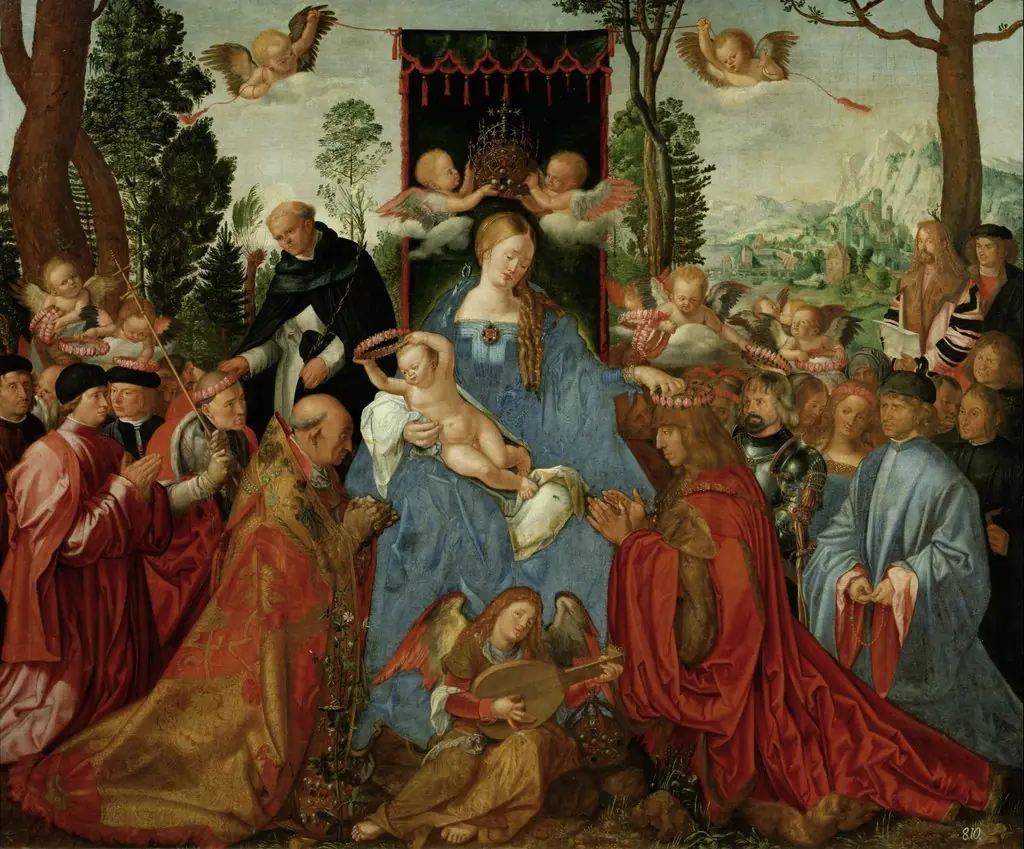 Rosenkranzfest
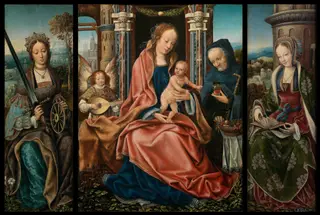 The Holy Family with a Musician Angel Saints Catherine and Barbara
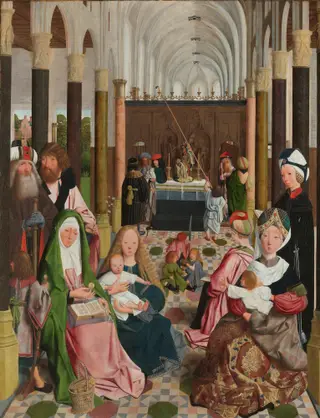 The Holy Kinship
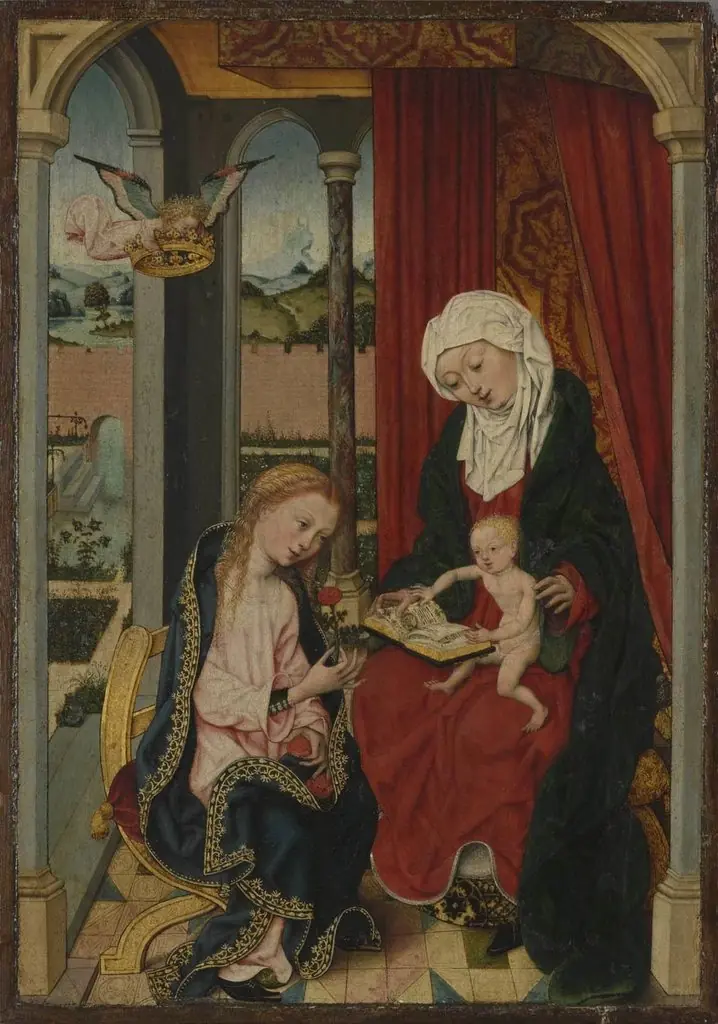 Virgin and Child with Saint Anne
 Virgo inter Virgines