Artwork
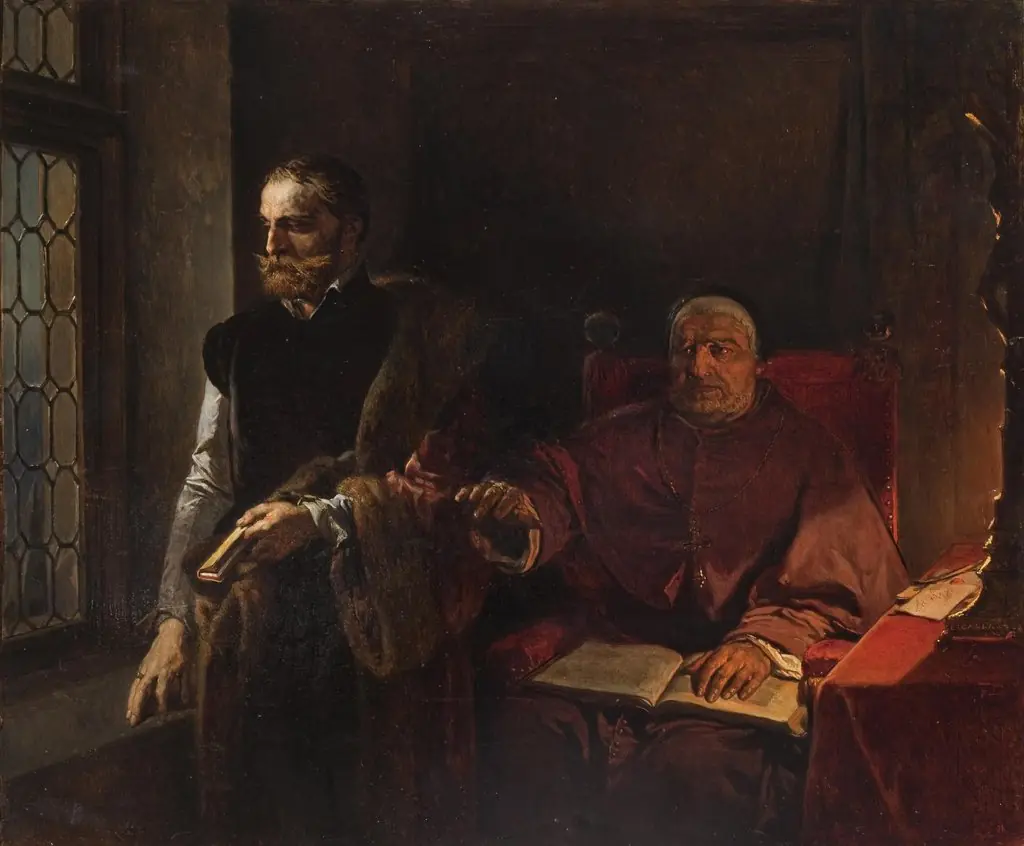
Giacomo and Cardinal Marco, investing Andrea, Abbot of San Zeno, with his Benefice
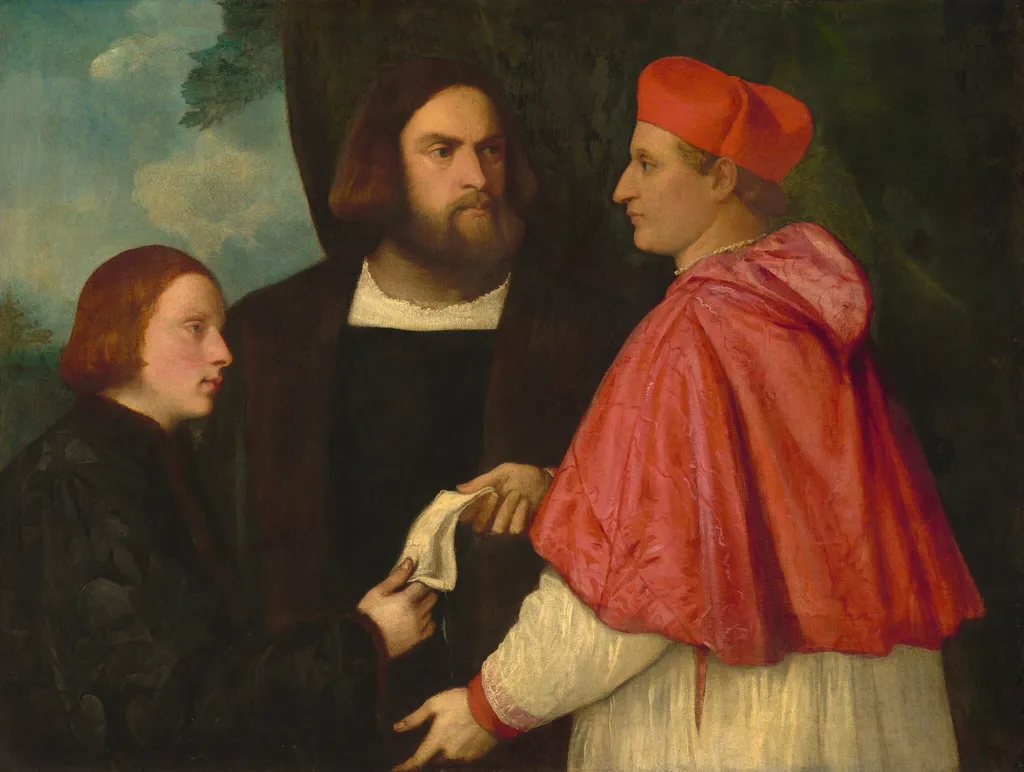
Giacomo and Cardinal Marco, investing Andrea, Abbot of San Zeno, with his Benefice is an oil painting by the High Renaissance artist Follower of Titian. It dates from 1524 and is held in the collection of the National Gallery of Art. This oil on canvas painting, measuring 99.
About this work
In 1524, Cardinal Marco Cornaro placed the abbey of San Zeno into the hands of his young nephew Andrea, watched by the boy's father Giacomo. Painted by a follower of Titian, the solemn family scene records the Cornaro dynasty's concentration of church wealth through inherited benefices. It hangs in the National Gallery of Art, its subjects re-identified by scholar Rachel Healy in 2025.
Subject & Meaning
As a family portrait, it underscores the Cornaro lineage and their control over church offices.
This group portrait depicts the investiture of Andrea Cornaro as Abbot of San Zeno with his benefice, a ceremonial act led by his relatives Cardinal Marco Cornaro and Giacomo Corner. The painting commemorates a specific event of ecclesiastical patronage within the Cornaro family, symbolizing the transfer of a benefice and reinforcing the family's influence in Venetian religious and political spheres. As a family portrait, it underscores the Cornaro lineage and their control over church offices.
Technique & Style
The painting is executed in oil on canvas, a medium typical of the Venetian school during the High Renaissance. The artist, a follower of Titian, employs the master's characteristic warm tonalities and fluid handling, though with less virtuosity. The composition is a formal group portrait arranged across the picture plane, with the figures engaged in the investiture scene.
The brushwork is broad and painterly in the drapery and setting, while faces retain sufficient detail for individual likenesses. Condition has suffered significantly: the work is described as “much repainted” and damaged, which compromises the surface integrity and complicates assessments of original handling. Despite these later interventions, the stylistic allegiance to early 16th-century Venetian portraiture remains evident.
History & Provenance
Painted in 1524, this work was originally in the possession of the Corner (Cornaro) family in Venice. It entered the collection of British Resident John Udny by 1788, when a letter documents its transfer to the painter Angelica Kauffmann, who later mentioned it in her 1803 will. It was likely acquired from her estate by sculptor Antonio Canova, who gave it as a gift in 1816 to William Richard Hamilton.
The painting remained with Hamilton's descendants into the early twentieth century, then passed through dealers Colnaghi and Howard Young Galleries before being acquired by William R. Timken by 1933. It passed to his widow Lillian Guyer Timken and was bequeathed to the National Gallery of Art in 1960.
Overview
This oil on canvas painting, measuring 99.8 by 132.1 centimeters, captures a significant moment in the Cornaro family's history. It depicts Cardinal Marco Cornaro bestowing the benefice of the abbey of San Zeno upon his young nephew, Andrea, with Andrea's father, Giacomo, observing the transaction. Created around 1524 by a follower of Titian, the work entered the National Gallery of Art in 1960.
Its title and the identities of its subjects were definitively re-established in 2025 through new scholarly research, correcting a long-standing misattribution.
Artist & collection
Artist
A painter working in Venice in the 1550s, this artist followed the vivid color and loose brushwork pioneered by Titian.

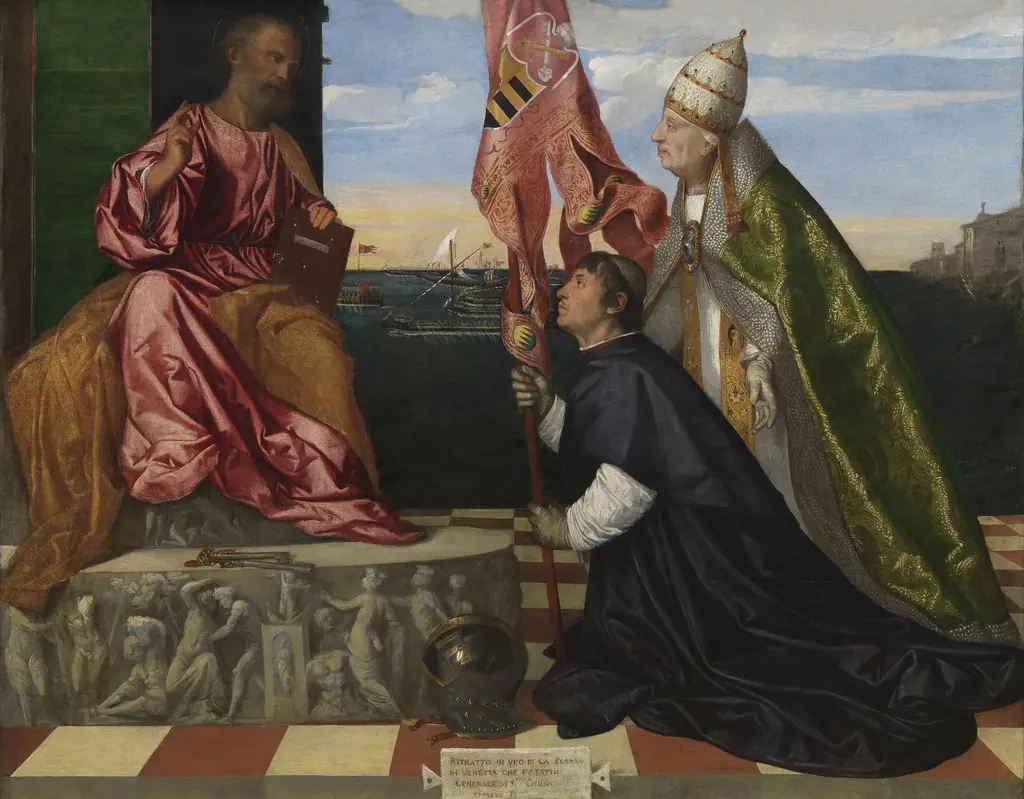
- Jacopo Pesaro, Bishop of Paphos, being presented by Pope Alexander VI to Saint Peter
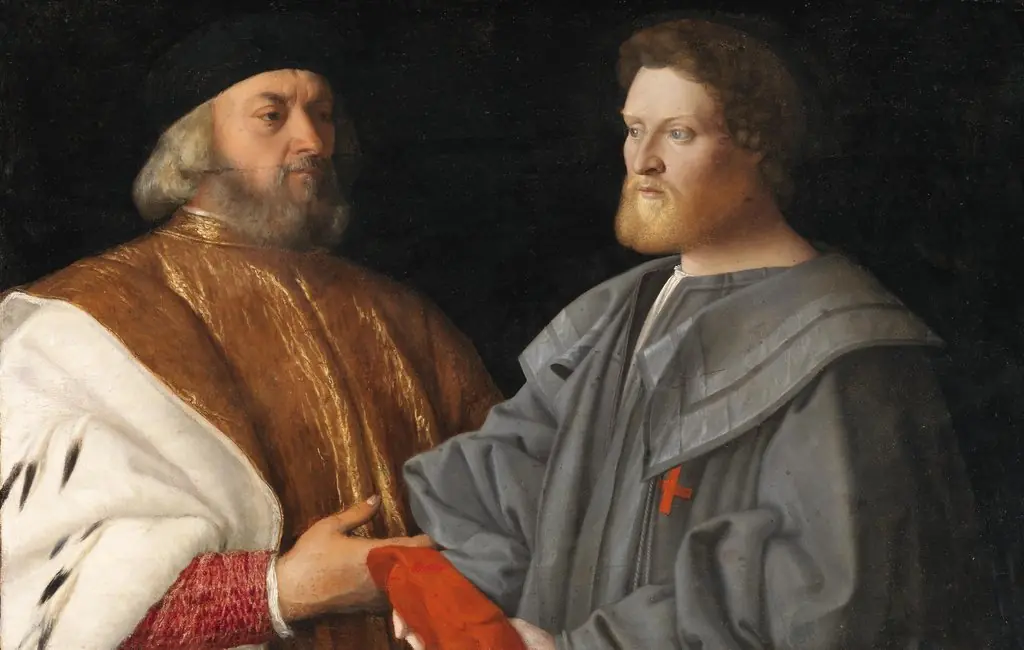 Giorgio Cornaro (1452-1527) and his son Francesco Cornaro (1478-1543)
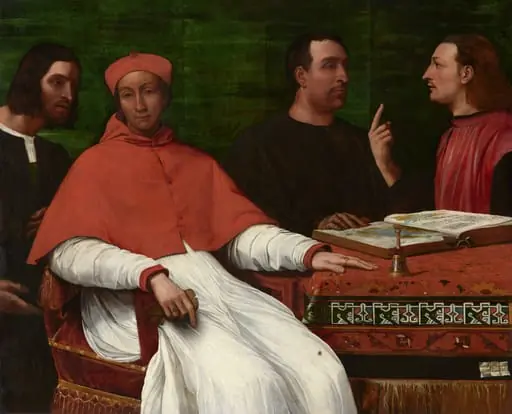 Cardinal Bandinello Sauli, His Secretary, and Two Geographers
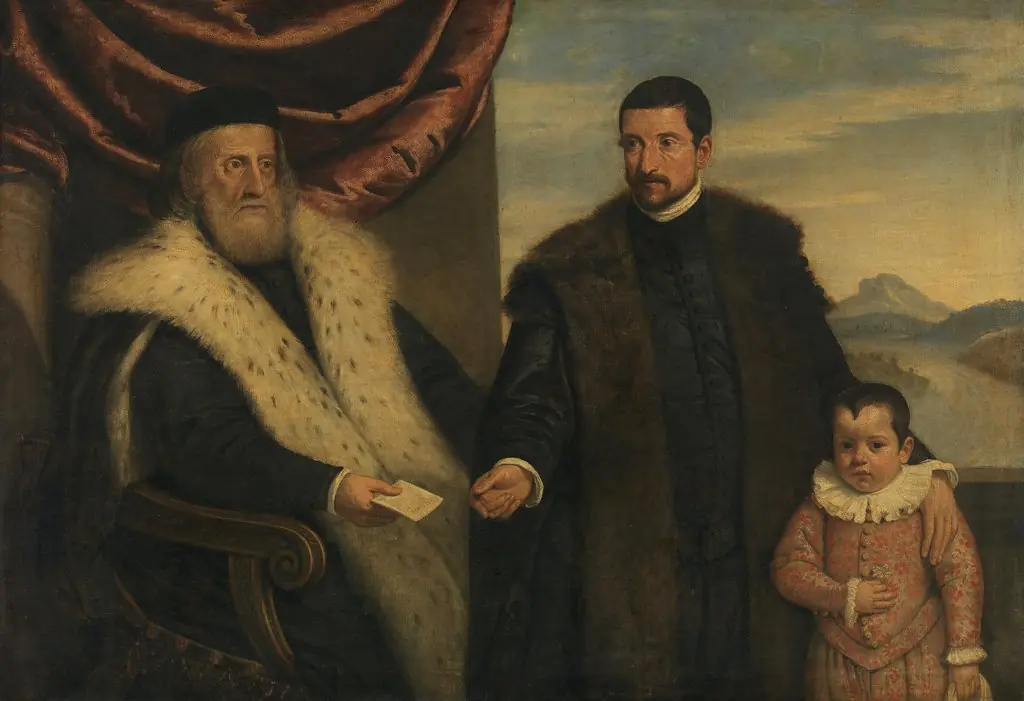 Gruppenbildnis
 The Painters Matthijs and Paul Bril in Rome
 Double Portrait of Two Men, one Dressed in Ecclesiastical Dress
 Adolf, Duke of Schleswig-Holstein, Declines the Offer to Accede to the Danish Throne. Copy after C. W. Eckersberg
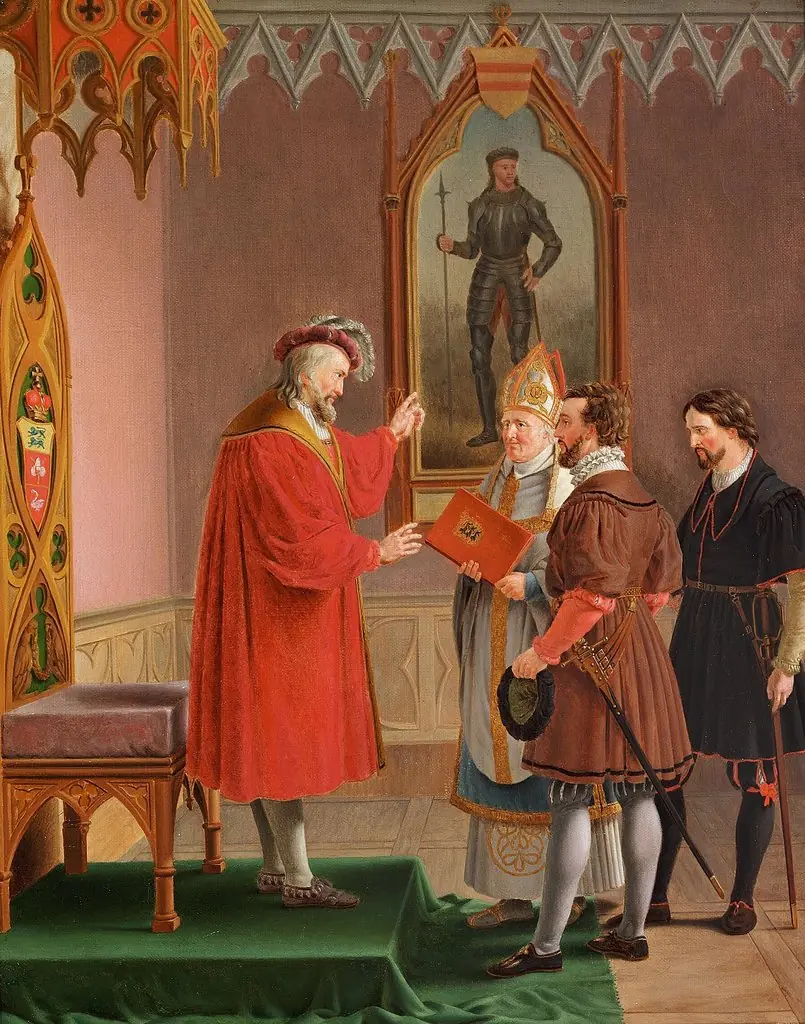 Duke Adolf refuses the offer of the Crown of Denmark
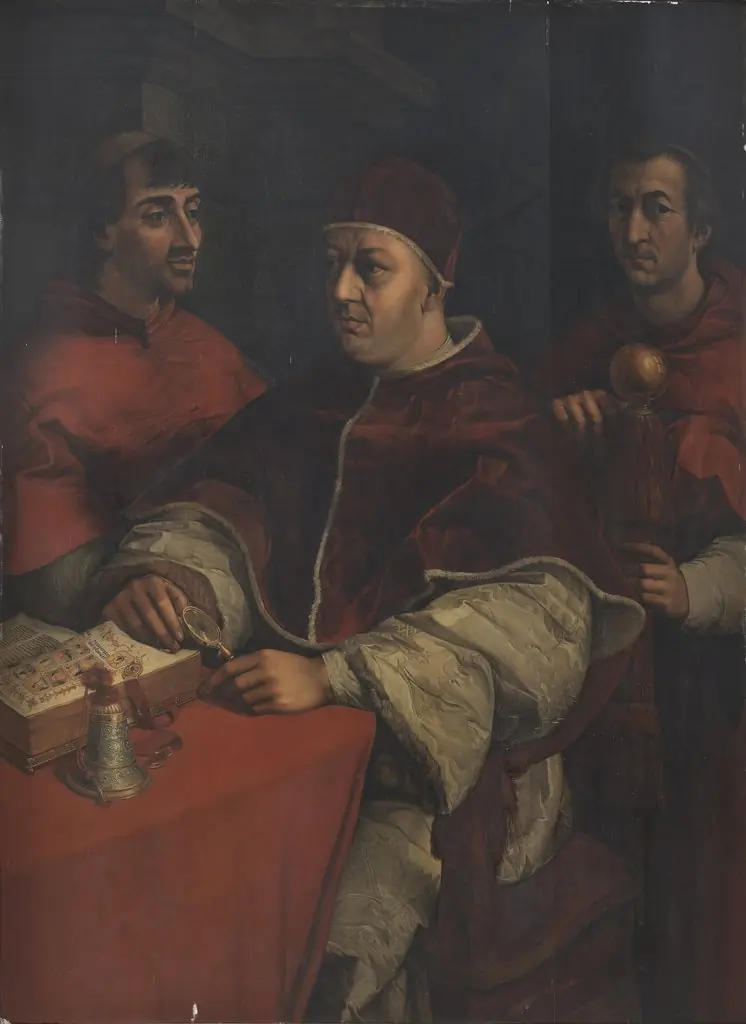 Pave Leo X og kardinalerne Ludovico de' Rossi og Giulio de' Medici. Kopi efter Rafael
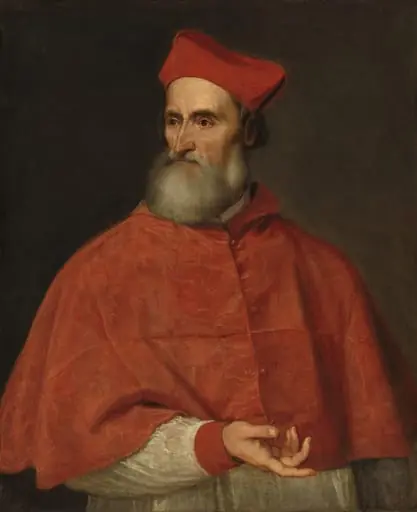 Cardinal Pietro Bembo
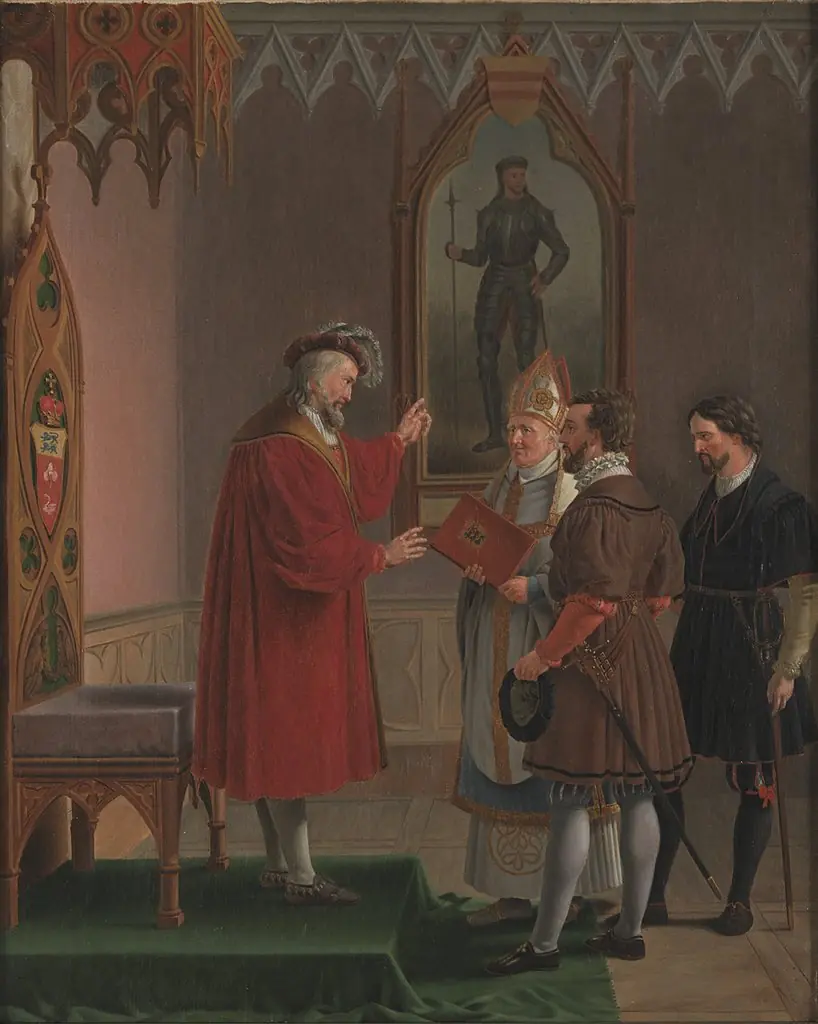 Adolf, Duke of Schleswig-Holstein, Declines the Offer to Accede to the Danish Throne. Copy after C. W. Eckersberg
 The Last Moments of Count Egmont (Count Egmont Before His Death)