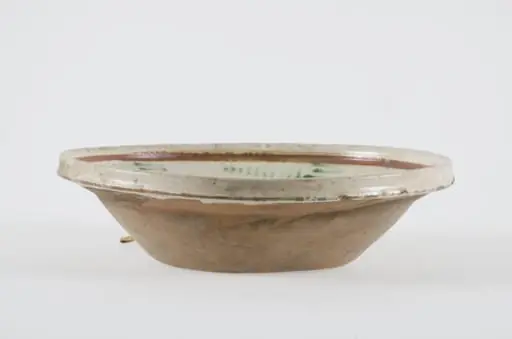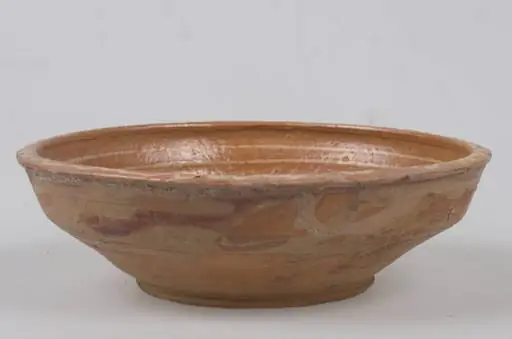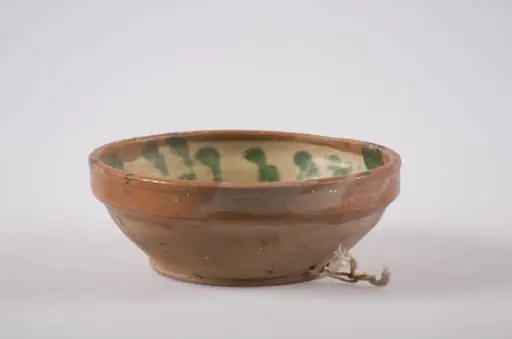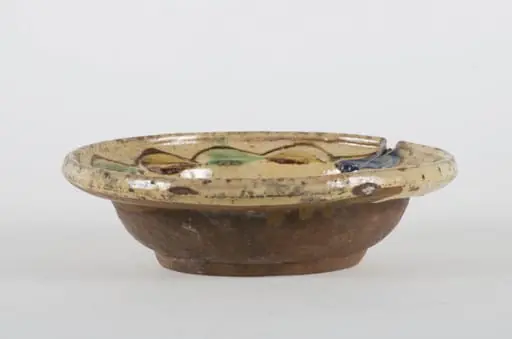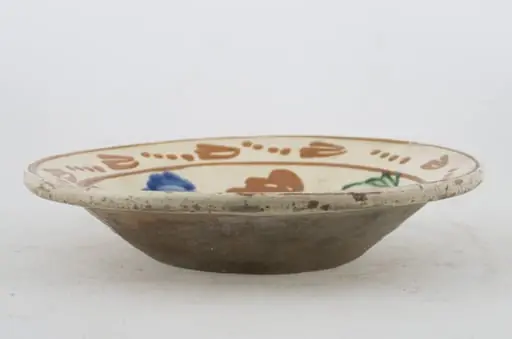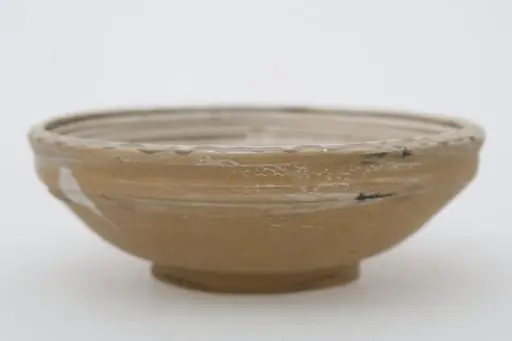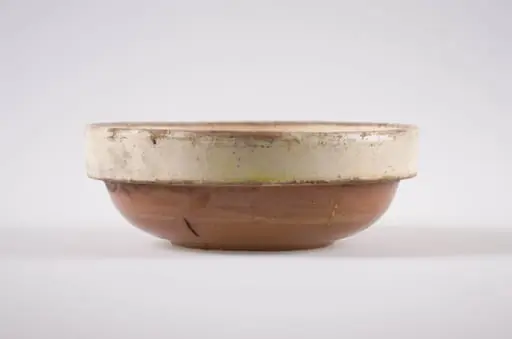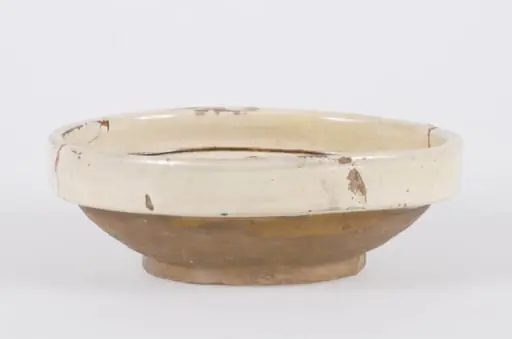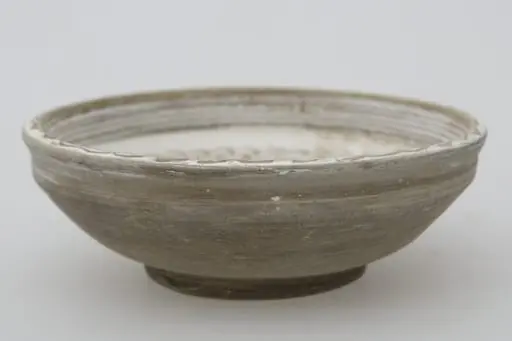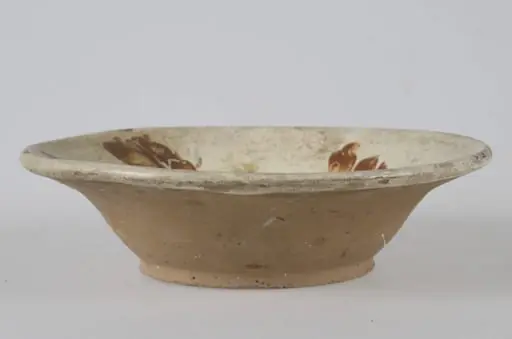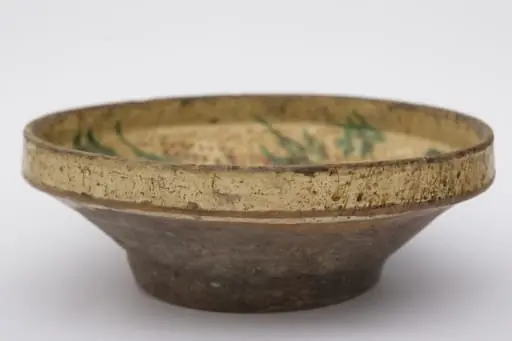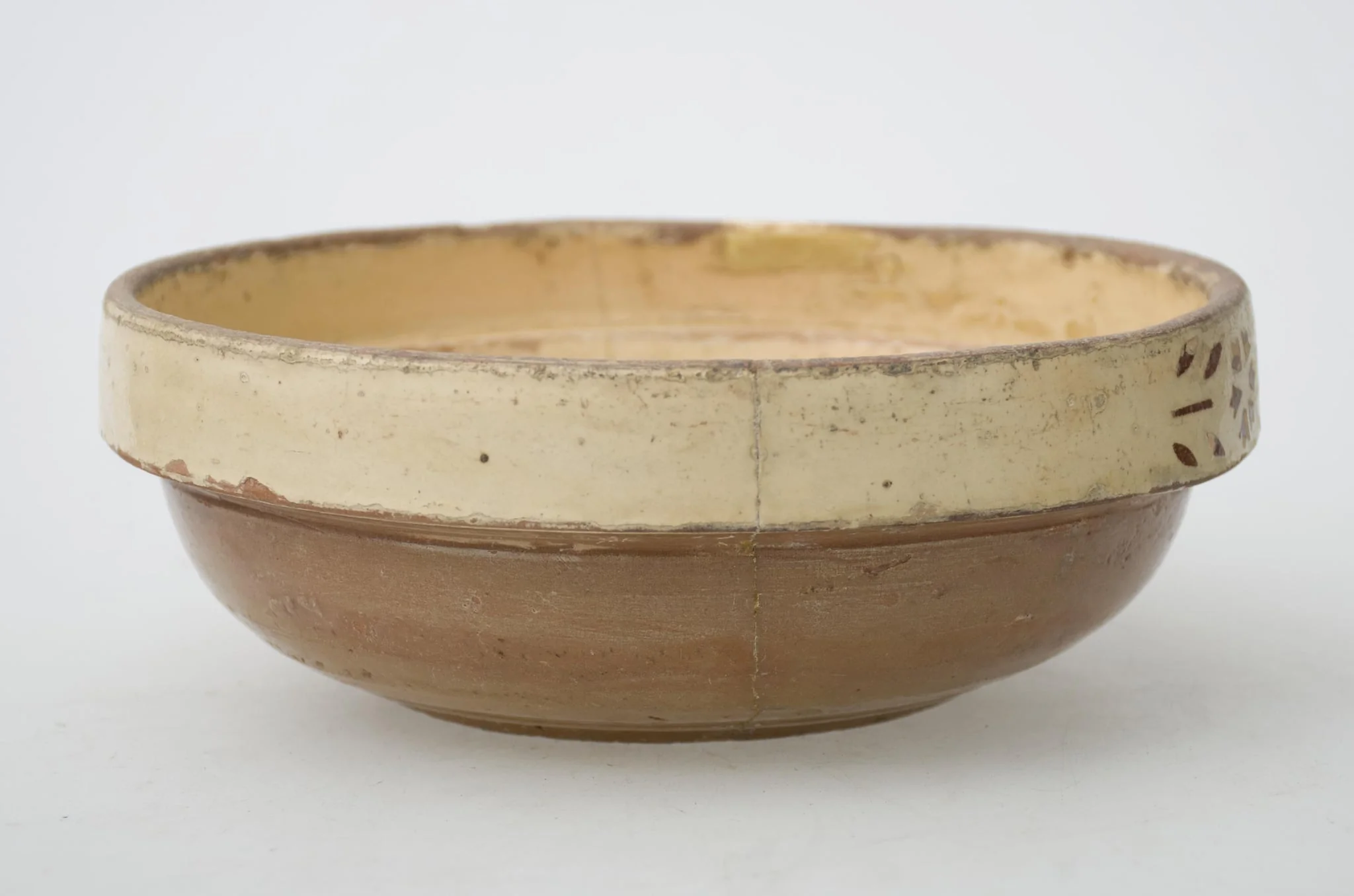
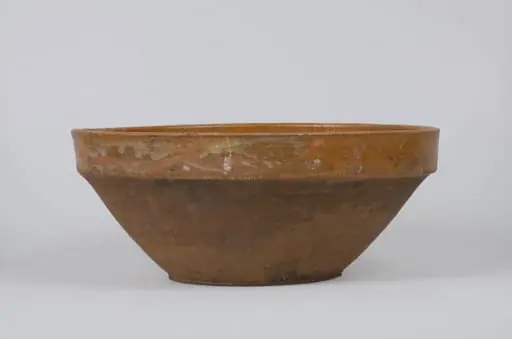
Vasul este realizat la roată, smălțuit în interior și pe buza exterioară. Fundul este îngustat și deschiderea largă. Pe buza exterioară se identifică motive vegetale stilizate.pe diametrul maxim interior se identifică 2 cercuri concentrice. Baza exterioară a vasului este nesmălțuită. Prezintă urme de uzură funcțională și exfolieri insulare. Cromatică: maro la exterior, smalț alb la interior.

Vasul este realizat la roată, smălțuit în interior și pe buza exterioară. Fundul este îngustat și deschiderea largă. Pe buza exterioară se identifică motive vegetale stilizate.pe diametrul maxim interior se identifică 2 cercuri concentrice. Baza exterioară a vasului este nesmălțuită. Prezintă urme de uzură funcțională și exfolieri insulare. Cromatică: maro la exterior, smalț alb la interior.

Unknown

1850

From the collection of ASTRA National Museum Complex
About this work

This bowl looks simple but has a lot of small details. The outside is a plain brown clay, while the inside is smooth and white, like it was glazed. Around the rim, there are faint marks that look like leaves or plants, and two thin circles near the widest part. The edges show some wear, like it’s been used a lot. The white glaze inside and on the rim suggests it was made to hold liquids or food. The brown clay base is rough, which makes the contrast with the smooth, shiny inside even more noticeable. Next, check out chiaroscuro to see how artists use light and shadow in similar ways.

More by Unknown

Artifact World Gallery — 100,000 artworks Get the app