Artwork
The Dance
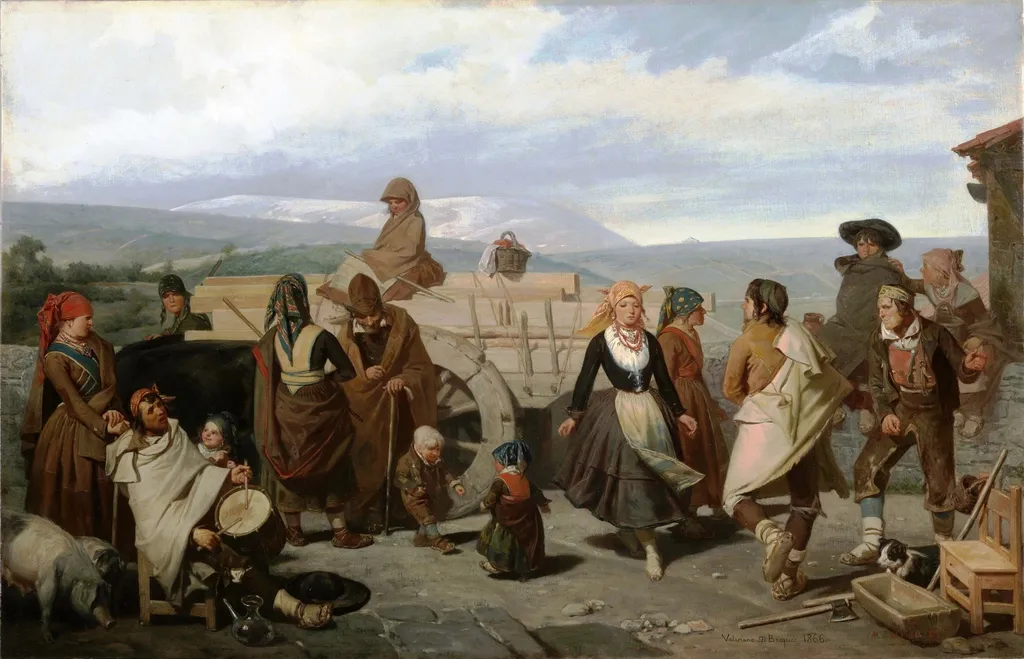
The Dance is an oil painting by Valeriano Bécquer. It dates from 1866 and is held in the collection of the Museo del Prado.
About this work
Subject & Meaning
The painting shows a winter countryside scene in the village of Noviercas, where locals gather around a cart loaded with firewood, a pig, a tabor, basketry and an axe, set against the Moncayo mountains. The figures wear distinctive Castilian dress: white wool capes with hoods for shepherds, dark woolen garments and mantles for women, and traditional footwear such as alpargatas, while a man carries a three‑pointed hat and a staff. The composition blends work and celebration, illustrating the seasonal labor and festive customs of the Sorian province that Bécquer documented for the provincial customs series.
History & Provenance
The painting was executed in 1866 by Valeriano Bécquer as part of a series titled "Cuadros de costumbres de las provincias españolas," a project made possible by a pension granted the previous year, in 1865, by Spain's Ministry of Development (Ministerio de Fomento) to document regional dress and customs across the Spanish provinces before industrialization erased them. The work is held in the collection of the Museo del Prado. It was exhibited under the title "El baile o La carreta de los pinares" (catalogue number 244) at the Las Edades del Hombre exhibition "La Ciudad de Seis Pisos," held in 1997 at El Burgo de Osma in Soria, Spain.
The painting belongs to the collection of the Museo del Prado in Madrid, where it is held as an oil on canvas measuring 65 by 101 cm (per Wikidata) or 65 by 102 cm (per Spanish-language sources). Its documented exhibition history consists of a single showing at the Las Edades del Hombre cycle held in El Burgo de Osma (Soria, Spain) in 1997, titled La Ciudad de Seis Pisos. There it was displayed under the title El baile o La carreta de los pinares and listed as catalogue number 244, accompanied by an entry by Lourdes Cerrillo Rubio in the accompanying volume.
Context
The painting belongs to the costumbrista tradition, recording a popular scene set in the Sorian village of Noviercas with the Moncayo in the background.
El baile was produced in 1866 by the Romantic painter Valeriano Bécquer (1834–1870) as part of a series titled "Cuadros de costumbres de las provincias españolas," commissioned after the Spanish Ministry of Development granted him a pension in 1865 to document the traditional dress and customs of Spain's provinces before industrialisation erased them.
The painting belongs to the costumbrista tradition, recording a popular scene set in the Sorian village of Noviercas with the Moncayo in the background. Bécquer paid close attention to the identifying garments of Soria, including the white woollen capes with shoulder capes and hoods worn by shepherds, dark cloth suits, shawls, and headscarves tied in different knots, as well as the festive attire of the dancing woman with her embroidered shawl, laced bodice, coral necklaces, and sandals. The work also documents the trades of woodcutters and carters of the pine-wood region, with a cart hauling thick logs and an axe left on the ground.
The painting is held by the Museo del Prado and was exhibited at Las Edades del Hombre in El Burgo de Osma in 1997 under the title El baile o La carreta de los pinares, catalogue number 244.
Overview
Valeriano Bécquer's The Dance, created in 1866 with oil paint, captures a vibrant scene of Spanish daily life. This painting exemplifies the costumbrismo movement, which sought to document and celebrate local customs and traditions. It is a key work by Bécquer, an artist known for his focus on regional culture and folk practices, and is housed in the Museo del Prado in Madrid.
Own this work as a print
Artist & collection
Artist
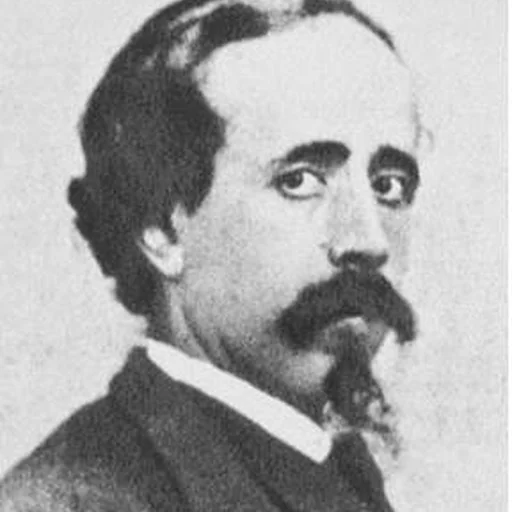
Valeriano Domínguez Bécquer (15 December 1833 – 23 September 1870) was a Spanish painter and graphic artist, who often worked in the costumbrismo style.

- Roman Peasants Going to Market
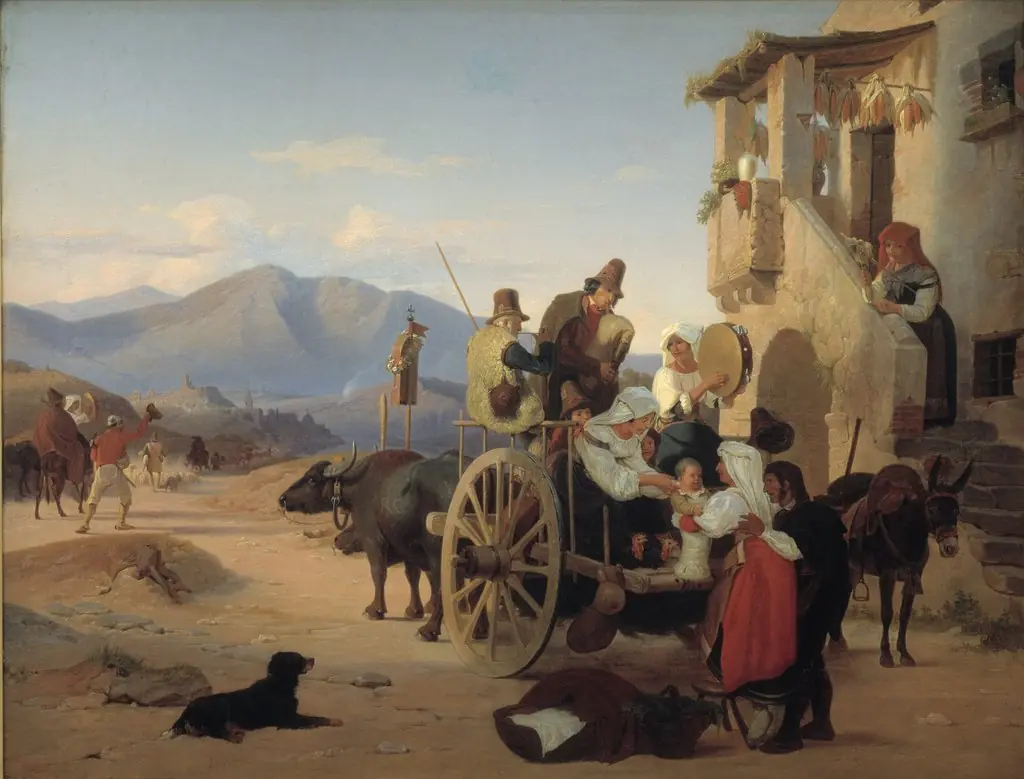 Romerske landfolk drager til marked
 The Arrival of the Bride
 Highlanders' Dance
 The Fish Market on the Beach, Hastings
 Halt for prisoners
 Eine Hirtenfamilie. Gewitter in der römischen Campagna
 Kirchenausgang in Pskow
 En trolovelse i Herrestad i Skåne
 Familiar Note
 The Drover's Departure: A Scene in the Grampians
 St. Hansfest i Tisvilde