Artwork
Seven Liberal Arts
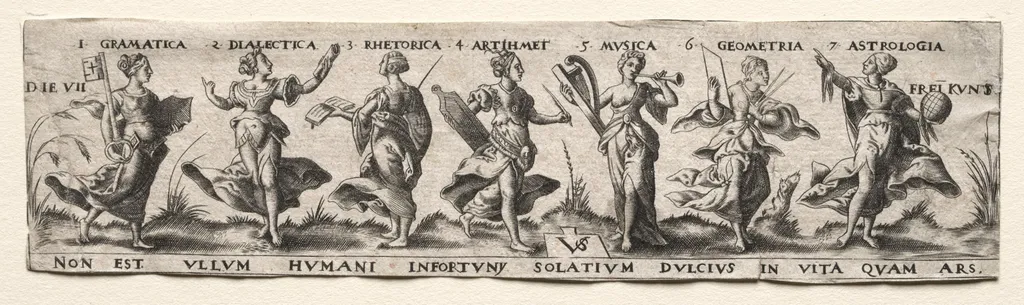
Seven Liberal Arts is a print by the Renaissance artist Virgil Solis. It dates from 1546 and is held in the collection of the Cleveland Museum of Art.
- Accession no.
- 1924.680
- Credit line
- Gift of Leonard C. Hanna Jr.
About this work
Overview
The image arranges seven female figures in a linear composition, each associated with a distinct emblem that identifies a traditional liberal art.
Virgil Solis’s 1546 woodcut, titled Seven Liberal Arts, is part of the Cleveland Museum of Art’s print collection. The image arranges seven female figures in a linear composition, each associated with a distinct emblem that identifies a traditional liberal art. A Latin inscription crowns the scene, naming the subjects, while a motto at the bottom reflects the period’s belief in art’s consolatory power.
Subject & Meaning
Each woman holds an attribute that signals one of the medieval curriculum’s seven disciplines: grammar (scroll), rhetoric (open book), geometry (globe), music (lyre), astronomy (compass), arithmetic (trumpet), and philosophy (wheel). The grouping visualizes the Renaissance ideal that a well‑rounded education rests on these interconnected fields, and the accompanying Latin phrase suggests that artistic knowledge offers solace amid human hardship.
Technique & Style
Executed as a woodcut, the print displays Solis’s characteristic fine line work and clear delineation of forms. The figures are rendered in flowing drapery and classical hairstyles, set against a simple pastoral backdrop of grass and sparse vegetation. The stark contrast between black ink and white paper emphasizes the symbolic objects and the orderly arrangement of the subjects.
History & Provenance
Created in 1546, the print was produced during Solis’s prolific period as a German engraver and publisher. It entered the Cleveland Museum of Art’s collection through a 20th‑century acquisition, though the exact path of ownership before that remains undocumented in the museum’s records.
Context
The seven liberal arts formed the core of Renaissance curricula, reflecting a revival of classical learning and the belief that intellectual development required mastery of language, mathematics, music, and philosophy. Prints such as Solis’s served both as instructional tools and decorative objects, disseminating these educational ideals to a broader audience beyond university walls.
Artist & collection

Artist
Virgil Solis or Virgilius Solis (1514 – 1 August 1562), a member of a prolific family of artists, was a German draughtsman and printmaker in engraving, etching and woodcut who worked in his native city of Nuremberg.

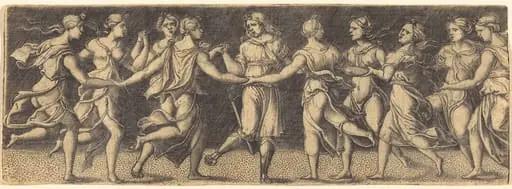 Apollo Dancing with the Nine Muses
 Triumphal Procession
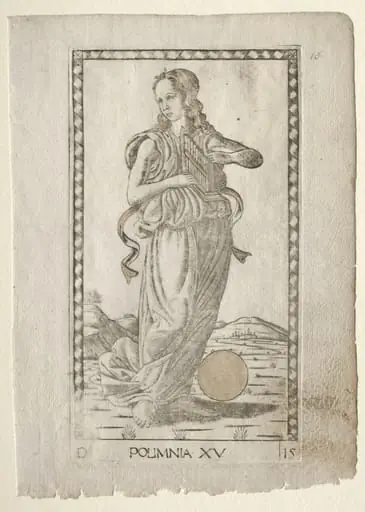 Polyhymnia (heroic hymns) (from the Tarocchi series D: Apollo and the Muses, #15)
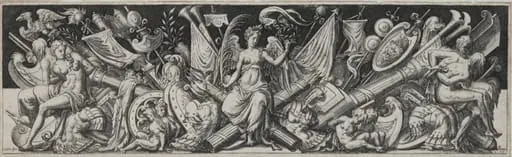 Combats and Triumphs No. 3
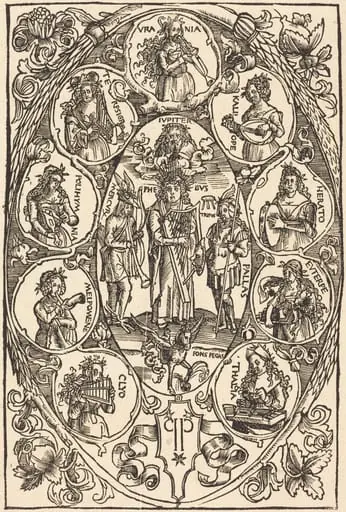 Apollo and the Muses
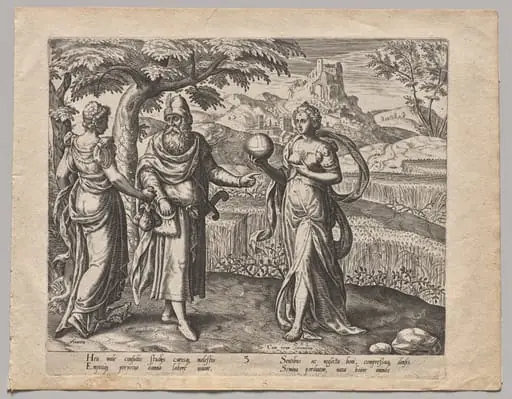 The Seed Received among the Thorns
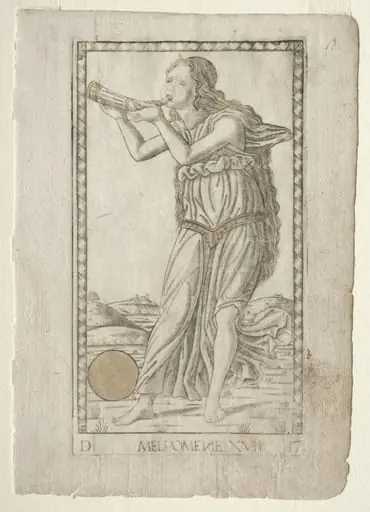 Melpomene (tragedy) (from the Tarocchi series D: Apollo and the Muses, #17)
 Dancing Nymphs and Satyrs
 The Triumph of Love
 The Little Fortune