March 27 in Art History
6 real events recorded on March 27, the earliest from 1859. 2 artists were born on this date.
Born on this day 2
- 1859 Born
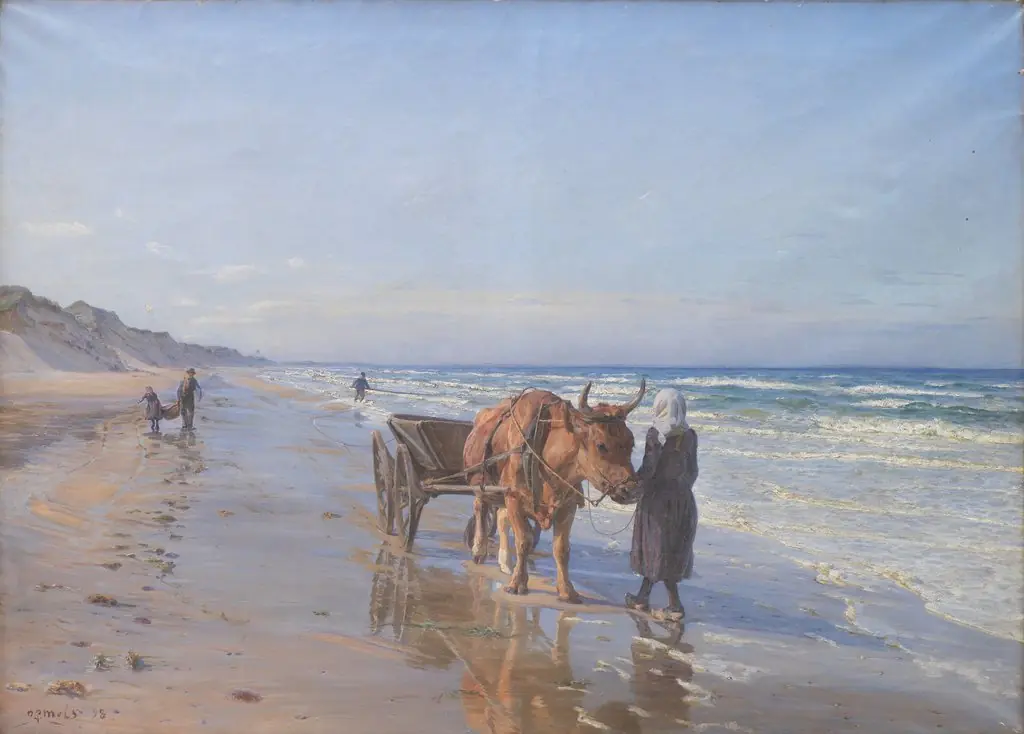
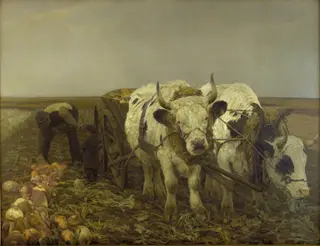
Born this day: N.P. Mols
N.P. Mols, born on March 27, 1859, was a Danish artist known for his works such as Kystboerne drager vod i landingen and Milking the Cows. West Jutland, which reflect his focus on everyday scenes. His art provides a glimpse into the lives of people in his native region.
N.P. Mols' legacy lies in his contributions to Danish art, capturing the essence of rural life in his time.
- 1875 Born
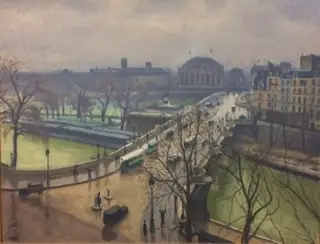
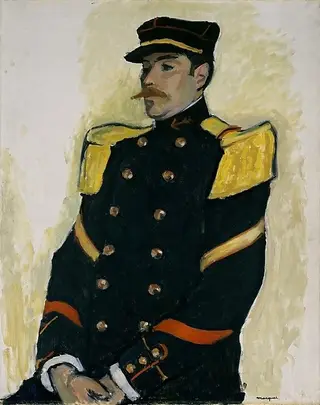
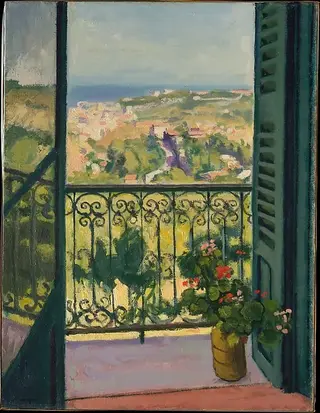
Born this day: Albert Marquet
Albert Marquet, born on March 27, 1875, was a French painter who began as a Fauve painter and later transitioned to an impressionist style, capturing landscapes, portraits, and nudes with sensitivity. His work reflects a deep connection to light and color.
Marquet's unique blend of Fauvism and Impressionism continues to influence modern art.
Exhibitions & salons 1
- 2024 Exhibition
Brancusi retrospective opens at Centre Pompidou
Centre Pompidou's Brancusi exhibition opened on March 27, 2024, and ran through July 1. The museum's page describes it as an exceptional tribute to the father of modern sculpture, while its structured event data records the exact opening and closing dates. The exhibition mattered because the Pompidou holds Brancusi's studio legacy and the Musee National d'Art Moderne is one of the central repositories for twentieth-century modernism. By gathering the sculptor's works, studio context, and archival material just before the Centre Pompidou's long renovation closure cycle, the show reframed Constantin Brancusi not only as an isolated maker of iconic forms but as an artist whose working environment, bases, photographs, and display choices were part of the sculpture itself.
It renewed Brancusi's centrality to modern sculpture through the institution most closely tied to his Paris studio legacy.
Openings & foundings 3
- 1920 Founding
Society of Wood Engravers founded
On March 27, 1920, ten British artists founded the Society of Wood Engravers to promote wood engraving as a modern artists' medium rather than only a reproductive trade. The group included Eric Gill, Gwen Raverat, Lucien Pissarro, Edward Gordon Craig, John Nash, Noel Rooke, Sydney Lee, Philip Hagreen, Robert Gibbings, and E. M. O'Rourke Dickey. Its program supported original white-line engraving on end-grain wood and helped distinguish artist-engravers from commercial block cutters. Although the society later went into abeyance, its revival in 1984 and centenary in 2020 show how the 1920 founding became a durable institutional base for British relief printmaking.
It gave modern wood engraving a professional exhibiting society and a lineage that continues into contemporary print practice.
- 1987 Opening
National Museum of Mexican Art opens
The National Museum of Mexican Art opened in Chicago's Pilsen neighborhood on March 27, 1987. It grew from the Mexican Fine Arts Center Museum, formed in 1982 by Carlos Tortolero and Mexican-American teachers, and occupied a Chicago Park District building in Harrison Park after a 1986 agreement. The opening created a permanent museum space for Mexican, Mexican American, and Chicano art at a time when Latino cultural institutions had limited representation in the U.S. museum field. The institution later adopted its current name in 2006 and is described as the only Latino museum accredited by the American Alliance of Museums, as well as the largest Latino cultural institution in the United States.
It anchored Mexican and Chicano art within a major U.S. museum framework while remaining rooted in Chicago's Pilsen community.
- 2018 Opening
Hauser & Wirth Hong Kong opens with Mark Bradford
On March 27, 2018, Mark Bradford's exhibition opened as the inaugural presentation for Hauser & Wirth's Hong Kong gallery. The show followed Bradford's high-profile 2017 U.S. Pavilion project at the Venice Biennale and his Smithsonian Hirshhorn commission Pickett's Charge, positioning the Hong Kong opening as part of his rapid international institutional ascent. The exhibition consisted of new large-scale paintings and works incorporating street-sourced merchant posters, a material central to Bradford's practice of building abstract surfaces from the social and commercial language of urban Los Angeles. For Hauser & Wirth, the event marked an expansion into Asia through a living artist strongly associated with postwar abstraction, social history, and material excavation.
The opening tied a major global gallery's Hong Kong expansion to Bradford's socially charged abstraction.