Madame Théodore Gobillard (Yves Morisot, 1838–1893) by Edgar Degas
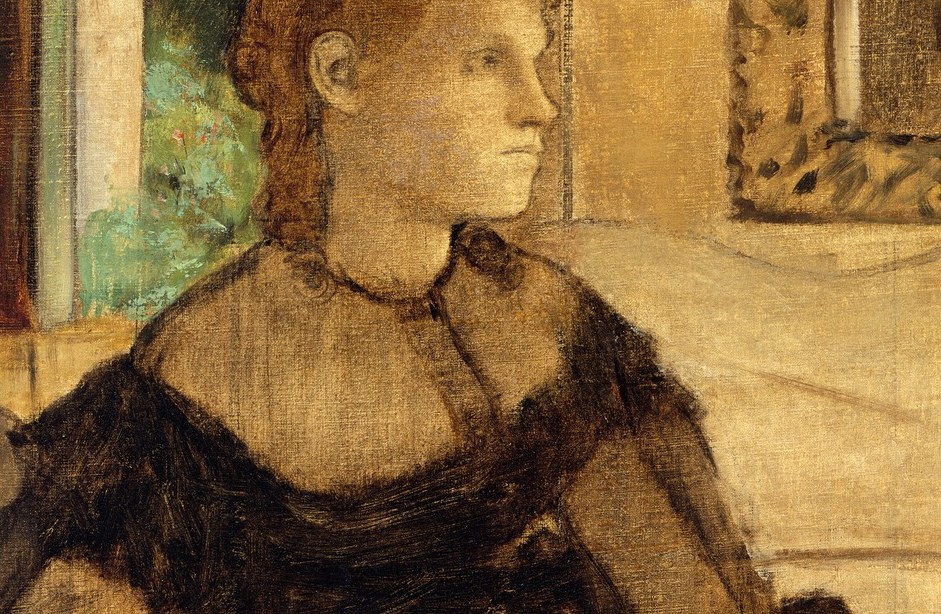
Edgar Degas painted Madame Théodore Gobillard (Yves Morisot) in 1869, and it holds one of the most direct, psychologically penetrating gazes in his entire portrait output. She does not turn away or lower her eyes; she meets the viewer with a steadiness that was rare in domestic portraiture of the period. The painting is in the collection of The Metropolitan Museum of Art.
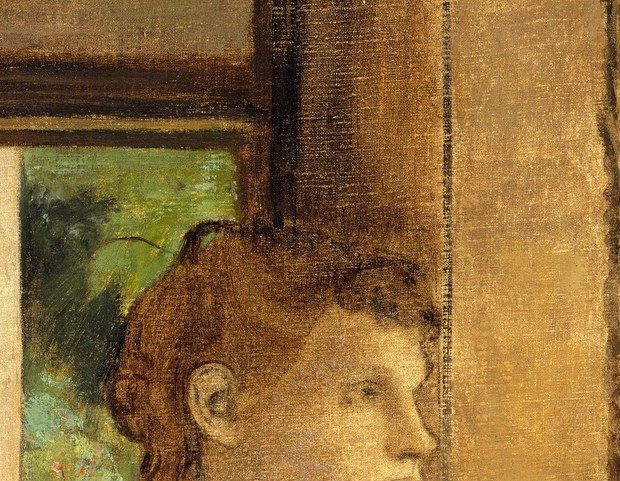
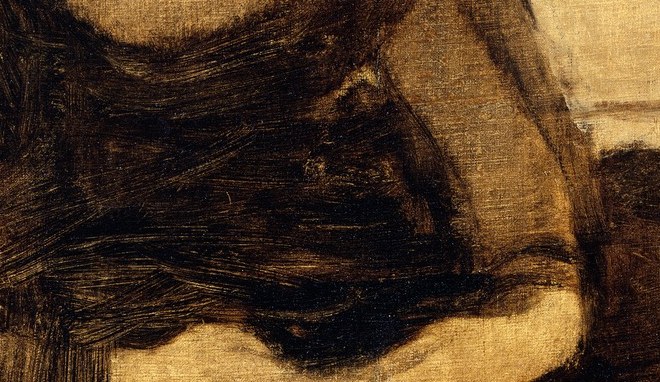
Look at what Degas does with the brush. The dark dress is a near-void of loose, summary strokes that dissolve into the shadow of the sofa. The hands in her lap are barely resolved, just a few dabs of pale paint. But the eyes, set in that alert, intelligent face, are rendered with restrained precision. He forces you there, and he makes it count.
Yves Morisot was the sister of Berthe Morisot, who would become the only woman to exhibit with the Impressionists in their first show in 1874. In 1869, that world was still taking shape. Degas, then 34, was a friend of the Morisot family and moved easily between their homes and the studios of Paris. He painted Yves not as a society ornament but as a presence: still, watchful, completely herself.
This is a portrait by a man who loved the unposed moment long before he painted a single dancer. What do you think Yves was thinking as she sat for him?
Details

Transcript
She meets your eyes and does not look away. Degas painted his sister-in-law, Yves Morisot, in 1869. Her dress is almost black; it pushes all the light into her face. Her hands in her lap are barely a few strokes of pale paint. But her eyes are precise. He anchored her whole presence there. Yves was the sister of Berthe Morisot, the only woman to exhibit with the Impressionists. This portrait was made just before that movement broke open. Degas was 34. He already knew how to find the person inside the pose.