Madonna and Child by Francesco Granacci
Francesco Granacci painted this Madonna and Child around 1520, and for a few centuries the world almost forgot him. He was a lifelong friend of Michelangelo, trained alongside him in Ghirlandaio's workshop, and even helped on the Sistine Chapel ceiling. Yet he worked quietly, without the force of personality that made his friend a legend.
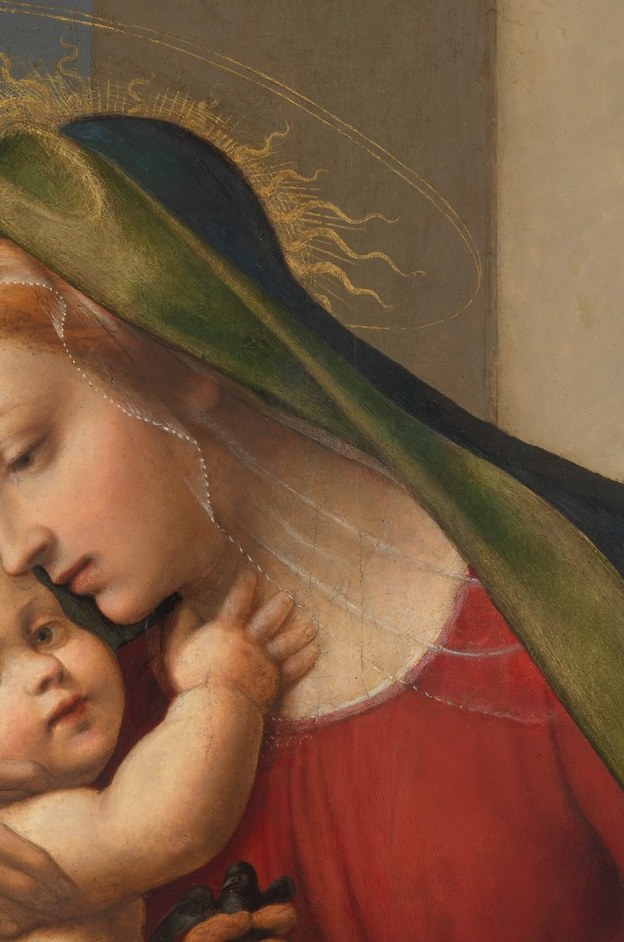
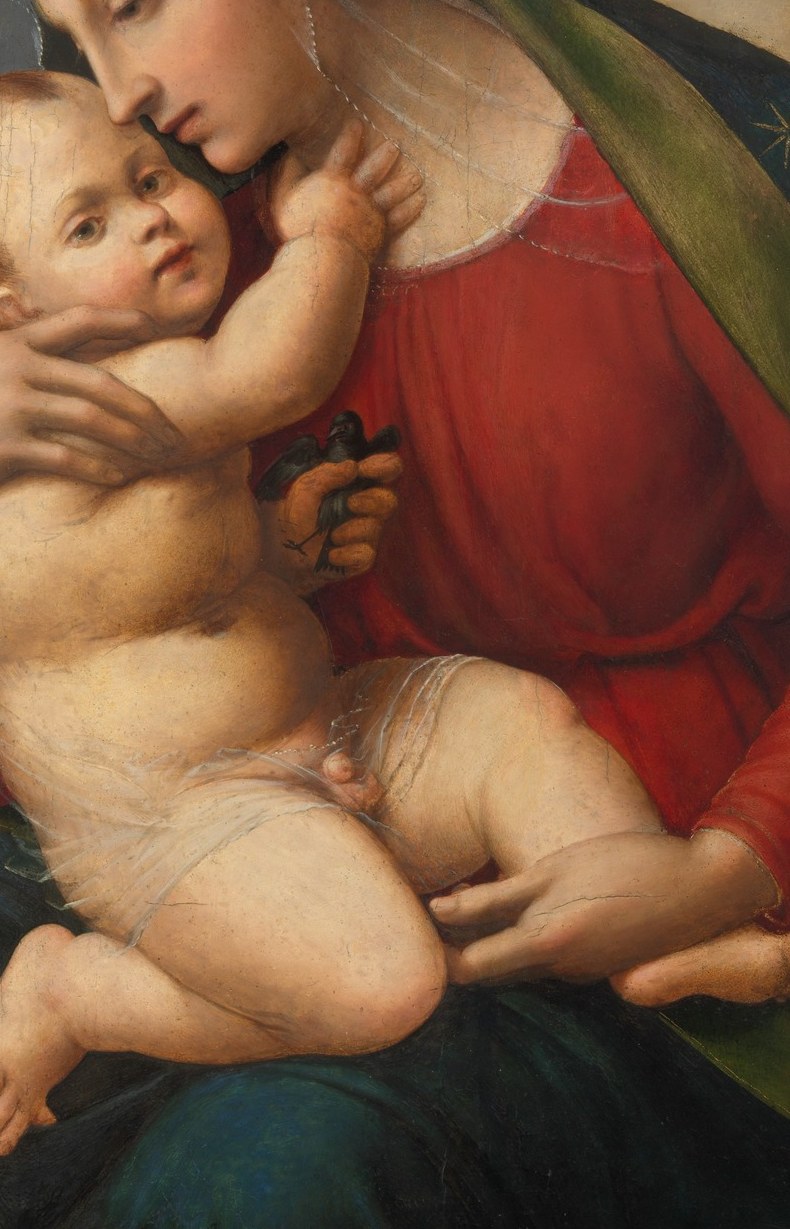
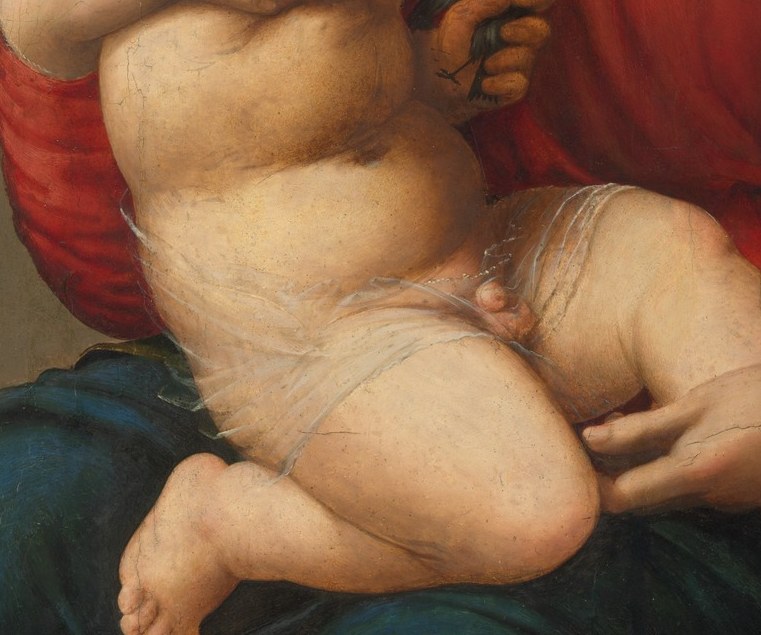
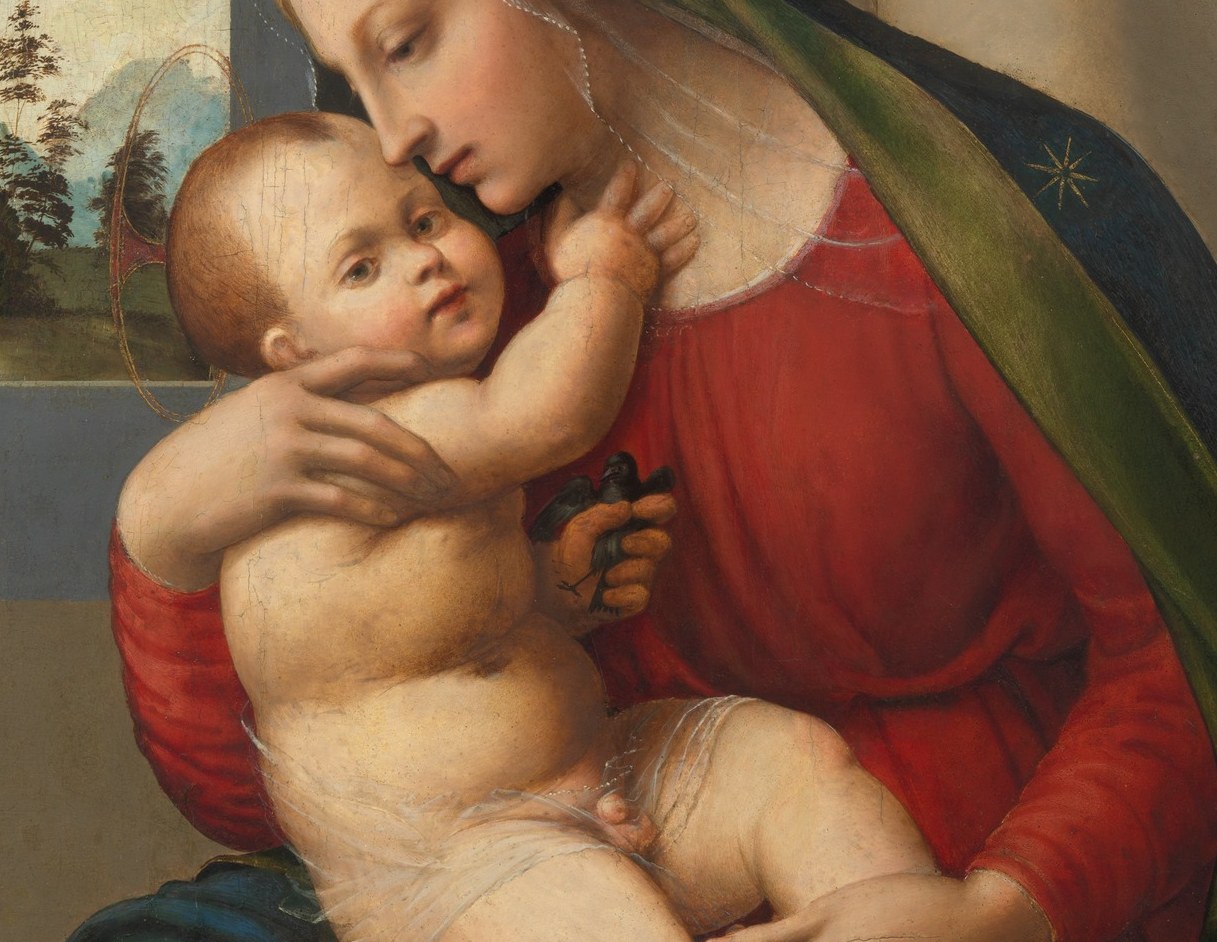
Look at the space between them. The near-touch of mother and child cheeks is the painting's emotional center, compressed into a few centimeters of warm air. Mary's eyes are downcast, absorbed entirely in the child. The child's bare feet and plump body make the theological plain: God made vulnerable human flesh, held steady by careful hands. The red of her gown, so saturated it still glows in the Met's galleries, carries the weight of both love and future sacrifice.
Granacci's career unfolded inside Florence's innermost artistic circles. He appears in Vasari's Lives, was reported to frequent the Medici sculpture garden, and received steady commissions for churches and wealthy patrons. He was never radical, never revolutionary. He was a painter who honored the devotional image and let feeling carry the work. This panel, now in the collection of The Metropolitan Museum of Art, is a surviving fragment of that reverence.
Some painters shout. Granacci held the silence. What does it cost an artist to spend a lifetime beside genius, doing their own quiet work?
Details
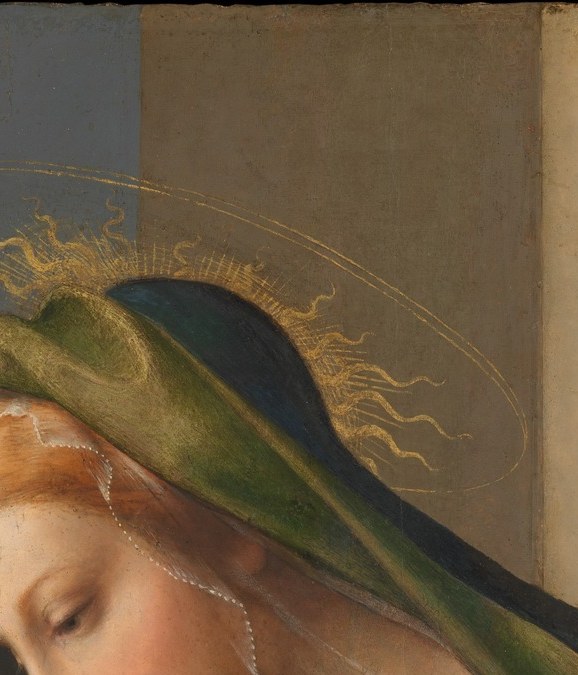
Transcript
A lifelong friend of Michelangelo. Trained in the same workshop. Same circle. But look at her face. The tenderness. Her cheek, a breath from his. He painted this around 1520, in Florence. A small work, for quiet prayer. She does not clutch him. She presents him. Granacci was nearly forgotten. But here, he held the silence.