Still Life with Tulips by Binoit, Peter
Peter Binoit's “Still Life with Tulips” from 1623, housed in a private collection, appears perfectly preserved, inviting viewers to appreciate its vibrant floral arrangement.
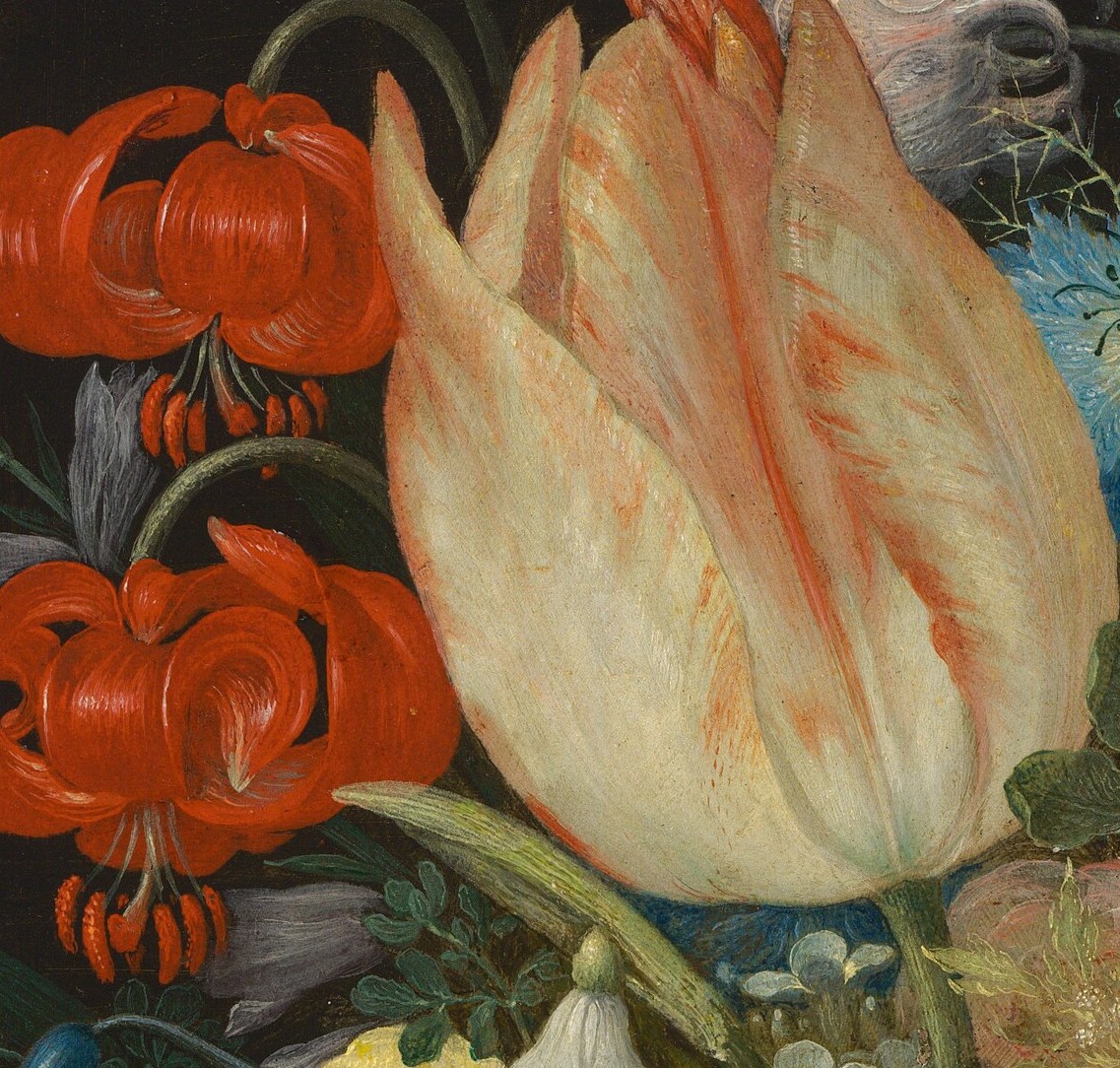
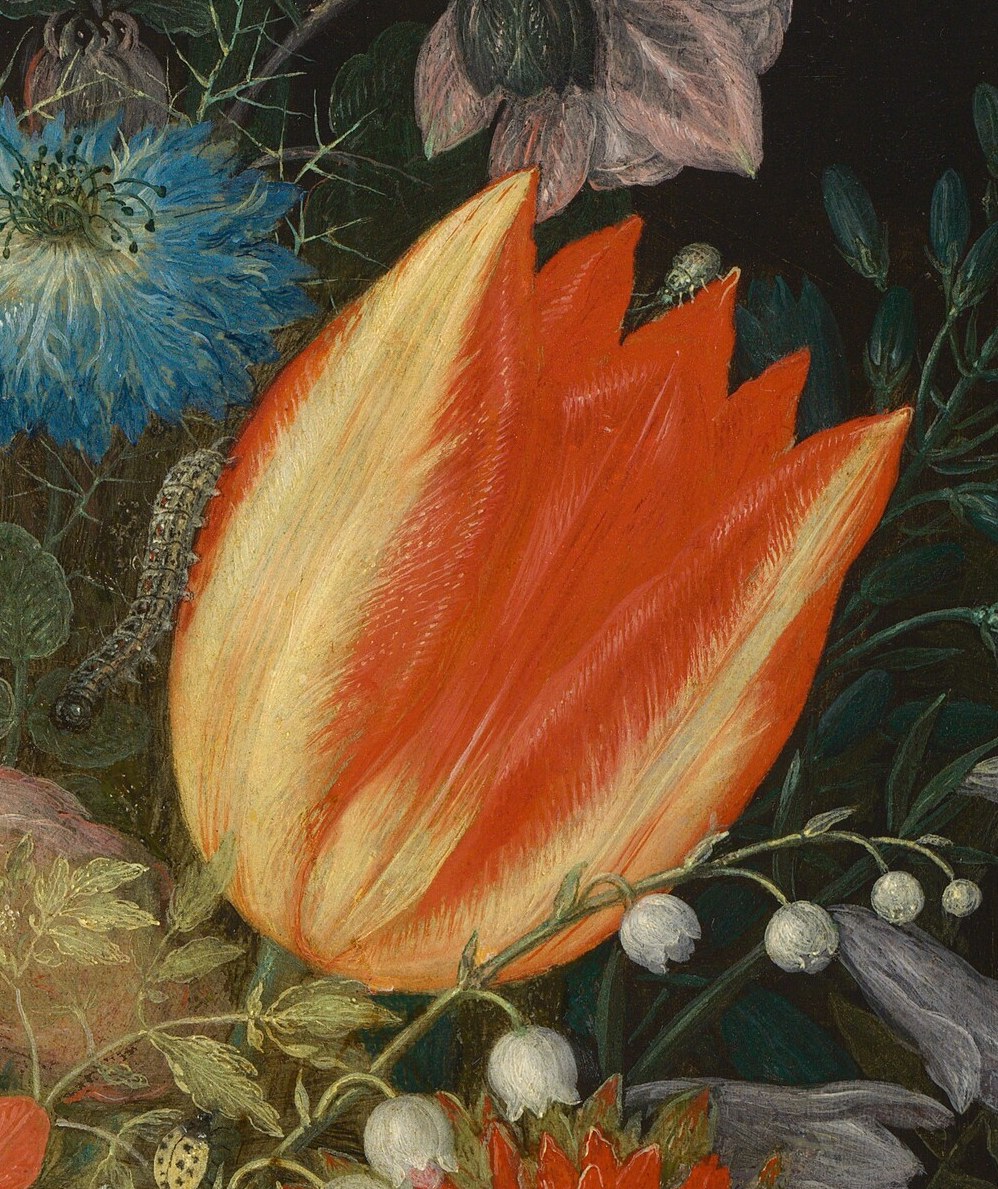
Look closely at the meticulous details, from the ruffled petals of the orange tulips to the delicate pink rosebud at the bottom. The artist’s skill is evident in the way he captures the subtle textures and forms of each bloom.
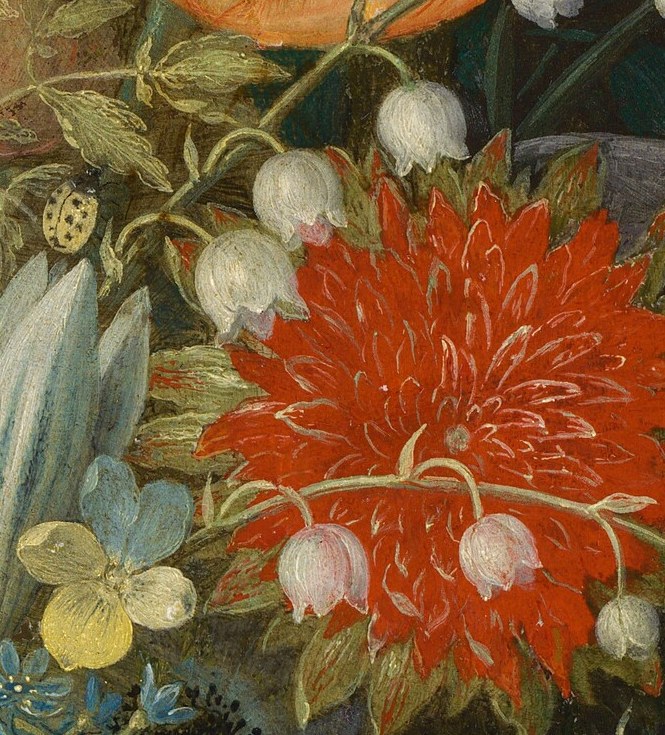
Beyond the beautiful flowers, Binoit included small elements like a red beetle and a snail. These were common motifs in 17th-century still life paintings, subtly reminding viewers of the fleeting nature of life and beauty amidst the grandeur of the blossoms. The dark background, characteristic of chiaroscuro, further intensifies the vivid colors and draws the eye to the illuminated forms.
This painting is a quiet testament to the artist's keen observation and ability to imbue everyday objects with deeper meaning.
Details
Transcript
This painting from 1623 looks perfectly preserved. The artist rendered every petal and stem with precision. He even included this tiny red beetle on the surface. These insects were common symbols of life's transient beauty. A snail also suggests the slow passage of time. These small details remind us that all beauty fades.