George Washington (Vaughan-Sinclair portrait) by Stuart, Gilbert
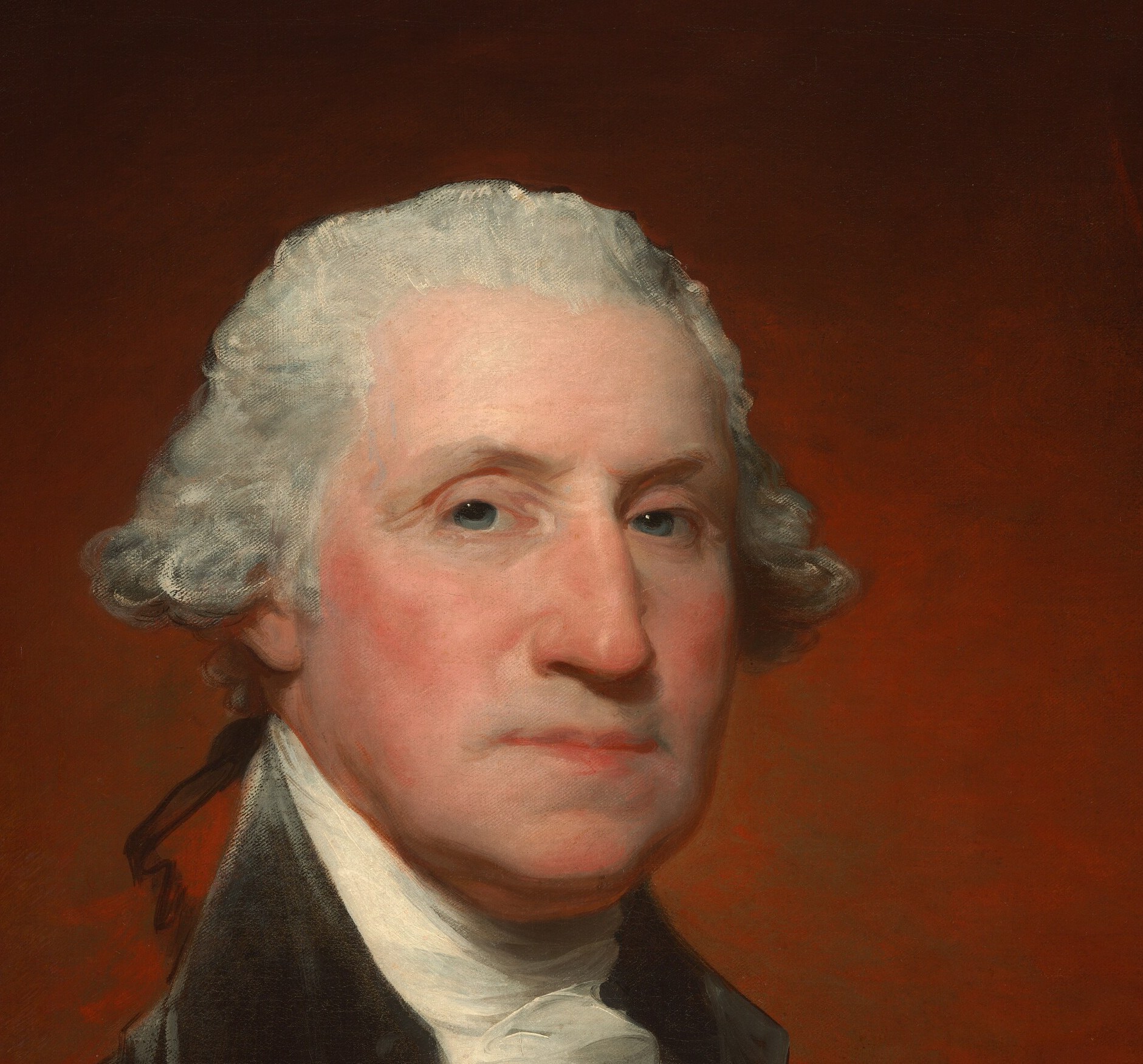
This is Gilbert Stuart's 1795 Vaughan-Sinclair portrait of George Washington, now in the collection of the National Gallery of Art. It is one of several versions Stuart painted after his famous Athenaeum portrait, made to meet the insatiable demand for the president's likeness in the early republic.
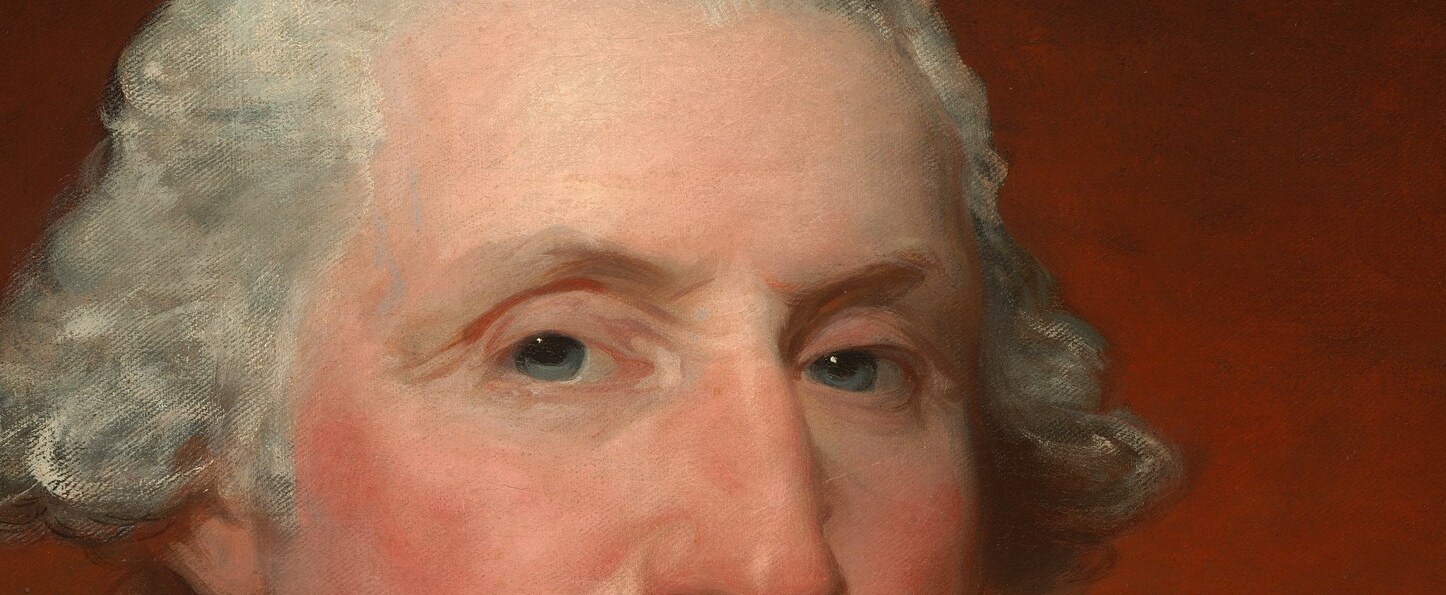
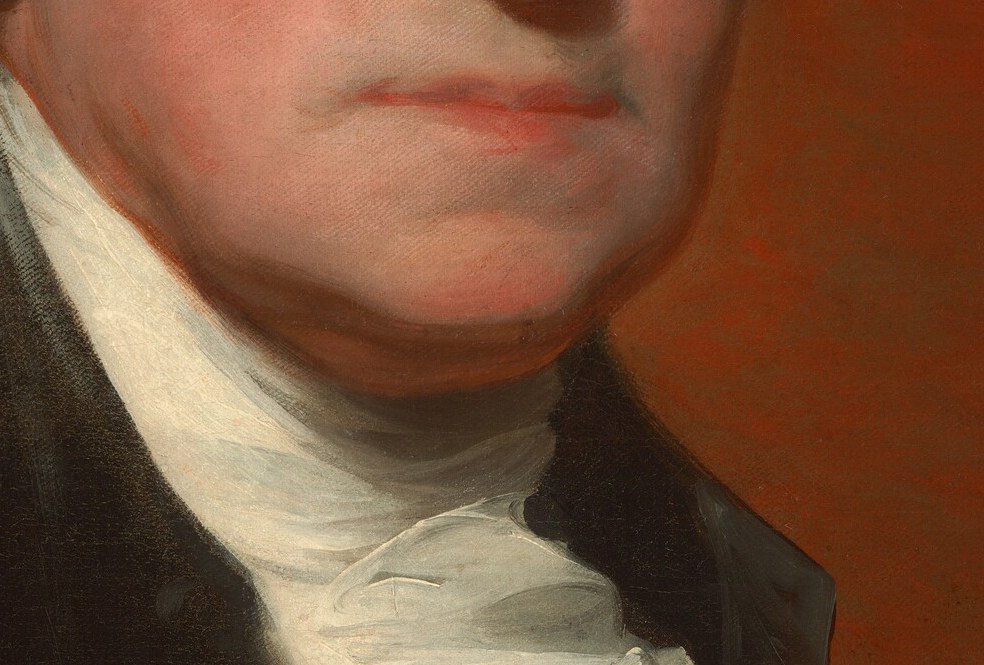
The first thing to look at is the mouth, which is held unnaturally tight. Washington was 63, long accustomed to public scrutiny, and by this date he wore ill-fitting dentures that caused him constant pain. The slight distortion in the jaw and the firm set of the lips are a rare window into his physical reality. Then look at the eyes, which communicate authority without warmth, this is the expression of a man who learned to reveal nothing.
Stuart reportedly said the president's face was exceptionally hard to capture. The painter struggled with the elusive look of a private man forced into permanent public display. What resulted is an image that walked a tight line, projecting calm leadership for a fledgling nation while preserving the unreadable composure Washington cultivated over decades of command.
This painting helped cement the visual iconography of the American presidency. But when you stop on the mouth and sit with the face for a moment, you are looking at a tired man, not just a symbol.
Details
Transcript
He sat for this portrait in 1795. He was 63. A face every American knows. An icon of composure. But the painter said he could not get the look right. What was hardest to capture sits here, around the mouth. Washington wore ill-fitting dentures by then. The tightness is real. He endured pain daily and gave away nothing.