Three Riccarree Indians by Catlin, George
George Catlin's "Three Riccarree Indians," painted in 1861, offers a detailed look at Riccarree (Arikara) culture through the specific attire and adornments of its subjects. This oil on card, mounted on paperboard, is housed in a collection focusing on American folk art and Indigenous representation.
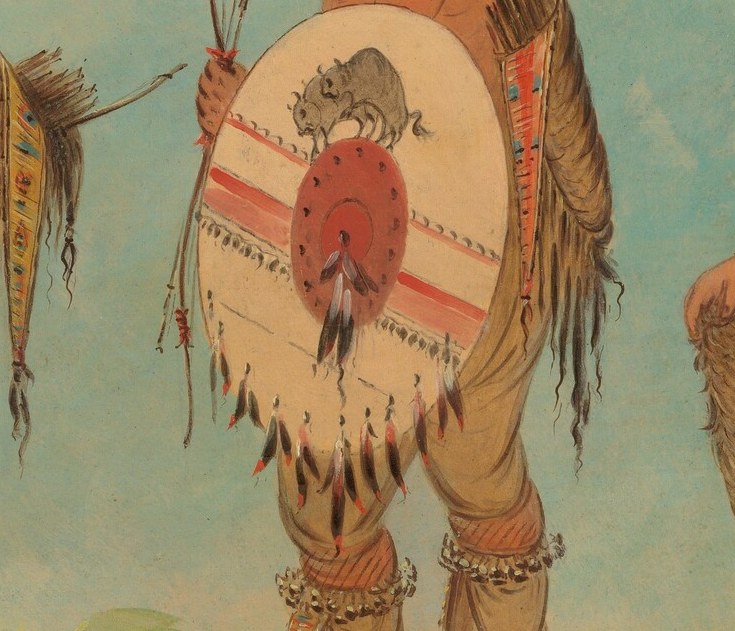
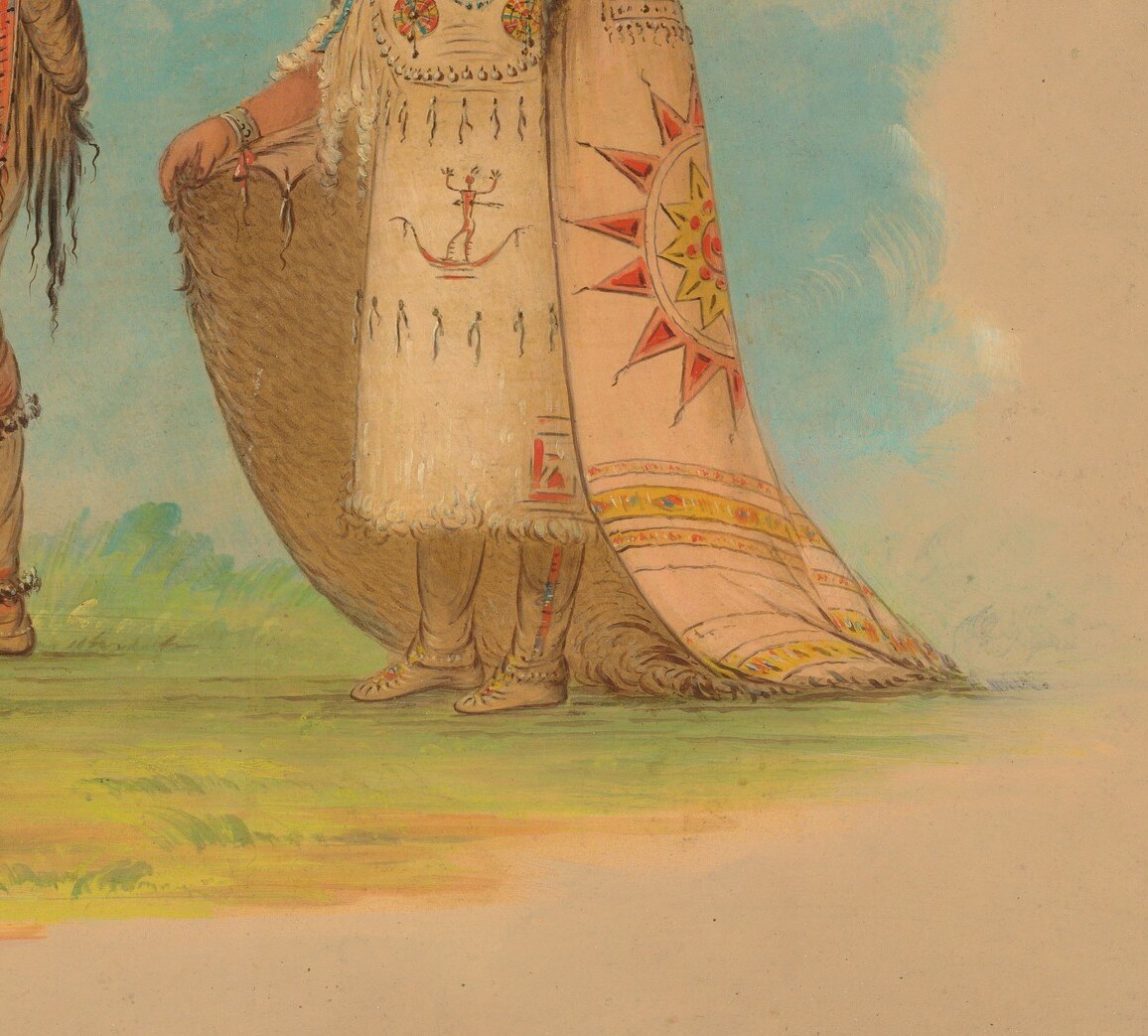
Look closely at the figures' clothing and accessories. The central figure's tall, feathered headdress and shield, possibly with a buffalo motif, speak to warrior status. The woman on the right wears layered beads and a robe with intricate geometric patterns, each detail a piece of Riccarree iconography.
Catlin, a lawyer and artist, made five expeditions to the American West in the 1830s to document Native American life amidst rapid territorial expansion. His ethnographic portraits aimed to preserve visual records of tribal customs during a time of significant cultural displacement. This work is a testament to his dedication.
What details in their adornments tell you the most about their stories?
Details
Transcript
This painting dates to 1861, a time of rapid western expansion. It shows three members of the Riccarree (Arikara) tribe. His tall feathered headdress signifies a warrior or leader. His shield's design may depict a buffalo, hinting at tribal identity. The layered beads and pendant on her necklace show social standing. This artist traveled the West, documenting Indigenous life in detail. The geometric patterns on her robe offer insight into Riccarree motifs. Every detail here preserves their visual culture.