Springtime by Charles Jacque
Charles Jacque's *Springtime* (1863) sits in the Metropolitan Museum of Art, but it carries a secret the paint almost hides: Jacque was an engraver before he was a painter. He spent seven years in the French Army engraving maps. When he finally turned to oil, he brought the burin with him.
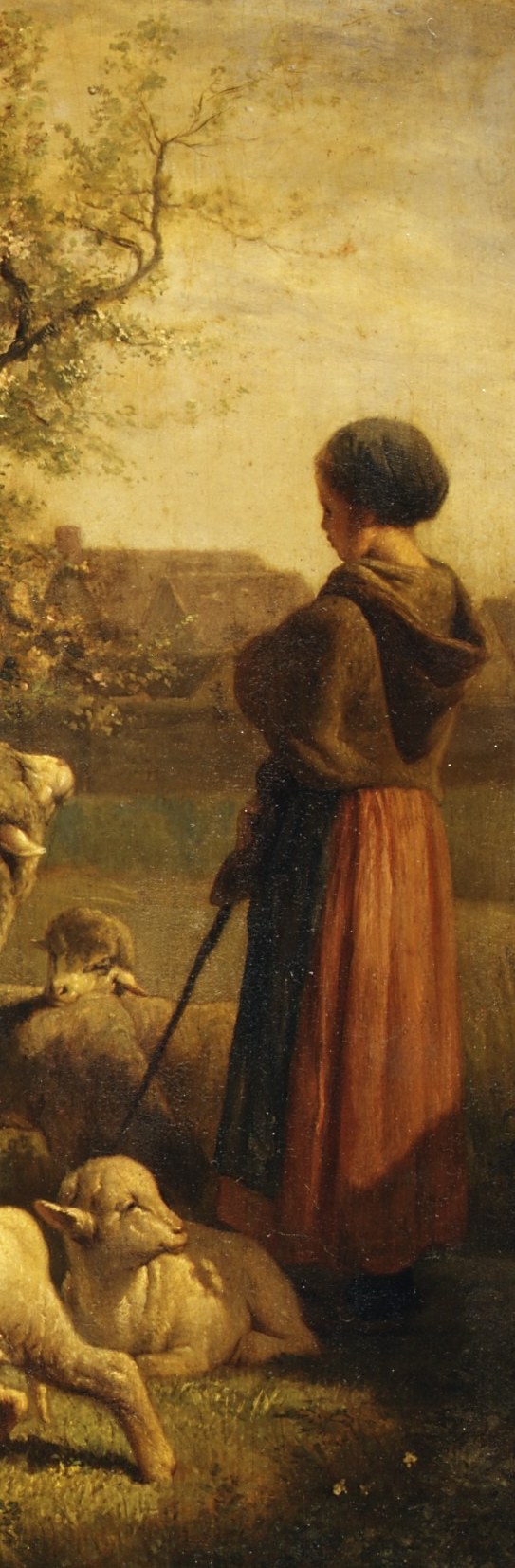
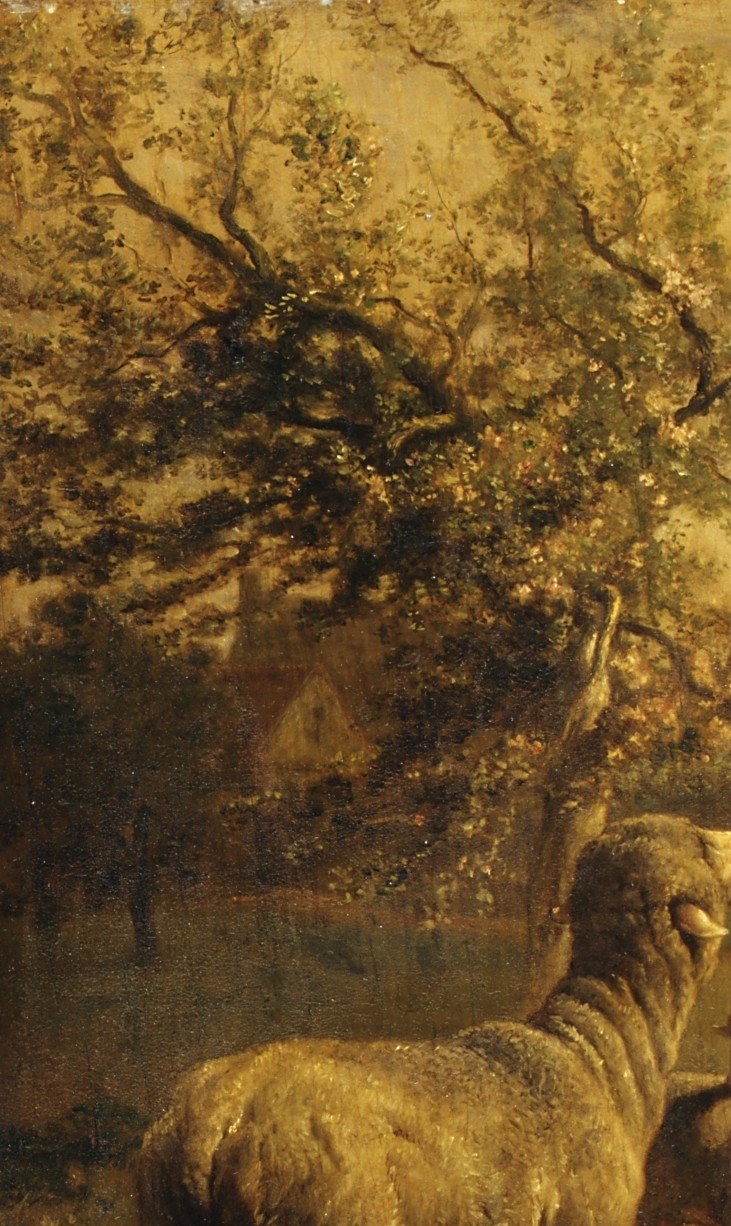
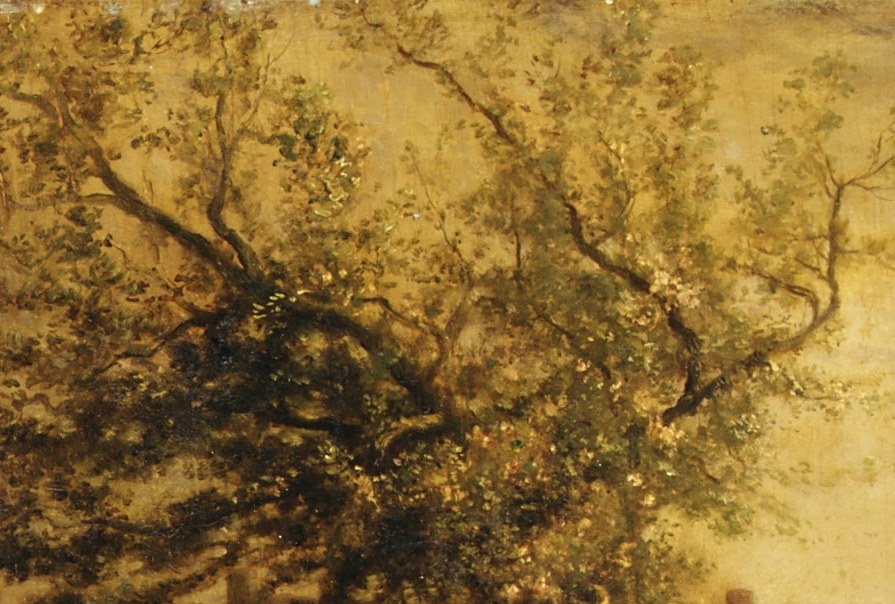
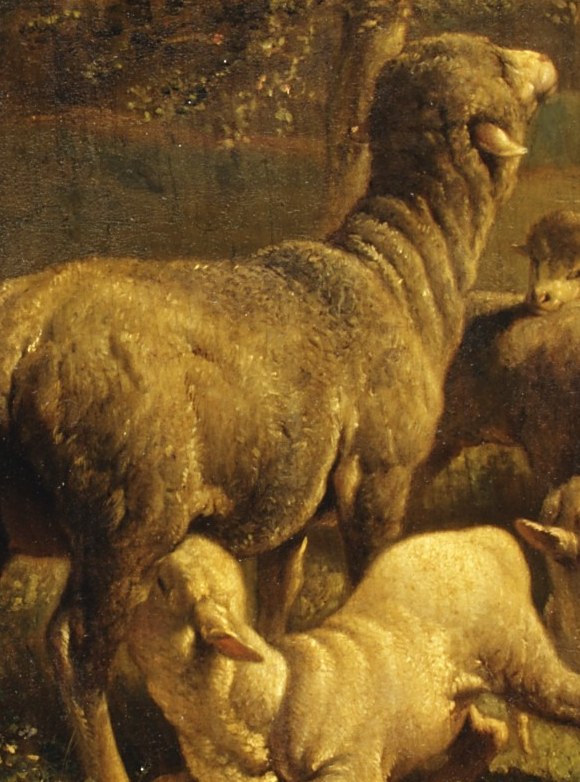
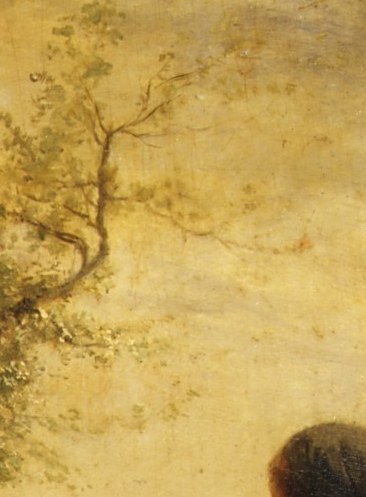
Look at the delicate branch tracery in the upper left against the warm sky. Those fine dark lines read as pure calligraphy, the exact pressure and release of a printmaker's hand, not a brush loaded with pigment. Then drop your eye to the standing sheep. The fleece isn't modeled with soft blended dabs. It's built from individual curled strokes, each one a drawn line mimicking the lanolin weight of wool. Jacque constructed texture the way an engraver builds tone: line by line.
The Barbizon School prized direct observation, painting outdoors in the Fontainebleau forest alongside Millet. Jacque's subject here, a solitary shepherdess, her flock, a tree with the first sparse leaves of spring, is classic Barbizon pastoral. But the visual engine underneath is older, sterner, more disciplined. The luminous atmosphere softens it, yet the structure remains linear.
Next time you see a painting that feels impossibly textured, ask what craft the artist carried in their hands before they ever picked up a brush.
Details
Transcript
This looks like pure paint. But the artist was an engraver first. He spent seven years engraving maps for the French Army. Look at the branches against the sky. Those aren't brushstrokes. They're calligraphic cuts. A printmaker drags a burin through metal. He dragged a brush the same way. Each curled lock is a line, not a dab. Engraving, in oil. The soft spring light holds it all together, but the skeleton underneath is line.