Farmhouse in Mahantango Valley by American 19th Century
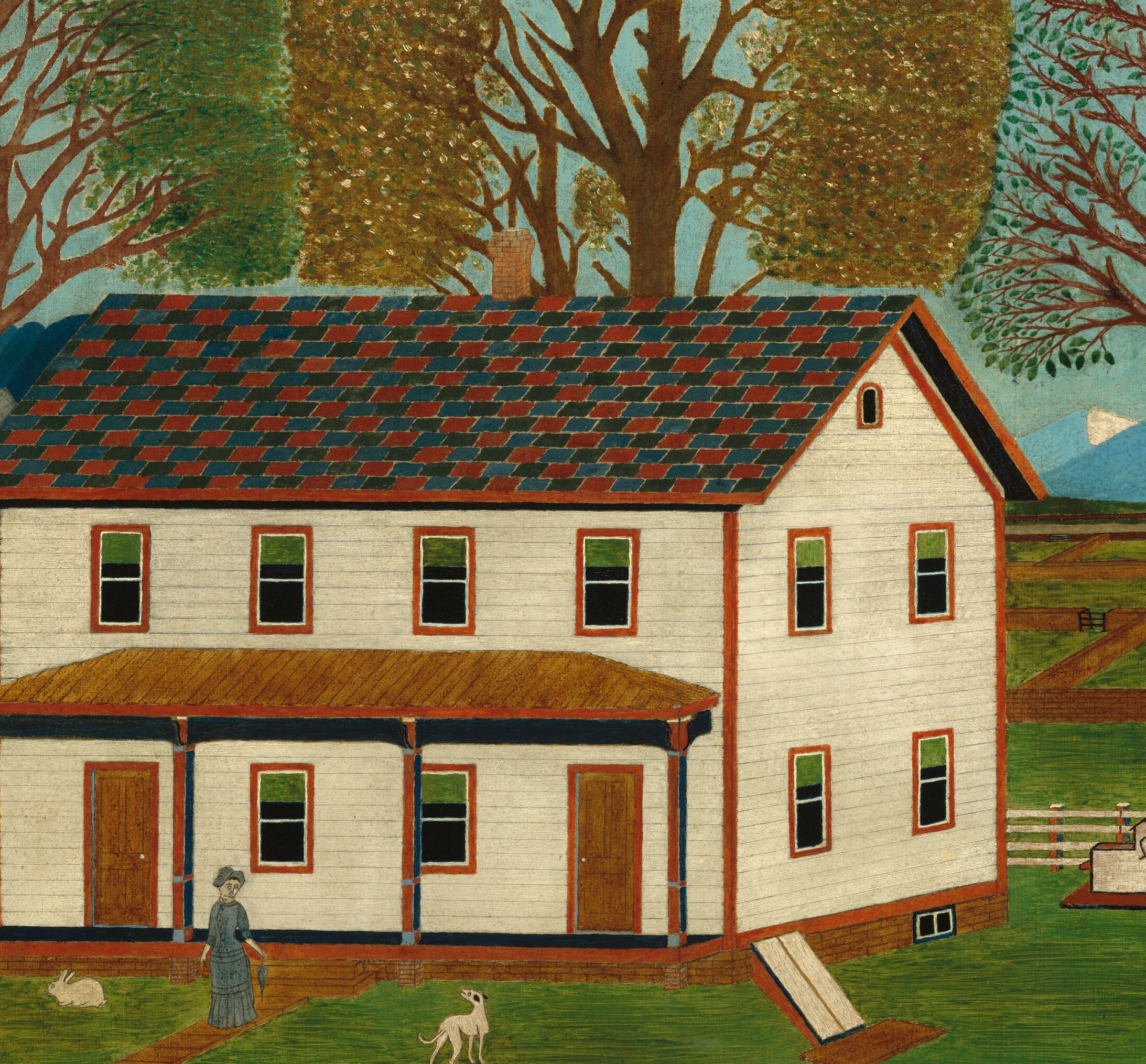
Farmhouse in Mahantango Valley is a late 19th-century oil painting by an unknown American artist, now held in a public collection. Painted around 1870, it depicts a Pennsylvania German farmstead with the crisp, flat precision of the folk-art tradition. There is no grand drama here, only the accumulation of small, true things that reward a patient eye.
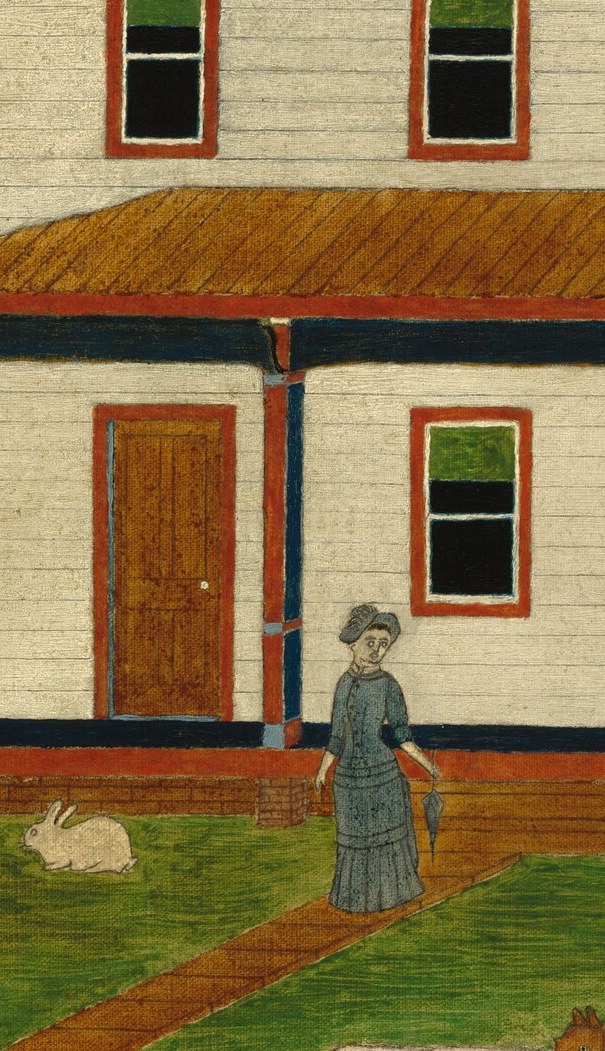
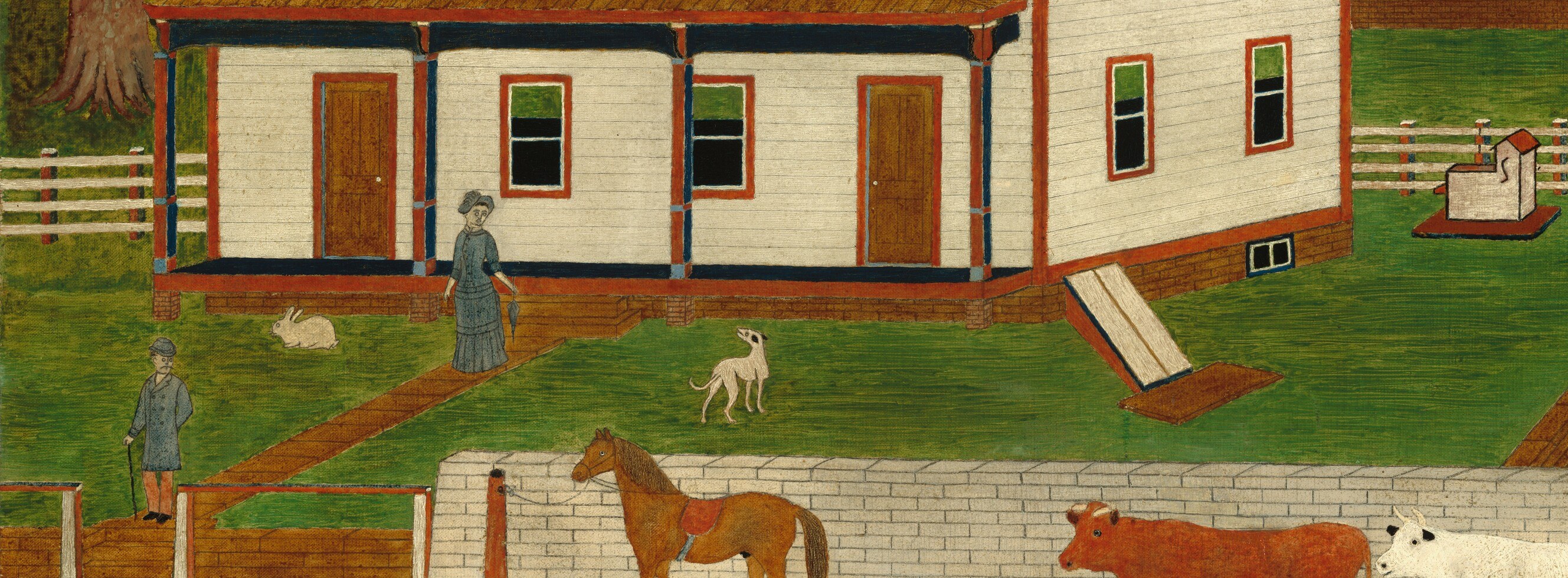
Start with the woman in the dark dress, standing alone by the covered porch. A small white dog keeps her company. The white fence rails pull your eye inward, past a well-pump and a cluster of cattle, toward a massive golden tree that crowns the composition. The painting feels complete already, but two details change how you read it.
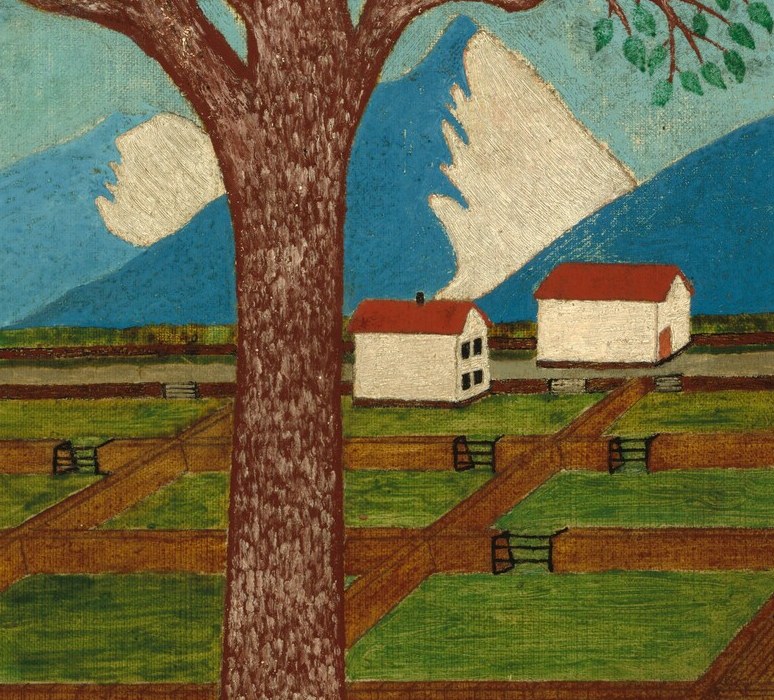
First, follow the fence line down to its base in the lower center. A grey cat is crouching there, so small and still it nearly dissolves into the grass. Second, scan the blue-grey mountain peaks on the far right horizon. Tucked into the middle distance is a second white farmstead, barely visible. These details do not decorate the scene, they correct our assumption that this is an isolated homestead. It is a valley of neighbors.
The Mahantango Valley, in central Pennsylvania, was settled by German immigrants in the 18th and early 19th centuries. The artist has documented working rural infrastructure, right down to the well-pump in the mid-yard. The skeletal trees at each margin tell us it is late autumn. What else do you notice now that you didn't see at first?
Details
Transcript
It looks like one farm, one quiet valley. A woman stands beside a covered porch, her dog nearby. Late 19th century, painted by an unknown hand in Pennsylvania. Now look closely at the base of the fence. A grey cat, crouching low. Easy to scroll past. Now pull back and scan the far right horizon. A second farmstead, barely visible against the ridge. This valley was a settled, working landscape, not a wilderness.