Portrait of an Ecclesiastic by French 15th Century
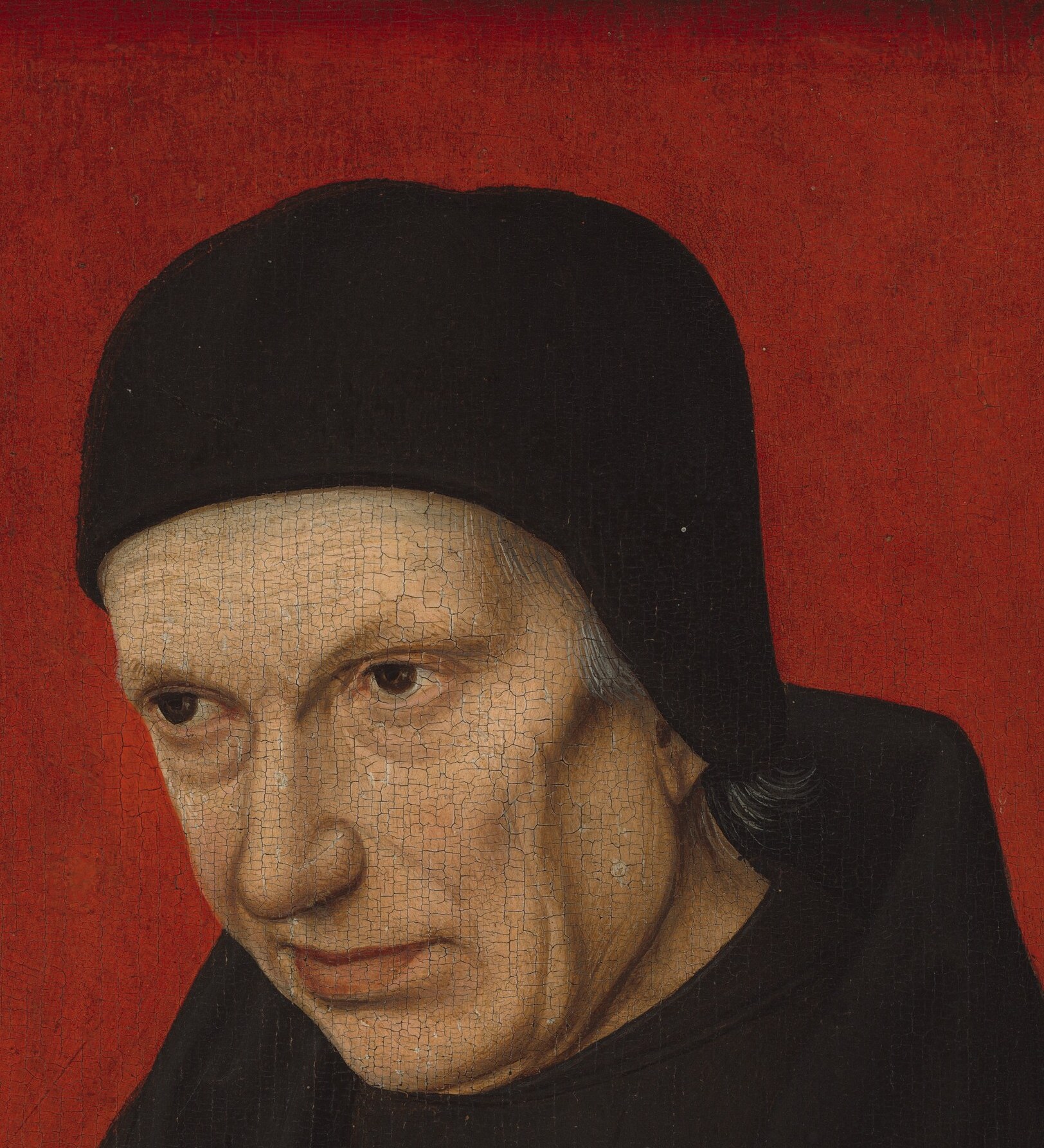
This is 'Portrait of an Ecclesiastic', painted by an unknown French artist around 1480. He has no name now, just a title. But this is one of the great psychological portraits of the late 15th century, a record of a specific, austere life that can still stop you in a museum.
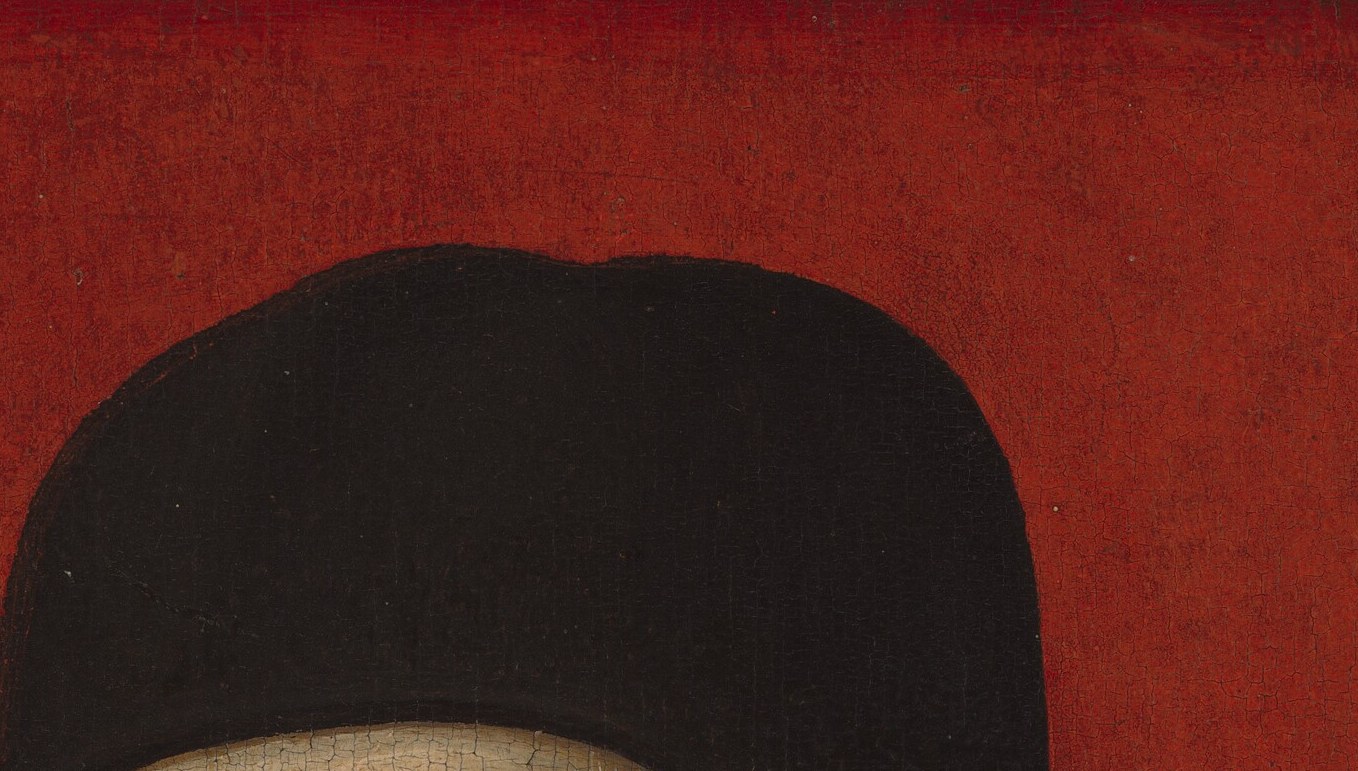
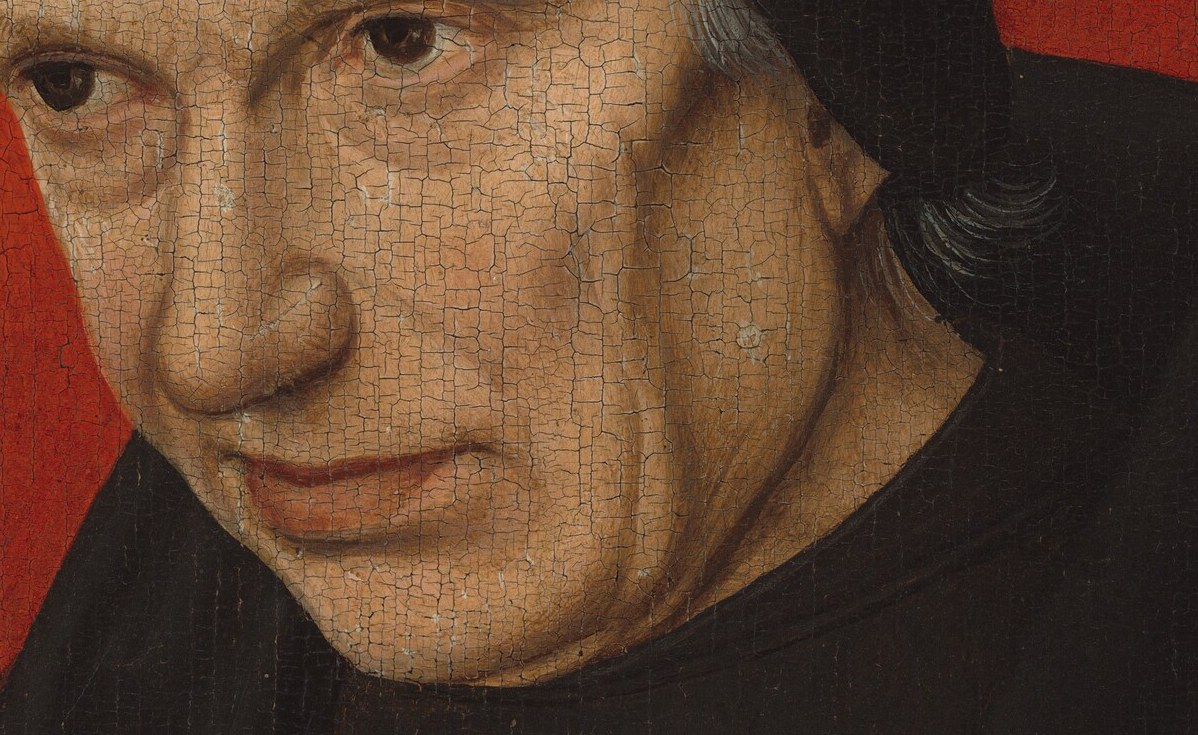
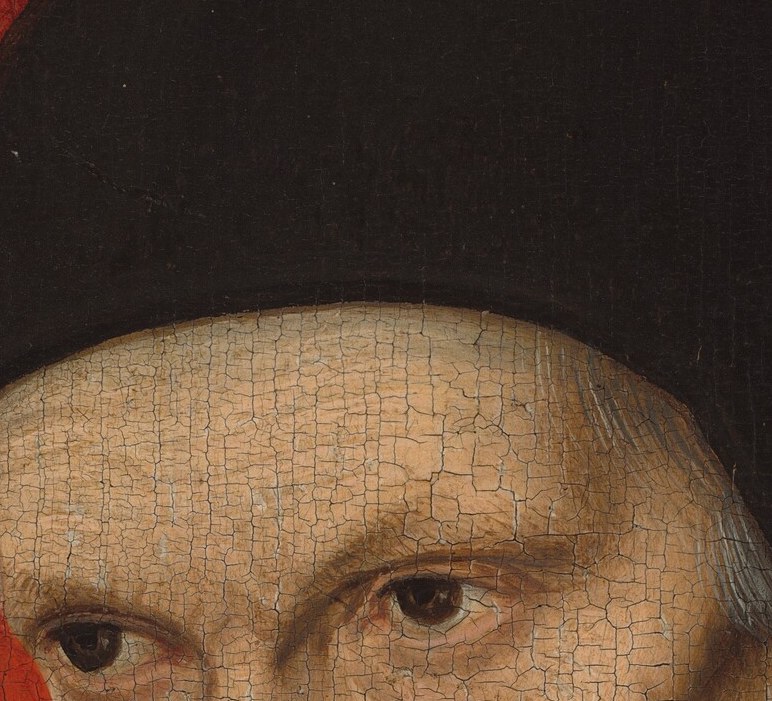
Look first at the face. It is gaunt and strikingly asymmetrical, every deep line carved by the artist without flattery. See the faint stubble on the upper lip and jaw, a tiny sign that this man sat for the painter in real time, in a real room. The heavy black cowl isolates the pale face like a spotlight against a vermilion background, so we have nothing to look at but him.
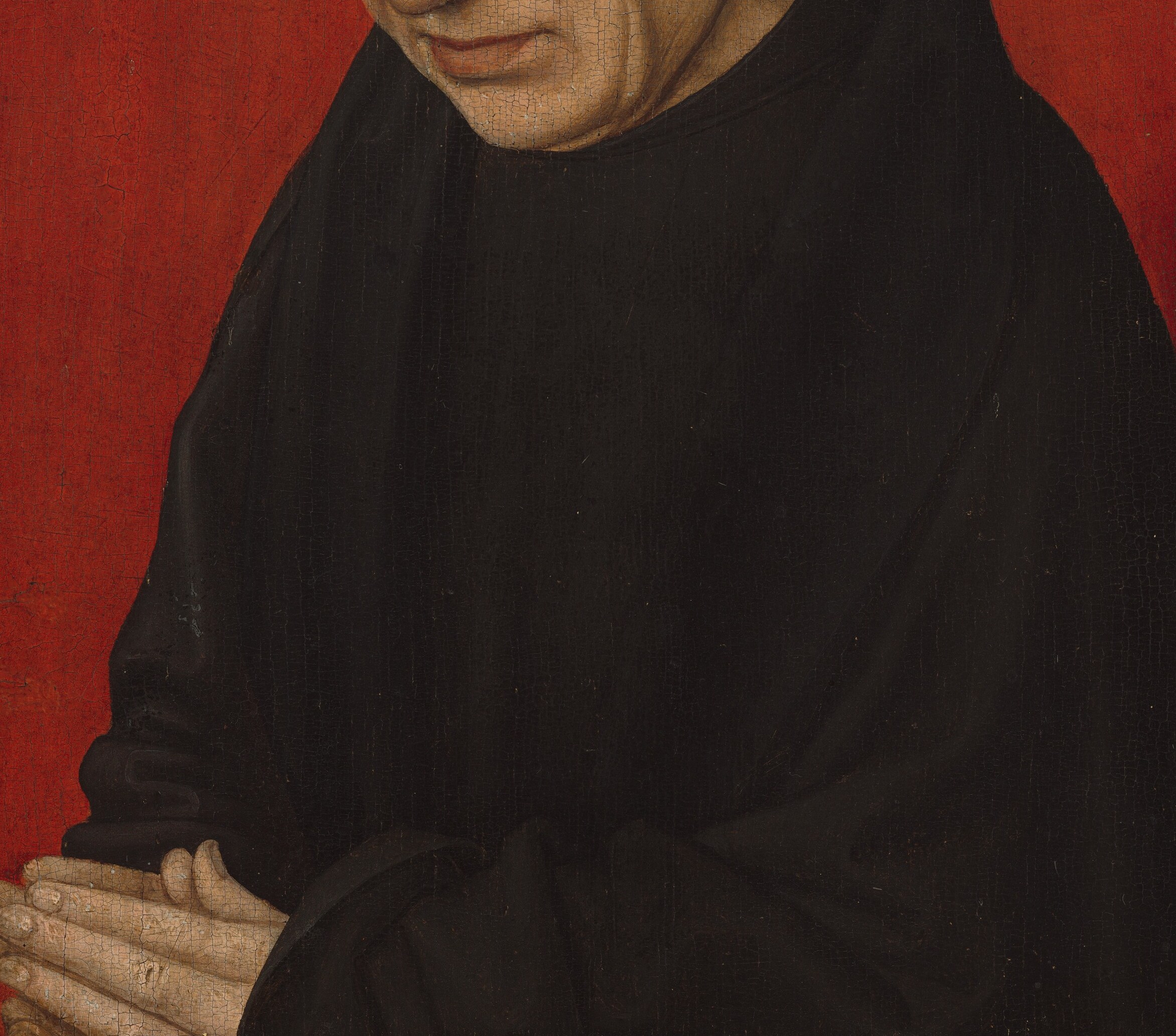
The technique is a quiet revolution. Painted in tempera and oil on oak, the portrait uses new oil glazes to build a velvety, light-absorbing black robe that makes the thin white collar and angular face feel almost touchable. This blend of media was forward-looking in French painting, allowing for a psychological depth that pure tempera rarely achieved.
We do not know his name, his order, or the church he served. His folded hands barely emerge from the robe at the bottom edge, a visual ellipsis that suggests prayer without showing it. His eyes drift downward and inward, not hostile but wholly removed. The effect is not sadness exactly. It is the quiet of a man who has spent decades looking at something far beyond the viewer.
Details
Transcript
He has no name now. Just 'Portrait of an Ecclesiastic', painted around 1480. His gaunt face is a map of a hard, simple life. The shaved forehead marks his tonsure, a sign of devotion. The shadow on his jaw is real stubble, painted from life. A new oil technique captured this startling human detail. His eyes don't quite meet yours. They look inward, past everything.