Paradise by Giovanni di Paolo
Giovanni di Paolo's "Paradise" (1445) is not an autonomous painting. It is a single surviving panel from the Guelfi Altarpiece, commissioned for the Church of San Domenico in Siena. The full altarpiece comprised a central Virgin and Child, flanked by saints, with narrative panels and this vision of heaven. The entire project was a significant financial undertaking, funded by the Guelfi family to secure their legacy and spiritual standing in one of Siena's most prominent churches.
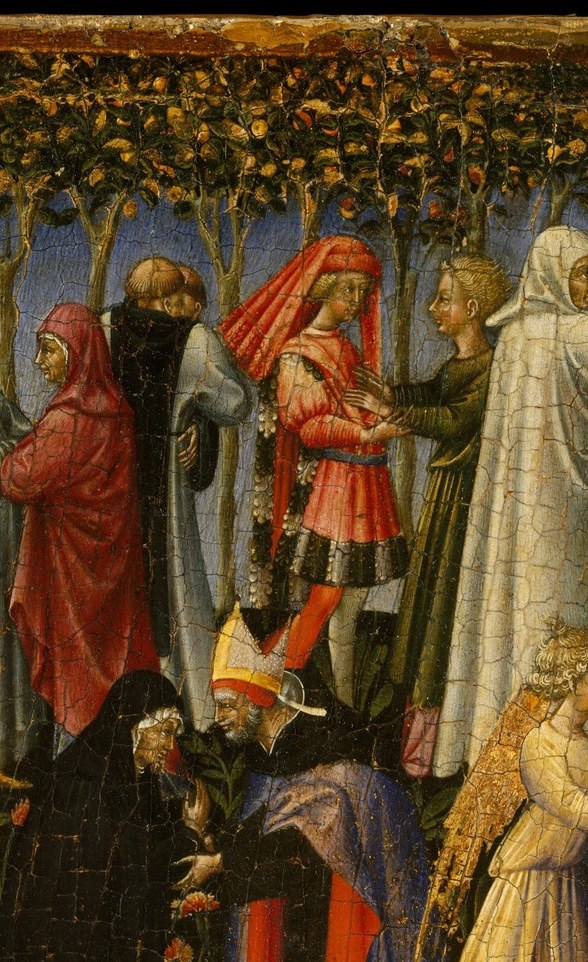
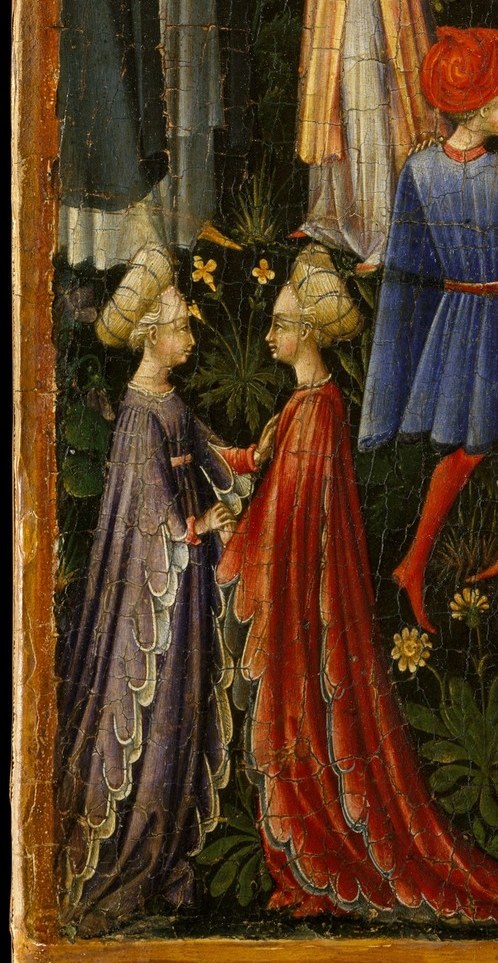
Look at the blue robe on the figure at the lower left. That vivid color is ultramarine, ground from lapis lazuli mined in Afghanistan and shipped to Italian ports at staggering expense. Fifteenth-century contracts often specified the exact grade and quantity of ultramarine the artist was required to use. The patron paid separately for it, and Giovanni di Paolo would have accounted for every fraction of an ounce. The gold leaf in the halos and the divine aureole was similarly priced, real gold, pounded by hand into sheets thinner than paper, laid onto a prepared ground and burnished.
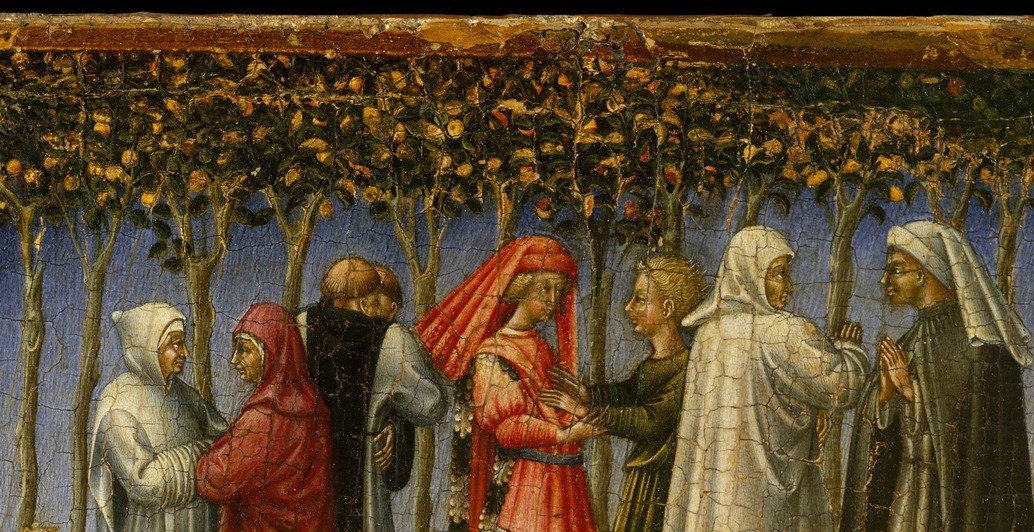
Giovanni di Paolo, one of the foremost painters of the Sienese School, worked within a strict guild system. His fee was calculated by the day or by the figure, which explains the crowded composition. The figures visible in the upper margin, barely peeking over the main tier, are not theological subtlety alone. They are billable units. The painter spent his career in Siena and never became wealthy. His reputation declined after his death, only to be revived in the 20th century as a singular, dreamlike voice of the Italian quattrocento.
This panel now hangs in the Metropolitan Museum of Art. To stand before it is to see the literal material of faith: gold, lapis, and labor, transformed into an image of eternal reward.
#arthistory #italianrenaissance #giovannidipaolo
Details

Transcript
Siena, 1445. A city bankrolls its own slice of heaven. This is not a single painting. It's one panel of a vast altarpiece. The gold alone cost a fortune. Real gold leaf, beaten thin. Look at the halos. Each one was punched by hand. The contract specified the pigment: ultramarine from lapis lazuli. That blue was worth its weight in gold. The patron paid for every grain. Giovanni di Paolo completed this paradise on a guild painter's wage. He charged by the figure. Crowding heaven was good business.