Wild Strawberries and a Carnation in a Wan-Li Bowl by Hulsdonck, Jacob van
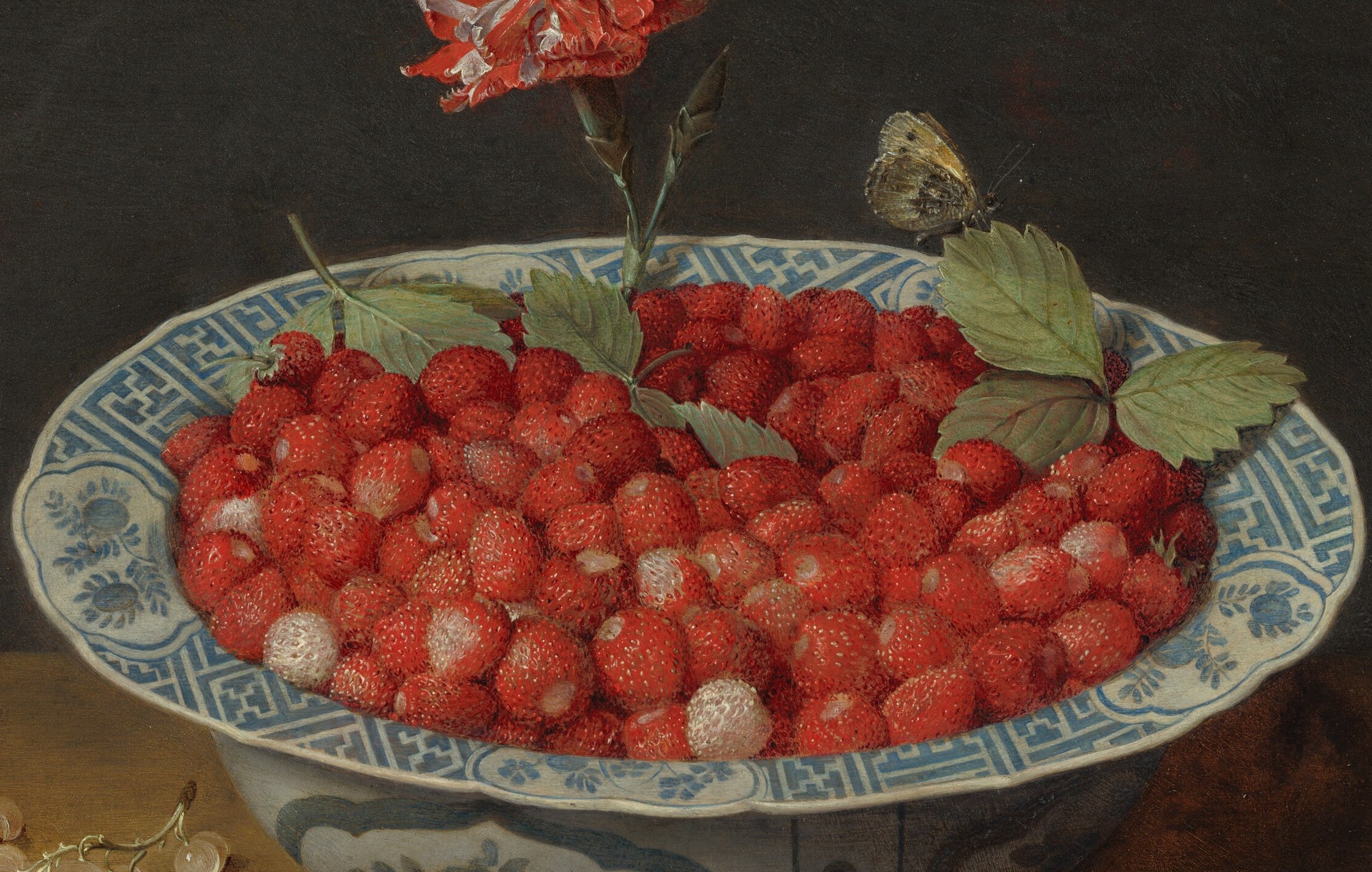
Jacob van Hulsdonck's "Wild Strawberries and a Carnation in a Wan-Li Bowl" (c. 1620) is a jewel of Flemish still-life painting that rewards a very close look. Painted in oil on copper, a support that allowed astonishing luminous detail, the work is now held at the Museum of Fine Arts, Boston.
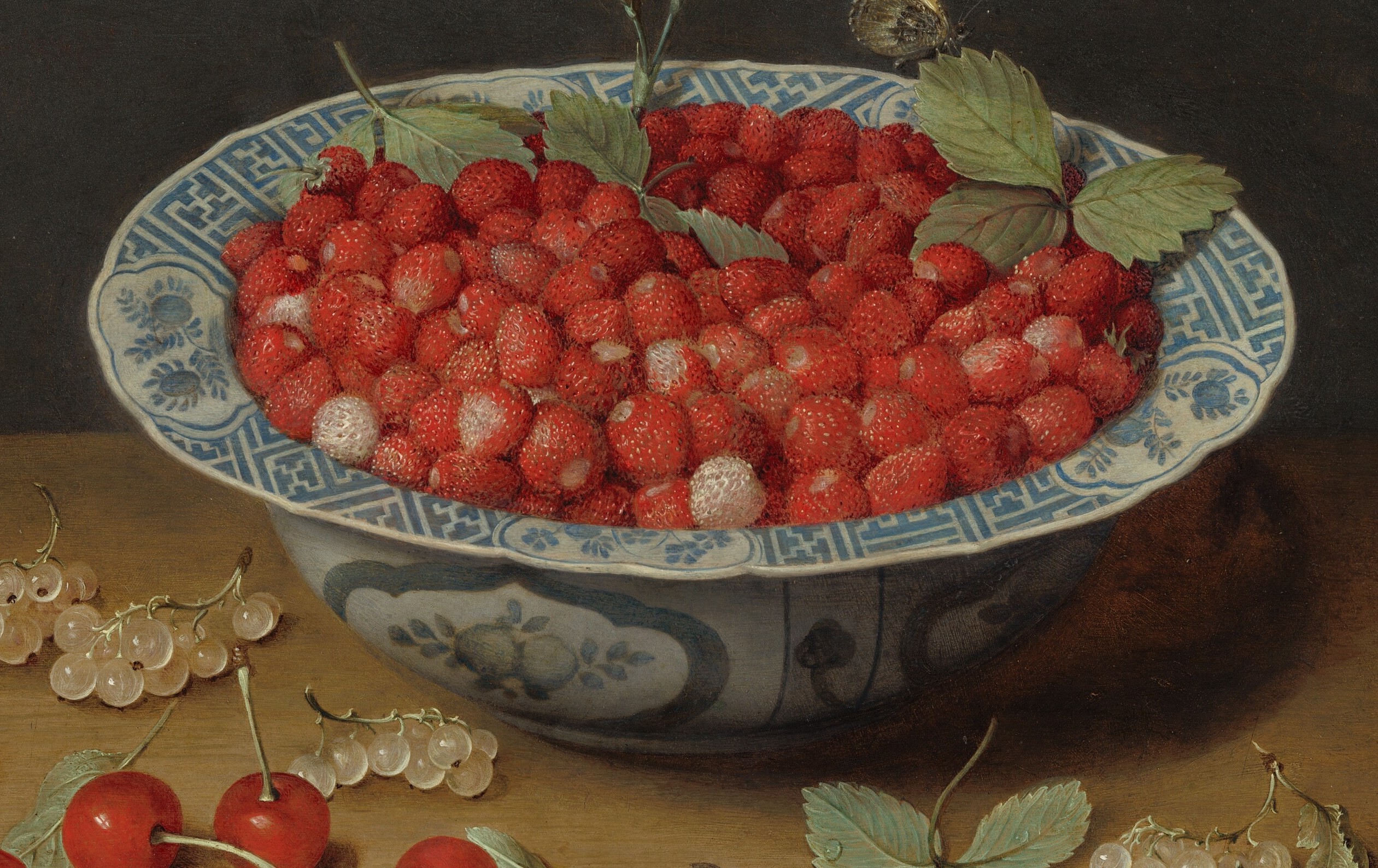
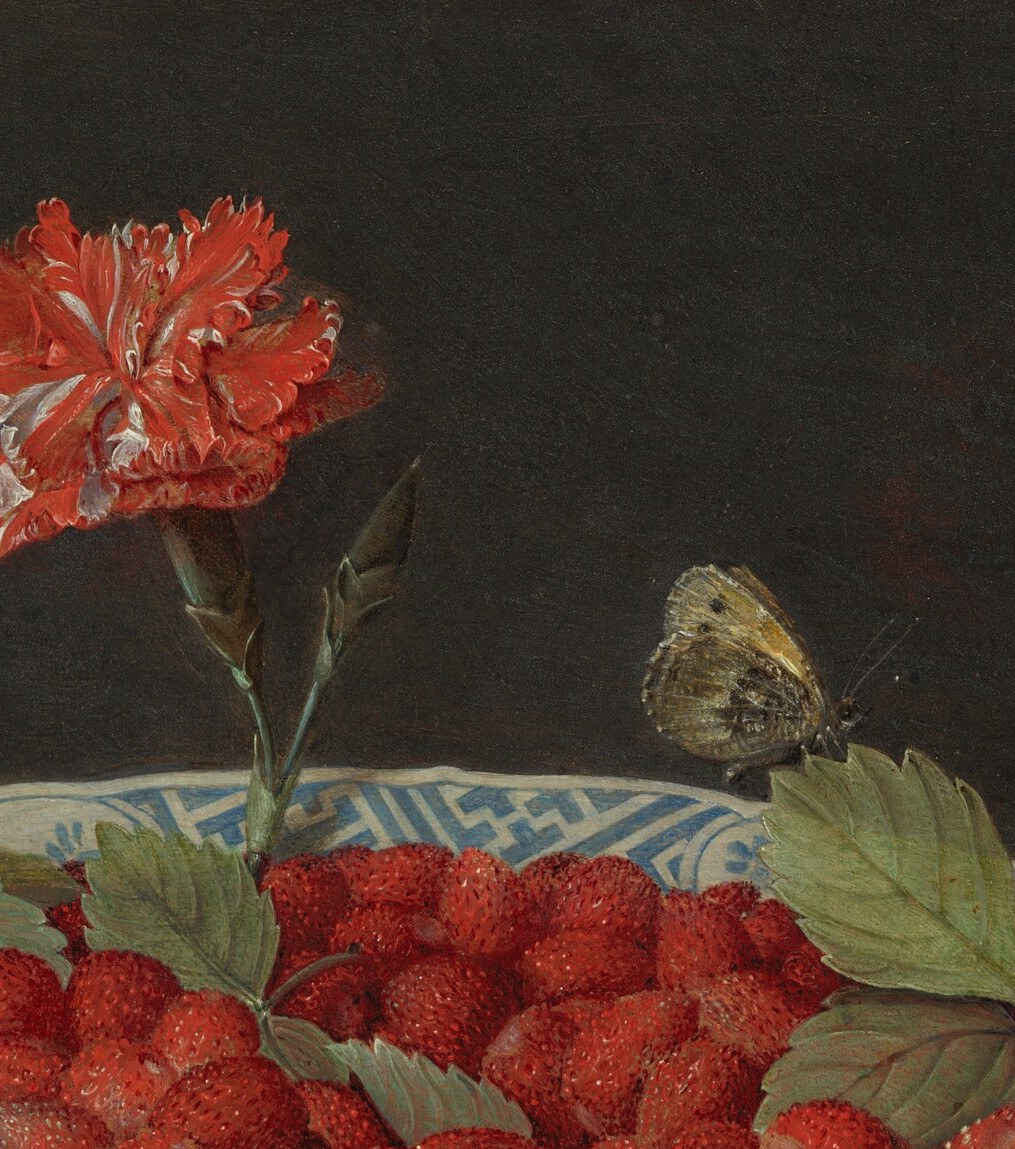
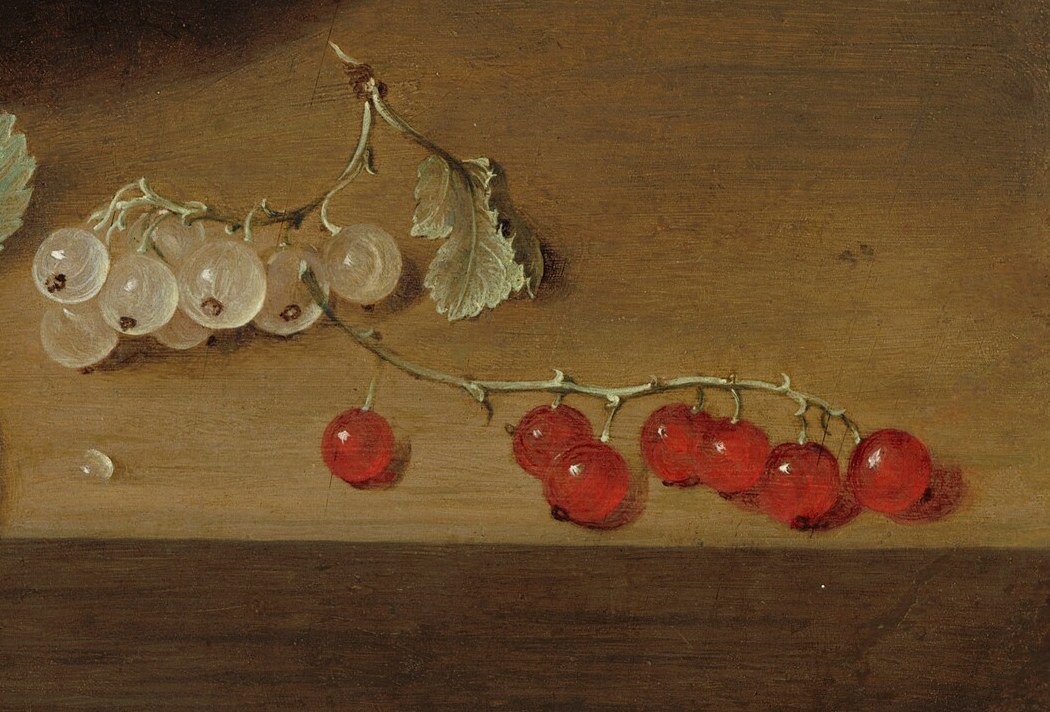
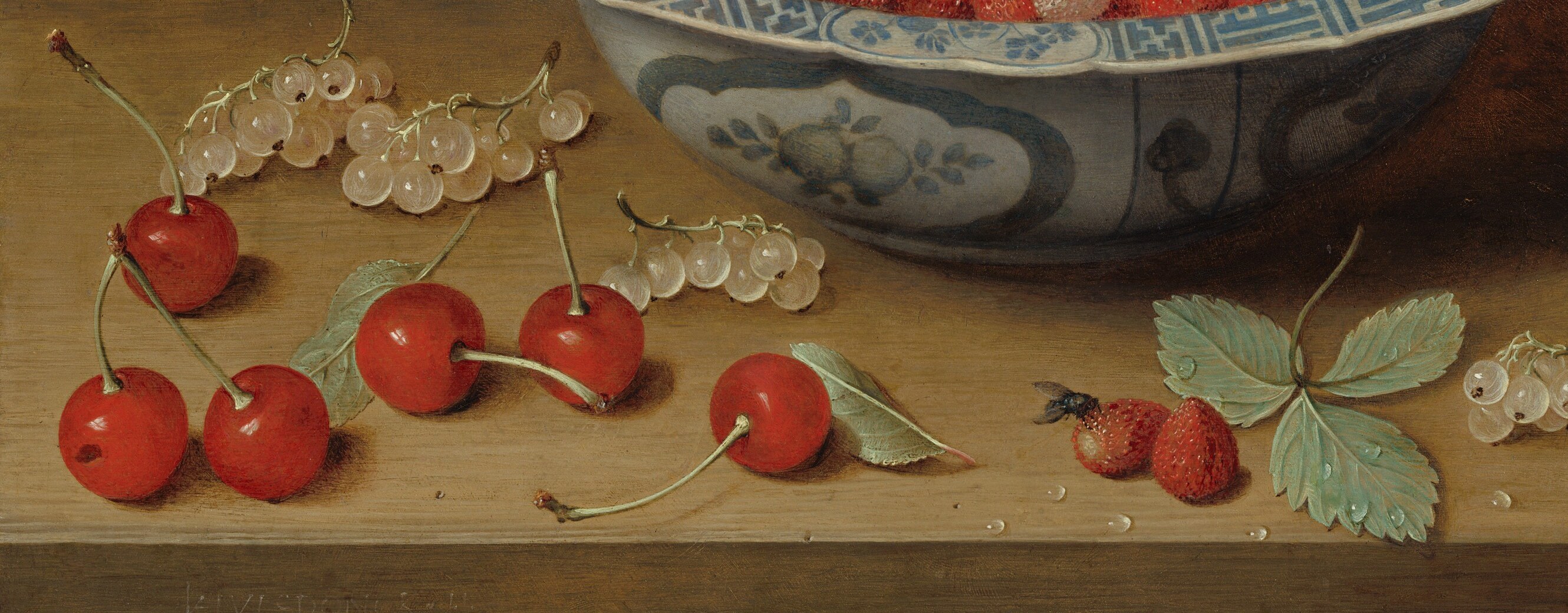
Scan the painting from the top down. A red carnation, the era's emblem of betrothal, crowns the mound of wild strawberries. The bowl itself is Chinese Wan-Li porcelain, a luxury import that signaled wealth and global reach in early 17th-century Antwerp. The scattered cherries and loose fruit on the tabletop reinforce the idea of abundance overflowing.
But the real story sits almost out of frame. In the lower-right margin, a single strawberry is crushed and decaying. It is a vanitas detail, a memento mori, placed at the edge of all this sweetness. Hulsdonck never lets us forget that ripeness and rot are the same season.
Next time you stand before a still life, check the corners. That is often where the painter has hidden the truth.
Details
Transcript
A bowl of wild strawberries and a single carnation. Seventeenth-century Flemish still life. Pristine and perfect. This Wan-Li bowl was a luxury import from Ming-dynasty China. A red carnation crowns the mound: the symbol of betrothal. Everything signals abundance and sweetness. But now look at the corner. Something has been left to rot. A crushed, decaying strawberry. A memento mori pushed to the margin.