Mrs. Hugh Hammersley by John Singer Sargent
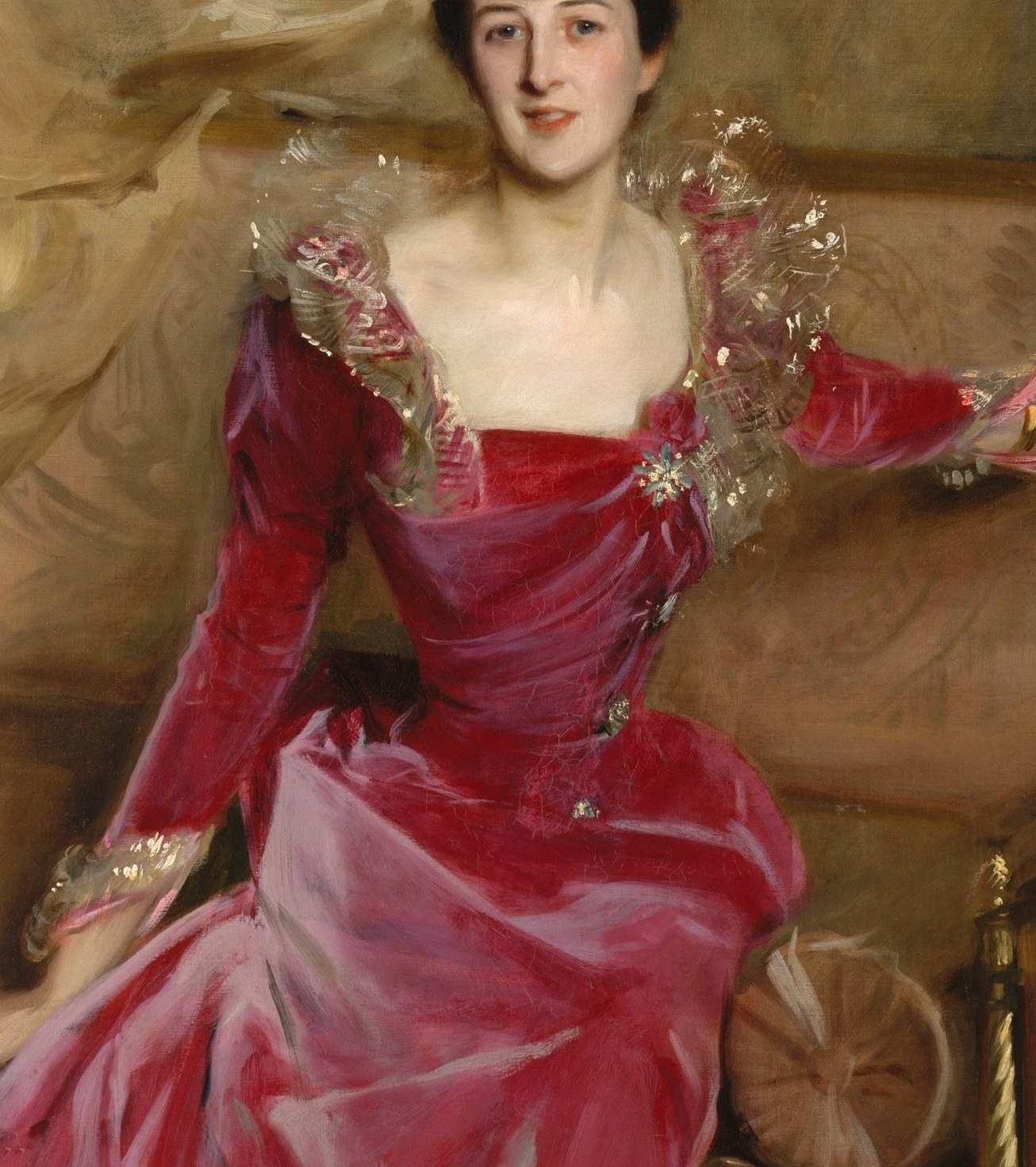
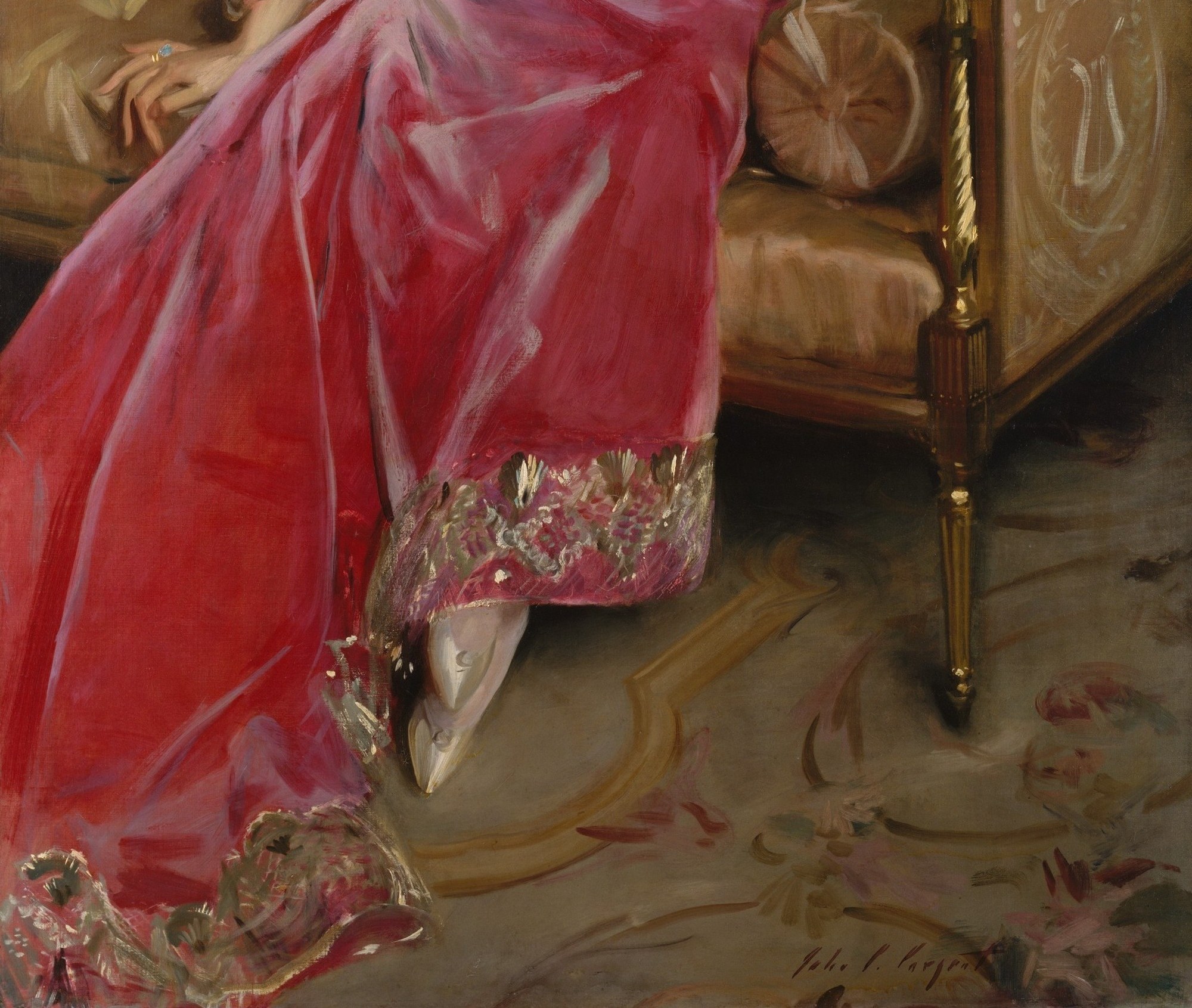
John Singer Sargent painted Mrs. Hugh Hammersley in 1892, and the dress alone tells you everything about the world it comes from. That saturated crimson silk was not a quiet choice. In late-Victorian London, a gown of this dye and yardage announced serious wealth, and Sargent treated it as a co-star, the skirt consumes nearly the bottom third of the canvas.
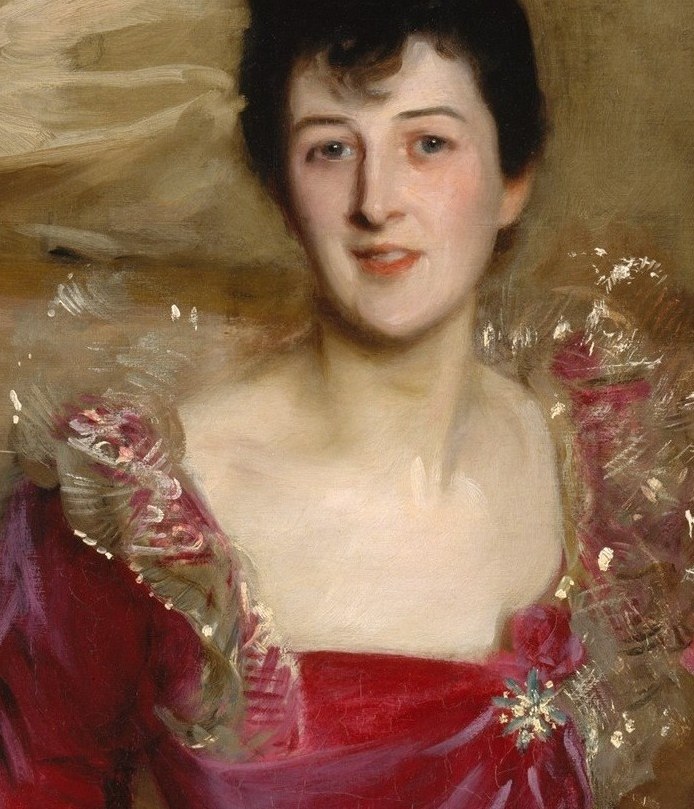
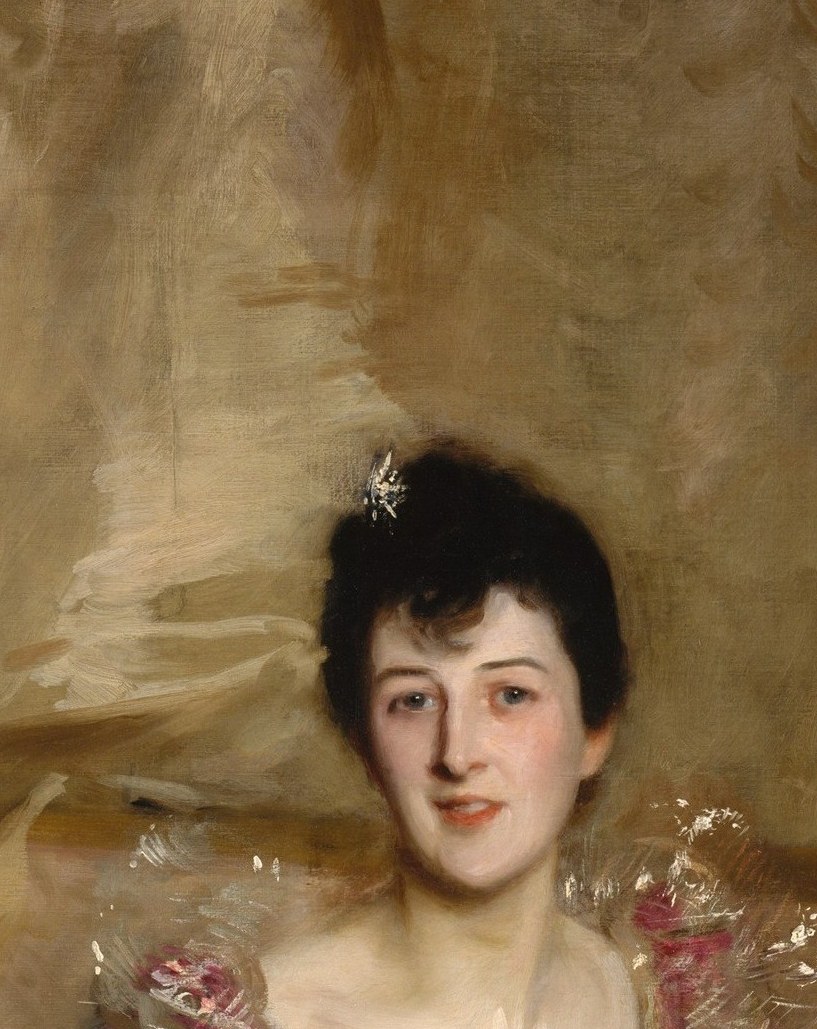
The painting hangs at the Metropolitan Museum of Art. Look at the bodice in person or in a high-resolution image: the highlights are wet white paint dragged directly across still-wet red, a bravura move that captures the flash of silk in a single pass. Up from the jewel at her throat, the face is classic Sargent, slightly parted lips, an expression of ease that took weeks of sittings to construct.
Sargent was thirty-six when he painted this, already past the scandal of Madame X and firmly established as the portraitist of choice for the Anglo-American elite. Mrs. Hammersley was one of the many society women who came to his Tite Street studio. He gave them all the same thing: a version of themselves that looked effortlessly composed, painted with a fluency no other living artist could match.
Nearly every brushstroke in the background dissolves into gesture when you look closely, pure speed and confidence. The dress, meanwhile, remains deliberate down to the embroidered hem. Sargent knew exactly where your eye would go.
Details

Transcript
London, 1892. A painter works his way into society. Mrs. Hugh Hammersley sits for him in a gown of brilliant crimson silk. The scarlet was a provocation. Silk this saturated cost a fortune. Sargent painted wet white strokes straight into the red to catch the sheen. A jewel at the throat pulls your eye upward, past the dress, to the face. Her expression is self-possession itself. Sargent called this 'the look of a sitter.'