Expulsion from the Garden of Eden by Thomas Cole
Thomas Cole's 1828 painting, "Expulsion from the Garden of Eden," housed at the Museum of Fine Arts, Boston, captures the dramatic biblical narrative of Adam and Eve's banishment.
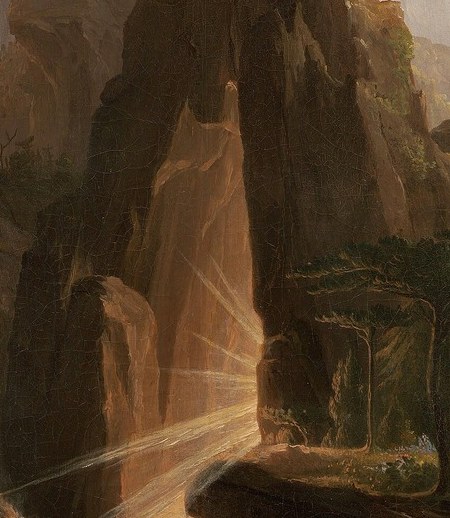
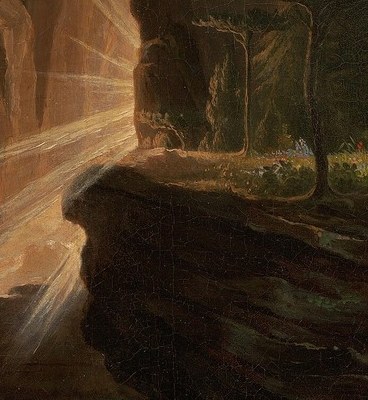
The painting is a powerful example of Cole's work as the founder of the Hudson River School. Look closely at the small figures of Adam and Eve, almost overwhelmed by the vast, turbulent landscape. The stark contrast between the lush Garden of Eden and the harsh wilderness beyond emphasizes the profound loss.
Cole, an Anglo-American artist, used his landscapes to convey deeper allegorical meanings. He often critiqued the industrialization and westward expansion of his time, viewing the American wilderness as a fragile, natural paradise. This painting reflects his concern for the untouched natural world.
Cole's work invites us to consider our relationship with nature and the consequences of human actions.
Details
Transcript
This painting tells a familiar story. Adam and Eve flee a lost paradise. The artist, Thomas Cole, founded the Hudson River School. He was known for dramatic, allegorical landscapes. Notice the small signature, T Cole, on the cliff face. Cole often used landscape to criticize industrialism and westward expansion. He saw the American wilderness as a new Eden, now also threatened.