The Dormition of the Virgin by http://www.wikidata.org/.well-known/genid/1c4ec684a784263c8bd01c525c5c4b0c
This tempera painting, "The Dormition of the Virgin," from around 1500, offers a powerful visual narrative of the Virgin Mary's passing and ascent to heaven. Its anonymous artist created a work rich in spiritual symbolism, now preserved in an undisclosed museum.
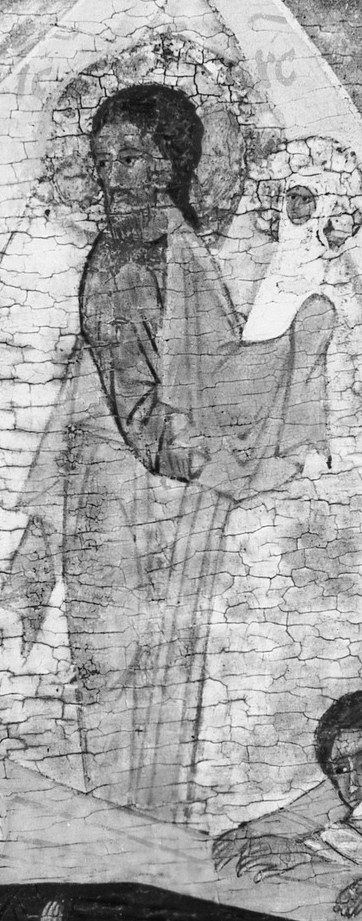
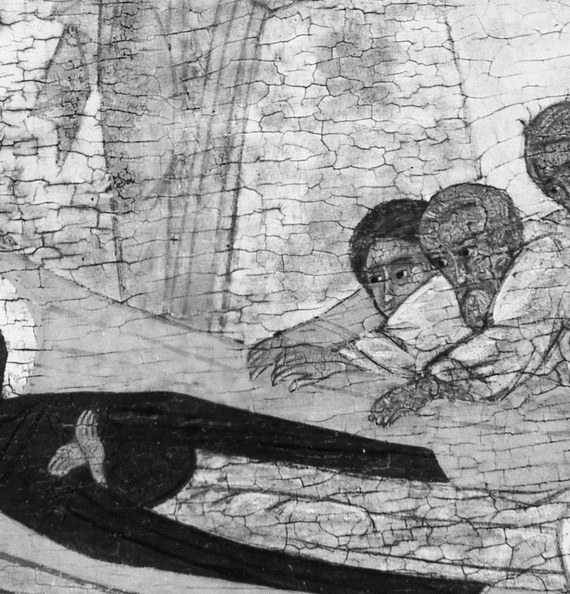
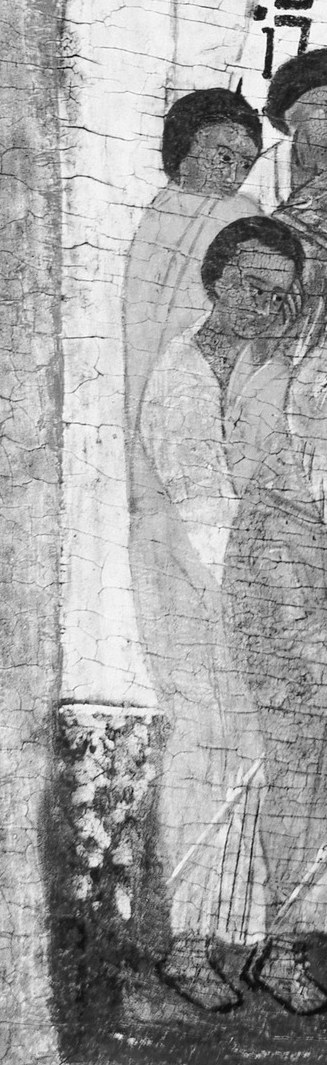
Observe Mary's serene face, reflecting peaceful acceptance, while above her, Christ guides her soul. The apostles around her are depicted with bowed heads, conveying deep sorrow and reverence. Notice the fine details in their garments, a characteristic made possible by the tempera medium.
The painting's background features a small boat in a distant landscape. This isn't just a scenic element; in medieval visual culture, it often symbolized the soul's passage across the waters of death, adding a profound layer of meaning to the scene. This artwork is a testament to the theological concerns and visual language of its era.
What other subtle symbols do you think might be hidden within this deeply spiritual work?
Details
Transcript
This painting tells the story of the Virgin Mary's passing. Her serene face suggests a peaceful acceptance of her fate. Above her, Christ descends, guiding her soul to heaven. The apostles bow their heads, lost in grief. The use of tempera paint creates fine details in their garments. Look closely at the distant landscape with a boat. This boat symbolizes the soul's journey across the waters of death.