Portrait of Mr. C. by Max Bohm
Max Bohm's "Portrait of Mr. C." (1896) at The Cleveland Museum of Art shows an artist mastering light and texture. This portrait is a stunning example of how oil paint can create illusions of three-dimensionality and tactile surfaces.
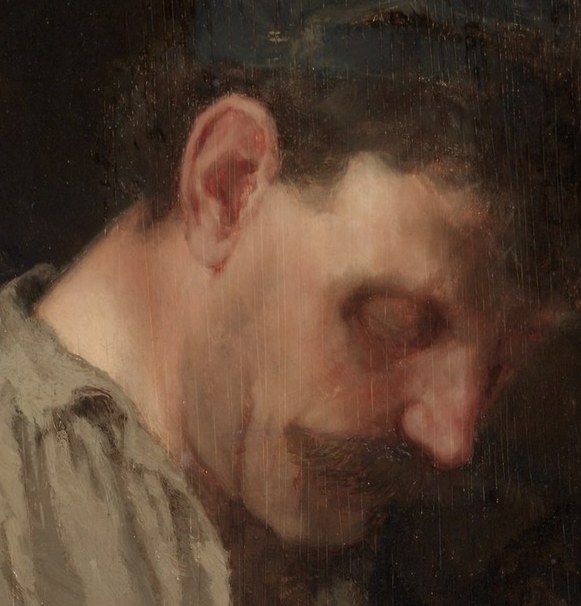
Observe the dramatic chiaroscuro, with light sharply defining the subject's cheekbone and plunging the background into deep shadow. Notice the artist's hand revealed in the visible brushstrokes on the dark garment, giving it a tangible texture. Even the crisp white shirt collar demonstrates Bohm's precise control.
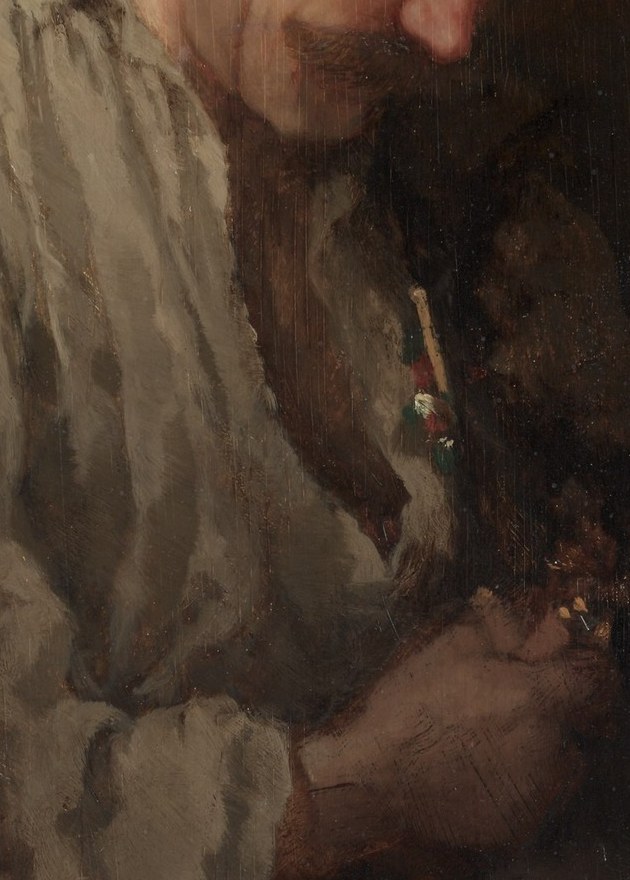
This painting captures an intimate moment, with the subject intensely focused on a small, ambiguous object held in his hands. The mystery of this object, whether it's a tool or jewelry, adds to the portrait's intrigue and the sitter's contemplative mood.
Bohm's skill lies in making the viewer question the reality of the painted surface.
Details
Transcript
Look at the strong light on his cheek. It sculpts his face with deep shadows. The dark background swallows all else. But look at the textures in his collar. His garment shows visible brushstrokes. Bohm captured them with thick oil paint. Focus on the object in his hands. Is it a tool, or a piece of jewelry?